Buy a Wooden Box: How to Tell Real Craftsmanship From Cheap MDF
Most “best wooden box” roundups just embed whatever product photo looked nice in a spreadsheet. But a wooden box is built the same way as any other piece of wood furniture, and the same shortcuts that make a cheap dresser fall apart in a few years show up in cheap boxes too – they’re just easier to miss on a small product photo. Before you add anything to your cart, it helps to know what you’re actually looking at: how the corners are joined, whether the wood is solid or a printed veneer over particleboard, what the hinges are made of, and whether the finish was actually applied evenly. None of that takes more than a minute to check once you know what to look for, and it’s the difference between a box that holds up for twenty years and one that warps or breaks a hinge within a season.
Our Pick for a Genuinely Well-Built Wooden Box
Best Solid-Wood Construction Pick
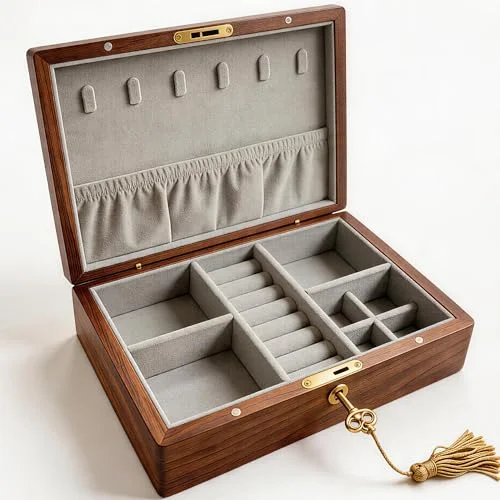 |
LIGNUMLOQU Solid Black Walnut Wood Jewelry Box – $47.49 Passes every check in this guide – the listing itself specifies solid walnut (no veneer, no MDF), brass hardware hinges, and a hand-applied oil finish, not just marketing language.
|
Joinery Is the First Thing to Check
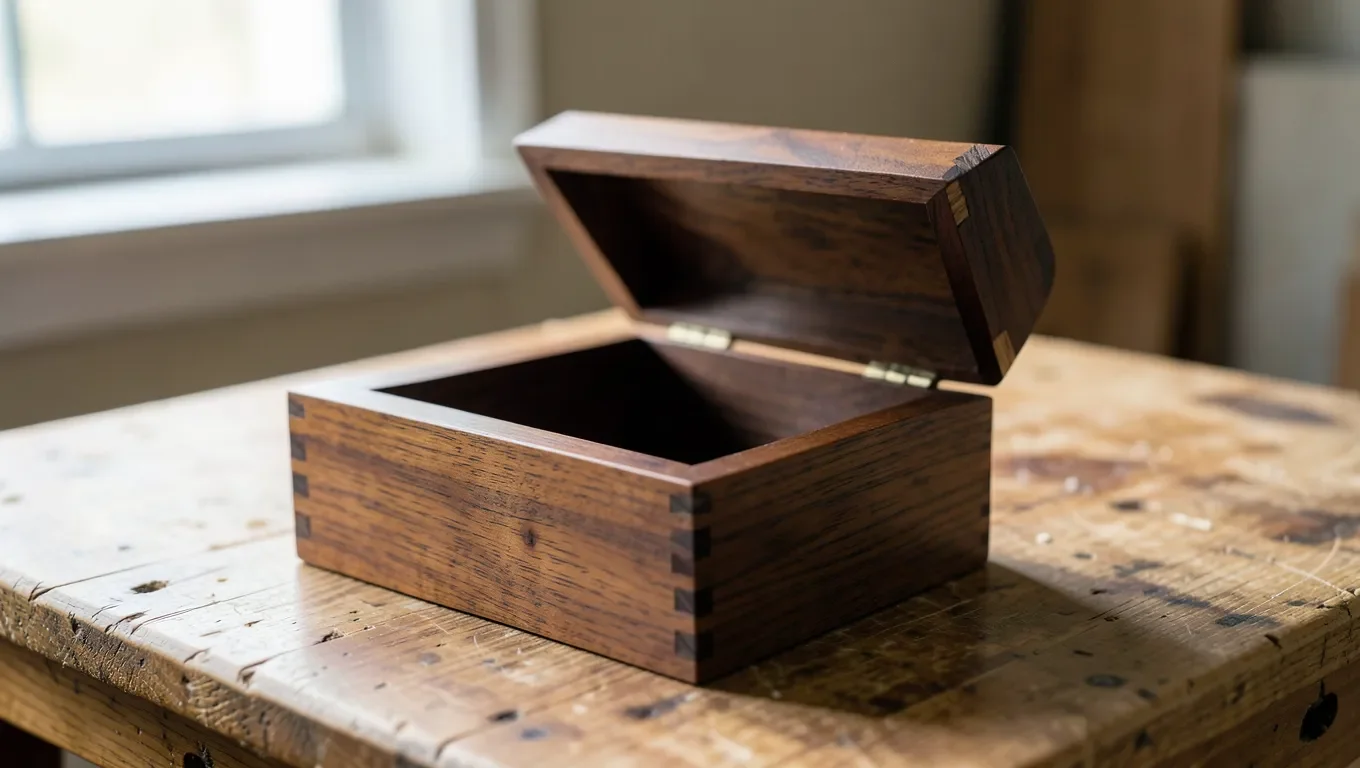
The corners are where a box takes the most stress – every time it’s picked up, set down, or bumped, the joint at the corner is what holds the two panels together. That makes it the single best place to judge construction quality. A dovetail or finger joint interlocks the two panels with a row of trapezoid or rectangular “fingers” cut into each piece, then glues them together, so the joint is mechanically keyed as well as glued. A plain butt joint just glues two flat edges together face to face, sometimes reinforced with a couple of narrow staples on the cheapest boxes, and relies entirely on that glue line to hold under stress.
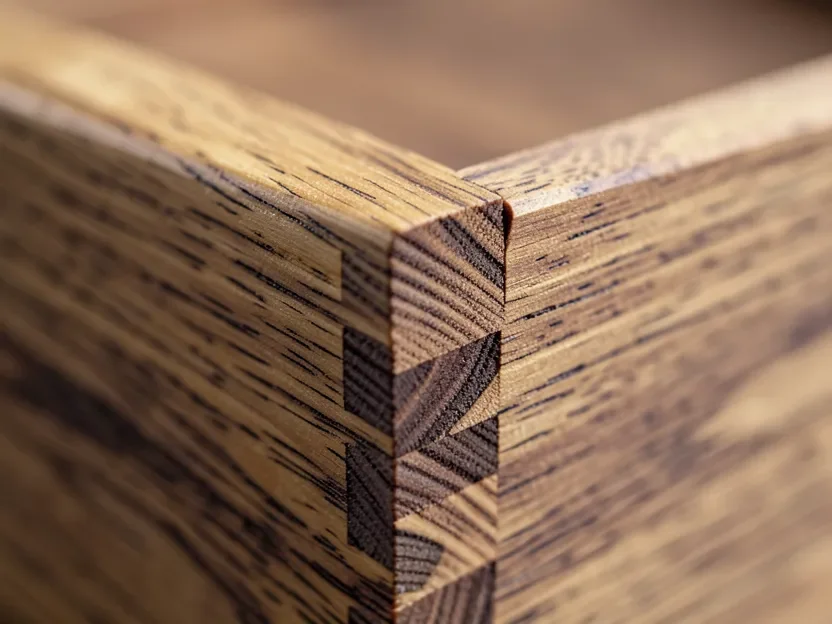
You can check this from a product photo before you buy: look at the outside corner of the box. If you see interlocking “fingers” running through the joint, that’s real joinery. If the corner is perfectly smooth with no visible pattern, it’s most likely a butt joint under a coat of finish. A hand-cut dovetail is often slightly irregular in spacing – on a handmade piece, that’s actually a good sign, not a flaw, since it means a person cut it rather than a template stamping identical fingers on every unit.
Solid Wood vs. Veneer-Over-MDF
Veneer betrays itself at any exposed edge – the inside lip of the lid, the underside of the base, a keyhole cutout – because that’s where you can see a thin skin of real wood glued over a fibrous or particleboard core instead of solid material all the way through. Real wood grain also isn’t perfectly repeating; if the same swirl or knot pattern shows up more than once across a listing’s photos of “different” boxes, that’s a rotary-cut veneer sheet being reused, not a one-off piece of solid stock.
The distinction matters more than it sounds like it should. Solid wood can be lightly sanded and refinished decades later if it gets scratched or the finish dulls, the same way a solid-wood dresser can be refinished. Veneer over MDF can’t – sanding through the thin veneer layer exposes the core underneath, and MDF swells and delaminates permanently if it ever gets damp, which a solid hardwood box generally shrugs off with nothing worse than a temporary color change. A listing that specifically states “solid wood, no veneer, no MDF” in its own description, rather than just showing a wood-grain photo, is telling you something real – it’s a specific claim a seller can be held to, not just marketing language.
Hinge Quality: What Cheap Boxes Skimp On
Hinges are the first part of a cheap box to fail, because they’re the only moving part and they take load every single time the lid opens. Thin stamped-steel hinges are folded from a flat sheet of metal – you can usually spot the seam where the metal was bent – and their screw holes tend to strip out of the soft interior wood after repeated use, which leaves the lid loose or dropping to one side. Uncoated steel hinges are also prone to a faint rust bloom at the pin within a few months in any home with normal humidity, which then stains the wood around them.
Cast or milled solid brass hinges are heavier, swing without the wobble a thin stamped hinge develops, and brass itself doesn’t rust the way steel does – uncoated brass can develop a cosmetic patina over time, but that’s a surface color change, not structural failure. Since you can’t physically test a hinge before buying online, check the listing’s material and hardware callouts directly. A seller that specifically lists “brass hardware” or “solid brass hinges” is making a checkable claim; one that just says “metal hinges” or doesn’t mention the hinge material at all usually means it’s whatever was cheapest to source.
Finish Quality: Even Coverage, No Drips
A well-applied finish looks consistent across every visible surface in a listing’s photos – the same sheen on the lid, sides, and base, with no pooled drip lines at edges or corners and no blotchy light/dark patches from uneven stain absorption. Blotching is especially common on lower-grade or mixed wood, where the finish soaks in unevenly across grain that wasn’t prepped consistently. Edges and corners should also read as smooth and rounded-over in photos, not sharp or splintery – a box that’s actually been sanded through its finishing grits before finishing won’t have that raw, catchy edge.
Oil finishes – the kind applied to our pick above – soak into the wood rather than sitting on top of it, so they look more matte and let the actual grain show through, and they’re easy to refresh with another coat of oil down the road. Lacquer or polyurethane finishes build a harder, glossier protective film on the surface, which resists moisture and scuffs better up front but shows scratches more visibly over years of use and is harder to spot-repair. Neither is objectively the better choice – it’s a trade-off between a more natural look that’s easy to maintain and a harder shell that’s more resistant to daily wear.
Which Type of Wooden Box Do You Actually Need?
A jewelry box is built around its interior – lined compartments or removable trays, a soft anti-tarnish lining, and often a lock, all sized for small items you’ll access daily. A keepsake or memory box is closer to an empty vessel: one open cavity sized for letters, photos, or a folded flag, with less internal structure and more emphasis on the box itself feeling substantial enough to be worth keeping for decades. A decorative or display box is built to be looked at more than opened – often shallower, with the exterior finish and joinery doing more of the visual work since there’s less interior detail to show off.
Budget is a genuine signal here too. A properly joined solid-wood box in a normal jewelry-box size realistically runs somewhere between about $35 and $90 – raw hardwood plus real dovetail or finger-joint cutting time simply costs more to produce than that, even at manufacturing scale. If a listing claims “solid wood” construction at a price well under $20, treat that claim skeptically regardless of what the description says; it’s far more likely to be a thin veneer over engineered board than an error in the seller’s favor.
Frequently Asked Questions
How can you tell if a wooden box is real wood or veneer just from photos?
Look at any exposed edge in the listing photos, such as the inside lip of the lid or the underside of the base. Solid wood shows continuous grain running through the thickness of the material; veneer shows a thin skin of wood-grain pattern glued over a different-colored core, visible as a hairline seam at the edge. Repeating grain or knot patterns across multiple product photos are also a sign of a reused veneer sheet.
Are dovetail joints necessary, or just decorative?
They’re functional first. The interlocking fingers mechanically key the two panels together in addition to the glue, so the corner resists being pulled apart under the everyday stress of lifting and setting the box down. A plain glued butt joint relies on the glue line alone, which is the first thing to fail if the box is dropped or handled roughly.
What’s the difference between a jewelry box and a keepsake box?
A jewelry box is built around its interior organization – lined compartments, trays, and often a lock, sized for small items accessed often. A keepsake box is usually one open, lined cavity meant for larger sentimental items like letters or photos, with less internal compartmentalization and more focus on the box itself feeling substantial.
Is a wooden box under $20 actually solid wood?
Usually not, even when the listing calls it solid wood. Real hardwood stock plus the labor to cut dovetail or finger joints costs more to produce than that at almost any scale, so a solid-wood claim at a very low price is far more likely to describe a veneer-over-MDF box than a genuine bargain.
Conclusion
You don’t need to be a woodworker to buy a well-built wooden box – you just need to check four things before you click buy: the corner joinery, whether the wood is solid at any exposed edge, whether the hardware is specifically called out as brass or another durable material, and whether the finish looks even across every surface in the photos. A box that passes all four will outlast one that just looked nice in a thumbnail, and it’s usually only a few dollars more.
Sponsored / affiliate links. As an Amazon Associate I earn from qualifying purchases. I may earn additional commission from eligible campaigns.