How to Install Levolor Faux Wood Blinds: A Step-by-Step Guide
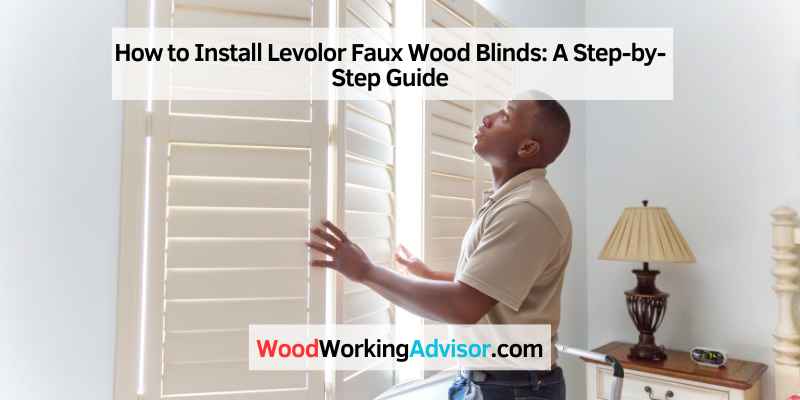
Levolor’s Trim+Go™ faux wood blinds are built for a DIY install – a drill, a level, and about 30 to 45 minutes per window is all you need. This guide follows the same bracket, headrail, and valance sequence Levolor uses in its own printed instructions, plus a few measurement and hardware details that manual tends to gloss over.
Every Levolor faux wood blind kit ships with mounting brackets, a valance with clip-on end caps, a lift wand, and (on most stock and custom kits) a paper drilling template you hold against the window frame to mark screw locations without guesswork. If you’re cleaning an existing set instead of installing new ones, see our Faux Wood Blinds instead – this page covers mounting a new blind from the box.
One distinction worth knowing before you start: Levolor sells both stock faux wood blinds (fixed sizes, ready to ship) and custom faux wood blinds (built to your exact opening). The hardware and installation steps are the same either way, but a custom kit’s bracket spacing is sometimes pre-set to the ordered width, so double-check the template against your actual window rather than assuming it’s universal.
What You’ll Need Before You Start
Gather a tape measure, pencil, a 4-foot level, a cordless drill/driver, a 1/16-inch drill bit, and a Phillips screwdriver. The 1/16-inch bit matters more than it sounds – pre-drilling a pilot hole at each bracket mark keeps the mounting screws from splitting wood trim or casing, which is the most common damage we see from a rushed install. If you don’t have the blind itself yet, the LEVOLOR Basics cordless set below is the same Trim+Go-style hardware this guide walks through.
Direct-Fit Levolor Pick
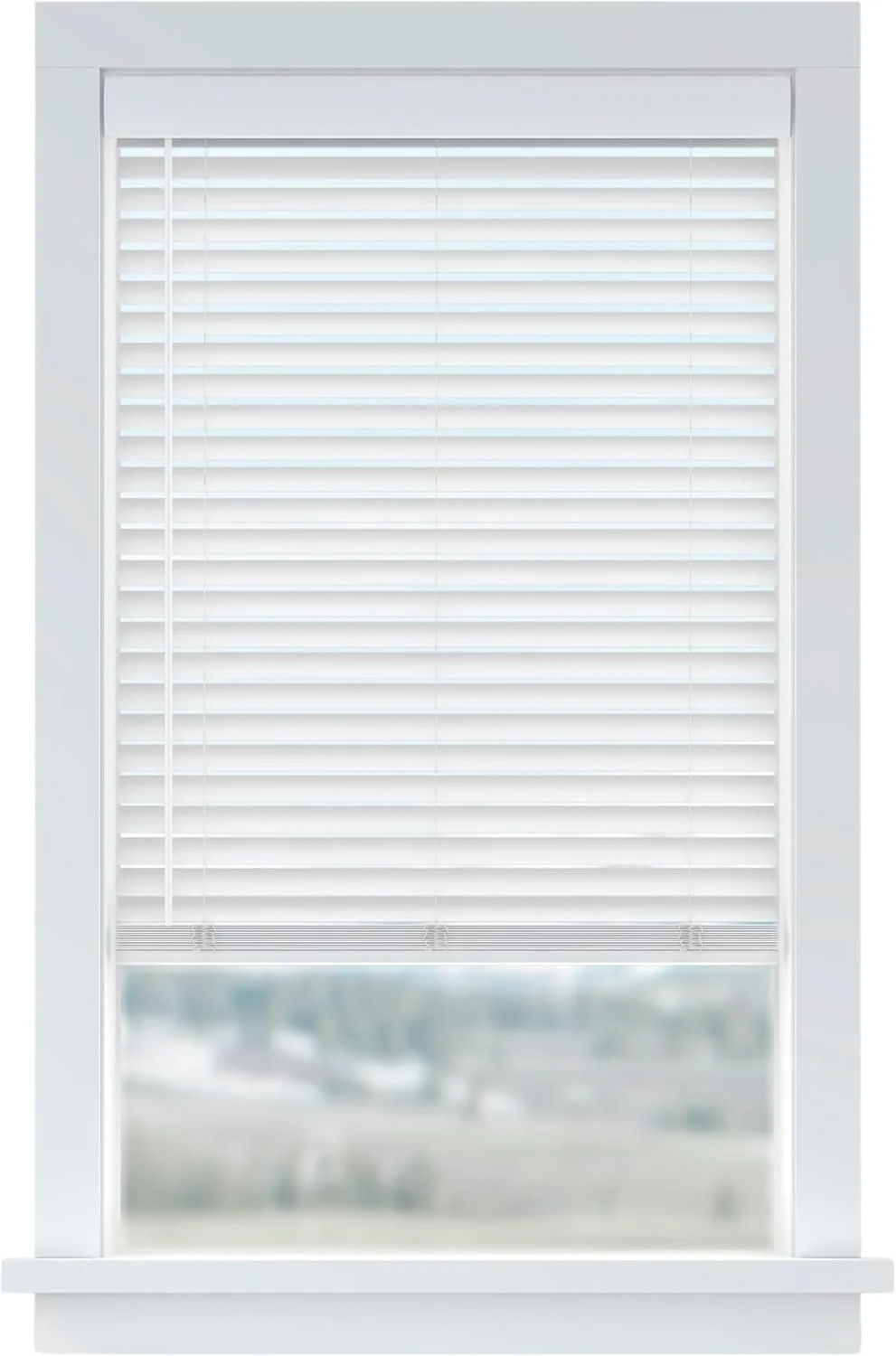 |
LEVOLOR Basics Cordless Faux Wood Blinds – $49.99 The same Trim+Go-style bracket and valance hardware this guide walks through, in a cordless 2-inch slat blind.
|
Measuring for Inside Mount vs. Outside Mount
Before you touch a drill, decide on mount type – it changes both the measurement and where the brackets go. If you haven’t measured your window yet, our 3-point measuring guide covers this in more depth; the short version for Levolor blinds specifically is below.
Inside Mount
Inside mount sits the blind inside the window frame for a flush, built-in look. Measure the width at the top, middle, and bottom of the opening and use the narrowest of the three – window frames are rarely perfectly square. Levolor’s finished inside-mount blind arrives about 1/2 inch narrower than the size you order, which is intentional clearance for the brackets, not a manufacturing error.
Outside Mount
Outside mount hangs the blind on the wall or trim above the window, covering the full opening. It’s the better choice when the frame is too shallow for brackets or you want to make a small window look larger. Order the blind 2 to 4 inches wider than the window opening so it overlaps the frame on both sides and blocks light gaps at the edges.
Installing the Mounting Brackets
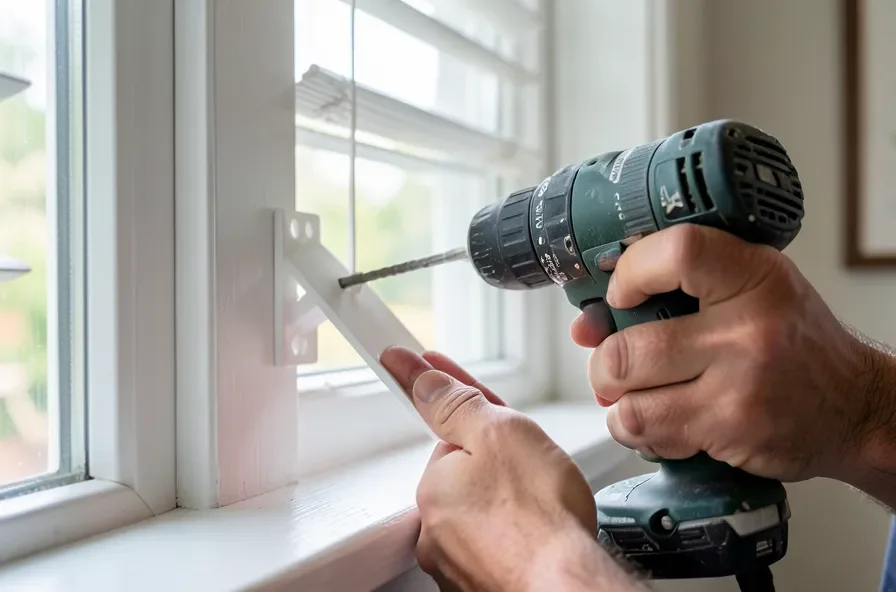
Hold the paper template (or the headrail itself) against the frame, level it, and mark the screw holes at each end. Brackets need to sit flush against a flat surface – don’t mount directly onto curved or rounded molding, or the blind won’t sit level. Pre-drill each mark with the 1/16-inch bit, then drive two screws per bracket; Levolor brackets are designed for two-screw attachment, and a single screw won’t hold the headrail’s weight securely over time.
If a window handle, lock, or trim detail is in the way of a flush bracket, Levolor kits include a spacer block that adds about 3/8 inch of clearance behind the bracket. Use exactly one spacer block per bracket – stacking two or more is a real failure point, since it flexes the bracket enough that the headrail can pop loose. For any blind wider than 36 inches, install the included center support bracket as well, spaced evenly between the two end brackets and positioned clear of the lift cords or ladder tape so it doesn’t interfere with operation.
Attaching the Headrail and Valance
With both brackets (and the support bracket, if used) level and secure, snap the headrail into the brackets from the front until you hear or feel it click into place on both ends. Give it a gentle downward tug to confirm it’s seated – a headrail that isn’t fully clicked in is the most common reason a new blind looks crooked on day one.
To finish with the valance: lay it face-down on a flat surface and clip the valance clips evenly along the back, then hook those clips onto the front lip of the headrail to hide the hardware. Slide the end caps onto both sides of the valance last – they snap over the exposed ends and give the installation its finished look.
Operating and Adjusting Your New Blinds
Turn the wand to rotate the slats open and closed for light control, and use the wand or cordless lift strap (depending on your model) to raise and lower the blind. Cordless Levolor blinds use an internal spring lift instead of a pull cord, which is why they sometimes need a tension adjustment after a few months of use, especially on wider blinds.
To adjust it, locate the tension adjustment slot in the end of the headrail (opposite the wand side), insert a flathead screwdriver, and turn it clockwise to increase resistance or counterclockwise to loosen it. Test by raising and lowering the blind a few times after each adjustment rather than cranking it all at once – small turns are easier to dial in correctly.
Troubleshooting Common Installation Problems
A blind that hangs crooked almost always traces back to one of two things: a bracket that wasn’t actually level when you drilled it, or a headrail that clicked in on one end but not the other. Pull the headrail back off, re-check both brackets with the level, and re-seat it – it’s faster than trying to shim a crooked install after the fact.
If the blind won’t stay raised, that’s a tension problem on cordless models, not a bracket problem – work through the tension adjustment steps above rather than re-drilling anything. And if the slats won’t tilt fully closed, check that the wand is turning freely and that nothing (a spacer block, a bracket screw) is pinching the tilt mechanism inside the headrail; that’s a common side effect of overtightening the mounting screws.
One more thing worth checking before you call the install done: on an outside mount, confirm the headrail is actually centered over the window opening and not just centered on the brackets – it’s an easy measurement to get backwards when you’re marking bracket positions freehand instead of with the template.
Frequently Asked Questions
How do you install faux wood blind brackets?
Level and mark the bracket positions using the paper template, pre-drill each mark with a 1/16-inch bit to prevent splitting the trim, then attach each bracket with two screws. Add a spacer block only if something behind the bracket is blocking a flush fit, and add a center support bracket for any blind wider than 36 inches.
Is it hard to install faux wood blinds?
No – Levolor’s Trim+Go system is designed for a first-time DIYer with basic hand tools. The parts most people get wrong are skipping the level and skipping the pilot hole, not the bracket mechanism itself, so slowing down on those two steps solves most installation problems.
How do you attach the valance on Levolor faux wood blinds?
Clip the valance clips to the back of the valance, spaced evenly along its length, then hook them onto the front of the installed headrail so the valance hangs down and hides the brackets and cords. Finish by snapping the end caps over both exposed ends of the valance.
How do you adjust the tension on Levolor cordless faux wood blinds?
Find the tension adjustment slot at the end of the headrail, turn it clockwise with a flathead screwdriver to increase resistance or counterclockwise to reduce it, and test the lift after each small adjustment until the blind holds its position smoothly.
Final Thoughts
Most Levolor faux wood blind installs go wrong at the measuring or bracket-leveling step, not the headrail snap-in – take the extra few minutes there and the rest of the install is genuinely quick. Once it’s up, a quick wipe-down keeps the slats looking new; our cleaning guide covers that if you need it down the road.
Sponsored / affiliate links. As an Amazon Associate I earn from qualifying purchases. I may earn additional commission from eligible campaigns.