5mm vs 1/4 Plywood: Why They’re Not Actually the Same Thickness
5mm plywood and 1/4 inch plywood are often treated as interchangeable, but they are not the same thickness. A true 1/4 inch measures 0.250 inches (6.35mm), while metric 5mm plywood measures 0.197 inches – a gap of about 0.053 inches. That sounds small, but it is enough to leave a dado groove loose, throw off a cabinet reveal, or jam a router jig built for the wrong fraction. Here is what each thickness actually measures, where “5mm” and “1/4 inch” get confused at the store, and how to check what you actually bought before you cut.
5mm vs 1/4 Plywood: The Real Thickness Numbers
On paper, 5mm and 1/4 inch plywood look close enough to swap. In practice they are two different standards that only sometimes land on the same actual thickness.
- True 1/4 inch = 0.250 inches = 6.35mm. This is the theoretical inch measurement a plan or a router bit is sized around.
- Metric 5mm plywood = 0.197 inches, about 13/64 inch. This is the actual, measured metric thickness common on imported and Baltic birch-style plywood.
- The gap between a true 1/4 inch and true 5mm is roughly 0.053 inches – small on a tape measure, but significant once a bit or a groove is cut to one exact number.
Here is the part that trips up most people: hardware-store plywood labeled “1/4 inch” is not always a true 0.250 inches. Softwood plywood sold in the US is manufactured and sanded within a standard tolerance, and nominal 1/4 inch panels commonly measure closer to 0.200 to 0.220 inches in practice – nearer to 5mm than to a true quarter inch. So a sheet stamped “1/4 inch” at a home center and a sheet stamped “5mm” at a specialty or import supplier can land within a few thousandths of each other, while a panel actually milled to a true 0.250 inches (more common in cabinet-grade hardwood plywood) will measure noticeably thicker than either. The only way to know for certain is to measure the actual sheet in your hands, not trust the label printed on it.
Best Way to Check Your Actual Thickness
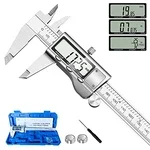 |
Stainless Steel Digital Caliper, 6 Inch – $21.98 Switches between inches, millimeters, and fractions with one button, so you can check whether your plywood is a true 1/4 inch or actually 5mm before you cut a dado.
|
Why This Small Difference Actually Matters
A few hundredths of an inch will not matter for a rough shelf, but it matters in a handful of specific situations that come up constantly in shop work.
- Dado grooves: A standard 1/4 inch dado stack or router bit cuts a groove sized to a true 0.250 inches. If your actual panel measures 0.197 to 0.22 inches, either true 5mm or an undersized “1/4 inch” sheet, the plywood will sit loose in that groove and can rack or rattle over time.
- Cabinet backs and rabbets: Many cabinet plans size the rabbet around a specific nominal thickness. A 0.05 inch gap across a wide cabinet back changes how flush the panel sits and can leave a visible reveal or a proud edge.
- Hardware and inserts: T-nuts, hinge cups, and slide-in hardware sized for a true 1/4 inch slot can bind or rattle if the panel is actually 5mm.
- Imported vs. domestic sheets: Baltic birch and most imported plywood are cut to true metric sizes (3mm, 6mm, 9mm, 12mm, 18mm), not to inch fractions. If a plan calls for “1/4 inch plywood” and you buy Baltic birch, you are actually working with 6mm (0.236 inches), which is closer to a true 1/4 inch than 5mm is, but still not identical to either.
5mm Plywood: Best Uses and Characteristics
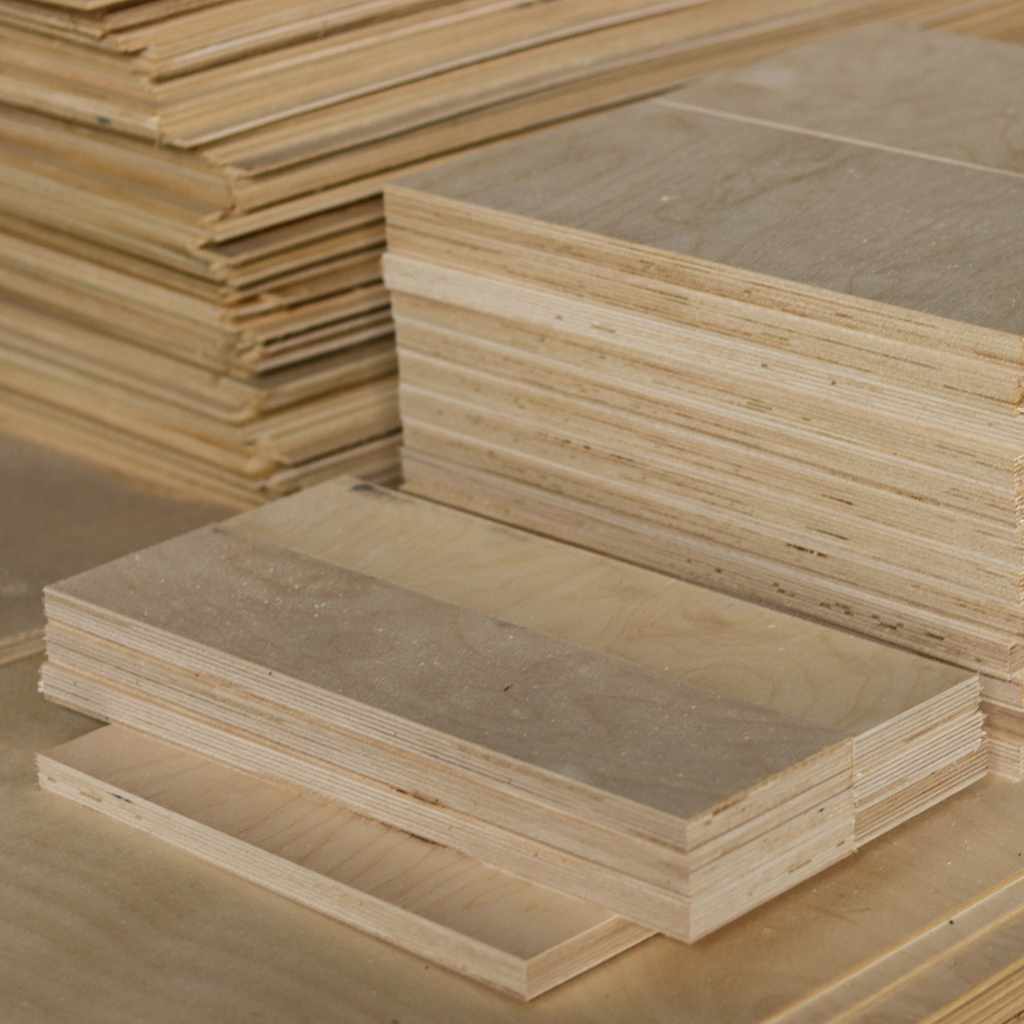
5mm plywood (0.197 inches actual) is thin enough to flex without cracking, which is exactly what makes it useful. It is common in Baltic birch and other import plywood lines, and it is the thickness you will most often find sold specifically by millimeter rather than by fraction.
- Flexibility: 5mm plywood bends around curved forms and jigs without a steam box, which makes it a go-to for bent-lamination shop projects and curved drawer fronts.
- Weight: A full 4×8 sheet of 5mm Baltic birch weighs noticeably less than the same sheet in 3/4 inch, which matters for anything that gets carried, shipped, or mounted overhead.
- Consistent core: Baltic birch 5mm typically has more, thinner plies than a comparable domestic softwood sheet, so the edge is void-free and takes a clean finish without filler.
- Splitting risk: At 0.197 inches, there is not much material to grab a screw thread. Pre-drilling and using thinner fasteners is worth the extra minute.
5mm shows up most often in model making, drawer bottoms, box and case backs, RC and hobby builds, and as a light backing panel behind cabinetry where it never carries a structural load on its own.
1/4 Inch Plywood: When to Use It
1/4 inch plywood covers a wider range of actual thicknesses than 5mm does, from a slightly undersized 0.20 inches on some softwood sheets up to a true 0.250 inches on hardwood-grade panels. Whichever version you end up with, it carries more real strength than 5mm and holds a fastener noticeably better.
- Fastener holding power: The extra 0.03 to 0.05 inches over 5mm gives screws and staples more material to bite into, which matters for cabinet backs that get screwed to a wall cleat.
- Stiffness: 1/4 inch resists flex better than 5mm across the same span, so it is the safer default for anything that spans more than a few inches unsupported.
- Dado compatibility: A true 0.250 inch panel is the only one of the two that fits a standard 1/4 inch dado blade or router bit snugly, without shimming.
- Availability: Nominal 1/4 inch is the more common stock size at general home-improvement stores, while true 5mm is more often a specialty-supplier item.
1/4 inch plywood is the better default for shelving, small furniture panels, cabinet backs that get screwed on rather than dadoed in, and any project where the panel needs to hold its own shape without a frame around it.
5mm vs 1/4 Inch Plywood: Side-by-Side Comparison
The table below compares true 5mm plywood against both the typical nominal “1/4 inch” sheet you’ll find at a home center and a true full-dimension 1/4 inch panel.
| Feature | 5mm Plywood | 1/4 Inch Plywood |
|---|---|---|
| Actual thickness | 0.197 in (5.0mm) | 0.20-0.22 in typical (nominal store sheet); 0.250 in (6.35mm) on a true full-dimension panel |
| Fits a 1/4″ dado cleanly | No – about 0.05 in undersized | Only if it’s a true 0.250 in panel |
| Strength / stiffness | Lower, more flexible | Higher, more rigid |
| Fastener holding | Prone to splitting, pre-drill | Holds screws and staples better |
| Typical source | Baltic birch, import suppliers | Home centers, lumberyards |
| Best uses | Model making, curved forms, drawer bottoms | Shelving, cabinet backs, small furniture |
The practical takeaway: if a plan or a joint depends on an exact 1/4 inch, do not assume a sheet labeled “1/4 inch” is actually 0.250 inches, and do not assume 5mm plywood will drop into that same slot either. Measure the sheet before you cut the joinery.
Cost and Workability
5mm plywood generally costs less per sheet than 1/4 inch, largely because it uses slightly less veneer, though Baltic birch grades can flip that if the core quality is higher. Both are widely stocked, so pricing comes down more to grade and species than to the thickness itself.
- Cutting: Both thicknesses cut cleanly with a hand saw, circular saw, or jigsaw. 5mm needs support under the cut line to keep it from flexing and chipping; 1/4 inch is rigid enough to cut straight without extra backing.
- Shaping and bending: 5mm bends around a curved jig with little effort. 1/4 inch can be bent too, but it usually needs a form, clamps, or a kerfed backer to get a tight curve.
- Fastening and gluing: 5mm splits more easily under a screw, so pre-drilling matters more. 1/4 inch holds fasteners with less risk of splitting and takes glue-up the same way any plywood does.
Choosing the Right Plywood for Your Project
Start with what the joint actually needs, not with which fraction sounds close to what you have on hand.
- Building into a 1/4 inch dado or groove: Buy a true full-dimension 1/4 inch panel (check with a caliper) or plan the groove width around whatever thickness you’re actually using.
- Bending, curved forms, or model work: 5mm plywood, ideally Baltic birch, gives you the flex without sacrificing much strength.
- Cabinet backs and shelving that need to hold shape: 1/4 inch, verified as close to a true 0.250 inches as you can find, gives more stiffness and better screw holding.
- Working from an imported or metric plan: Match the plan’s stated millimeters exactly rather than converting to the nearest inch fraction; a 5mm call-out and a “1/4 inch” substitute are not guaranteed to be the same board.
Frequently Asked Questions
Is 5mm plywood the same thickness as 1/4 inch plywood?
No. True 1/4 inch is 0.250 inches (6.35mm), and 5mm plywood is 0.197 inches, a difference of about 0.053 inches. Some nominal “1/4 inch” sheets are sanded down closer to 0.20-0.22 inches, which puts them nearer to 5mm, but the two labels are not a guaranteed match.
Why does nominal “1/4 inch” plywood sometimes measure less than 0.250 inches?
Softwood plywood is manufactured and sanded within a standard thickness tolerance, and thin panels commonly come out under their nominal size. That is why a caliper reading on a “1/4 inch” sheet often comes back closer to 0.20-0.22 inches instead of a full 0.250 inches.
Does the 5mm vs 1/4 inch difference actually matter for dado joints?
Yes. A standard 1/4 inch dado stack or router bit cuts to a true 0.250 inches. A panel that actually measures 0.197 to 0.22 inches will sit loose in that groove, which can rack or rattle over time unless you size the groove to your actual panel instead of the label.
How can I tell if my plywood is a true 1/4 inch or actually 5mm?
Measure it directly with a digital caliper rather than trusting the label or a tape measure. A true 1/4 inch panel reads 0.250 inches; 5mm plywood reads 0.197 inches; anything in between is an undersized nominal “1/4 inch” sheet.
Is 6mm Baltic birch the same as 1/4 inch plywood?
Not exactly, but it is closer than 5mm. 6mm measures 0.236 inches, nearer to a true 0.250 inches than 5mm’s 0.197 inches, but still about 0.014 inches under a full 1/4 inch. It is close enough for most non-critical joints but still worth checking before a tight dado.
Final Thoughts
5mm and 1/4 inch plywood are close enough to cause real mix-ups but not close enough to swap blindly. A true 1/4 inch is 0.250 inches, 5mm is 0.197 inches, and a typical hardware-store “1/4 inch” sheet often lands somewhere in between. For anything that depends on an exact fit, a dado groove, a rabbet, or hardware sized to a specific fraction, measure the actual panel with a caliper before you cut. For everything else, either thickness works as long as you pick it for the job’s flexibility and strength needs rather than for the label on the sheet.
Sponsored / affiliate links. As an Amazon Associate I earn from qualifying purchases. I may earn additional commission from eligible campaigns.