How to Secure Plywood to a Roof Rack: Weight Limits and Strap Setup
To secure plywood to a roof rack, keep the load within your vehicle’s roof weight limit, lay the sheet flat on the crossbars, and pull at least two straps tight around the sheet and the bars. Use buckle-style straps rather than bungee cords, and drive slowly.
Most guides jump straight to knots and strap counts. The step that actually decides whether a roof-rack haul is safe comes earlier: whether the load is inside the limit of your roof at all. A single 3/4 inch sheet is fine on most racks, while a stack of three can pass what many vehicle roofs are rated to carry while moving. The sections below cover the weight math, the strap setup, and the overhang rules that catch people at the lumberyard exit.
If you are still deciding how to get the sheet home, our guides on moving plywood without a truck and hauling it in a pickup compare the other options. This page is only about the roof.
The Short Version: What a Safe Roof-Rack Setup Looks Like
Best Roof Rack Strap Pick
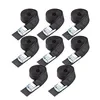 |
Cartman 1 in x 15 ft Cam Buckle Straps, 8 Pack, $21.99 A budget set of hand-tightened straps that gives you enough loops to strap a sheet or two to a set of crossbars.
|
- Weight: add up the sheets and stay under the lower of your rack rating and your vehicle roof rating.
- Position: sheet flat, centered side to side, resting on two crossbars, with something soft between the wood and the bars if they are bare metal.
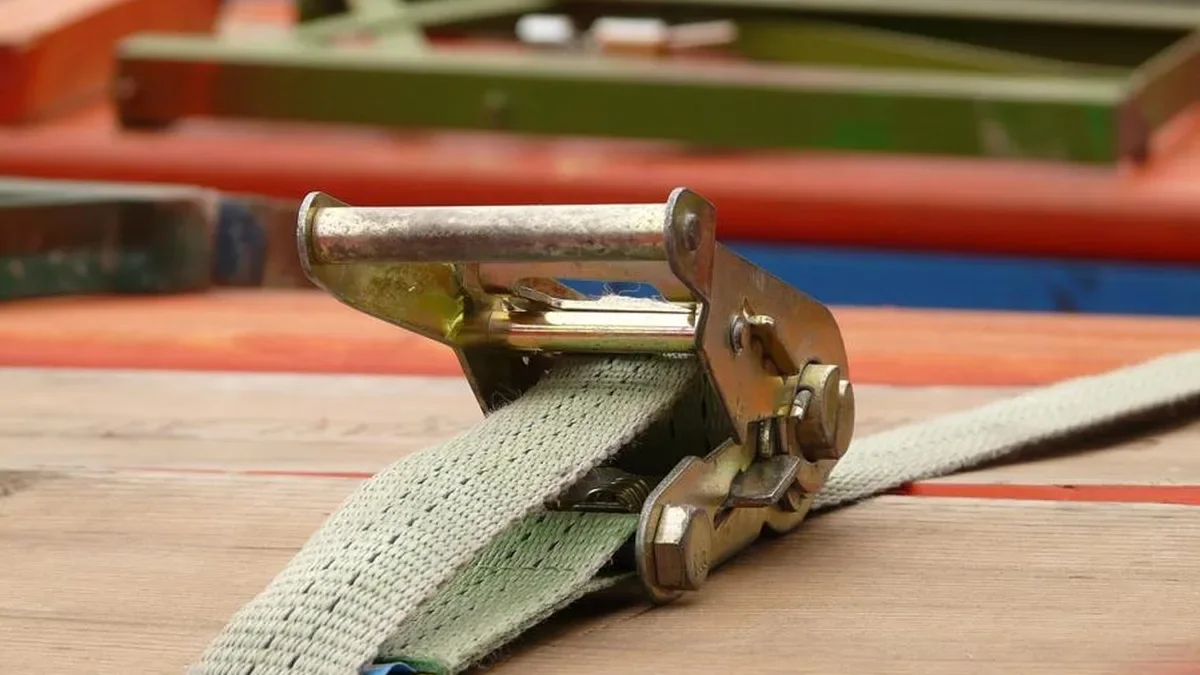
- Straps: at least two buckle-style straps, each going over the sheet and around a crossbar, pulled tight by hand or with a careful ratchet.
- Overhang: check how far the sheet extends past the bumper, because past 4 feet many states want a flag.
- Drive: slow, gentle braking, and stop within the first few miles to re-tighten.
Check the Weight First: Sheet Weight vs. Roof Limit
A roof rack has two limits, and people usually only look at one. The rack (the crossbars and towers or feet) carries a rating from its maker, and the vehicle roof carries its own rating in the owner’s manual. Published dynamic ratings, meaning the weight you can carry while driving, are commonly quoted in the region of 150 to 165 lb for Yakima crossbars and up to 220 lb for a pair of Thule WingBar, SquareBar or ProBar Evo bars. Vehicle roofs are often lower, with figures around 100 to 165 lb being typical. The rule that holds every time: use the lower of the two numbers. Static ratings, which apply when the car is parked, are often about double and do not apply on the road.
Many manuals also count the weight of the rack itself against the roof limit, so if the manual is not explicit, subtract the crossbars from your budget to be safe. Those ratings are typical published figures, not guarantees, and your own manual overrides everything on this page.
Here is what standard softwood 4×8 sheets weigh and how many fit under two example limits. Hardwood plywood and Baltic birch run heavier for the same thickness, and wet plywood weighs more than dry, so treat these as best-case numbers.
| Sheet thickness (4×8, softwood) | Approx. weight per sheet | Sheets under a 100 lb limit | Sheets under a 150 lb limit |
|---|---|---|---|
| 1/4 in | 22 lb | 4 sheets (88 lb) | 6 sheets (132 lb) |
| 3/8 in | 28.5 lb | 3 sheets (85.5 lb) | 5 sheets (142.5 lb) |
| 1/2 in | 40.5 lb | 2 sheets (81 lb) | 3 sheets (121.5 lb) |
| 5/8 in | 48 lb | 2 sheets (96 lb) | 3 sheets (144 lb) |
| 3/4 in | 61 lb | 1 sheet (61 lb) | 2 sheets (122 lb) |
| 1-1/8 in | 84.5 lb | Not on a 100 lb roof | 1 sheet (84.5 lb) |
Sheet weights are from the Inch Calculator plywood weight chart. The counts are our own arithmetic: sheets times weight, kept under the limit with no allowance for the rack. If you are near the line, buy the sheets cut down at the store or make two trips. Sheeting in MDF instead? It runs heavier than plywood, so see our plywood vs MDF weight chart before you count sheets.
The Myth About Rack Ratings
The number on the crossbar box is not your limit. A platform rack rated for several hundred pounds can still be bolted to a car roof that is rated for far less, and the roof is what bends or dents. Before you load, open the owner’s manual and look under roof, roof rack or cargo. If it gives no number, that is a reason to keep the load light, not a reason to assume it is fine.
Ratchet Straps, Cam Buckle Straps, or Rope
Any of the three can hold a sheet if used correctly, but they behave differently on a roof.
| Option | Strengths | Watch out for |
|---|---|---|
| Cam buckle straps | Tightened by hand, so it is harder to over-tighten; quick to adjust; easy on thin sheets and paint | Can slip if wet or under-tightened, so pull hard and check them |
| Ratchet straps | Very high tension; do not slip once locked | Easy to over-tighten, which can crush edges of thin plywood or press the rack into the roof |
| Rope with a trucker’s hitch | Cheap; the hitch gives you leverage | Knots take practice; rope can loosen; harder to check tension by feel |
| Bungee cords | Convenient | Stretch, lose tension and can let the load shift; not suitable as the main hold-down |
The table reflects general practice rather than a tested ranking. Whatever you choose, check the strap’s working load limit if it prints one. Many consumer straps print only a break strength, which is a much bigger number than what the strap should be loaded to. On very light loads like a single sheet this rarely matters, but it is one reason not to lean on cheap straps for heavy stacks.
How to Load and Strap the Sheet, Step by Step
- Pad the bars. Lay a moving blanket, foam or a folded towel across the crossbars so the sheet does not scratch or slide on bare metal.
- Lift with a helper. A 4×8 sheet is awkward and, on a tall vehicle, easy to drop. Get someone to hold the far end while you slide it up.
- Lay the sheet flat and centered. Rest it across both crossbars, not just one, with roughly equal overhang front and back.
- Run two straps over the sheet. Each strap goes over the wood and around a crossbar (not around the roof), then back to the buckle. Keep the buckle off the plywood face if you can.
- Pull them tight. Tight enough that pushing on the sheet moves the whole car, not the sheet.
- Secure the loose ends. Tuck or tie off the tails so they cannot flap onto the paint or come loose and whip.
- Add a third point if the sheet is long. Some drivers run an extra strap or line from the front edge to a secure point to stop the front edge lifting; this is general practice, not a legal requirement.
- Shake test. Grab the sheet and try to move it. Any slide means re-strap it before you leave.
Why fuss with the front edge? A flat sheet can catch wind like a wing. The faster you go, the more lift it may feel, and the only things holding it down are the straps. That is the reason for slow driving and a tight shake test, not the exact strap count.
Overhang and Flag Rules to Know Before You Leave
An 8 ft sheet on a compact car roof will hang past the front, the back or both. Rules vary by state and by whether the vehicle is a commercial one, so check your own state DMV. Two examples we checked: California requires a 12 inch red or fluorescent orange flag on cargo that extends more than 4 feet from the rear bumper, two red lights at night, and does not allow driving with an unsecured load that is a safety hazard. Virginia requires a red flag at least 12 inches by 12 inches on the end of a load extending more than four feet beyond the rear for non-commercial vehicles. Sources: the California DMV driver handbook and Virginia Code 46.2-1121.
Federal cargo-securement rules apply to commercial vehicles; a private car is normally governed by state law, which in general requires any load to be secured so it cannot shift or fall. We have not checked every state, so treat this as a starting point and confirm locally. Also keep the sheet from blocking your view: the front edge should not reach out over the windshield.
Driving With Plywood on the Roof
- Slow down. There is no single safe speed for every vehicle and load. Drive noticeably below highway speed on the first trip and go slower in crosswinds or rain.
- Re-check after a few miles. Straps settle and webbing stretches. Pull over in a safe place within the first few miles and re-tighten.
- Brake early and turn gently. The load adds height and a wind sail, so sudden moves are harder on the rack.
- Skip windy days. If the forecast shows strong gusts, cut the sheet down and load it inside instead.
- Mind the height. The vehicle is taller now. Garages, drive-throughs and low branches do not care what is on top.
Plywood on a roof can also hum. A half twist in each strap between the sheet and the bar is a common way to cut the noise, and padding under the sheet helps too.
When Not to Use the Roof Rack
Skip the roof when the load is over your limit, when the sheet is wet or warped, or when you have no crossbars and would be relying on straps through the doors. Alternatives: have the sheet cut into smaller pieces at the store so it fits inside a hatchback, rent a truck, or use a small trailer. Our guide to transporting 4×8 plywood lays out those choices side by side.
Common Mistakes to Avoid
- Trusting the rack rating and never looking up the roof rating.
- Using bungee cords as the only hold-down.
- Letting one strap carry the load, so a single failure frees the sheet.
- Forgetting the re-tighten stop after the first few miles.
- Leaving a long tail on a strap to flap in the wind.
- Ignoring overhang and flag rules because the drive is short.
Frequently Asked Questions
How do I secure plywood on a roof rack?
Lay the sheet flat and centered across both crossbars, then run at least two buckle-style straps over the sheet and around the bars, pulled tight. Give the sheet a shake, drive slowly, and stop within a few miles to re-tighten.
How many sheets of plywood can I put on a roof rack?
It depends on the lower of your rack rating and your vehicle roof rating. As an example, under a 150 lb limit you could carry two 3/4 inch softwood sheets at about 61 lb each, or three 1/2 inch sheets at about 40.5 lb each. Check your manual, because many roofs are rated lower.
Can I use bungee cords for plywood?
Bungee cords are not a good main hold-down because they stretch and can lose tension. Use cam buckle straps, ratchet straps or rope with a proper hitch, and keep bungees for small secondary tasks.
Are ratchet straps or cam buckle straps better for plywood on a roof?
Both work. Cam buckle straps are tightened by hand, so they are harder to over-tighten on thin sheets or a roof, while ratchet straps hold higher tension but can crush edges if pulled too hard. Follow the strap working load limit and re-check after a few miles.
Do I need a flag on plywood hanging off my car?
Many states require a red or fluorescent flag when a load extends more than about 4 feet past the rear of the vehicle, and lights at night. Rules vary, so check your state DMV before you drive.
Conclusion
A roof rack can carry plywood safely if you respect the weight limit, strap the sheet at more than one point, and slow down. Start with the arithmetic in the table, buy sturdy buckle straps, and re-check after the first few miles. If the load is too heavy or too long for your roof, cut it down or use a truck or trailer instead.
Sponsored / affiliate links. As an Amazon Associate I earn from qualifying purchases. I may earn additional commission from eligible campaigns.
 Baltic Birch Plywood Sheets Box of 45 - Laser Engraving Cutting, Scroll Saw Nature Veneer Color, Stronger Than Basswood, A/A Grade,12 x 12 x 1/8”, 3mm Thickness Perfect for Wood Burning
 Double Side Plywood Sheets 4mm or 5mm for Painting Stenciling Wood Burning and Decoration 150x220mm 220x300mm 300x450mm Art Project Wood