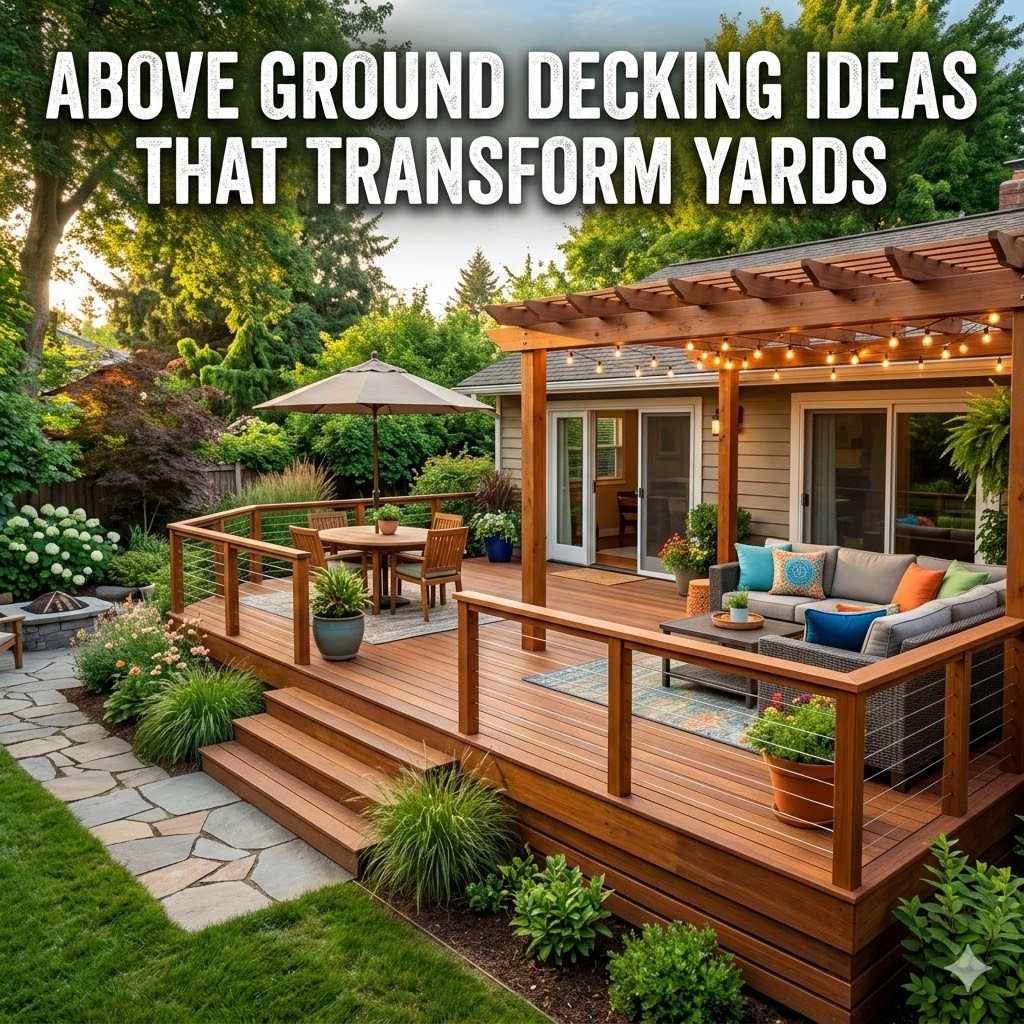
Above Ground Decking Ideas That Transform Yards
Thinking about building a deck but not sure where to start, especially with an above-ground setup? It might seem tricky, but lots of folks find it a bit confusing. Don’t worry, though!
We’re here to make it super simple. This guide will walk you through everything step-by-step. Get ready to discover amazing Above Ground Decking Ideas That Transform Yards and make your outdoor space truly special.
Transforming Your Yard With Above Ground Decking
Creating an outdoor living area with above-ground decking can really change how you use your yard. It’s a popular choice because it works well even if your land isn’t perfectly flat or if you have a sloped yard. This type of decking gives you a solid, level surface to relax, entertain, and enjoy the outdoors.
You can add beautiful features like built-in seating, planters, or even outdoor kitchens. These ideas help make your yard more functional and attractive.
Building an above-ground deck often starts with understanding the need for a stable platform. Many homes have a slight slope or uneven ground, which makes traditional ground-level decks difficult to build. Above-ground decks use support posts to elevate the deck structure, creating a level surface.
This makes them a practical solution for many different yards. They also offer a unique design opportunity, allowing for creative approaches to landscaping and outdoor living.
One of the biggest benefits of an above-ground deck is the flexibility it offers in design. You are not limited by the natural contours of your land. This means you can create decks that wrap around trees, step down to different levels, or even incorporate storage underneath.
The support system itself can be made a feature, with decorative post caps or interesting railing designs. This approach allows homeowners to maximize their usable outdoor space, turning an awkward or underutilized area into a functional and beautiful extension of their home.
Here are some key advantages of choosing above-ground decking:
- Adaptability to Sloping Yards: Above-ground decks are ideal for yards with significant slopes or uneven terrain. They can be built at various heights to create a level outdoor living space. This avoids costly excavation and grading work. The support posts can be adjusted to compensate for the slope, ensuring a safe and stable structure. This makes them a more economical and practical choice for many homeowners.
- Enhanced Views and Airflow: Raising a deck off the ground can offer improved views of your surroundings. It also promotes better airflow beneath the deck, which helps prevent moisture buildup and rot. This can extend the lifespan of your decking materials. The elevated position can make the space feel more open and airy.
- Customization Options: Above-ground decks offer a blank canvas for creativity. You can design them to fit your specific needs and aesthetic preferences. Features like built-in seating, planters, lighting, and multi-level designs are easily incorporated. This allows for a truly personalized outdoor oasis.
- Increased Usable Space: By elevating your deck, you create a distinct outdoor room that extends your home’s living area. This space can be used for dining, lounging, entertaining, or even as a play area for children. It effectively increases the functional square footage of your property.
Designing Your Above Ground Deck
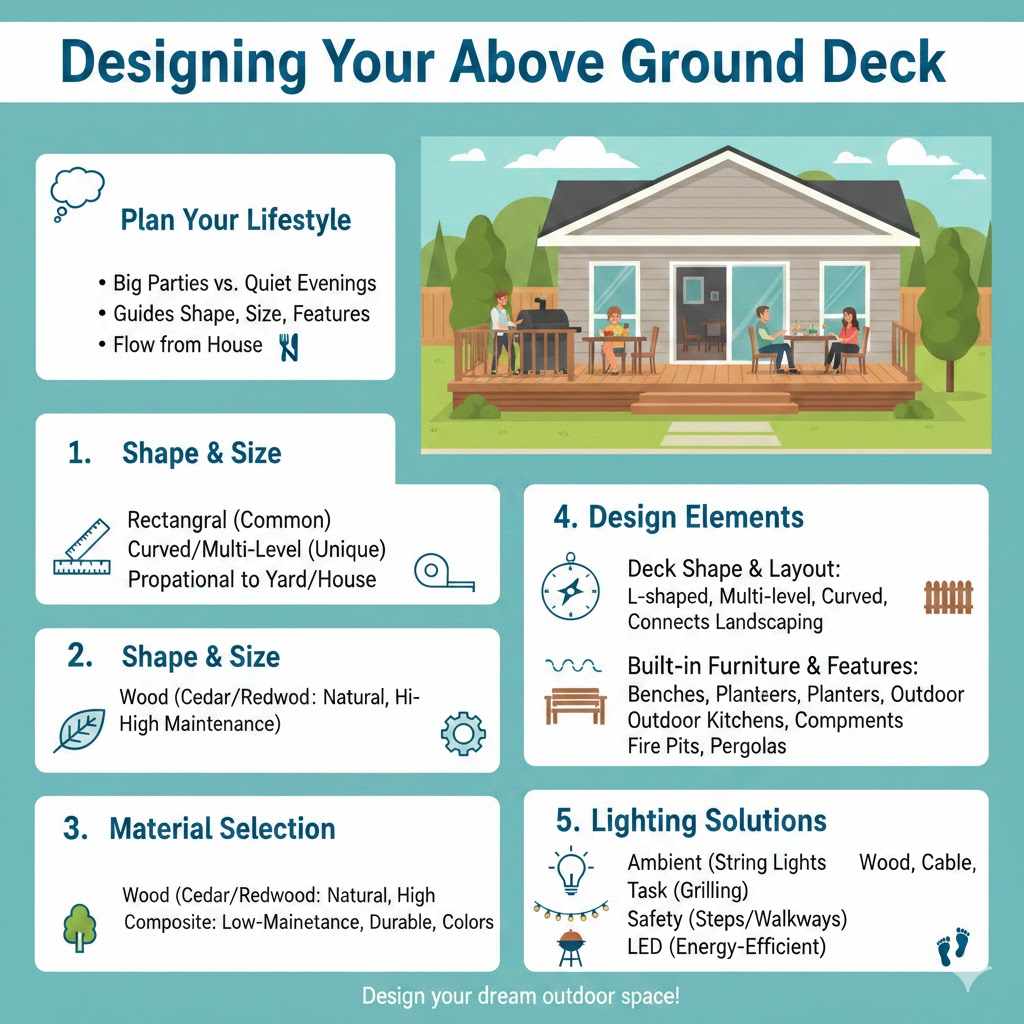
When you start planning your above-ground deck, think about how you want to use the space. Do you love hosting big parties, or do you prefer quiet evenings with family? Your lifestyle will guide the shape, size, and features of your deck.
Consider the flow from your house to the deck. A deck close to the kitchen or living room will be very convenient for serving food and drinks.
Think about the shape and size of your deck. Rectangular decks are common and straightforward to build. However, you might consider a deck with curves or multiple levels if you want something more unique.
The size should be proportional to your yard and house. A deck that’s too big can overwhelm a small yard, while one that’s too small might not serve your needs. Measure the space carefully before you start designing.
Material selection is also a big part of the design. Common choices include wood like cedar or redwood, or composite materials. Wood offers a natural look and feel but requires regular maintenance.
Composite decking is low-maintenance, durable, and comes in many colors and styles. The choice depends on your budget, desired look, and how much time you want to spend on upkeep.
Here are some popular design elements to consider for your deck:
- Deck Shape and Layout: Beyond simple rectangles, consider L-shaped or multi-level decks. These can define different areas for dining, lounging, or a hot tub. A curved deck can soften the look of your yard and create a more organic feel. Think about how the deck will connect with existing landscaping and pathways.
- Built-in Furniture and Features: Incorporating benches directly into the deck design saves space and looks very professional. Plan for planter boxes to add greenery and color. Outdoor kitchens, fire pits, or even pergolas can be integrated to create a complete outdoor living experience.
- Railing and Baluster Styles: Railings provide safety and are a key design element. Options range from traditional wood balusters to modern cable railings or sleek metal designs. Consider how the railing will complement your home’s architecture and the overall aesthetic you’re aiming for.
- Lighting Solutions: Outdoor lighting extends the usability of your deck into the evening. Consider ambient lighting with string lights, task lighting for grilling areas, and safety lighting for steps and walkways. LED lights are energy-efficient and offer a wide range of colors and styles.
Building Your Above Ground Deck Foundation
The foundation is the most critical part of any deck, especially an above-ground one. It needs to be strong enough to support the weight of the deck, furniture, and people. You’ll typically use concrete footings and sturdy posts to build this support structure.
The depth of your footings is important and depends on your local climate to prevent frost heave.
First, you’ll need to mark out the location of your deck and where the support posts will go. Dig holes for the concrete footings below the frost line. Pour concrete into these holes, making sure it’s level.
Once the concrete cures, you’ll attach post anchors. These will hold your support posts securely in place.
The posts themselves are usually made of pressure-treated lumber, which is resistant to rot and insects. They need to be plumb (perfectly vertical) and securely attached to the concrete footings. The height of these posts will determine how high your deck sits off the ground.
Be sure to check local building codes for specific requirements regarding footing depth, post size, and spacing.
Here’s a look at the typical foundation components:
- Footings and Piers: These are the underground supports that anchor your deck to the ground. They must extend below the frost line to prevent the deck from shifting. Concrete piers are common, offering a stable base for the posts. The size and number of footings depend on the deck’s size and the loads it will carry.
- Support Posts: These vertical members transfer the weight of the deck from the beams to the footings. Pressure-treated lumber is standard, but engineered posts or steel options are also available. The spacing of posts is crucial for distributing weight evenly and preventing sagging.
- Post Anchors and Connectors: These metal hardware pieces securely attach the posts to the footings and the beams to the posts. Using the correct type of galvanized steel connectors ensures a strong and durable connection that resists corrosion. Proper fastening is key to long-term stability.
- Beams and Joists: Beams are horizontal members that rest on top of the posts and support the deck joists. Joists are smaller beams that run perpendicular to the beams and support the deck boards. The size and spacing of beams and joists are determined by span tables and building codes to ensure structural integrity.
Decking Materials and Installation
Choosing the right decking material is a balance between aesthetics, durability, and maintenance. Wood, such as cedar, redwood, or pressure-treated pine, offers a classic look. Cedar and redwood are naturally resistant to rot and insects but can be more expensive.
Pressure-treated pine is a budget-friendly option but requires regular sealing and staining to protect it from the elements.
Composite decking is a popular alternative made from a mix of wood fibers and plastic. It’s highly durable, resistant to fading, staining, and scratching, and requires very little maintenance. Composite boards come in a wide variety of colors and wood-grain patterns, offering a premium look without the upkeep of real wood.
However, it can be more expensive upfront.
Installation involves attaching the deck boards to the joists. For wood decks, this is typically done with screws or nails. Many composite decking systems use hidden fastening systems, which create a clean, smooth surface without visible screw heads.
Ensure your boards are spaced correctly to allow for expansion and contraction, especially with wood.
Here are some material and installation considerations:
- Wood Decking: Natural woods like cedar and redwood are beautiful but require ongoing maintenance. Pressure-treated lumber is affordable and resistant to decay, but still needs protection. Regular cleaning, sanding, sealing, and staining will keep wood decks looking their best and extend their life.
- Composite Decking: Made from recycled materials and plastics, composite is low-maintenance and long-lasting. It resists fading, warping, and insect damage. Cleaning usually involves soap and water. Different brands offer various warranties, often 25 years or more, highlighting their durability.
- PVC Decking: A newer option, PVC decking is entirely plastic-based. It’s extremely durable, waterproof, and resistant to mold and mildew. It’s also very lightweight. While it offers excellent performance, it can sometimes have a less natural look than wood or composite.
- Installation Techniques: Whether using screws or hidden fasteners, proper installation is key. Ensure boards are square and have consistent spacing for expansion. Overhangs at the edges of the deck should be consistent. Following manufacturer guidelines is crucial for warranty purposes and deck longevity.
Creative Above Ground Decking Ideas
Beyond the basic platform, there are many ways to make your above-ground deck truly unique. Think about adding unique shapes or creating different functional zones. A multi-level deck can break up a large space and create distinct areas for dining and lounging.
You can also integrate landscaping elements directly into your deck design.
Consider adding built-in seating that follows the lines of your deck. This can be a simple bench along one edge or a wrap-around design. Planter boxes built into the deck can hold flowers, herbs, or small shrubs, bringing nature right to your seating area.
This integration makes the deck feel like a natural extension of your garden.
Outdoor kitchens are a fantastic addition for those who love to entertain. You can install a built-in grill, a sink, and counter space. Even a small bar area can transform how you host guests.
Don’t forget about lighting; it can create ambiance and make your deck usable long after the sun goes down.
Explore these inspiring ideas:
- Multi-Level Designs: A split-level deck can add visual interest and define separate outdoor rooms. For example, one level could be a dining area, while a lower level serves as a cozy lounge. This is especially effective on sloped yards where the levels can follow the natural grade.
- Integrated Planters and Seating: Building seating and planter boxes directly into the deck structure creates a seamless, built-in look. Use these to add pops of color with flowers or greenery. These features can also act as natural dividers between different areas of the deck.
- Outdoor Kitchens and Bars: For the avid entertainer, a deck is the perfect place for an outdoor kitchen. Include a grill, sink, and countertops. A dedicated bar area with seating can be a lively spot for friends and family to gather. Consider weather-resistant materials and proper ventilation.
- Unique Shapes and Curves: Move beyond the traditional square or rectangle. Curved decks can add a softer, more artistic feel to your yard. Organic shapes that flow with the landscape can create a truly distinctive outdoor space that stands out.
Elevating Your Outdoor Space With Decking Features
Adding special features to your above-ground deck can turn it from a simple platform into a true outdoor oasis. These elements enhance both the beauty and the functionality of your space. Think about how you want to spend time on your deck and select features that support those activities.
Whether it’s for relaxation, entertainment, or dining, there’s a feature to enhance it.
Consider adding a pergola or a shade sail to provide relief from the sun. These structures not only offer shade but also add architectural interest to your deck. They can be adorned with climbing plants or string lights for added charm.
A well-designed shade element makes your deck more comfortable for daytime use.
Outdoor lighting is another key feature that dramatically changes the mood and usability of your deck. Accent lighting can highlight plants or architectural details, while overhead lights provide general illumination for evening gatherings. Under-deck lighting can create a cozy glow beneath the structure, expanding its usable area.
Here are some popular features to consider:
- Pergolas and Shade Structures: Pergolas offer a defined overhead structure that can support climbing plants, string lights, or retractable canopies. They provide partial shade and create a beautiful focal point. Shade sails offer a more modern and flexible shading solution, allowing you to adjust coverage as needed.
- Outdoor Fireplaces and Fire Pits: A fireplace or fire pit is a fantastic way to extend the use of your deck into cooler evenings and create a cozy gathering spot. They add warmth, ambiance, and a focal point for outdoor living. Ensure proper safety clearances are maintained.
- Water Features: Integrating a small water feature, like a tabletop fountain or a wall-mounted waterfall, can add a soothing sound and visual appeal to your deck. It brings a sense of tranquility and nature to your outdoor retreat.
- Built-in Storage Solutions: Decks can incorporate hidden storage compartments within benches or along the edges. This is perfect for stowing away cushions, gardening tools, or outdoor games, keeping your deck tidy and clutter-free.
Popular Decking Materials Compared
When choosing materials for your above-ground deck, understanding their differences helps in making the best choice. Each material has its own look, feel, and maintenance requirements. Your decision will impact the overall cost, appearance, and how long your deck lasts.
Wood decking, like cedar and redwood, is classic. It’s beautiful and smells great, but it needs regular cleaning, sealing, and staining. Pressure-treated wood is a budget-friendly option.
It’s treated to resist rot and insects, but it still needs maintenance to look good and last a long time. These woods expand and contract with moisture, so spacing is important during installation.
Composite decking is made from wood fibers and plastic. It’s very durable and low-maintenance. It doesn’t rot, warp, or splinter.
Composite comes in many colors and textures, often mimicking real wood. It costs more upfront but saves time and money on upkeep over the years. Many composites have long warranties against fading and staining.
Here’s a comparison of common decking materials:
| Material | Pros | Cons | Maintenance | Typical Cost |
|---|---|---|---|---|
| Pressure-Treated Wood | Affordable, readily available, resistant to rot/insects | Can warp, splinter, requires regular maintenance | High (staining, sealing, cleaning) | $ |
| Cedar/Redwood | Natural beauty, insect/rot resistant, pleasant aroma | More expensive than pressure-treated, requires maintenance | Medium (sealing, cleaning) | $$ |
| Composite Decking | Durable, low-maintenance, resistant to fading/staining/warping | Higher upfront cost, can get hot in direct sun, less natural look | Low (occasional cleaning) | $$$ |
| PVC Decking | Extremely durable, waterproof, mold/mildew resistant, lightweight | Can be expensive, may have a less natural appearance | Very Low (occasional cleaning) | $$$$ |
The cost of materials can vary significantly. For example, pressure-treated pine might cost around $2-$4 per linear foot. Cedar or redwood could range from $4-$8 per linear foot.
Composite decking typically falls in the $5-$10 per linear foot range, with premium options going even higher. PVC decking can be similar to high-end composites.
Building Your Deck Safely
Safety should be the top priority when building any deck, especially an above-ground structure. Proper design, strong construction, and adherence to building codes are essential. This ensures your deck is a safe place for family and friends to enjoy for years to come.
First, make sure your foundation is solid. The concrete footings need to be deep enough for your region, and the posts must be securely attached. Railings are vital for preventing falls.
They should be at least 36 inches high and have balusters spaced no more than 4 inches apart to prevent children from slipping through. Every connection point should be reinforced with appropriate hardware.
Consider the weight your deck will need to support. This includes the weight of the structure itself, plus furniture, people, and snow load in winter. Overbuilding is often better than underbuilding when it comes to safety.
Always check local building codes and obtain any necessary permits before you start construction.
Key safety considerations include:
- Code Compliance: Building codes exist for a reason, primarily to ensure safety. They dictate things like footing depth, post size, joist spacing, railing height, and load-bearing requirements. Always research your local building department’s regulations and obtain permits if required.
- Structural Integrity: Use appropriate hardware, such as galvanized joist hangers and post anchors, to ensure strong connections. Properly size beams and joists for the intended spans and loads. A well-engineered structure is a safe structure.
- Railing and Baluster Spacing: As mentioned, railings are critical. They must be strong enough to resist lateral forces and meet height requirements. Baluster spacing is crucial to prevent small children from falling through. This detail is often overlooked but vital for safety.
- Surface Stability and Maintenance: Deck boards should be securely fastened and free of tripping hazards. Regular inspections can identify loose boards, rot, or other issues. Keeping the deck clean and free of debris also contributes to safety and longevity.
Above Ground Decking Ideas That Transform Yards
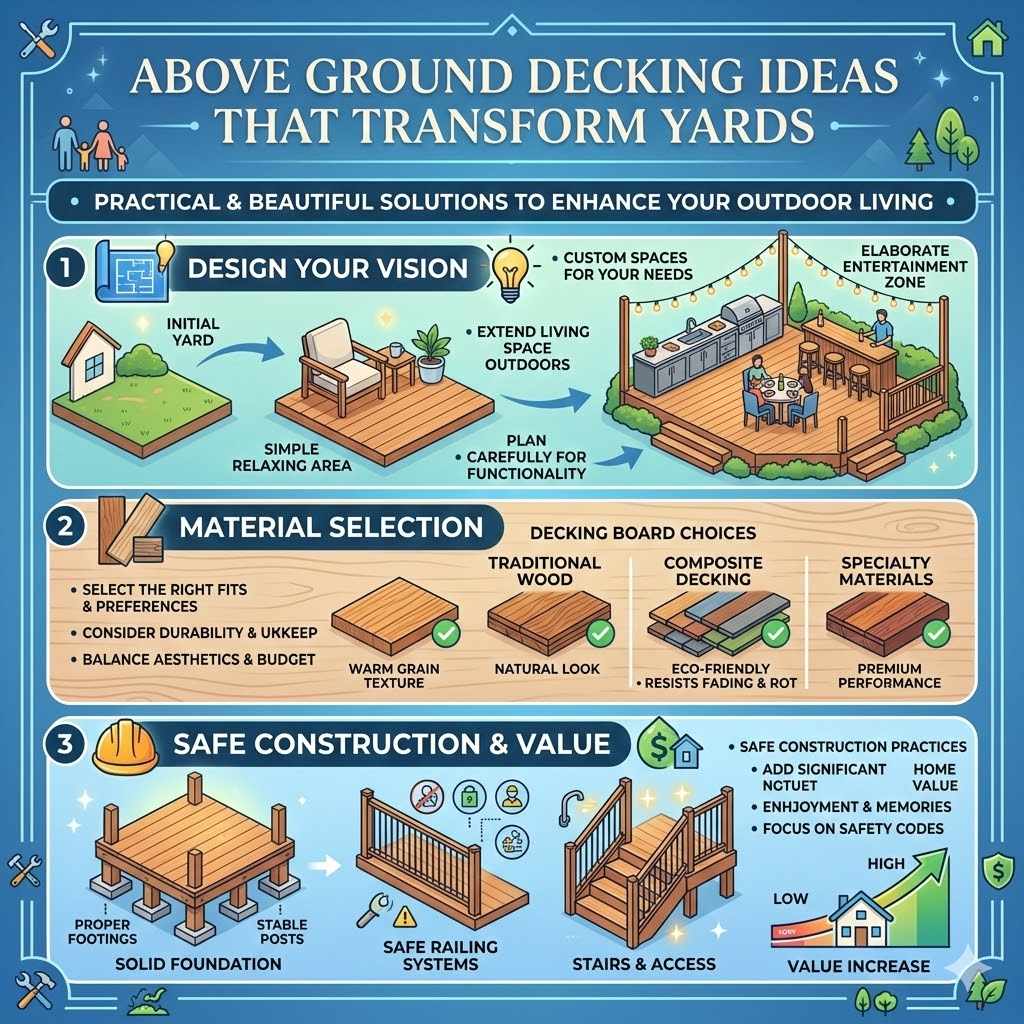
These Above Ground Decking Ideas That Transform Yards offer a practical and beautiful way to enhance your outdoor living. They provide a solid foundation for creating custom spaces, whether you need a simple area for relaxing or an elaborate spot for entertaining.
By carefully planning your design, selecting the right materials, and focusing on safe construction, you can build a deck that not only looks great but also adds significant value and enjoyment to your home. Think about the different ways you can use your new deck to extend your living space outdoors and create lasting memories.
Frequently Asked Questions
Question: What is the easiest way to build an above ground deck?
Answer: For beginners, kits or pre-fabricated deck sections can simplify the process, but careful planning and following instructions are still key. Using simpler shapes like rectangles is also easier than complex curves.
Question: How high can an above ground deck be?
Answer: Local building codes usually specify maximum heights for decks. This is often related to the need for railings and other safety features. It’s best to check with your local building department for specific regulations.
Question: Do I need a permit for an above ground deck?
Answer: In most areas, decks over a certain size or height require a building permit. This ensures the structure meets safety standards. Always check with your local building authority before you start construction.
Question: What are the cheapest above ground decking materials?
Answer: Pressure-treated lumber is generally the most affordable option for deck framing and decking boards. However, it requires more maintenance than composite materials.
Question: How do I make an above ground deck look good with my yard?
Answer: Integrate the deck with landscaping by adding planters, using plants to soften edges, and choosing materials that complement your home and garden. Multi-level designs can also help blend the deck into the yard’s contours.
Wrap Up
Creating an amazing outdoor space with above ground decking is achievable. You can transform your yard with smart design choices and the right materials. Focus on a strong foundation, safe railings, and features that fit your lifestyle.
Enjoy building a beautiful and functional deck that you’ll love for years to come.