How Long Does It Take Wood Ash to Decompose: Discover Now
Wood ash doesn’t decompose the way leaves or food scraps do, because it’s already the inorganic, fully-burned mineral leftover of wood – there’s no more organic carbon in it for microbes to break down. What actually happens is dissolution and dispersal: rain and soil moisture dissolve the water-soluble mineral salts (mostly potassium and calcium compounds), and within roughly one to a few months of being spread thinly outdoors, a visible pile of ash disappears into the soil. A thick, undisturbed pile in a dry spot can take considerably longer – sometimes a year or more – because there’s less moisture reaching the material to dissolve it.
That distinction actually matters for how you use it. Because ash isn’t organic matter breaking down and feeding soil biology the way compost does, it isn’t adding humus or feeding microbes – it’s a fast-acting mineral amendment, closer in effect to a quick-release lime and potash application than to compost. Understanding that difference is what keeps people from either wasting it or overusing it.
Wood Ash Composition
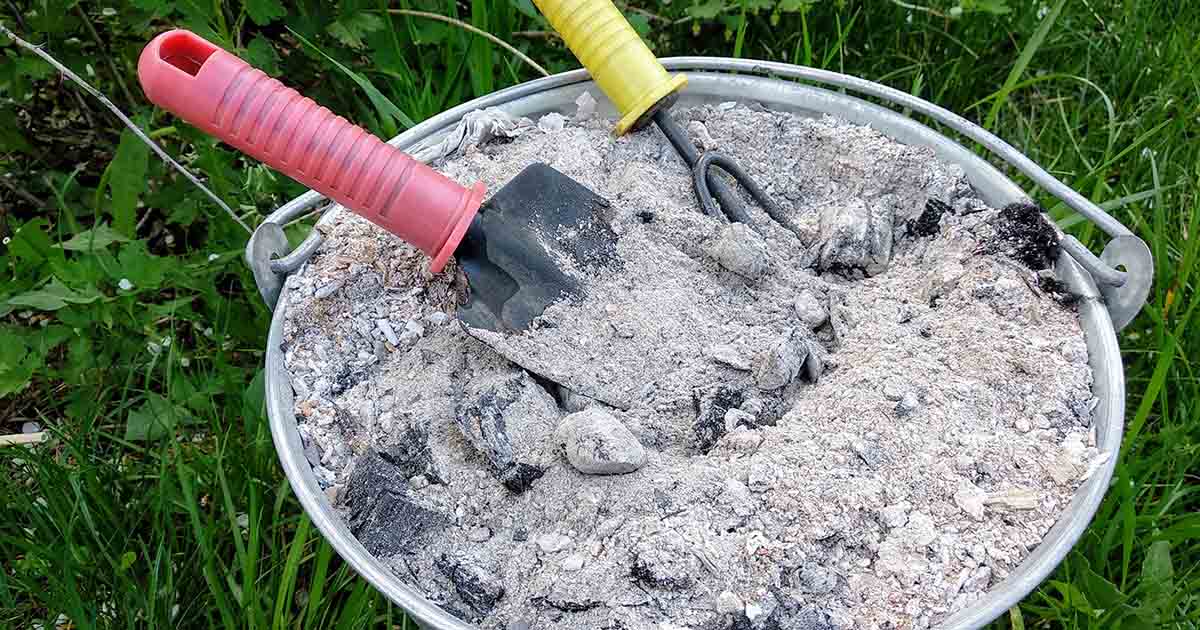
Handle Hot Ash Safely First
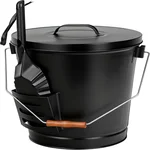 |
F2C Galvanized Ash Bucket – $19.98 Fireplace and wood-stove ash can hold hidden embers for days – a metal bucket with a tight lid is the safe way to store it before it ever reaches your compost or garden.
|
Wood ash is mostly mineral: calcium carbonate makes up the largest share, which is why ash raises soil pH the same way agricultural lime does. It also carries meaningful amounts of potassium and smaller amounts of phosphorus and magnesium, plus trace micronutrients like zinc, copper, and iron. What it does not have is nitrogen – combustion drives nitrogen off as gas, so wood ash alone won’t feed the leafy, fast growth nitrogen provides. Pair it with a nitrogen source if that’s part of your goal.
One real caution worth knowing: only use ash from clean, untreated wood. Ash from painted, stained, pressure-treated, or glued wood (including most scrap lumber and old furniture) can carry concentrated heavy metals and chemical residues that have no place in a food garden. Trees themselves can also take up trace cadmium from soil, so even clean wood ash should be used in moderation rather than piled on thickly.
Factors Influencing How Fast Ash Disperses
Since there’s no biological decomposition happening, the “how long” question is really about how quickly moisture dissolves and disperses the mineral salts into the soil around it:
- Moisture: rain and soil moisture are what actually dissolve the soluble potassium and calcium salts. A pile kept bone dry can sit largely intact for a long time; regular rain or irrigation disperses it much faster.
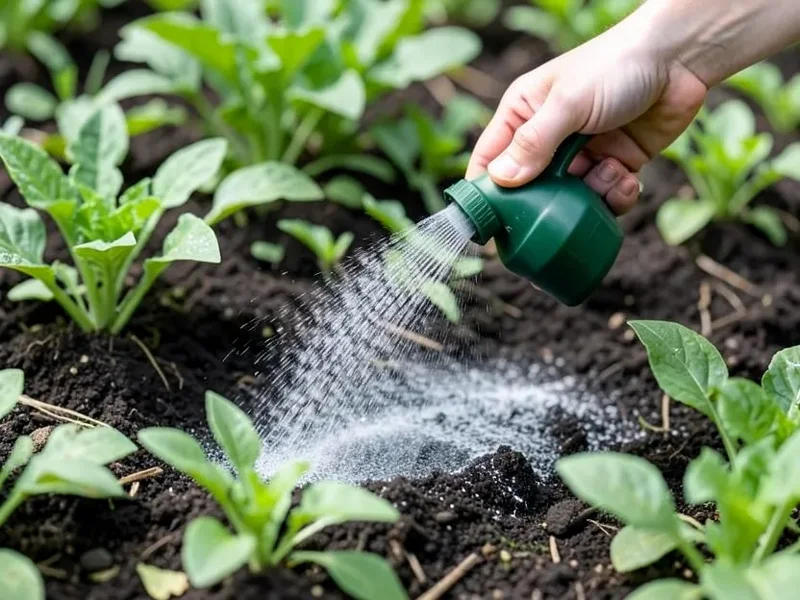
- Particle size and pile thickness: a thin, spread-out layer exposes far more surface area to moisture than a thick pile, so it disperses faster. This is also why a thin application is the actual safety practice, not just a suggestion – thick piles both disperse slowly and risk a much stronger local pH spike.
- Soil type: looser, well-drained soil lets water move through and carry dissolved minerals down and outward faster than dense clay, which holds water near the surface longer.
- Whether it’s tilled in: mixing ash into the top few inches of soil (rather than leaving it sitting on the surface) exposes it to more moisture and soil contact, speeding dispersal noticeably.
Does Wood Ash Really “Decompose”? Clearing Up The Confusion
This is worth addressing directly because search results on this topic often contradict each other. Strictly speaking, wood ash does not decompose – decomposition is a biological process that breaks down organic material, and ash has already been through combustion, which removed the organic carbon and left behind mineral residue. There’s nothing left for microbes to consume.
What people actually mean when they ask this question is: how long until the ash pile is gone and incorporated into the soil? That’s the dissolution and dispersal process described above, and it’s genuinely fast compared to composting organic matter – typically weeks to a few months for a thin application in a soil that gets regular moisture, versus the many months to years true composting of leaves or food scraps requires.
Using Ash To Speed Up An Actual Compost Pile
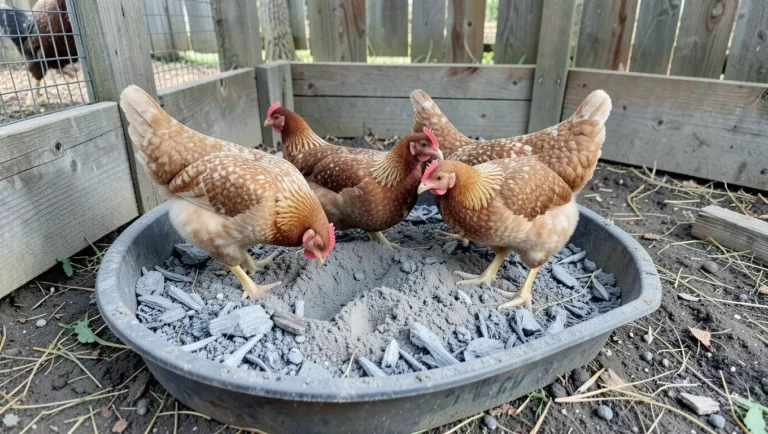
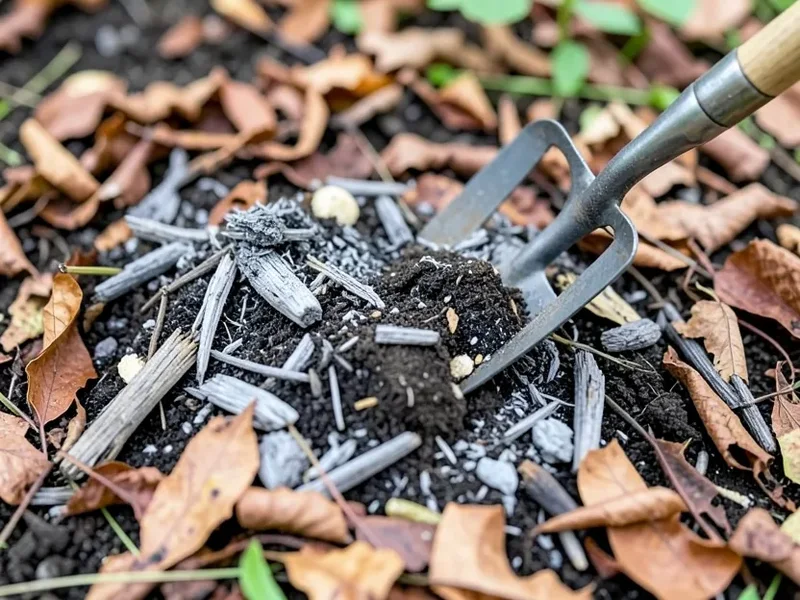
Wood ash can be a useful compost additive, but it works by adjusting the pile’s chemistry, not by decomposing itself. Compost tends to acidify as organic matter breaks down; a light dusting of ash mixed in periodically counteracts that and keeps pH closer to neutral, which is where compost microbes work fastest. Add it in thin layers between green (nitrogen-rich) and brown (carbon-rich) materials rather than dumping it in one spot, and keep the total amount modest – a large amount of ash can push compost pH too high and slow the very microbial activity you’re trying to encourage.
Common Myths About Wood Ash
The biggest myth is the one this article opened with: that ash slowly decomposes like organic matter over months or years. It’s mineral residue that disperses via moisture, not biological decomposition – a subtle distinction, but it’s why “just wait for it to break down” isn’t quite the right way to think about a thick, dry pile that isn’t going anywhere on its own.
A second myth is that wood ash is uniformly bad for soil – it isn’t, when used correctly and in moderation on soil that needs the pH lift. The real caveat is that it’s wrong for acid-loving plants like blueberries, azaleas, rhododendrons, and most conifers, where raising pH works against the plant. A third real (if less discussed) point: fresh wood ash is genuinely caustic while dry and airborne – it’s alkaline enough to irritate skin, eyes, and lungs, similar in kind to handling powdered lime. Gloves and a dust mask for handling dry ash aren’t overcautious, they’re standard practice.
Practical Applications Of Wood Ash
In the garden: spread thinly (a light dusting, not a visible layer) over soil that needs a pH lift, and work it in rather than leaving it sitting on the surface. Test soil pH first if you’re unsure – most vegetable gardens do fine in the 6.0-7.0 range, and ash pushes things upward, so it’s easy to overshoot on soil that’s already near neutral.
As a pest deterrent: a ring of dry ash around plants does discourage soft-bodied pests like slugs and snails, mainly because the fine alkaline particles are unpleasant for them to cross – but it loses that effect completely once wet, so it needs reapplying after rain or watering.
Around the house: ash’s mild abrasiveness makes it a reasonable glass and cookware cleaner in a pinch, and a thin layer on icy steps adds traction the way sand does. These are genuinely useful secondary uses, though none of them relate to how fast the ash itself disperses in soil.
Frequently Asked Questions
Does Wood Ash Decompose?
No, not in the biological sense – it’s already inorganic mineral residue left after wood’s organic carbon has burned off, so there’s nothing left for microbes to break down. What actually happens is that rain and soil moisture dissolve its soluble mineral salts and disperse them into the soil, typically within weeks to a few months for a thin application.
Can You Throw Away Wood Ash?
Yes, but let it cool fully first – ideally stored in a metal container for several days, since embers can smolder undetected for surprisingly long. Once cool, it can go in regular household trash, though using it in the garden or compost (in moderation) puts its nutrient content to better use than discarding it.
Are Wood Ashes Good For The Soil?
Yes, in moderation and on the right soil – wood ash adds potassium and calcium and raises soil pH, which benefits acidic soil growing plants that prefer neutral-to-alkaline conditions. It’s the wrong choice for acid-loving plants like blueberries and rhododendrons, and testing soil pH before applying prevents overshooting into soil that doesn’t need the adjustment.
What Are The Disadvantages Of Wood Ash?
Overuse raises soil pH too far, which can lock out nutrients for plants that prefer acidic conditions. Ash from painted, treated, or glued wood can carry heavy metals and chemical residues that don’t belong in a food garden. Fresh, dry ash is alkaline enough to irritate skin, eyes, and lungs if handled without gloves and a mask, and it turns slippery on wet or icy surfaces.
Conclusion
Wood ash doesn’t decompose the way compost does – it’s mineral residue that dissolves and disperses into soil through rain and moisture, usually within weeks to a few months when spread thinly. Use it sparingly on soil that actually needs a pH lift, skip it around acid-loving plants, only burn clean untreated wood if you plan to use the ash, and let it cool fully in a metal container before it goes anywhere near your garden or compost. Get those basics right and wood ash is a genuinely useful, fast-acting soil amendment – not a slow-release fertilizer, and not something that needs months of patience to “finish decomposing.”
Sponsored / affiliate links. As an Amazon Associate I earn from qualifying purchases. I may earn additional commission from eligible campaigns.