Acacia Vs Walnut Cutting Board: Essential Choice
For a beginner deciding between an acacia and a walnut cutting board, the choice often comes down to budget and color. Acacia offers great durability and a distinct, often lighter, grain at a more affordable price, while walnut provides unmatched deep, rich aesthetics and excellent food safety, though generally at a higher cost. Consider your kitchen style and budget to make the best choice.
Choosing the right wood for your cutting board can feel overwhelming when you’re starting out. You see beautiful boards online, but you wonder which one will actually last, stay safe for your food, and look good on your counter. Two woods that come up often are sturdy Acacia and luxurious Walnut. It’s tough to know which hardwood is truly worth your investment.
Don’t stress! As your woodworking mentor, I’m here to break this down simply. We will look at durability, cost, maintenance, and looks, side-by-side. By the end of this guide, you will know exactly which wood—Acacia or Walnut—is the perfect match for your home kitchen.
Why the Wood Type Matters for Your Cutting Board
A cutting board isn’t just a piece of wood; it’s one of the most used tools in your kitchen. The wood you choose impacts how long the board lasts, how much upkeep it needs, and, crucially, how safely you can prepare food on it. We look at many factors, but for cutting boards, three things rise to the top:
- Density and Hardness (Durability): This controls how easily the board gets deep knife grooves. Deeper grooves can harbor bacteria, so harder wood is usually better.
- Janka Hardness Rating: This standard test tells us exactly how hard a wood is to dent. We’ll use this for an objective comparison.
- Closed Grain Structure: Woods with very tight, closed grains (like Maple or Walnut) tend to resist moisture absorption better than open-grained woods.
Meet the Contenders: Acacia and Walnut Up Close
Let’s get to know our two champions before we put them head-to-head. Both Acacia and Walnut are hardwoods, meaning they are tough and generally great for kitchen use, but they have very different personalities.
Acacia Wood: The Durable, Versatile Choice
Acacia is known for being incredibly versatile globally. It’s often praised for its rich color variations and its fantastic resistance to water, which makes it a favorite for things like outdoor furniture and, yes, cutting boards. When you buy an Acacia board, you are often getting a robust piece that handles daily chopping well.
Pros of Acacia Cutting Boards:
- Affordability: Generally more budget-friendly than Walnut, offering great value.
- Water Resistance: Naturally oily and dense, it stands up well to spills and moisture, provided it is oiled regularly.
- Aesthetics: Features a dynamic grain pattern that can range from golden to reddish-brown.
Walnut Wood: The Premium, Rich Option
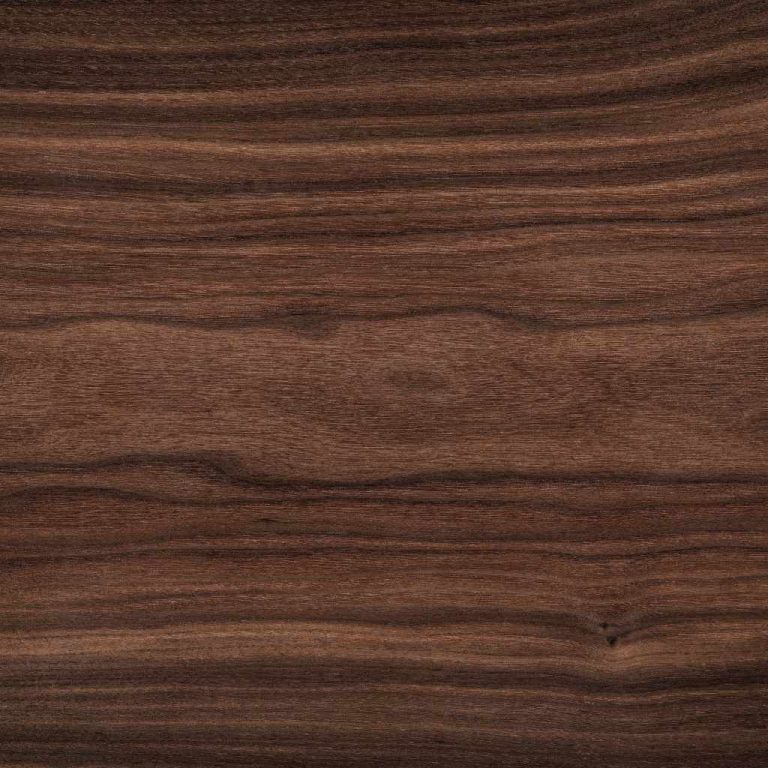
Black Walnut (the type generally used for premium boards) is famous in woodworking for its deep, dark chocolate color. It is considered a premium wood—beautiful, sturdy, and holds a fantastic finish. Many high-end board makers default to Walnut because of its incredible looks and excellent performance.
Pros of Walnut Cutting Boards:
- Stunning Looks: The dark, rich color elevates any kitchen counter instantly.
- Knife Friendliness: While hard, it offers a slight give that many professional chefs prefer, preventing knives from dulling too fast.
- Natural Food Safety: Walnut is often cited for having natural antimicrobial properties, which is a wonderful bonus in food prep areas.
The Technical Deep Dive: Hardness and Durability
This is where we look below the surface. For a cutting board, hardness is key. We measure this using the Janka Hardness Scale. Higher numbers mean a harder wood that resists dents better. Remember, we are aiming for a board that is hard enough to be durable but not so hard that it instantly ruins your knife edge!
Here is how these two woods compare based on standard hardness ratings:
| FeatureAcacia WoodBlack Walnut Wood | ||
|---|---|---|
| Janka Hardness | Around 1700–2200 lbf | Around 1010 lbf |
| Primary Color | Light gold to medium reddish-brown | Deep, rich chocolate brown |
| Grain Structure | Interlocking, sometimes wavy | Straight to slightly wavy |
| Moisture Resistance | Very Good | Good to Very Good |
| Typical Cost (Relative) | Mid-Range / Affordable | High-End / Premium |
What the Janka Score Tells Beginners: Look closely at that Janka score! Acacia is often significantly harder (sometimes nearly twice as hard) as Black Walnut. While this suggests Acacia might resist dents better, extremely hard woods can sometimes be tougher on your knife edges over time. Walnut sits in a sweet spot: hard enough to be durable, but softer enough to be gentler on your quality knives. This difference is important for long-term use.
Knife Edge Longevity
If you invest in high-quality kitchen knives, you need a board that supports them. Softer hardwoods allow the knife edge to sink in just enough without causing excessive wear. Walnut performs excellently here. While Acacia’s density is great for resisting damage to the board, very hard woods can sometimes accelerate the dulling of finely honed edges. This is a trade-off worth considering if your knives are your priority.
The Look: Aesthetics on Your Countertop
Let’s be honest—your cutting board is often left out. Its appearance matters!
Acacia’s Dynamic Look
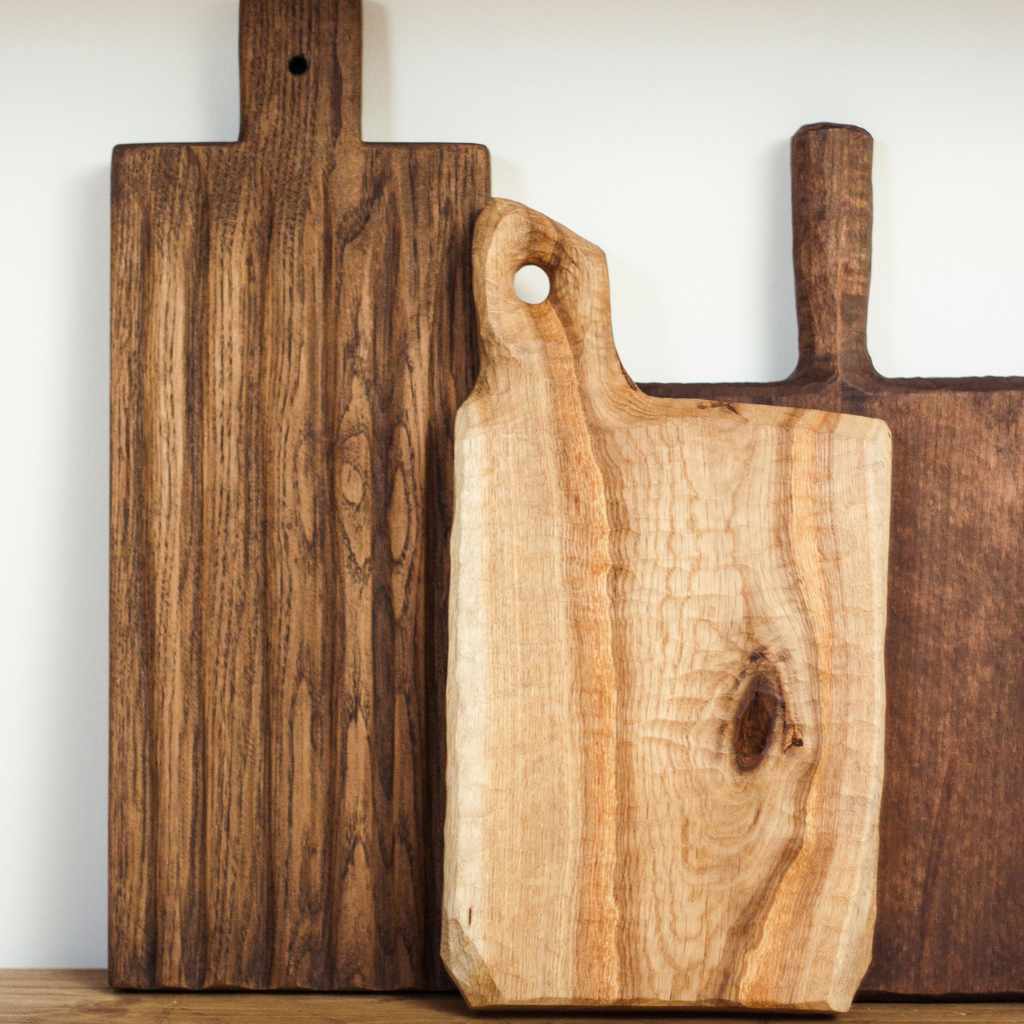
Acacia is the extrovert of the group. Its boards often feature dramatic color variations, sometimes called “figure.” One section might be nearly blonde, while the next has deep, tiger-like stripes. This makes every board truly unique, offering a warm, natural, and often rustic feel to your kitchen design.
Walnut’s Understated Elegance
Walnut brings classic elegance. It’s deep, consistent, and sophisticated. When oiled, the dark color becomes incredibly rich, making it look like professional equipment. If your kitchen leans toward modern, traditional, or darker cabinetry, Walnut perfectly complements that rich aesthetic.
Maintenance and Longevity: Keeping Your Board Beautiful
No matter which wood you choose, keeping it oiled is the single most important step for longevity. Uncared-for wood dries out, cracks, and harbors bacteria. You must commit to oiling!
Oiling Regimen for Both Woods
For both Acacia and Walnut, you must use a food-safe mineral oil (sometimes called butcher block oil). You can find reliable, inexpensive mineral oil at most pharmacies or large retailers. Avoid standard cooking oils like olive oil or vegetable oil, as they turn rancid over time and will make your board smell terrible (a common beginner mistake!).
- Initial Saturation: When you first get the board (or if it looks dry), apply oil liberally until the wood stops absorbing it. Let it sit for at least four hours, or ideally overnight.
- Wipe Off Excess: Use a clean, lint-free cloth to wipe off any oil that hasn’t penetrated the surface.
- Routine Care: For daily use, oil once a month. If you use your board heavily or wash it often, oil every two weeks until it stops absorbing the oil quickly.
Cleaning Best Practices (Safety First!)
This rule applies to every cutting board, regardless of wood type. Never, ever put a wooden cutting board in the dishwasher. The heat and harsh detergents will strip the oil, warp the wood, and cause cracks.
Always clean with warm water, mild dish soap, and immediately dry it afterward. For sanitation, a simple wipe-down with a solution of white vinegar and water or a diluted solution of food-grade hydrogen peroxide works wonders. For more in-depth sanitation resources, experts often point to guidelines provided by organizations focusing on food safety, such as those published by the United States Department of Agriculture (USDA), which offer basic home cleaning protocols.
Acacia vs. Walnut: The Beginner’s Scorecard
To help you visualize the final decision, here is a quick summary of where each wood excels in areas important to a new woodworker or homeowner.
| Category | Acacia Wins If You Need… | Walnut Wins If You Need… |
|---|---|---|
| Budget | The best utility for the lowest price. | Willing to pay more for premium looks. |
| Appearance | Vibrant, highly varied, and unique grain patterns. | Classic, deep, consistent, and sophisticated color. |
| Knife Feel | A very hard surface for maximum resistance to denting. | A softer, more forgiving surface that protects knife edges better. |
| Density/Porosity | Naturally higher inherent water resistance. | Excellent, reliable, closed-grain performance (though Acacia can edge it out on raw hardness). |
Making Your Final Decision
Choosing between Acacia and Walnut comes down to prioritizing your needs. I want to give you confidence in your purchase, so let’s look at two common beginner scenarios.
Scenario 1: The Budget-Conscious Hobbyist
If you are just starting out, worried about scratching an expensive board, or need a functional board without breaking the bank, Acacia is likely your best bet. It’s tough, handles daily chopping well, and you get a lot of wood quality for your dollar. You get fantastic value, and it will easily last for years with proper oiling.
Scenario 2: The Kitchen Matchmaker
If you are looking for a statement piece, want the absolute best pairing for your high-end knives, or have a kitchen décor that demands dark, rich wood tones, Walnut is the right investment. It requires the same care as Acacia, but its beauty and softer impact on steel edges make it the premium choice for dedicated home cooks.
Tips for Buying Your First Hardwood Board (Safety Check!)
When you go shopping, look beyond just the wood type. A poorly constructed board will fail faster than a high-quality board made from a “lesser” wood. Here’s what to check:
- Check the Construction: Look for “Edge Grain” or “End Grain.” End grain boards (where the wood fibers point up like a bundle of straws) are typically the best for self-healing properties and ease on knives, but they are always more expensive. Edge grain is common and perfectly good for beginners.
- Inspect the Seams: Run your finger over where the pieces of wood meet. You should feel no gaps, bumps, or rough edges. Smooth seams mean tight glue joints, which means less chance of water ingress and warping.
- Feet vs. No Feet: Some boards come with small rubber feet underneath. These are great because they keep the bottom of the board from sitting in any standing water on your counter, improving airflow and longevity.
- Source Transparency: If you can easily find out where the wood comes from (e.g., FSC certified or domestic North American Black Walnut), it’s often a sign of a responsible supplier, which is always a bonus. If you want to dive deeper into sustainable sourcing, organizations focused on forestry management, like the Forest Stewardship Council (FSC), provide excellent background information on wood origins.
Frequently Asked Questions (FAQ) for New Board Owners
How often should I oil my new Acacia or Walnut board?
For a brand-new board, oil generously every day for the first week. After that, oil once a month, or whenever the wood starts looking dull or dry instead of rich and glossy. Consistency is more important than frequency!
Can I use my Walnut cutting board for raw meat?
Yes, you can, but you must dedicate that board solely to raw meat (chicken, beef, fish) followed by extremely rigorous cleaning. Many cooks prefer to keep one designated board for raw items and a separate, prettier board (like Walnut) for ready-to-eat items like bread or vegetables to prevent cross-contamination.
Is an Acacia board safe if small knife marks appear?
Yes, small knife marks alone are not a safety issue, provided you are cleaning and oiling the board properly. The safety concern arises when grooves become excessively deep, allowing moisture and food particles to sit beneath the surface where cleaning soap might not reach completely.
Which one is heavier when finished and oiled? Is weight a factor?
Acacia is generally denser and often slightly heavier than Walnut for the same size board when both are fully oiled. Weight provides stability—a heavy board won’t slide around while you chop, which improves safety. Both options tend to be substantial enough for good stability.
What should I do if my board warps slightly?
If warping is minor, you can try letting the convex (curved outward) side absorb more oil than the concave side for a few days. If the warp is significant, you may need to sand the entire board flat again. This is why immediate drying after washing is critical—water causes wood to swell unevenly, leading to warping.
Will the color of my Walnut board change over time?
Walnut is beautiful because it darkens with exposure to light and air, becoming richer over time. Acacia’s color can also deepen slightly, but because it starts lighter, the visual transformation might be less dramatic than with Walnut.
The Final Word from Your Mentor
Stepping into the world of quality kitchen tools means making informed choices, and you’ve just learned the essentials about two fantastic hardwoods. Whether you choose the robust affordability of Acacia or the timeless richness of Walnut, remember this:
The difference between a great cutting board and a wasted investment is maintenance. Both Acacia and Walnut are highly durable woods that will serve your kitchen well for decades if you commit to simple care routines. An Acacia board will give you excellent utilitarian service day in and day out, standing up strong to rigorous kitchen activity. A Walnut board will provide that beautiful, dark foundation that elevates your cooking space, feeling wonderful under your knives.
There is no wrong choice here, only the choice that fits your current kitchen needs and budget best. Go confidently, pick the one that excites you most, and start enjoying your woodworking journey in the kitchen. Happy chopping!