Can You Use Vegetable Oil on Wood? (Not for Cutting Boards)
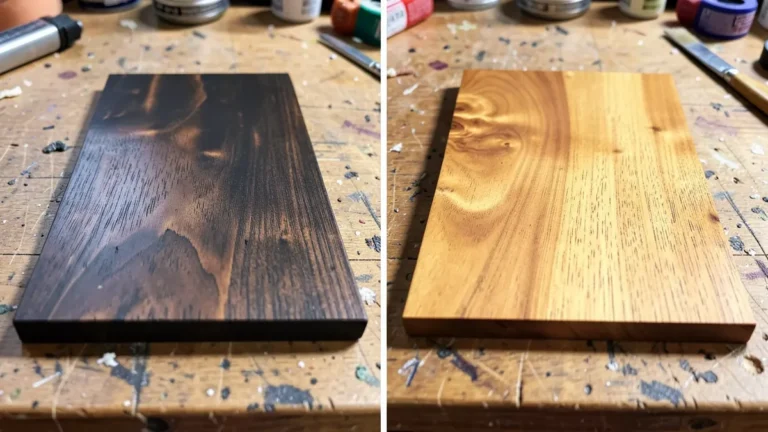
Yes, you can put vegetable oil on wood, and it will darken the grain nicely at first — but it’s the wrong choice for anything long-term, and the wrong choice entirely for cutting boards or utensils that touch food. Vegetable oil is a non-drying oil, so it never fully cures inside the wood. Within weeks it oxidizes, turns rancid, and leaves a sticky, sour-smelling film that also attracts pests.
That single fact — drying vs. non-drying oil — decides almost everything else in this guide: which woods it actually works on, why cutting boards need a completely different product, and what to reach for instead if you want the finish to last.
Quick Answer
Vegetable oil (canola, corn, olive, sunflower) will sit on wood and darken it, but it’s a non-drying oil — it doesn’t cure, so it stays greasy, then goes rancid within 2-6 weeks. It’s fine as a one-time decorative treatment on a non-food item you don’t mind redoing. For cutting boards, utensils, or any wood that touches food, use food-grade mineral oil instead — it’s the FDA-approved standard because it physically cannot go rancid (mineral oil is a petroleum derivative, not a fat).
Why Vegetable Oil Behaves Differently From “Real” Wood Oils
Wood finishing oils fall into two categories, and the difference explains every problem vegetable oil causes:
- Drying oils (linseed, tung, walnut) contain fatty acids that react with oxygen and polymerize — they harden into a solid film inside the wood fibers. This is a real chemical cure, not just evaporation.
- Non-drying oils (vegetable, canola, corn, olive, sunflower) lack that reactive fatty-acid structure. They never cure. They stay in liquid form inside the wood indefinitely — until oxygen and warmth break them down into rancid byproducts instead.
That’s why a drying oil like walnut oil is a legitimate wood finish, while vegetable oil is really just a temporary cosmetic treatment that comes with a countdown clock.
Cutting Boards and Kitchenware: Use Mineral Oil, Not Vegetable Oil
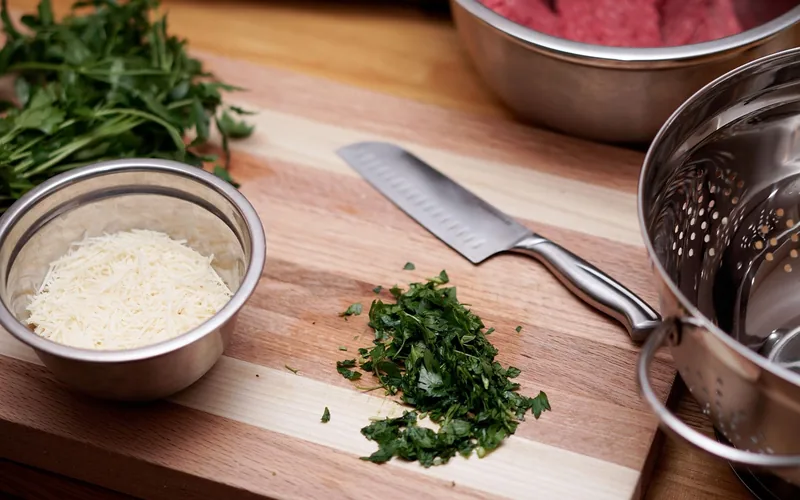
This is the most common way people search for this topic, and it deserves a direct answer: don’t season a wooden cutting board, butcher block, or wooden spoon with vegetable oil. A cutting board has huge surface area exposed to air, plus regular heat from nearby stoves and warm water washing — ideal conditions for the oil to oxidize fast. Within a few weeks the board can turn sticky, smell faintly sour, and that rancid oil sitting in the grain becomes a place for bacteria to multiply.
Food-grade mineral oil is the standard fix. It’s FDA-approved for incidental food contact, colorless, odorless, and — because it’s a mineral (petroleum) product rather than a fat — it structurally cannot go rancid. If you want a plant-based option instead, fractionated coconut oil works similarly: the parts of coconut oil that would normally spoil have been removed, so it stays shelf-stable on wood. Full routine here: sealing a cutting board with beeswax and mineral oil.
Recommended: Food-Grade Mineral Oil
Won’t oxidize or go rancid on cutting boards, butcher blocks, or utensils.
Check Bayes Mineral Oil on AmazonTypes Of Wood That Actually Take Vegetable Oil Well
Open-grained softwoods and hardwoods absorb vegetable oil the most readily. Pine and cedar soak it in and darken noticeably. Maple and oak take it well too, gaining a temporary sheen. These are the woods where a one-off vegetable oil treatment looks the best — as long as you accept it will need replacing (with a real oil) in a matter of weeks.
Correction on a common myth: teak and mahogany are often said to “repel” oil — that’s backwards. Both are naturally oily, dense tropical hardwoods that are actually prime candidates for oil finishes; teak oil soaks into mahogany and teak even more readily than linseed or tung oil, which is exactly why it’s sold as a finish for both species — see mahogany finishing options for the full comparison. Bamboo is the real exception here — it isn’t wood at all but a grass with a dense, waxy outer surface, so it genuinely resists oil penetration of any kind, vegetable oil included.
How To Apply Vegetable Oil To Wood
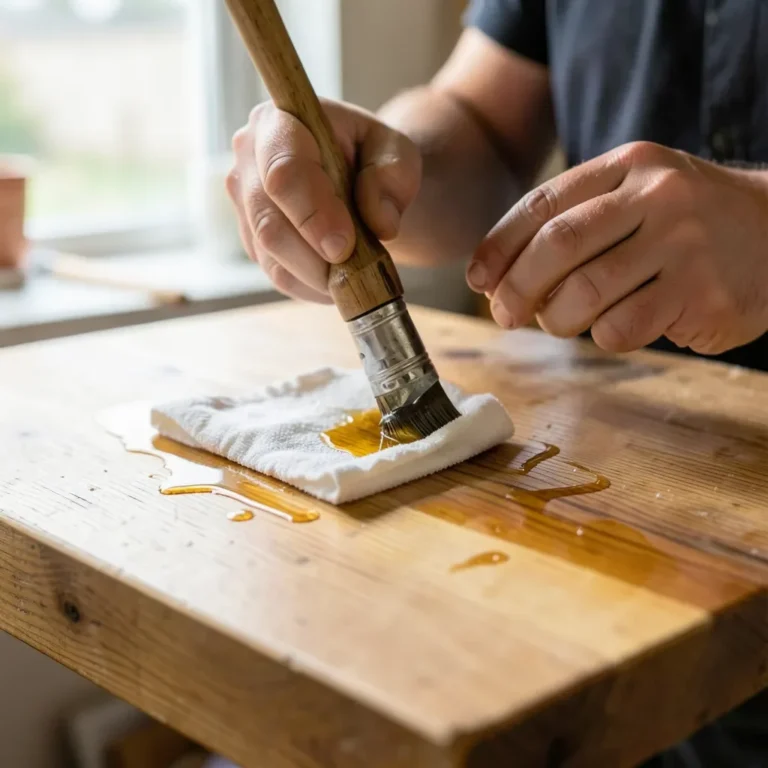
Before applying vegetable oil to wood, gather a clean cloth, a soft brush, and a small bowl. Make sure the wood surface is clean and dry. Remove any dust or dirt.
- Pour a small amount of vegetable oil into the bowl.
- Dip the cloth or brush into the oil and apply it to the wood in a circular motion, working small sections at a time.
- Let the oil soak in for 15-30 minutes.
- Wipe off all excess oil with a clean, dry cloth — any oil left sitting on the surface is what turns sticky first.
Common Mistakes To Avoid
Overapplication is the biggest one — excess oil that isn’t wiped off is what goes sticky and traps dust first. Using it on food-contact surfaces is the second, for the rancidity reasons above. If you want a similar look with an actual cure, flaxseed oil (a drying oil) is a better substitute for wood care — it hardens instead of staying greasy.
Maintenance And Longevity
If you do use vegetable oil as a short-term decorative treatment, watch for these signs it needs attention (or replacing with a proper finish):
- Wood feels dry or rough to the touch.
- Color looks faded or dull.
- A slightly sour or “off” smell developing — this is early rancidity, not just dryness.
- Surface feels tacky or sticky rather than smooth.
Any of these signs on a food-contact item means it’s time to strip the oil and switch to mineral oil and beeswax rather than reapplying more vegetable oil.
Vegetable Oil Mixtures And Recipes
DIY oil blends can enhance the beauty of wood, though the rancidity limitation above still applies to any blend containing vegetable oil. Here are a few common blends:
| Blend | Ingredients |
|---|---|
| Basic Oil Blend | 1 part vegetable oil, 1 part lemon oil |
| Nutty Blend | 1 part walnut oil, 1 part olive oil |
| Herbal Blend | 1 part vegetable oil, few drops of mahogany-safe essential oils |
Pure oils give a more predictable, natural finish. Test any blend on a small hidden area first, and skip vegetable oil in the blend entirely for anything food-contact.
Surprising Uses Beyond Wood Conditioning
Vegetable oil has a few genuinely useful non-wood applications. As a natural pest deterrent, a diluted spray (oil mixed with water) can help keep some insects off garden plants. For leather, a small amount on a cloth can condition and soften without cracking. On bare metal tools, a thin wiped-on layer creates a temporary barrier against surface rust — though it should be reapplied often since, again, it doesn’t cure.
Frequently Asked Questions
Can Vegetable Oil Damage Wood Surfaces?
It won’t damage the wood structurally, but because it’s a non-drying oil it never cures — it just sits in the grain and slowly oxidizes into a sticky, rancid film that attracts dust and, eventually, pests. Use it sparingly and only as a short-term treatment, not a permanent finish.
Is Vegetable Oil Safe For Cutting Boards And Wooden Kitchenware?
No — avoid it for cutting boards, butcher blocks, and utensils. The large surface area, warmth from cooking, and regular washing all speed up rancidity, and rancid oil in a cutting board’s grain can become a bacteria-friendly environment. Use FDA-approved food-grade mineral oil or fractionated coconut oil instead — neither one goes rancid.
How Often Should I Apply Vegetable Oil On Wood?
If used at all (on a non-food item), expect to reapply every few weeks, not months — vegetable oil breaks down far faster than a true drying oil. Watch for dryness, dullness, or a faint sour smell as your cue to redo it or switch finishes entirely.
Can Vegetable Oil Be Used For Wood Finishing?
Not as a real finish. Because it doesn’t cure or harden the way linseed, tung, or walnut oil does, it never builds the protective film a finish is supposed to provide. Treat it strictly as a temporary cosmetic touch-up, and use a dedicated drying oil or mineral oil for anything that needs to actually last.
Conclusion
Vegetable oil can darken and temporarily condition open-grained wood like pine, cedar, maple, or oak, but it never cures, so it’s a short-lived cosmetic fix rather than a real finish — and it should never go on a cutting board, utensil, or any surface that touches food. For those, food-grade mineral oil is the safer, longer-lasting choice.
Sponsored / affiliate links. As an Amazon Associate I earn from qualifying purchases. I may earn additional commission from eligible campaigns.