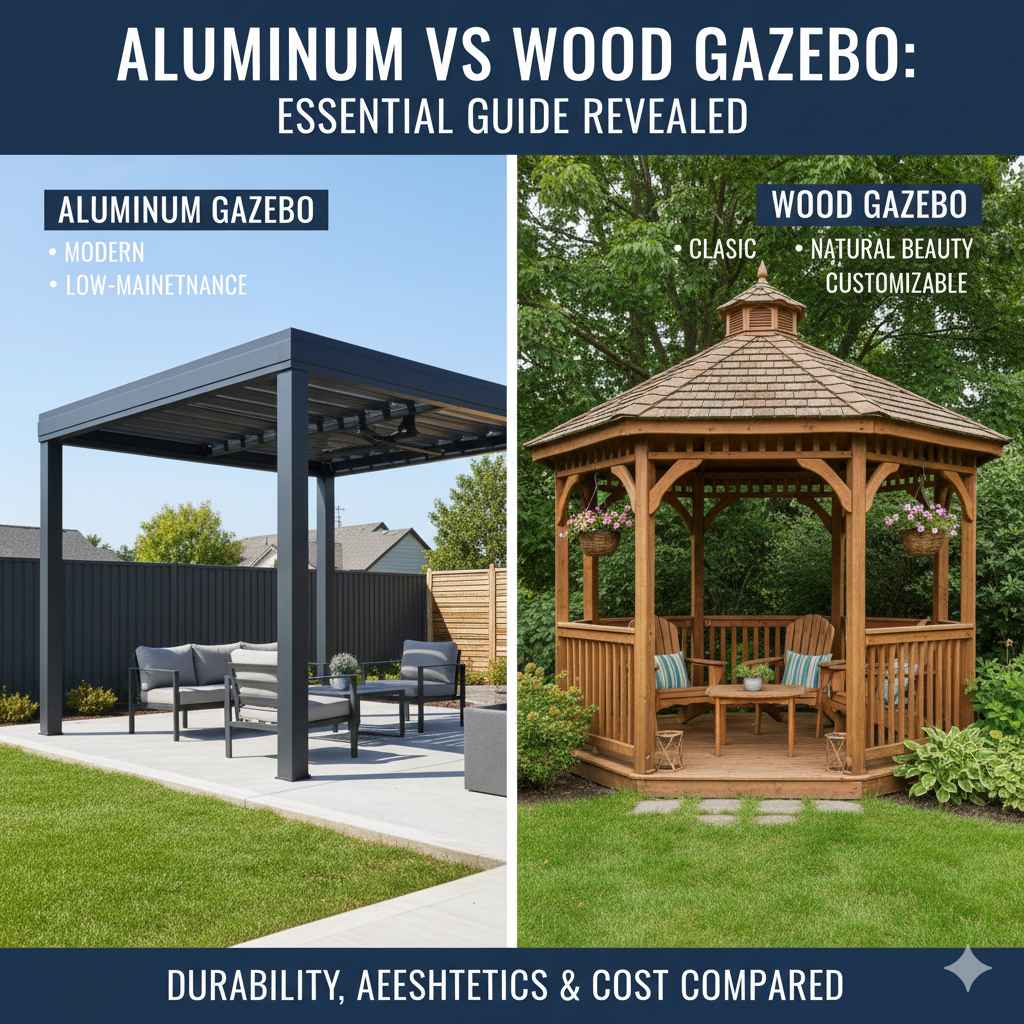
Aluminum vs Wood Gazebo: Essential Guide Revealed
Aluminum vs Wood Gazebo: The Essential Guide
Choosing between an aluminum and a wood gazebo is a common dilemma for homeowners. Both offer wonderful outdoor spaces, but they have different pros and cons. This guide will help you decide by looking at cost, durability, maintenance, and style. We’ll break down everything you need to know so you can pick the perfect gazebo for your backyard.
Building a beautiful backyard oasis can feel overwhelming, especially when you’re deciding on the centerpiece. A gazebo is a fantastic addition, providing shade and a gathering spot. But which material is right for you? Aluminum and wood are the two most popular choices, and they offer very different experiences. Many folks feel stuck, wondering which one will last longer, look better, or be easier to care for. Don’t worry! I’m here to help you sort through it all. We’ll explore what makes each material special, weigh the options, and guide you to making a confident choice for your home. Get ready to discover which gazebo is your perfect match!
Quick Summary
Aluminum gazebos are low-maintenance, durable, and weather-resistant but can have a more modern look. Wood gazebos offer natural beauty, can be customized easily, but require regular upkeep. The best choice depends on your budget, desired aesthetic, and willingness to perform maintenance.
Aluminum vs. Wood Gazebo: The Big Decision
Deciding between an aluminum and a wood gazebo is a significant choice for your outdoor space. Each material brings its own set of advantages and disadvantages to the table. Think of it like picking the right tool for a project – you want the one that fits your needs best. We’ll dive deep into what makes each material stand out, so you can feel confident in your selection.
Understanding Aluminum Gazebos
Aluminum gazebos are a fantastic option for those who value durability and minimal upkeep. They are crafted from a lightweight yet strong metal, often powder-coated for an attractive finish. This means they can withstand various weather conditions without succumbing to rust or rot. They are a great choice if you want to spend more time enjoying your backyard and less time maintaining it.
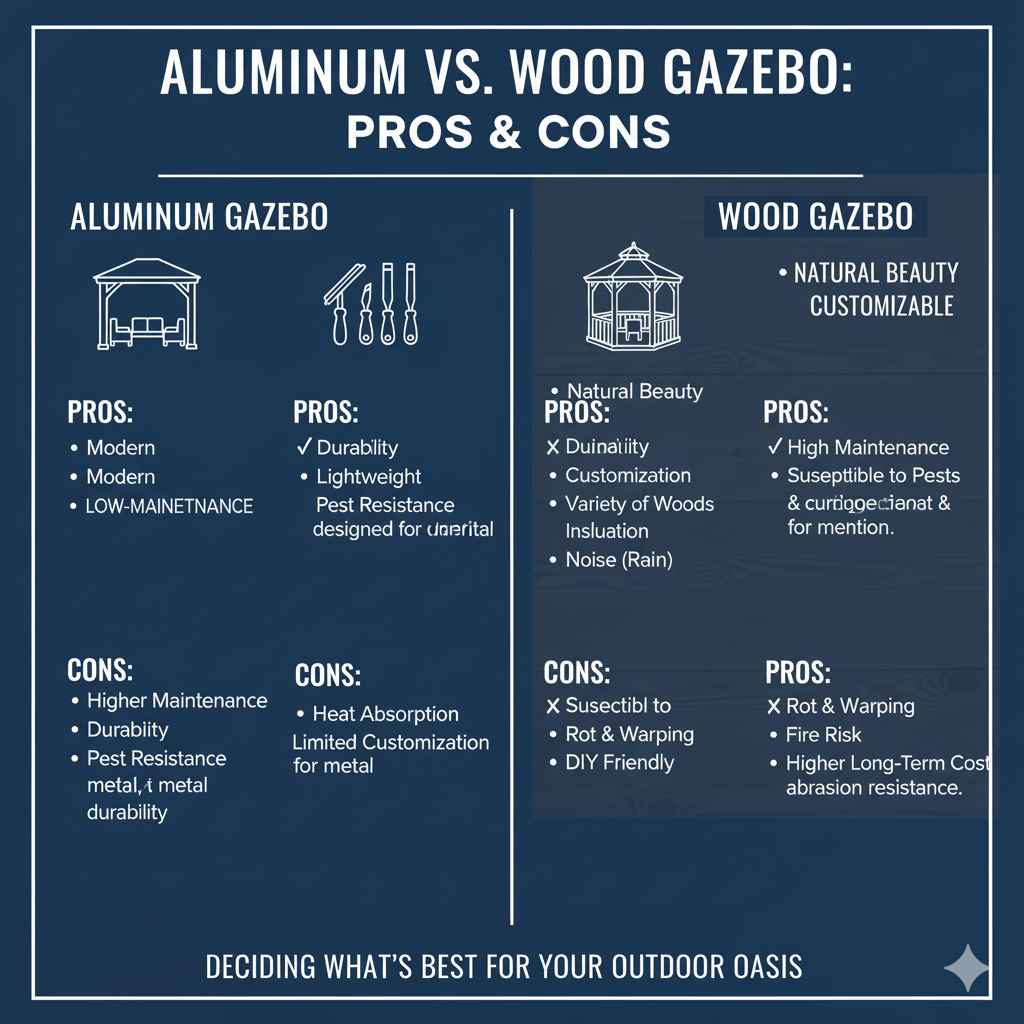
Pros of Aluminum Gazebos
- Low Maintenance: This is a big win! Aluminum doesn’t rot, warp, or get eaten by insects. A simple wash-down is usually all it needs.
- Durability: Aluminum is strong and resistant to rust and corrosion, especially when properly treated and finished. It holds up well against rain, sun, and wind.
- Lightweight: Compared to wood, aluminum is lighter, which can sometimes make installation easier.
- Pest Resistance: Unlike wood, aluminum is not susceptible to termites or other wood-boring insects.
- Variety of Styles: While often associated with modern designs, aluminum gazebos come in various styles, including some that mimic the look of wrought iron or traditional wood.
Cons of Aluminum Gazebos
- Cost: Aluminum gazebos can sometimes be more expensive upfront than basic wood options.
- Heat Absorption: In direct sunlight, some aluminum structures can get quite hot to the touch, especially the roof.
- Limited Customization: While you can paint them, you can’t easily alter the structure of an aluminum gazebo in the way you might with wood (e.g., adding intricate carvings or custom shapes).
- Noise: Rain hitting an aluminum roof can be noticeably louder than on a wood or shingled roof.
- Potential for Fading/Chipping: The powder coating, while durable, can eventually fade or chip over many years, though this is less common with higher-quality finishes.
Understanding Wood Gazebos
Wood gazebos are beloved for their natural beauty and classic appeal. They bring a warm, organic feel to any garden or patio. Whether you choose pine, cedar, redwood, or a composite wood, the inherent charm of wood is undeniable. However, this natural beauty comes with the need for regular care to keep it looking its best and to ensure its longevity.
Pros of Wood Gazebos
- Natural Beauty: Wood offers an unparalleled aesthetic that many find timeless and inviting. The grain and texture add character.
- Customization: Wood is incredibly versatile. You can paint, stain, or seal it to match your home’s exterior. You can also more easily add custom features like built-in seating, pergolas, or decorative railings.
- Variety of Woods: You have many wood types to choose from, each with its own look, natural resistance to decay, and cost. Common choices include pine (often pressure-treated), cedar, and redwood, known for their natural durability.
- Insulation: Wood is a natural insulator, helping to moderate temperatures better than metal.
- DIY Friendly: For those who love to build, wood gazebos are often easier for DIYers to construct and modify.
Cons of Wood Gazebos
- Maintenance: This is the biggest factor. Wood requires regular sealing, staining, or painting to protect it from sun, moisture, and rot. Without this, it can quickly deteriorate.
- Susceptibility to Pests: Termites, carpenter ants, and other wood-boring insects can be a problem for wood structures.
- Rot and Warping: Exposure to moisture without proper sealing can lead to decay, mold, and warping over time.
- Fire Risk: While rare, dry wood can be a fire hazard.
- Higher Long-Term Costs for Preservation: While the initial cost might be lower, the ongoing cost of maintenance (stains, sealants, labor if not DIY) can add up.
Key Comparison Factors
When you’re weighing aluminum against wood, it’s helpful to look at the core aspects that influence your decision. These are the practical elements that will affect your experience with your gazebo day in and day out.
Cost Considerations: Initial vs. Long-Term
The upfront cost of a gazebo can vary significantly. Generally, a basic wooden gazebo kit might be less expensive to purchase than a comparable aluminum one. However, this is where you need to think about the bigger picture – the total cost of ownership.
Aluminum gazebos often have a higher initial price tag. This money buys into the longevity and minimal maintenance features. If you opt for a cheap aluminum gazebo, the finish might not be as robust, but most higher-quality aluminum structures are built to last with very little intervention.
Wood gazebos can be more affordable to buy, particularly if you choose common lumber like pine. But remember to factor in the cost of stain, sealant, brushes, and potentially hiring a professional for re-staining every few years. Over a decade, the maintenance supplies and potential repairs for a wood gazebo can add up, potentially making it more expensive than an aluminum one in the long run.
| Factor | Aluminum Gazebo | Wood Gazebo |
|---|---|---|
| Initial Cost | Often higher | Can be lower (for basic kits) |
| Long-Term Cost | Lower (due to minimal maintenance) | Higher (due to ongoing maintenance, repairs) |
| Value Retention | Generally good | Can vary greatly with maintenance |
Durability and Weather Resistance
Both aluminum and wood can be durable, but they face different challenges.
Aluminum, as a metal, is inherently resistant to rotting, warping, and insect damage. High-quality aluminum with a good powder coating will stand up to the elements for decades. It won’t decay from rain or moisture and is less likely to be damaged by strong winds compared to a flimsy wood structure. For extremely humid or harsh weather environments, aluminum often has the edge in pure resilience.
Wood’s durability is directly tied to the type of wood used and how well it’s maintained. Naturally resistant woods like cedar and redwood offer better longevity than softer pines. Pressure-treated lumber also gains significant resistance to rot and insects. However, all wood is susceptible to UV damage from the sun, which can cause fading and degradation over time, and moisture if not properly sealed, leading to rot and mold. For example, untreated pine left out in the rain will not last as long as a properly maintained teak gazebo.
A good resource for understanding wood treatments and their effectiveness can be found on government sites, such as the Forest Products Laboratory (FPL), which provides research on wood preservation.
Maintenance Requirements
This is often the deciding factor for many homeowners.
Aluminum: The beauty of aluminum is its near-zero maintenance. You don’t need to stain it, seal it, or worry about termites. A simple occasional cleaning with soap and water will keep it looking good. The biggest maintenance task might be ensuring the powder coating isn’t damaged, which could lead to minor corrosion over many years.
Wood: Wood gazebos demand regular attention. Typically, you’ll need to:
- Clean the wood annually to remove dirt, mold, and mildew.
- Inspect for any signs of rot, insect activity, or loose fasteners.
- Reapply a water-repellent sealant or stain every 1-3 years, depending on the product and climate.
- Paint or stain the wood every few years for aesthetic appeal and protection.
Neglecting wood maintenance can drastically shorten its lifespan and lead to costly repairs or replacement sooner than expected.
Aesthetics and Style
The look of your gazebo is crucial, as it will be a prominent feature in your yard.
Aluminum: Aluminum gazebos tend to lean towards a modern or minimalist aesthetic. They often feature clean lines and can come in a variety of colors, most commonly bronze, black, or white, achieved through powder coating. Some designs mimic the look of wrought iron, offering a more traditional feel, but without the weight or rust issues of actual iron. If you have a contemporary home or prefer a sleeker look, aluminum can be an excellent fit.
Wood: Nothing beats the classic, warm, and inviting look of wood. It blends seamlessly into almost any landscape, from rustic gardens to more formal settings. The natural grain and texture of wood add a sense of depth and character. You can stain it to highlight its natural beauty, paint it to match your house, or even get creative with custom designs and architectural details. For those aiming for a traditional, charming, or organic outdoor space, wood is typically the go-to material.
Installation and Assembly
The ease of putting together your gazebo can also be a factor.
Aluminum: Many aluminum gazebos come in pre-fabricated kits. Because aluminum is lightweight and often uses interlocking pieces or simple bolt systems, assembly can be relatively straightforward. Some homeowners can assemble them themselves with basic tools and a helper. However, larger or more complex aluminum structures might still require professional installation.
Wood: Wood gazebos also come in kits, and their assembly is generally considered “DIY-friendly” for those with some building experience. You’ll typically need more robust tools, like saws, drills, and potentially ladders. The weight of the lumber can make assembly more physically demanding than with aluminum. If you’re new to DIY projects or uncomfortable with power tools, hiring a professional for a wood gazebo installation is a wise choice.
Environmental Impact
Considering the planet is something we all do now.
Aluminum: Aluminum is highly recyclable. Manufacturing new aluminum requires energy, but using recycled aluminum is much more efficient. An aluminum gazebo, if properly cared for, will last a very long time, reducing the need for replacement and the associated resource consumption. However, the initial production of aluminum can be energy-intensive.
Wood: Wood is a renewable resource, especially if sourced from sustainably managed forests (look for certifications like FSC (Forest Stewardship Council)). It’s biodegradable. However, the chemical treatments often used on lumber (like pressure-treating) can have environmental implications. The ongoing use of stains and sealants also requires consideration. Responsible sourcing and eco-friendly finishes can mitigate some of these concerns.
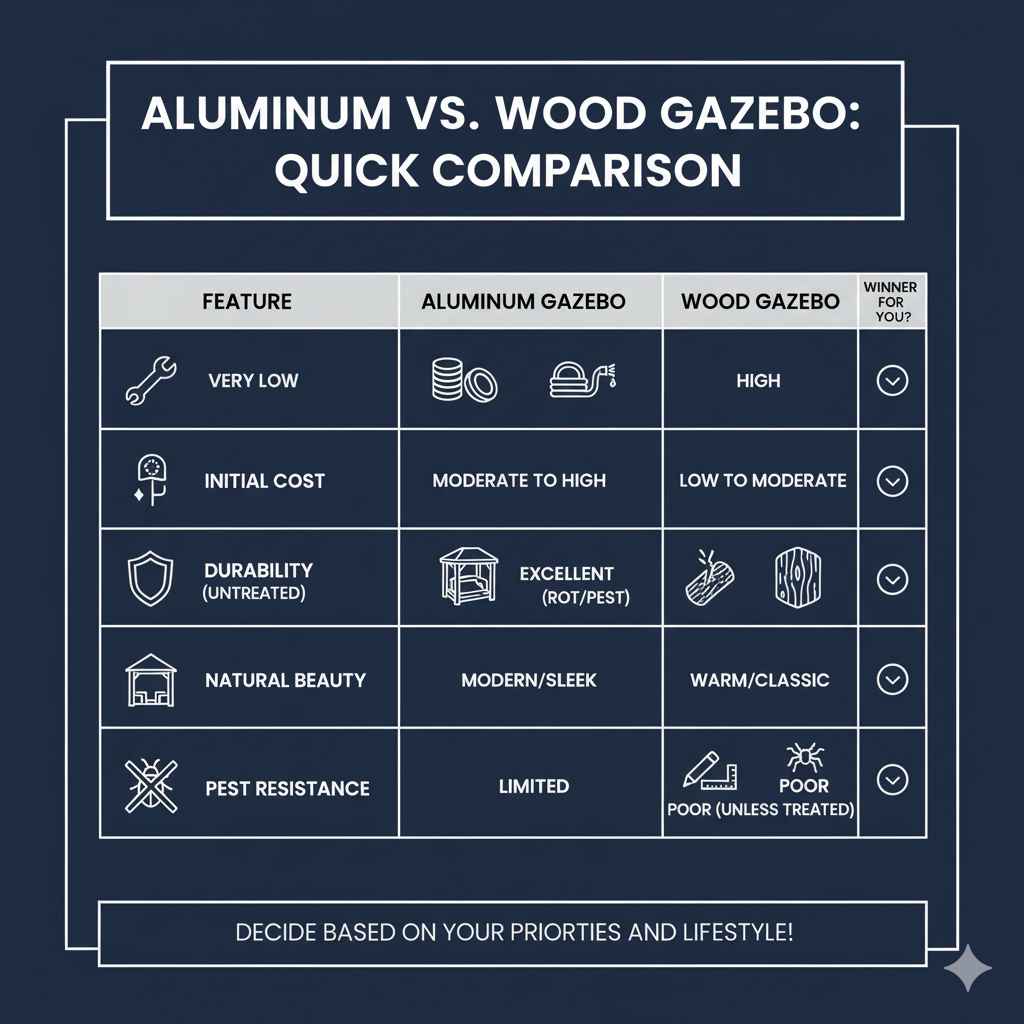
A Quick Comparison Table
Here’s a snap-shot to help you compare them side-by-side:
| Feature | Aluminum Gazebo | Wood Gazebo | Winner For You? |
|---|---|---|---|
| Maintenance | Very Low | High | Aluminum if you hate upkeep! |
| Initial Cost | Moderate to High | Low to Moderate | Wood if budget is tight upfront. |
| Long-Term Cost | Low | Moderate to High | Aluminum for cost-savings over time. |
| Natural Beauty | Modern/Sleek | Warm/Classic | Wood for traditional charm. |
| Customization | Limited | High | Wood for unique designs. |
| Durability (Untreated) | Excellent (rust-proof) | Poor (prone to rot/pests) | Aluminum for maximum lifespan with no care. |
| Pest Resistance | Excellent | Poor (unless treated) | Aluminum against bugs! |
| Ease of DIY Assembly | Moderate | Moderate to Difficult (heavy) | Depends on your DIY skill. |
Making Your Final Decision
So, aluminum or wood? The best choice really boils down to your personal priorities and lifestyle.
Choose Aluminum if:
- You want a “set it and forget it” kind of structure.
- You live in an area with extreme weather (heavy rain, high humidity, strong sun).
- You prefer a modern or minimalist outdoor aesthetic.
- You are allergic to or concerned about insects that might infest wood.
- You want to minimize long-term costs by avoiding regular maintenance supplies.
Choose Wood if:
- You love the natural, classic beauty of wood.
- You enjoy customizing your outdoor space and are comfortable with painting or staining.
- You have the time and willingness to perform regular maintenance.
- You are looking for a potentially lower upfront cost and are willing to invest in upkeep.
- You prefer the feel and look of natural materials.
Think about what’s most important to you. Do you want to relax under your gazebo with minimal worry about its condition? Or do you enjoy the process of caring for and personalizing a beautiful wooden structure?
Frequently Asked Questions
Which gazebo material is more budget-friendly overall?
While wood gazebos might have a lower initial purchase price, aluminum gazebos often prove more budget-friendly in the long run due to their minimal maintenance needs. The ongoing costs of stains, sealants, treatments, and potential repairs for wood can add up significantly over time.
Can aluminum gazebos rust?
High-quality aluminum gazebos, especially those with a durable powder coating, are designed to be rust-proof. Aluminum itself does not rust like iron or steel. While it can oxidize (forming a dull gray layer if the coating is damaged), it won’t succumb to the widespread corrosion associated with rust.