Buying Wood Ash on Amazon: What to Know
Search “wood ash” on Amazon and you’ll find bagged, pre-sifted hardwood ash selling for $17 to $65 for a few pounds, marketed for gardens, compost, and even chicken dust baths. That’s a strange thing to pay for when a wood stove or fireplace produces the same material for free. So what are you actually buying, is it any different from what’s left in your own firepit, and is it worth the money? Here’s what’s really in these listings, how to tell a legitimate one from a vague one, and when buying bagged ash actually makes sense.
What You’re Actually Buying When You Buy Wood Ash on Amazon
Bagged wood ash listings on Amazon are almost all small operations that burn a single, known hardwood species under controlled conditions, sift out the unburnt chunks and charcoal, and sell the resulting fine powder by the pound. A 2 lb bag of “Live Oak Wood Ash,” for example, is sourced and packaged in Texas from live oak specifically, with the listing stating no chemically treated wood, glues, painted wood, or additives went into the burn. That single-species, known-source claim is the whole value proposition: you know exactly what was burned, which you generally can’t say about ash scraped out of a random firepit or a shared community bonfire.
Best Verified-Clean Bagged Wood Ash
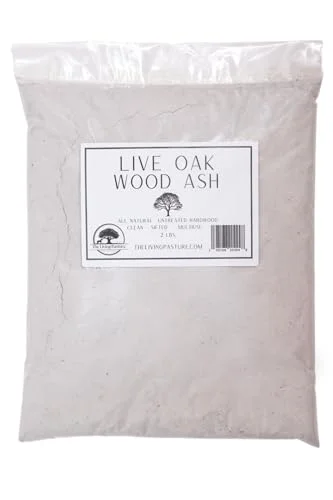 |
Live Oak Wood Ash, 2 lbs – $30.99 A pre-bagged, sifted hardwood ash with a clean-source label, useful if you don’t have your own fireplace or wood stove producing ash.
|
Is Bagged Wood Ash From Amazon Actually Safe to Use?
Wood ash itself is not dangerous to handle when it comes from clean, untreated wood. The safety question is entirely about what was burned to make it, not about ash as a material. Plain wood ash from natural, untreated lumber is alkaline and mineral-rich; that’s it.
The risk shows up when the source wood wasn’t clean. According to the National Pesticide Information Center, ash from lumber treated with older copper- and arsenic-based preservatives should never go into a garden or compost pile, since the arsenic doesn’t burn off and ends up concentrated in the ash. Painted or stained wood carries the same problem with lead and other pigment chemicals. That’s exactly why a reputable bagged-ash listing spells out its source species and states “no treated wood, glues, or paint” up front — it’s the seller doing the verification you’d otherwise have to do yourself with a pile of unknown ash.
If you’re using your own fireplace or wood stove ash instead of buying it, the same rule applies in reverse: only use ash from wood you know was never painted, stained, pressure-treated, or glued (no plywood, MDF, or particleboard scraps), and never ash from charcoal briquettes, which contain binders and additives not meant for soil.
What Wood Ash Does in the Garden (and Where to Get the Full Breakdown)
In short: wood ash is alkaline and raises soil pH while adding potassium and calcium, similar to a fast-acting, less predictable version of garden lime. That makes it useful for acidic soil that needs a nutrient boost, and a bad idea for soil that’s already neutral or alkaline, where it can lock up micronutrients your plants need. Whether it’s a good idea for a specific plant depends heavily on species and current soil pH, which is a bigger topic than a buying guide can cover properly.
We’ve already written the full breakdown of that question, with university extension application rates, elsewhere on this site: see Does Wood Ash Help Plants? When It Helps (and When to Skip It) for the general soil-pH case, and Do Hydrangeas Like Wood Ash? if you’re specifically trying to figure out what it’ll do to a hydrangea’s color. This page focuses on the buying side: what you get in an Amazon listing and how to tell a good one from a bad one.
How to Spot a Legit Wood Ash Listing (and Red Flags to Skip)
- Named wood species. A listing that says “live oak,” “hickory,” or another specific hardwood tells you exactly what was burned. A listing that just says “biomass ash” or “natural ash” with no species named is a red flag — you have no way to know what actually went into it.
- An explicit “no treated wood/glue/paint” statement. This is the seller taking responsibility for the one thing that actually matters for safety. If it’s missing entirely, assume it wasn’t verified.
- Sifted/mesh size mentioned. “Sifted” or a mesh size (60-mesh, 100-mesh) tells you it’s been screened for large unburnt chunks and charcoal, which matters if you’re mixing it into a finish, a paste, or fine garden application rather than just broadcasting it.
- Real seller reviews mentioning the actual product, not just generic five-star boilerplate. Ash is a low-review-volume niche category, so even a handful of specific reviews (“used it on my tomatoes,” “arrived dry and fine”) are worth more than a big number with vague text.
- Skip anything priced suspiciously low for the quantity claimed — wood ash is bulky and cheap to produce but not free to ship, so a huge bag at a tiny price is more likely mislabeled or bulked out with something else.
Bagged Wood Ash Price Compared to Free Fireplace Ash
Across current Amazon listings, bagged hardwood ash runs roughly $9 to $20 for a 6 to 12 oz starter size, and $17 to $65 for 2 to 5 lb bags, depending on brand and sifting. That works out to somewhere between $6 and $16 per pound — expensive for a material that a working fireplace or wood stove produces as a byproduct every week for free.
Buying it only makes sense in a few specific situations: you don’t burn wood at home at all and want a small amount for a one-off project or a container garden, you want a guaranteed single-species, contaminant-free source for something sensitive (like a food-contact wood finish or a chicken coop dust bath), or you need a consistent, pre-sifted product rather than the inconsistent mix a firepit produces. If you already have a working fireplace and clean, untreated firewood, your own ash costs nothing and works the same way.
How to Store and Handle Wood Ash Safely
- Let it cool completely before bagging, storing, or using ash straight from a fireplace or stove — ash can hold hot embers for days.
- Store in a sealed, non-combustible metal container, not a cardboard box or plastic bag, until you’re sure it’s fully cold.
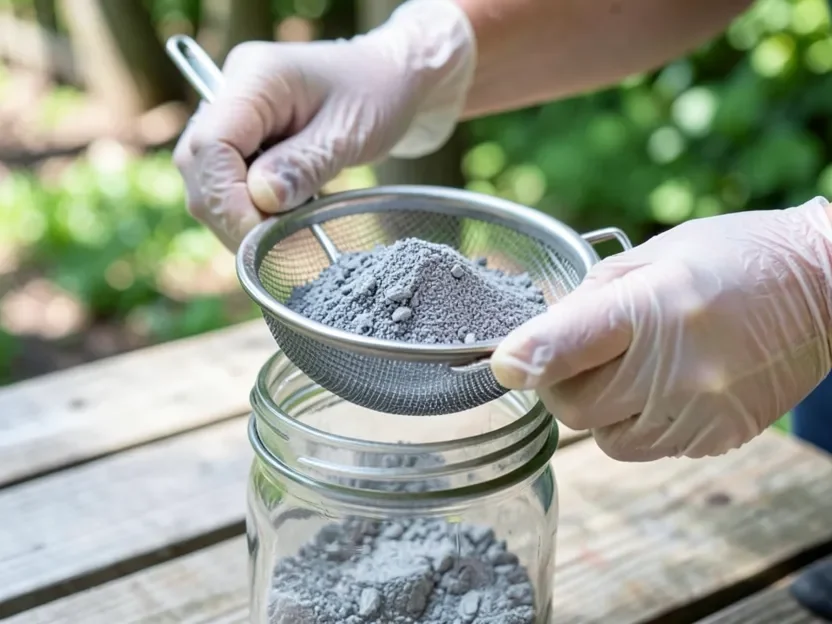
- Wear a dust mask and gloves when handling large amounts, sifted or not — fine ash particles are easy to inhale and can dry out or irritate skin.
- Keep bagged ash dry. Wood ash absorbs moisture from the air and will clump; an airtight container keeps it usable longer.
- Never dump a large amount of ash in one spot in the garden — spread it thin and work it into the soil, since a concentrated pile can spike the local pH far more than intended.
Frequently Asked Questions About Buying Wood Ash on Amazon
Is the wood ash sold on Amazon actually food-safe?
Ash from a reputable listing that names its wood species and states no treated wood, glue, or paint was used is generally safe for non-food-contact garden and compost use. For direct food-contact use (like a cutting board finish), you’d still want a food-safe binder and a proper seal on top, not raw ash alone.
Can I just use my own fireplace ash instead of buying it?
Yes, and for most people that’s the more practical option, since it’s free. The only reasons to buy bagged ash instead are not having a fireplace or stove at all, wanting a guaranteed single-species and contaminant-free source, or needing a consistently pre-sifted product.
How do I know if wood ash on Amazon is really untreated?
You’re relying on the seller’s stated sourcing, since there’s no independent lab test most buyers can run at home. Look for a named wood species, an explicit no-treated-wood/glue/paint statement, and specific customer reviews rather than vague five-star ratings.
Does bagged wood ash go bad or expire?
Not in the sense of spoiling, but it will absorb moisture from the air and clump or harden over time if left unsealed. Stored dry in an airtight container, it stays usable indefinitely.
Is wood ash the same thing as biochar?
No. Biochar is made by heating wood in a low-oxygen environment (pyrolysis) so it chars into a stable carbon structure rather than fully combusting. Wood ash is what’s left after wood burns completely in normal open-air combustion; it’s mineral-rich rather than carbon-rich, and the two behave very differently in soil.
Sponsored / affiliate links. As an Amazon Associate I earn from qualifying purchases. I may earn additional commission from eligible campaigns.