Are MDF Cabinets Toxic? (EPA Limit + the Ban Myth)
MDF cabinets are not inherently toxic — US law caps formaldehyde emissions at 0.11 ppm for MDF under EPA TSCA Title VI, the same federal rule that makes the “MDF is banned in America” claim a myth, not a fact. The real risk is unsealed raw edges and cut faces, which off-gas more than factory-finished surfaces. If you are still deciding between MDF and other core materials, see our guide to what MDF cabinets are. This guide covers the actual emission limits, where the ban myth comes from, and how sealing and ventilation reduce exposure.
What You Need to Reduce Off-Gassing
Best MDF Edge Sealer Pick
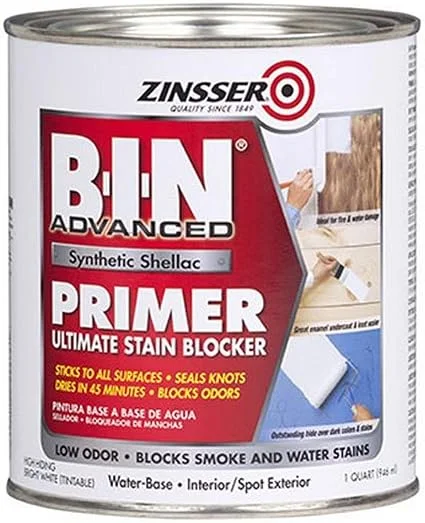 |
Zinsser B-I-N Advanced Shellac-Base Primer Sealer, 1 Qt – $24.32 This is the shellac-base sealer type referenced in the exposure-reduction steps below — seals raw MDF edges and cut faces, which is where off-gassing is highest.
|
A shellac-based sealer for any raw MDF edge or cut face, a dust mask and eye protection if you are cutting MDF yourself, and simply running a window fan or the kitchen exhaust for the first few weeks after new cabinets go in cover most of what actually reduces exposure. Painted or laminated factory faces are already sealed and need no extra treatment.
How Much Formaldehyde Can MDF Legally Emit?
Since 2018, every composite wood product sold in the US — including the MDF used in cabinet boxes and doors — must meet a federal emission ceiling, not a voluntary guideline.
📊 EPA TSCA Title VI caps formaldehyde emissions at 0.11 ppm for MDF, 0.13 ppm for thin MDF, 0.09 ppm for particleboard, and 0.05 ppm for hardwood plywood. — Source: EPA, Formaldehyde Emission Standards for Composite Wood Products. Products made or imported after June 1, 2018 must comply, and most major cabinet brands sold in the US label their boxes TSCA Title VI compliant.
Look for a CARB Phase 2 or TSCA Title VI compliance label on the cabinet box or cut sheet before buying — it is the actual proof the formaldehyde level was tested, not just a marketing claim.
Myth: Is MDF Banned in America?
No — MDF is not banned anywhere in the United States, and no state or federal law prohibits its sale or use. The confusion traces back to two real but separate things: California’s Proposition 65, which requires a cancer-risk warning label on products that expose people to formaldehyde above a certain threshold (a labeling rule, not a ban), and a 2018 lawsuit that forced EPA to finalize the TSCA Title VI emission limits above rather than leave them voluntary. Neither one removed MDF from the market — both made it more strictly regulated.
MDF vs Plywood vs Solid Wood: Formaldehyde Compared
| Material | TSCA Title VI Limit | Notes |
|---|---|---|
| Solid wood | Not regulated under Title VI | No added urea-formaldehyde resin in the wood itself |
| Hardwood plywood | 0.05 ppm | Lowest legal limit of the composite materials |
| Particleboard | 0.09 ppm | Common in cabinet boxes, less often in doors/fronts |
| MDF | 0.11 ppm (0.13 ppm for thin MDF) | Highest legal limit, but also the most commonly sealed on all faces — see our MDF vs birch plywood comparison for durability differences beyond formaldehyde |
How to Reduce Exposure
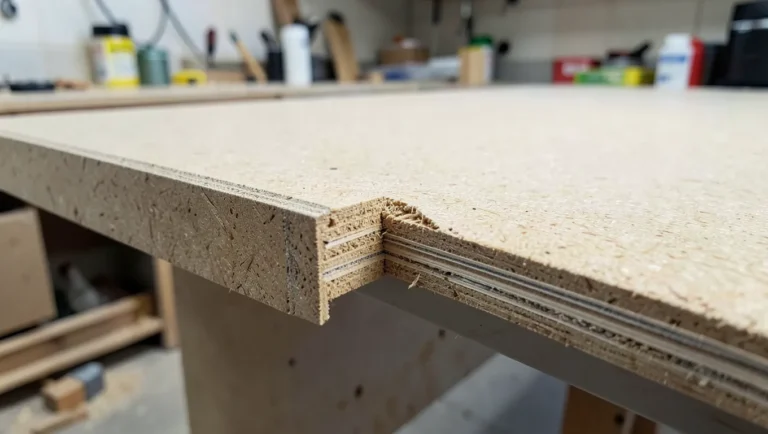
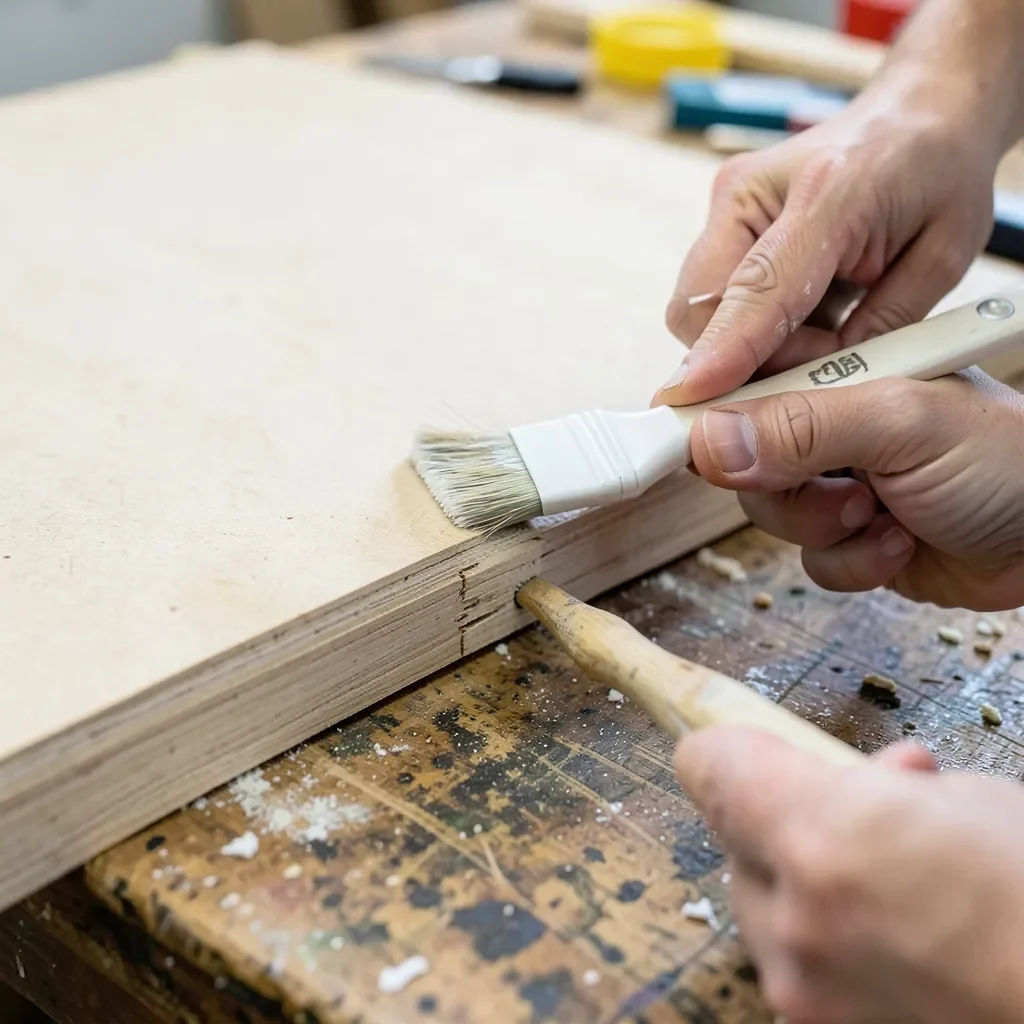
- Seal every raw edge and cut face: Factory faces are usually already laminated or painted; shop-cut edges are not and off-gas the most.
- Ventilate for the first few weeks: Run a kitchen exhaust fan or crack a window after new cabinets are installed, since off-gassing is highest when the material is new.
- Check for a compliance label: Look for CARB Phase 2 or TSCA Title VI marking on the cabinet box before purchase.
- Choose NAF or ULEF core if you are sensitive: No-Added-Formaldehyde and Ultra-Low-Emitting-Formaldehyde MDF exists and is sold by several manufacturers for a modest premium.
- Avoid sanding raw MDF indoors without a mask: Dust exposure, not just off-gassing, is the other real hazard when cutting or sanding MDF.
“As of June 1, 2018, EPA’s formaldehyde emission standards apply to hardwood plywood, medium-density fiberboard, and particleboard, and to finished goods made with these products that are sold, offered for sale, or manufactured in the United States.”
Frequently Asked Questions
Are MDF kitchen cabinets safe?
Yes, when they meet EPA TSCA Title VI or CARB Phase 2 formaldehyde limits, which nearly all cabinets sold in the US do as of 2018. Sealing raw cut edges further reduces the low-level off-gassing that continues after installation.
How long does it take for MDF to off-gas?
Off-gassing is highest in the first few weeks after manufacturing and installation, then drops off sharply, though very low-level emission can continue for months on unsealed surfaces. Ventilating the room for the first 2–4 weeks addresses most of the initial peak.
What are the least toxic kitchen cabinets?
Solid wood cabinets have no added formaldehyde resin at all, and NAF (No-Added-Formaldehyde) or ULEF (Ultra-Low-Emitting-Formaldehyde) MDF and plywood are the lowest-emission composite options if you want MDF’s stability and lower cost without the standard resin.
Why is MDF banned in America?
It is not banned — this is a myth. MDF sale and use are legal in every US state; what changed in 2018 is that formaldehyde emissions from MDF, plywood, and particleboard became federally regulated under EPA TSCA Title VI instead of voluntary, and California’s Proposition 65 separately requires a warning label above a certain exposure threshold.
Conclusion
MDF cabinets sold in the US today are held to a legal formaldehyde ceiling, not banned or unregulated — the real variable is whether raw edges get sealed and the room gets ventilated when they are new, which is what actually determines how much you are exposed to.
Sponsored / affiliate links. As an Amazon Associate I earn from qualifying purchases. I may earn additional commission from eligible campaigns.