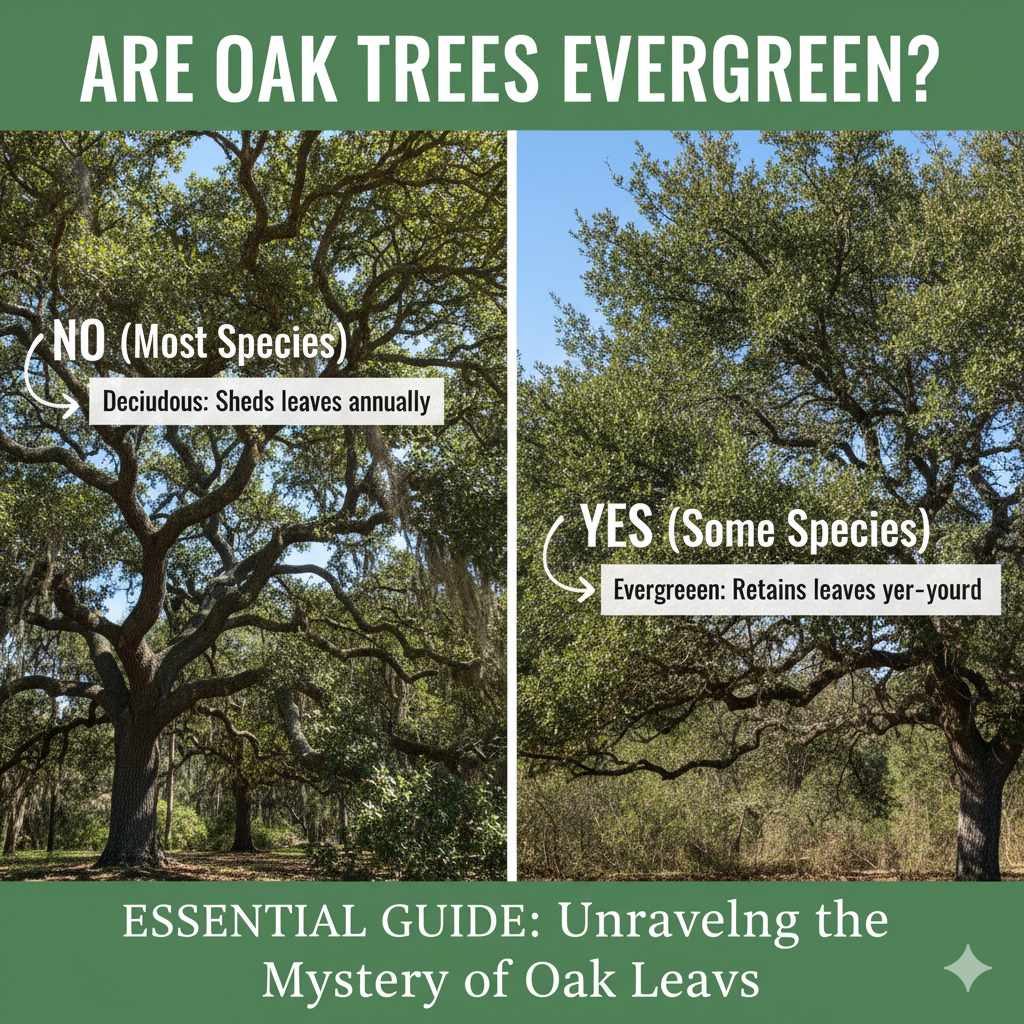
Are Oak Trees Evergreen? Essential Guide
No, oak trees are not typically evergreen. Most oak species are deciduous, meaning they lose their leaves seasonally. A few oak varieties are semi-evergreen or evergreen, but these are less common. Understanding this difference helps in plant identification and garden planning.
Have you ever walked through a park or your own backyard in the dead of winter and seen trees still holding onto their leaves? It’s easy to wonder if all trees behave the same way. A common question that pops up, especially for those planning their gardens or just admiring nature, is: “Are oak trees evergreen?” Well, the simple answer is usually no. Most of the oaks you’ll encounter are deciduous, which means they shed their leaves each year. But don’t worry, we’ll clear up all the confusion! We’ll dive into what makes an oak deciduous, look at the exceptions, and help you identify them with ease. Let’s get started on understanding these majestic trees!
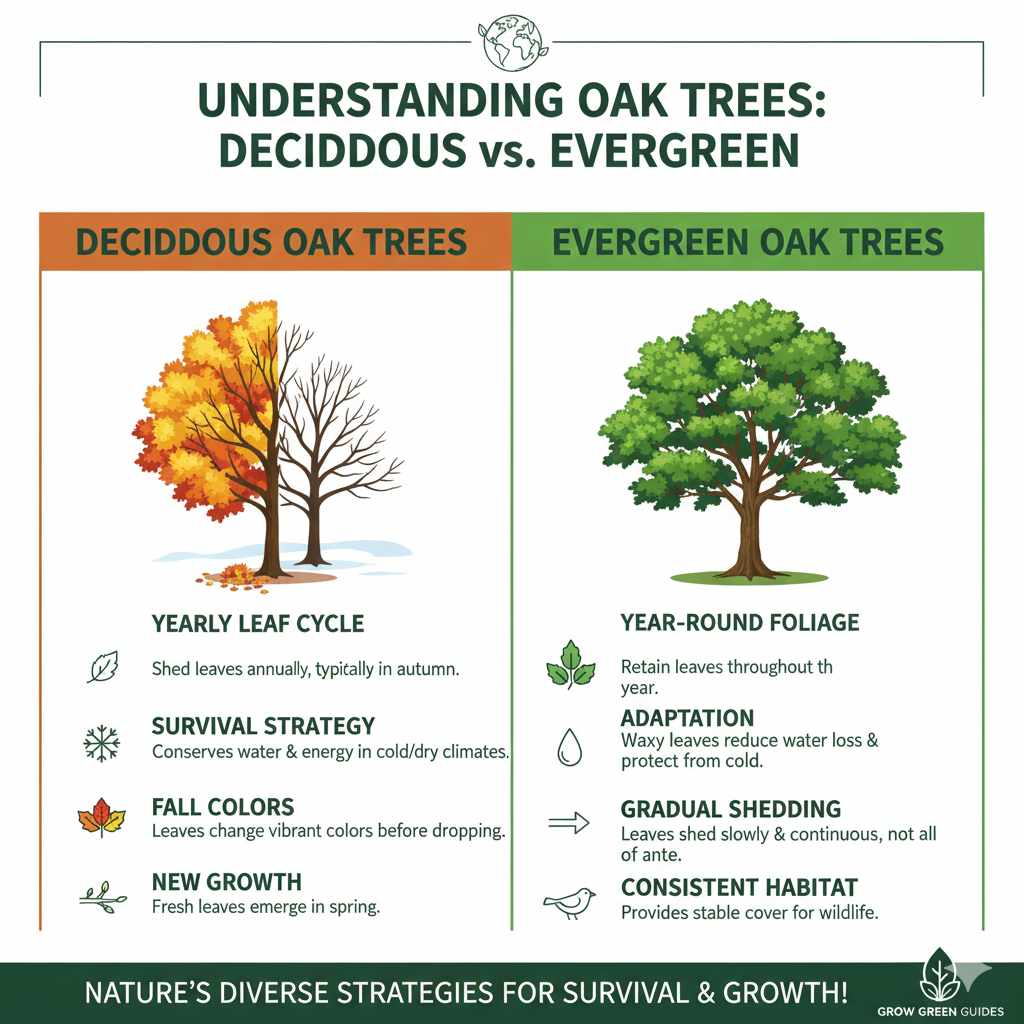
Understanding Oak Trees: Deciduous vs. Evergreen
When we talk about trees losing their leaves or keeping them year-round, we’re discussing two main categories: deciduous and evergreen. For oak trees, the vast majority fall into the deciduous category. This is a key characteristic that defines their life cycle and appearance throughout the seasons.
What Does Deciduous Mean?
Deciduous trees, like most oaks, go through a yearly cycle of shedding their leaves. This is a survival strategy, especially in climates with cold winters or dry seasons.
Leaf Drop: As the weather gets colder and days shorten, deciduous trees prepare for winter. They stop producing chlorophyll, the green pigment in leaves. This allows other pigments (yellows, oranges, reds) to show through, creating beautiful fall colors.
Energy Conservation: Dropping leaves helps the tree conserve water and energy. Leaves lose water through a process called transpiration. By shedding them, the tree reduces water loss when water might be frozen or scarce. It also prevents snow and ice from accumulating and breaking branches.
New Growth: In the spring, these trees will produce a fresh set of leaves to photosynthesize and feed the tree throughout the warmer months.
What Does Evergreen Mean?
Evergreen trees, on the other hand, keep their foliage all year long. They might still shed leaves, but they do so gradually, not all at once.
Year-Round Greenery: This means an evergreen tree will always have leaves or needles on its branches, providing consistent visual appeal and habitat for wildlife.
Adaptation: Many evergreens have adapted to harsh conditions with waxy coatings on their leaves or needles to reduce water loss and protect them from cold.
Are Oak Trees Evergreen? The General Rule
The short and practical answer is: No, most oak trees are not evergreen. They are deciduous. This means that if you see an oak tree in your neighborhood, it’s almost certainly going to lose its leaves in the fall. This is a characteristic trait of the Quercus genus, which is the scientific name for oaks.
Think about the classic autumn scenery often depicted with vibrant reds, oranges, and yellows. Many of those stunning trees are oaks! This seasonal change is a hallmark of deciduous trees. The acorns they produce also signal a cycle tied to seasons rather than year-round growth.
However, nature loves its exceptions, doesn’t it? While the rule is deciduous, there are a few fascinating oak species that defy this trend.
The Exceptions: Evergreen and Semi-Evergreen Oaks
While the majority of oak trees are deciduous, there are several species that are either evergreen or semi-evergreen. These are less common in many parts of North America and Europe but are important to know if you are in regions where they naturally occur, such as the Mediterranean, parts of Asia, or certain coastal areas.
Common Evergreen Oak Species
These oaks keep their leaves on their branches throughout the entire year. They are truly “evergreen.”
Holm Oak (Quercus ilex): Native to the Mediterranean region, the Holm Oak is a very common and well-known evergreen. Its leaves are somewhat holly-like, hence the name “Holm.” It’s known for its resilience and adaptability to various soil types and coastal conditions. You can often find these in Southern Europe and North Africa.
Kermes Oak (Quercus coccifera): Also found in the Mediterranean, the Kermes Oak is another compact evergreen. It’s known for its spiny, holly-like leaves and is historically important as the host plant for the Kermes scale insect, which was used to produce a red dye.
Canyon Live Oak (Quercus chrysolepis): This is a stunning evergreen oak native to the western United States, often found in canyons and on dry slopes. It has beautiful, leathery leaves that can be glossy on top and fuzzy underneath.
California Live Oak (Quercus agrifolia): Another California native, this evergreen is a prominent feature of the California landscape. It’s known for its sprawling branches and can live for hundreds of years. Its leaves are a deep green and often have a wavy or toothed edge.
Cork Oak (Quercus suber): Famous for its thick, corky bark, the Cork Oak is an evergreen native to the southwestern Iberian Peninsula and northwestern Africa. This is the tree from which most commercial cork is harvested.
Semi-Evergreen Oaks
Semi-evergreen oaks are a bit of a middle ground. They may retain some of their leaves through the winter, especially in milder climates, but they will shed a significant portion or all of them in harsher conditions.
Southern Live Oak (Quercus virginiana): While often called “evergreen,” the Southern Live Oak is technically semi-evergreen. In very cold winters, it can lose a noticeable amount of foliage, but in its preferred warmer climates, it appears evergreen. It’s iconic of the Southern United States, often draped with Spanish moss.
Many tropical and subtropical oak species: In warmer regions globally, many oak species show semi-evergreen characteristics. The exact behavior can depend on the specific microclimate and the severity of any winter frost.
How to Tell if an Oak is Evergreen or Deciduous (Even in Winter!)
It can be tricky to identify trees when they’ve lost their leaves. But there are clues!
Look at the Leaves (If Present)
Many evergreen oaks have leaves that are different from their deciduous cousins.
Texture: Evergreen oak leaves are often thicker, leathery, and more rigid. Think of the California Live Oak or Holm Oak leaves – they feel tough.
Shape: While opinions vary, some evergreen oaks have leaves that are somewhat spiky or holly-like, while many deciduous oaks have lobed leaves (like the familiar shape of a White Oak or Red Oak). However, there’s a lot of variety within both groups!
Color: Evergreen leaves tend to stay a consistent dark green year-round. Deciduous leaves will change color before they fall.
Check for Persistent Foliage
The most obvious sign is whether the tree still has leaves in late fall or winter. If it’s January and the oak is full of leaves, it’s likely an evergreen or semi-evergreen type. If it’s bare, it’s deciduous.
Consider Your Location
The type of oak trees that grow in a region are heavily influenced by the climate.
Cold Climates: If you’re in a region with significant winter frost and snow, chances are very high that any oak tree you encounter is deciduous. Evergreen oaks generally don’t thrive in harsh cold.
Mild or Mediterranean Climates: If you’re in California, the Mediterranean region, or similar climates, you’re much more likely to find evergreen or semi-evergreen oaks.
This is a wonderful infographic from the Arbor Day Foundation that can help with general tree identification, which can be useful when trying to distinguish oaks:
Tree identification can be a fascinating hobby! The Arbor Day Foundation offers great resources to help you learn more about different tree species.
Bark and Acorns
While not always a definitive identifier between evergreen and deciduous oaks (as both produce acorns!), the bark can offer clues about certain species. For example, the Cork Oak’s bark is uniquely thick and fissured. Acorn development time can also vary, but this requires more specific knowledge of oak species.
Common Deciduous Oak Species You’ll See
Most of us will be interacting with deciduous oaks. Here are a few you might recognize:
White Oak (Quercus alba): A large, majestic tree native to eastern North America. It has distinctive lobed leaves and produces light-colored acorns that mature in one season. Its wood is highly valued for furniture and barrels.
Red Oak (Quercus rubra): Also native to eastern North America, Red Oaks are known for their pointed lobes and reddish inner bark. They tend to grow faster than White Oaks and their acorns take two years to mature. They showcase brilliant red and russet fall colors.
Pin Oak (Quercus palustris): Popular as a landscape tree, especially in urban settings, Pin Oaks are native to eastern North America. They are characterized by their distinctive branching pattern and deeply cut leaves that turn a rusty red-brown in fall.
English Oak (Quercus robur): A very common and iconic tree across Europe, the English Oak is a symbol of strength and longevity. It has lobed leaves and produces acorns. It’s a cornerstone of many woodland ecosystems.
Why Does This Distinction Matter?
Understanding whether an oak is evergreen or deciduous has practical implications for homeowners, gardeners, and nature lovers.
Gardening and Landscaping
Seasonal Interest: If you want evergreen foliage for year-round color and screening, you’ll choose an evergreen oak. If you appreciate the dramatic fall color show and bare winter branches, a deciduous oak is your choice.
Shade: Deciduous trees offer shade in the summer and allow sunlight to pass through in the winter, which can be beneficial for certain plants or for passive solar heating of homes. Evergreen trees provide shade year-round.
Leaf Drop Management: Deciduous trees drop all their leaves for a few weeks, requiring cleanup. Evergreen trees shed leaves more gradually throughout the year, meaning a more constant, albeit smaller, amount of debris.
Woodworking and Crafting
As a woodworking mentor, I know this is an important consideration! Oak wood is prized for its strength, durability, and beautiful grain. However, the properties can vary slightly between species.
White Oak vs. Red Oak: These are two of the most common oak woods used in woodworking.
White Oak is known for being more water-resistant due to its closed cell structure (tyloses), making it ideal for boat building, outdoor furniture, and barrels (especially for whiskey and wine). It generally has a lighter color and a more open grain pattern.
Red Oak is a bit less resistant to moisture but is still very strong and durable. It’s a popular choice for interior furniture, flooring, cabinetry, and trim. It typically has a pinkish or rosy hue and can have a more prominent grain.
| Wood Type | Water Resistance | Common Uses | Appearance |
|---|---|---|---|
| White Oak | High | Barrels, outdoor furniture, boat building, flooring, cabinetry | Lighter brown, open grain |
| Red Oak | Moderate | Interior furniture, flooring, cabinetry, trim, doors | Pinkish hue, prominent grain |
Evergreen Oak Wood: Wood from evergreen oaks like Holm Oak or Live Oak is also used, often locally, for its strength and durability. It can be tough to work with due to its hardness.
For beginners in woodworking looking for a good, reliable wood, both White Oak and Red Oak are excellent choices. Red Oak is often a bit more readily available and slightly easier to work with for basic projects. You typically harvest oak timber from deciduous species for lumber.
Ecological Impact
The type of oak can also influence local ecosystems.
Habitat: Evergreen oaks provide cover and food sources (acorns) throughout the year, which is crucial for wildlife, especially during winter.
Nutrient Cycling: Deciduous oaks contribute significantly to leaf litter, which decomposes and enriches the soil with organic matter.
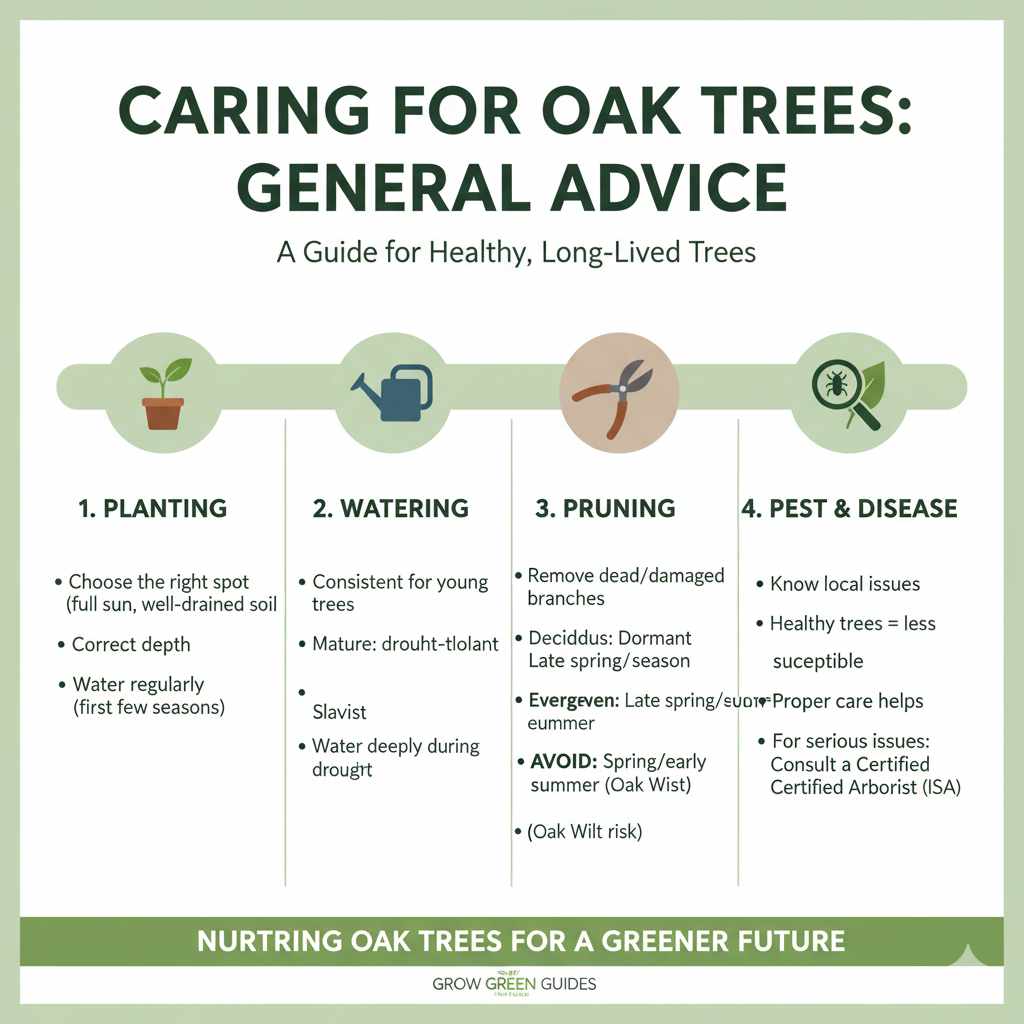
Caring for Oak Trees (General Advice)
Whether your oak is evergreen or deciduous, it will likely be a long-lived and rewarding tree. Here are some general tips for their care:
1. Planting:
Choose the right spot! Oaks generally need full sun and well-drained soil. Research the specific needs of your oak species.
Plant them at the correct depth.
Water regularly during the first few seasons to help them establish.
2. Watering:
Young trees need consistent watering.
Mature oaks are quite drought-tolerant, but prolonged dry spells can still stress them. Water deeply during extreme drought.
3. Pruning:
Prune to remove dead, damaged, or crossing branches.
The best time to prune most deciduous oaks is during their dormant season (late fall to early spring) to minimize stress and disease risk. For evergreen oaks, late spring or early summer is often recommended after new growth has hardened. Always use clean, sharp tools.
Avoid pruning during the spring and early summer growing season for oaks, as this can attract certain pests and diseases, like Oak Wilt.
4. Pest and Disease Management:
Be aware of common oak pests and diseases in your region.
Healthy trees are less susceptible. Proper watering, soil, and limited pruning can help.
For serious issues, consult a certified arborist. The International Society of Arboriculture (ISA) has resources to help you find a qualified professional.
Frequently Asked Questions (FAQ)
Q1: So, are ALL oak trees evergreen?
No, not all oak trees are evergreen. The vast majority of oak species are deciduous, meaning they lose their leaves every year. Only a select few species are evergreen or semi-evergreen.
Q2: How can I tell if an oak tree is evergreen from a distance?
If the oak tree still has green leaves on it in the middle of winter, it’s a good sign it’s an evergreen or semi-evergreen variety. Deciduous oaks will be completely bare during this time.
Q3: What is the most common type of oak tree?
The most common type depends heavily on your geographical location. In North America, the White Oak (Quercus alba) and Red Oak (Quercus rubra) are very common deciduous species. In Europe, the English Oak (Quercus robur) is widespread. In warmer, coastal regions of North America, the Live Oak (Quercus virginiana or Quercus agrifolia) is very common and is semi-evergreen.
Q4: Do evergreen oaks lose their leaves?
Yes, evergreen oaks do lose their leaves, but not all at once. They shed old leaves gradually throughout the year, so the tree always appears to have foliage. This is different from deciduous trees that drop all their leaves seasonally.
Q5: Is oak wood from evergreen oaks different from deciduous oaks?
While wood from evergreen oaks is hard and durable, most commercially harvested oak lumber comes from deciduous species like White Oak and Red Oak. These are well-studied and categorized for woodworking. The density and working properties can vary between species, but generally, oak in any form is a strong hardwood.
Q6: Why do deciduous oaks lose their leaves?
Deciduous oaks lose their leaves as a survival strategy to conserve water and energy during cold winters or dry seasons. It prevents water loss through transpiration and reduces the risk of branches breaking under snow or ice.
Conclusion
Navigating the world of trees can be wonderfully rewarding, and understanding their characteristics, like whether they are evergreen or deciduous, is a key part of that journey. For oak trees, the general rule you’ll encounter most often is that they are deciduous, gracing our landscapes with vibrant autumn colors before their winter slumber. However, it’s always good to know about the interesting exceptions like the Holm Oak or Live Oak, which offer their beauty year-round.
As a woodworker, knowing your oak species can even influence the wood you choose for a project, with White Oak and Red Oak offering distinct properties for different applications. Whether you’re planting a new tree, admiring the seasonal changes in your neighborhood, or selecting lumber for your next project, appreciating these differences adds depth to your connection with these magnificent trees. So, the next time you see an oak, take a closer look – its year-round appearance might just tell you a fascinating story about its nature!