Ash Wood Density: Weight, Specific Gravity & Janka Hardness
White ash weighs about 42 pounds per cubic foot once dried to a standard 12% moisture content, with a specific gravity near 0.60. That number shifts by species — green ash and especially black ash both run measurably lighter — and it shifts again with how wet the wood still is, since a freshly cut log carries far more weight in water than a dried board of the same size. Below are the real density figures by ash species, what moisture content does to those numbers, and how ash stacks up against the other woods you’re probably choosing between.
How Dense Is Ash Wood? Density by Species
Best Moisture Meter for Checking Ash Before You Buy or Build
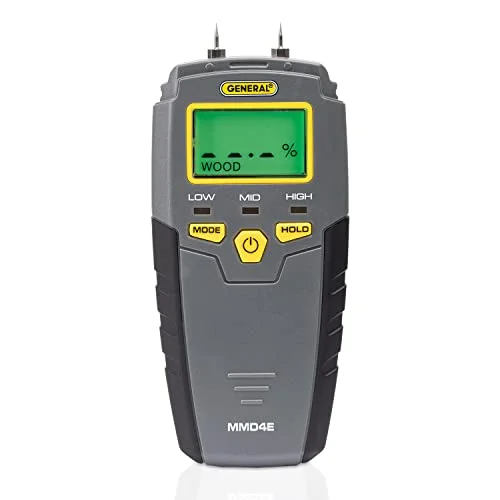 |
General Tools MMD4E Digital Moisture Meter – $24.99 Since density figures assume dry wood, checking actual moisture content tells you whether that ash board is really at the weight and hardness the charts below promise.
|
Ash isn’t one uniform number — “ash” covers several species sold under the same name, and their density varies enough to matter for tool handles, flooring, and furniture. The table below uses the commonly published reference values for wood dried to 12% moisture content, the standard basis most lumber charts use. Individual boards will vary a bit from sample to sample, since density is a natural-material average, not a fixed constant.
| Ash Species | Density (dry, 12% MC) | Specific Gravity | Janka Hardness |
|---|---|---|---|
| White Ash | ~42 lbs/ft³ | ~0.60 | 1,320 lbf |
| Green Ash | ~41 lbs/ft³ | ~0.56 | 1,200 lbf |
| Black Ash | ~34 lbs/ft³ | ~0.45–0.50 | 850 lbf |
White ash is the species you’ll most often see in tool handles, baseball bats, and furniture-grade lumber, precisely because it lands in that 1,300 lbf hardness range — hard enough to resist dents and shock, light enough to still be comfortable to swing or carry. Black ash, sometimes sold as “brown ash” or basket ash, is noticeably softer and lighter; it bends and splits more easily, which is exactly why it’s the traditional choice for woven basket strips, but it’s a weaker pick for a hammer handle or a stair tread. Green ash falls close to white ash in most mechanical properties and is frequently graded and sold interchangeably with it.
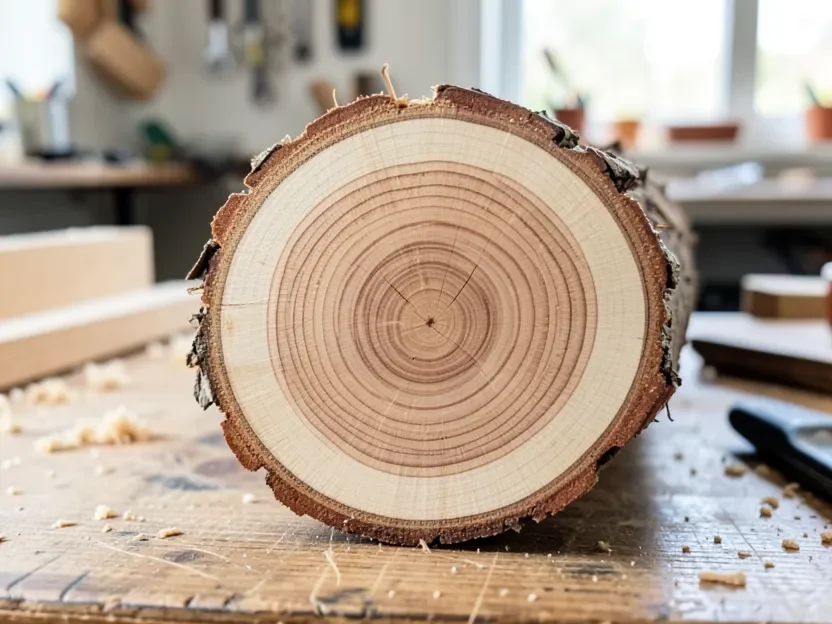
Does Moisture Content Change Ash Wood’s Density?
Yes, significantly. Every density figure published for ash — including the table above — is a “dry weight” number, meaning the wood has already been air-dried or kiln-dried down to roughly 12% moisture content, the rough equilibrium most indoor lumber settles at. A freshly cut, “green” ash log is a different story: living wood can carry 30–45% or more of its weight in free water inside the cell structure, on top of the solid wood material itself. That water adds real weight without adding any strength, which is why green ash feels noticeably heavier than a dried board of the same dimensions.
What confuses people is that wood also shrinks as it dries — a board loses volume along with weight, mostly across the grain rather than along its length. So the drop in raw density (weight per cubic foot) between green and dry ash is smaller than the drop in total weight, because the piece is getting both lighter and smaller at the same time. In practice: don’t trust a density or hardness chart for a board you haven’t checked, especially firewood-grade or air-dried lumber that may still be well above 12% moisture. That’s the one place a cheap moisture meter earns its cost — a board reading 25% moisture content is still partway through drying and will be both softer and lighter-feeling than its “dry” density number suggests, and it will also move and check as it finishes drying.
How Ash Density Compares to Other Common Woods
Ash sits in the middle of the domestic hardwood pack — denser and harder than walnut or pine, but a step below oak, maple, and hickory.
| Wood | Density (dry, 12% MC) | Janka Hardness |
|---|---|---|
| White Ash | ~42 lbs/ft³ | 1,320 lbf |
| Red Oak | ~44 lbs/ft³ | 1,290 lbf |
| White Oak | ~47 lbs/ft³ | 1,360 lbf |
| Hard Maple | ~44 lbs/ft³ | 1,450 lbf |
| Black Walnut | ~38 lbs/ft³ | 1,010 lbf |
| Shagbark Hickory | ~51 lbs/ft³ | 1,820 lbf |
| Southern Yellow Pine | ~36 lbs/ft³ | ~690 lbf |
Red oak and white ash are close enough in both density and hardness that they’re often interchangeable structurally, which is one reason ash gets used as a budget-friendly stand-in for oak flooring and furniture. Hickory is in a different league entirely — roughly 20% denser and nearly 40% harder than white ash — which is why hickory, not ash, is the standard for axe and hammer handles that take repeated hard impact. Ash’s real advantage over hickory and oak is weight: it’s noticeably lighter for its hardness, which is exactly the combination — shock resistance without excess mass — that made it the traditional choice for baseball bats, tool handles, and tennis rackets before composites took over those markets.
What Ash Wood’s Density Means for Your Project
Density drives three things you’ll actually notice in the shop. First, workability: ash’s moderate density means it machines cleanly with sharp blades, holds screws and glue joints well, and bends predictably when steamed, without fighting you the way denser hickory or heavier tropical hardwoods can. Second, feel and durability in the finished piece: that same density is why ash flooring and furniture resist dents better than pine or poplar but still feel lighter underfoot or in hand than oak or hickory. Third, shipping and handling weight — if you’re figuring out how much a specific board, slab, or order of ash lumber will actually weigh for freight, moving, or shop equipment load limits, that’s a board-foot calculation built directly from these density numbers; see our ash wood weight per board foot guide for the exact math.
One more practical note: kiln-dried ash and air-dried ash reach the same rough final density, but kiln drying gets there faster and more evenly, which matters if you’re buying lumber that needs to be stable right away rather than waiting out a slower air-dry cycle. If you’re unsure whether a batch of lumber has actually reached a workable moisture level, our guide on what kiln drying actually does to wood covers that distinction in more depth. And if density and hardness are just one part of what you’re trying to learn about this species — grain pattern, color, or where white ash differs from swamp ash — the full ash wood properties guide covers those beyond just the numbers here.
Frequently Asked Questions
What is the density of ash wood in pounds per cubic foot?
White ash, the most common species sold as lumber, weighs about 42 pounds per cubic foot when dried to 12% moisture content. Green ash is close behind at roughly 41 lbs/ft³, while black ash is noticeably lighter at around 34 lbs/ft³.
Is ash wood denser than oak?
No, not quite. Red oak (about 44 lbs/ft³) and white oak (about 47 lbs/ft³) are both slightly denser than white ash (about 42 lbs/ft³). Ash and red oak are close enough in hardness, though, that they’re often used interchangeably in flooring and furniture.
Does moisture content affect ash wood’s density?
Yes. Published density figures assume wood dried to about 12% moisture content. Green, freshly cut ash can carry 30–45% or more of its weight in water, making it feel considerably heavier than a dried board of the same size, even though it will also shrink somewhat as it dries.
Is black ash as dense as white ash?
No. Black ash runs noticeably lighter and softer, at roughly 34 lbs/ft³ and 850 lbf on the Janka scale, compared to white ash’s 42 lbs/ft³ and 1,320 lbf. That’s why black ash is traditionally split into strips for basket weaving rather than used for tool handles.
Why does ash wood’s density matter for woodworking?
Density is the main reason ash became the traditional choice for tool handles, baseball bats, and sports equipment: it’s hard enough to resist shock and dents but lighter than oak or hickory of similar hardness. It also determines how heavy a given board, slab, or shipment will actually be, which matters for freight, moving, and shop equipment weight limits.
Sponsored / affiliate links. As an Amazon Associate I earn from qualifying purchases. I may earn additional commission from eligible campaigns.