How Much Does an Ash Baseball Bat Cost?
An ash baseball bat is often reported at about $30 to $60 for stock models, about $80 to $150 for mid-range pro-style bats, and roughly $200 to $500+ for custom or collectible versions. This guide breaks down prices by quality tier, intended use, durability, and the customization costs that push the total up.
Ash baseball bat prices at a glance
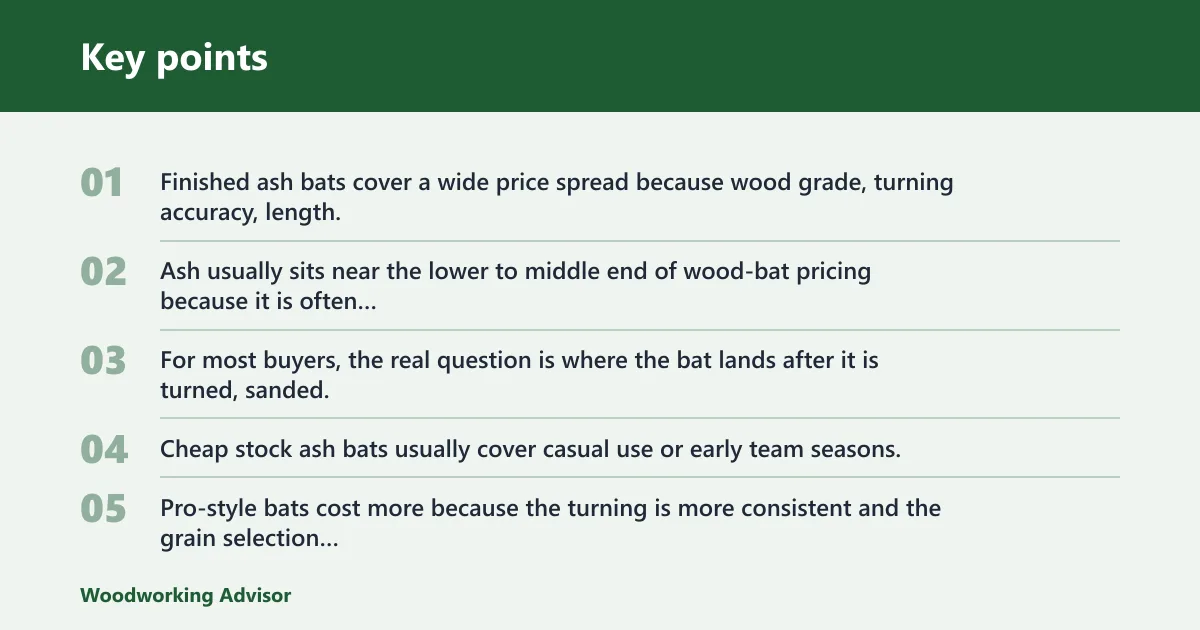


Finished ash bats cover a wide price spread because wood grade, turning accuracy, length, weight, and customization all change the bill. Ash usually sits near the lower to middle end of wood-bat pricing because it is often positioned as a more affordable wood choice than maple.
Finished bat price bands
For most buyers, the real question is where the bat lands after it is turned, sanded, finished, and shipped. Cheap stock ash bats usually cover casual use or early team seasons. Pro-style bats cost more because the turning is more consistent and the grain selection is tighter. Custom and collectible bats add personalization, special finishes, or limited-run details.
Ash blank versus finished bat
An ash bat blank is unfinished wood, so the sticker price is only part of the story. You still have to pay for turning, sanding, finish work, and often shipping. That makes a blank attractive only if you have a clear reason to buy unfinished wood, such as a custom shop order or a maker who already handles the lathe work.
Who each tier fits
Budget stock bats fit players who want a lower-cost wood bat for occasional games or practice. Mid-tier pro-style bats fit regular adult-league hitters who want a predictable feel without paying collectible prices. Custom and collectible ash bats fit buyers who care about model accuracy, personalization, or display value more than replacement cost.
What drives ash bat cost
Ash bat pricing depends on the wood itself, how cleanly the billet is turned, how much labor is involved, and whether the order is one bat or a batch of bats. Longer lengths, heavier profiles, and custom specs usually cost more because they use more material and require more careful sorting.
Wood grade and grain quality
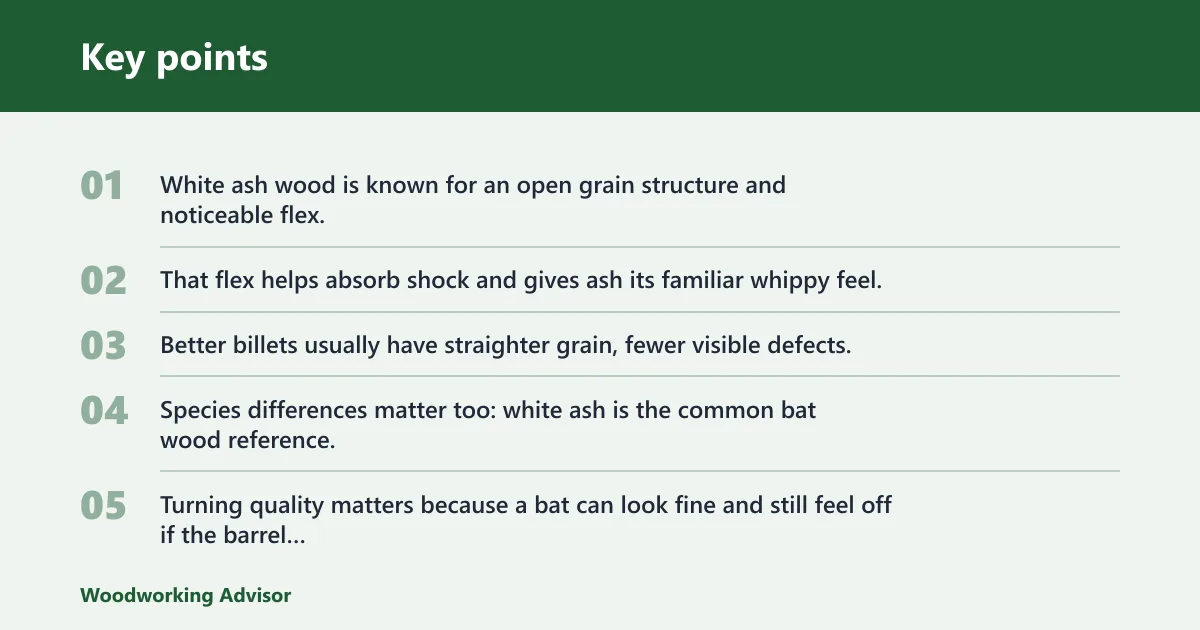
White ash wood is known for an open grain structure and noticeable flex. That flex helps absorb shock and gives ash its familiar whippy feel. Better billets usually have straighter grain, fewer visible defects, and more consistent density, which is why cleaner wood costs more. Species differences matter too: white ash is the common bat wood reference, not every ash species behaves the same way.
Turning accuracy and finish quality
Turning quality matters because a bat can look fine and still feel off if the barrel taper, handle thickness, or balance is inconsistent. Cleaner lathe work usually means better weight matching and fewer surprises in swing weight. A smoother finish, tinted coating, gloss coat, or extra protective layers can raise the price because each step adds labor and material.
Length, weight, and bat type
Youth sizes often cost less than adult sizes because they use less wood and smaller billets, but special lengths can narrow that gap. Adult bats with larger barrels or heavier profiles usually cost more. A bat made for league play also needs to match the rule set, which can affect what you can actually buy and use.
Brand name and order size
Brand name can add cost because buyers pay for a known shape, steady output, warranty policies, and reputation. Small custom orders usually cost more per bat than bulk runs. That is one reason pro players often do not pay retail for bats, while individual buyers do.
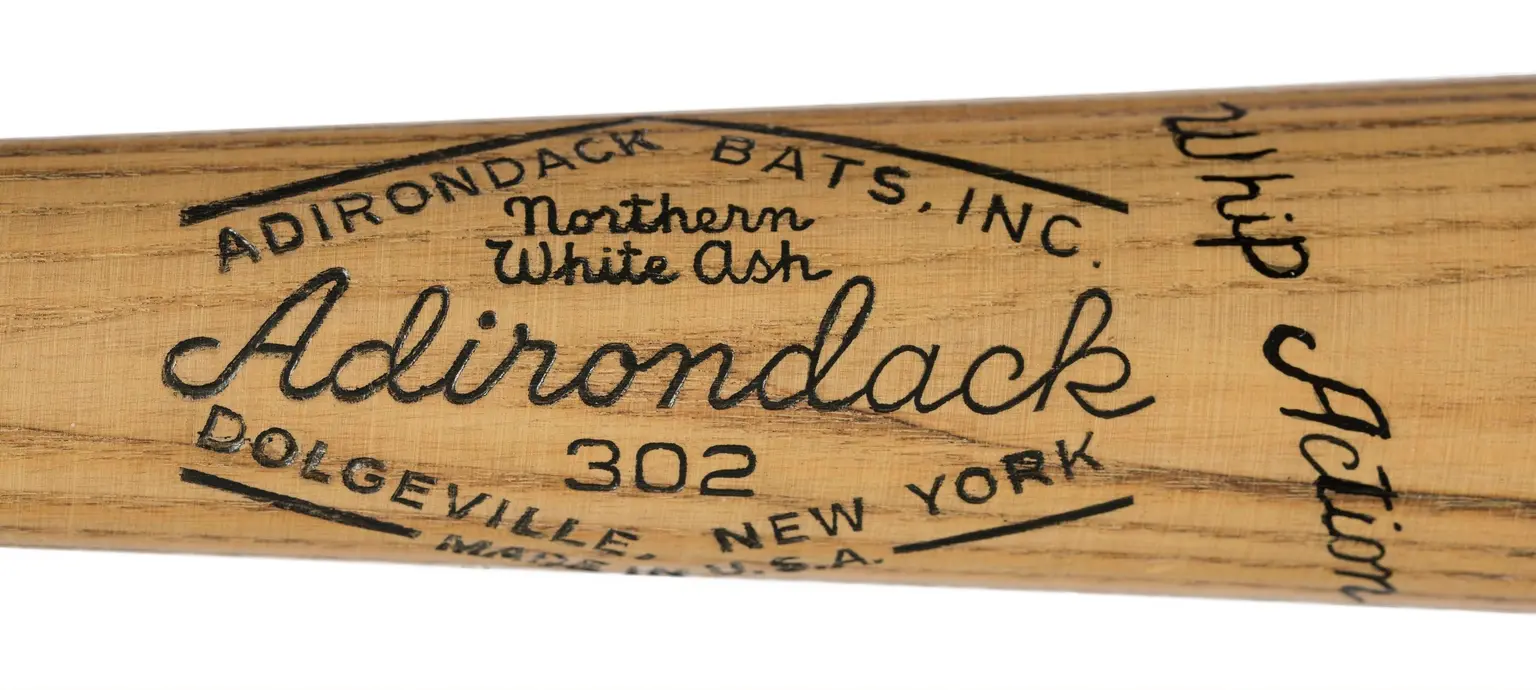
How much does a stock ash bat cost?
A stock ash bat usually costs about $30 to $60. These bats are aimed at budget buyers and casual use, so the profile, finish, and grain selection are usually simpler than on pro-style models.
Durability and replacement cycle
Stock ash bats tend to wear out faster than better-selected pro-style bats, especially under hard contact or heavy game use. Ash is flexible and forgiving, but that does not make it the longest-lasting wood option. If you expect frequent games, a lower upfront price can disappear quickly if you replace the bat often.
Best buyer profile
Budget ash bats fit youth players moving into wood, adult-league players who want a backup, or anyone who needs a low-cost game bat without custom specs. They are less attractive for frequent power hitters, because the chance of breakage pushes the cost per season upward.
How much does a pro-style ash bat cost?
A pro-style ash bat usually costs about $80 to $150. In this tier, you are paying for better billet selection, more consistent turning, and a bat shape that is closer to what experienced hitters want.
Model consistency and quality control
Pro-grade wood bat buyers care about repeatability. The same label or model should feel similar from bat to bat, with a predictable handle, barrel, and balance point. That consistency matters more than flashy finish work when the bat is meant for regular competition.
Value versus maple and birch
Ash is usually more flexible than maple, which can make it feel friendlier on contact. Maple often costs more at similar quality levels and is commonly chosen by hitters who want a stiffer feel and a harder surface. Birch sits between them for feel and durability, and it can be a strong middle-ground choice when ash starts to look like a shorter-life option.
Say your adult-league hitter uses a 33-inch ash bat twice a week and breaks one each season. A $120 bat that lasts a season may still be better value than a $70 bat that cracks midway through the schedule and forces another purchase.
Ash bat price matrix
This matrix separates finished bat pricing from blank pricing so you can compare apples to apples. It also shows how likely durability and added charges affect total cost of ownership, not just the shelf price.
| Tier | Typical retail range | Ash blank cost | Likely durability | Best for | Hidden add-ons |
|---|---|---|---|---|---|
| Budget stock | $30 to $60 | Usually not sold as a separate blank in retail channels | Lower to moderate; replacement can be frequent | Youth players, backups, casual league use | Shipping, basic personalization, simple finish upgrades |
| Mid-tier pro-style | $80 to $150 | About $20 to $50 before turning and finishing | Moderate; better grain selection can improve consistency | Adult-league hitters, regular team use | Shipping, engraving, color finish, weight matching |
| Custom or collectible | $200 to $500+ | Often part of a made-to-order or specialty build | Variable; display value may matter more than lifespan | Collectors, signed or limited-run models, custom orders | Engraving, special finishes, personalization, special shipping |
What does a custom ash bat add to the bill?
A custom ash bat adds cost through personalization, finish work, and order handling. A custom order can climb into roughly the $200 to $500+ range when the buyer wants a specific shape, engraving, custom paint, or collectible-style presentation. The more the order departs from stock, the more the price moves.
Personalization and engraving
Names, jersey numbers, logos, and model marks increase the cost because they add setup and production time. Some buyers want a bat that looks like a pro model but carries personal markings, and that request usually moves the order out of standard inventory.
Finish options and color work
Clear coat, stained barrels, painted handles, matte finishes, and multi-tone designs all add labor. A plain natural finish is usually the least expensive path. Extra finish work can also matter for display bats, where appearance matters as much as performance.
Shipping and special-order costs
Shipping can change the final price more than buyers expect, especially for single-bat orders or rush requests. Special-order bats may also carry handling fees, and a custom turner may charge more if the order asks for unusual length, balance, or barrel shape.
How much does a baseball bat cost?
Ash usually falls in the lower half of the wood-bat price ladder unless the bat is custom, collectible, or built to pro-model specs. That is why the same material can look inexpensive in one listing and expensive in another.
League legality and certification checks
League rules matter because a bat can be legal in one setting and unusable in another. Youth and amateur leagues may require a stamped standard or a specific approval mark, while many wood-bat leagues focus on length, barrel size, and approved construction rather than the same certification approach used for metal or composite bats. Always check the bat against the league rule before paying extra for a specialty model.
When ash becomes poor value
Ash can be a poor value when the hitter swings hard and breaks bats often, because the replacement cycle raises total cost quickly. It can also be weak value for players who need the hardest possible barrel surface or the longest service life. In those cases, maple or birch may cost more upfront but last long enough to close the gap.
Picture a youth player moving from alloy to wood for summer ball. A $45 stock ash bat is fine for learning mechanics and understanding wood contact, but a player who practices daily may get better value from a sturdier mid-tier model with cleaner grain and a more controlled swing weight.
Ash vs maple bat cost
Ash bats are often cheaper than comparable maple bats, especially in stock and mid-tier categories. Maple usually costs more because buyers expect a harder surface and, in many cases, a more durable barrel on contact. The best choice depends on how often the bat is used and how much breakage risk the hitter can tolerate.
Price comparison
At similar quality levels, ash often occupies the lower price band, while maple moves toward the higher end of wood-bat pricing. A buyer comparing two similarly finished bats may see ash as the lower-cost entry point and maple as the upgrade path.
Durability comparison
Ash is more flexible and can feel forgiving, but flexible does not mean indestructible. Maple is generally chosen for hardness and longevity, although a cracked maple bat can still fail abruptly. Birch gives many buyers a middle path: some flex early, firmer feel later, and a price that may sit between ash and maple.
Which hitter type each suits?
Ash suits contact hitters and players who like a lighter, springier feel through the zone. Maple suits hitters who want a stiffer bat and often favor harder contact profiles. If a player values feel and a lower entry price more than maximum barrel hardness, ash is usually the easier purchase.
Frequently asked questions
How much is a baseball bat?
For wood bats, a common price guide puts entry models at $50-$100 and premium wood bats at $170-$300. Alloy and composite bats can price differently, but for ash specifically, the main decision is whether you want a budget stock bat, a mid-tier pro-style model, or a custom order.
How expensive is ash?
White ash is usually not the most expensive wood-bat option, but good ash billets still cost more than bargain-grade stock. What raises the price is straight grain, clean turning, and a shape that meets league rules. Ash becomes more expensive when it is custom-built or tied to a premium model.
Are ash bats cheaper than maple bats?
Usually, yes. Ash bats often cost less than comparable maple bats because ash is commonly positioned as the more affordable wood choice. Maple tends to sit higher on price because buyers pay for harder barrel feel and, in many cases, longer useful life between breaks.
How much does a custom ash bat cost?
A custom ash bat commonly starts well above stock pricing and can land in the $200 to $500+ range when you add personalization, engraving, special finish work, or collectible presentation. The exact total depends on how far the order moves from a standard model and how much shipping adds.
Ash vs maple bats
Ash usually costs less and feels more flexible, while maple usually costs more and feels stiffer. Ash can be a smart buy for players who want a forgiving feel and a lower upfront price. Maple can be the better fit for hitters who prioritize hardness, durability, and a firmer response on contact.
Sponsored / affiliate links. As an Amazon Associate I earn from qualifying purchases. I may earn additional commission from eligible campaigns.
 Titebond II Premium Wood Glue 5 Gal. – ANSI Type II Waterproof Exterior Wood Adhesive, Strong Initial Tack, Fast Set, Ideal for Outdoor Projects & RF/Hot Press Gluing Systems – 5007
 KEILEOHO 100 PCS 1.2 Inch Small Wooden Blocks, Unfinished Wooden Cubes, Solid Blank Square Blocks for Crafts, Painting, Puzzle Making, Decorating, DIY Projects