How Much Does It Cost to Build Furniture with Ash?
Building furniture from ash usually costs about $250 to $900 for a small piece, about $900 to $2,500 for a medium table or dresser, and $2,500+ for larger casework once lumber, waste, milling, finish, and labor are included. Miss those costs and a “cheap” ash project can run 2 to 4 times over budget. This guide breaks down lumber, waste, machining, finish, and labor into project-size scenarios so you can price an ash build before you buy stock.
What drives ash furniture cost


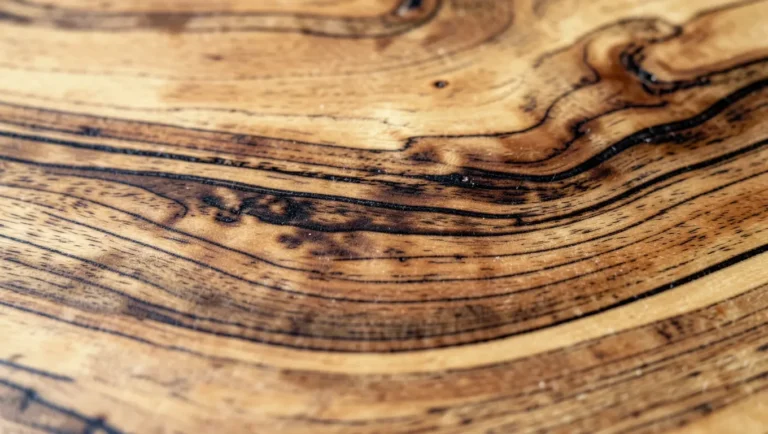
White ash is the workhorse for furniture design, and European ash is often compared with it. Both are straight-grained hardwoods that machine well, but price shifts with species, grade, thickness, drying, and local supply. Board foot is the main pricing unit, so the lumber price is only the starting point.
White ash is lightweight yet stiff, with density around 41 pounds per cubic foot, Janka hardness of 1,320 lbf, tangential movement about 7.8%, and radial movement about 4.9%. Those traits make it useful for furniture, and they also explain why dry stock, good layout, and stable joinery matter.
Board foot pricing and project yield
Lumber is usually sold per board foot, then converted into project cost through yield and waste. A board foot equals a 1-inch-thick board 12 inches square, or the same volume in another size. If your parts need 24 board feet of finished material, the actual purchase is usually higher because boards include knots, cutoffs, and milling loss.
A practical budgeting rule is to multiply finished board feet by 1.25 to 1.6 for simple furniture, and by 1.7 to 2.0 for projects with many short parts, curved parts, or visible grain matching. That multiplier is where many ash budgets go wrong.
Grade, thickness, and moisture content
Higher grades cost more because they have fewer knots, color streaks, and other defects. Standard stock is the least expensive, select stock sits above it, and FAS is premium stock. Thickness matters too: 4/4 is cheaper than 8/4, and thicker stock raises both purchase price and waste because more material is removed during flattening and sizing.
Kiln-dried ash is typically 6-8% moisture content, which is preferred for furniture because it is more stable than air-dried stock. Kiln drying usually adds cost versus rough air-dried lumber, but it reduces movement risk and the chance of rework after assembly.
Ash lumber price range
For budgeting, ash commonly lands around $4-8 per board foot in furniture use, with 4/4 stock often listed at $3.50 to $7.50 per board foot and 8/4 ash at $6.50 to $13.00 per board foot. Rough-sawn stock is usually the low end, kiln-dried stock costs more, and S4S adds another step and price bump.
Those ranges are not a national quote. They shift with species, grade, thickness, drying, and supply pressure from region to region. If a supplier is short on dry, straight stock, the upper end can appear fast.
Rough-sawn vs kiln-dried vs S4S
Rough ash is usually cheapest because you are buying lumber before surfacing and trimming. Kiln-dried stock costs more because moisture control takes time and equipment, but it is the safer choice for furniture parts. S4S saves shop time because it is planed and jointed, yet that convenience is built into the price.
Say your project needs 18 board feet of parts and you choose rough 4/4 ash at the low end. The lumber bill may look manageable, but the total rises once you add milling time, waste from cleanup, and the extra boards needed for defects or twist.
Standard, select, and FAS stock
Standard grade works when some defect will be hidden or cut away. Select grade reduces waste on visible parts. FAS is the premium choice for wide, clear boards, especially when door frames, table aprons, or long chair parts need consistent grain and fewer rejects.
For furniture, grade affects more than appearance. Lower-grade boards can force you to buy extra stock for the same finished parts, which makes the cheaper board look less cheap after yield is counted.
4/4 ash is the default for many panels, legs, rails, and aprons. 8/4 stock is used for thicker legs, butcher-block-style details, and parts that need extra depth. It costs more per board foot and often carries more waste because each board must be milled down farther.
Quarter-sawn ash usually costs more than plain-sawn stock because the cut reduces yield and raises processing cost. It can be worth the premium for parts that need straighter grain and more predictable movement, but the budget should reflect that premium from the start.
What adds to the total?
The full cost of an ash build includes more than lumber. Delivery, milling, finish, glue, fasteners, and hardware can add a noticeable amount, especially on a small project where material efficiency is poor. If the build has rejected boards or tearout during milling, the cost climbs again.
Delivery and freight
Freight can materially raise the final number. Ash availability varies by region, so a supplier farther away may have better grades but a worse delivered price. Small orders are hit hardest because shipping is spread over fewer board feet.
Milling and surfacing
Planing, jointing, ripping, and sanding add cost, often charged per board foot or per hour. Labor rates typically range from $40 to $85 per hour. If a shop needs to flatten rough ash, cut around defects, and re-run parts after tearout, milling can become one of the bigger line items.
Finish, glue, and hardware
Finish can be modest on a small shelf or meaningful on a dresser with multiple coats. Glue, screws, drawer slides, pulls, and leveling feet all add up. Mixed-material builds can lower lumber cost for hidden parts, but they do not remove hardware or finishing costs.
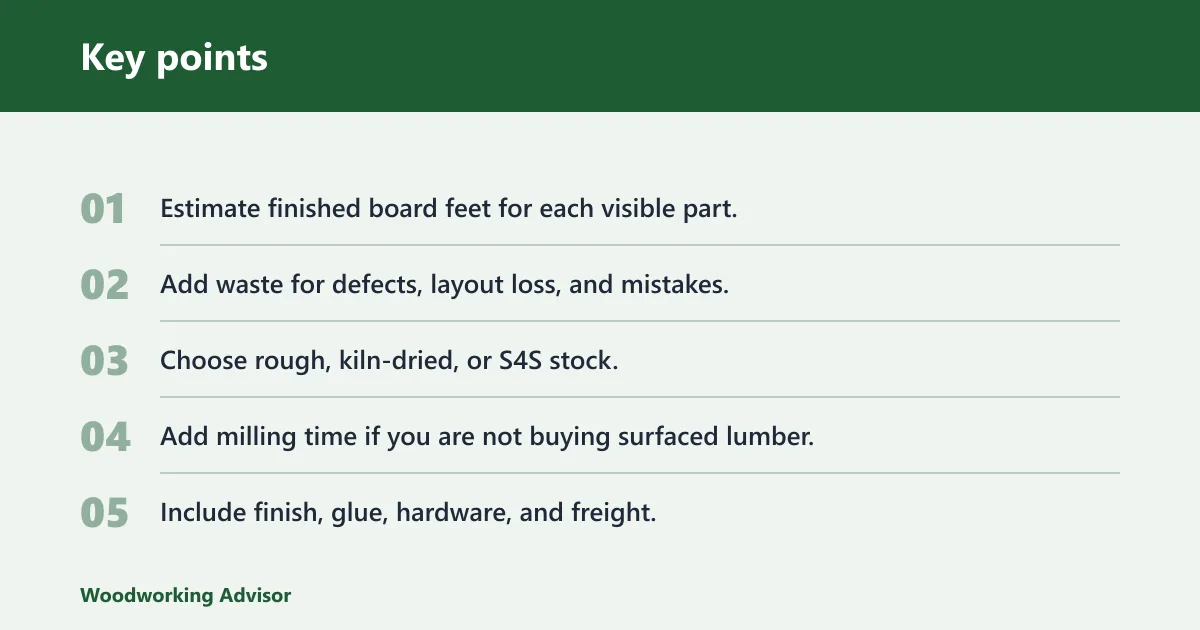
- Estimate finished board feet for each visible part.
- Add waste for defects, layout loss, and mistakes.
- Choose rough, kiln-dried, or S4S stock.
- Add milling time if you are not buying surfaced lumber.
- Include finish, glue, hardware, and freight.
- Price extra stock for rejected boards and tearout.
Ash furniture cost worksheet
This worksheet turns lumber pricing into project budgets. It separates rough-stock cost from surfacing, finish, and hardware so you can see where the money goes. The lumber totals below use realistic planning ranges, not a single national price.
| Project | Finished board feet | Lumber grade choice | Waste allowance | Milling hours | Finish/material add-ons | Low total | High total | Per-component cost |
|---|---|---|---|---|---|---|---|---|
| Small table | 10 bf | Standard 4/4, kiln-dried | 25% | 2-3 | $35-$85 finish, glue, hardware | $250 | $900 | Top, apron, legs: about $60-$180 each |
| Chair | 14 bf | Select 4/4, kiln-dried | 35% | 4-6 | $45-$110 finish, glue, hardware | $450 | $1,200 | Seat, back, rails, legs: about $40-$160 each |
| Dresser | 28 bf | Select to FAS, mixed 4/4 and 8/4 | 30% | 6-10 | $120-$260 finish, glue, hardware, slides | $900 | $2,500 | Case, drawers, face frame, legs: about $120-$450 each |
The table above assumes standard shop conditions, not a bargain-yard miracle. A chair can cost more per pound of finished furniture than a dresser because the parts are smaller, the waste rate is higher, and the labor per board foot is higher.
Picture a 4-board-foot side table built from 4/4 ash with simple stretchers. If the builder needs clear stock for the top and legs, the lumber bill may stay low, but milling, finish, and freight can still push the total past a casual estimate.
How much ash do you need?
Ash quantity starts with finished part size, not the rough board count. You add board feet for each part, then apply a waste multiplier for defects, layout loss, and rejected boards. That multiplier is the difference between a realistic budget and a surprise at checkout.
Estimating board feet from parts
Start with each visible part: top, legs, rails, drawer fronts, sides, and shelves. Long, straight parts are efficient. Short or curved parts are not. The more parts you need from clear grain, the more extra stock you should buy.
Waste allowance and reject boards
Waste allowance should cover knots, sapwood mismatch, twist, and board layout. A common mistake is assuming the ash lumber cost stops at the listed board-foot price and forgetting to budget for extra stock lost to knots, saw kerf, and matching grain across the pieces. In ash, that mistake shows up fast when one wide board turns out to be less usable than expected.
Rough-stock versus finished component pricing
Rough lumber is cheaper at the sticker price, but surfaced component cost can be lower only if you can flatten and dimension it efficiently. S4S reduces labor, yet it usually raises the material bill. For a small shop, the better choice depends on whether time or cash is tighter.
How to keep the budget lower
Buy standard grade when defects will be hidden or cut away. Choose rough lumber if you can mill it yourself. Lay out parts to avoid wide offcuts, and reserve premium boards for the parts people will see first.
Another way to cut cost is to mix materials. Use ash where strength and appearance matter, then choose a less expensive panel material for drawer bottoms, interior webs, or hidden stretchers if the design allows it. That keeps the visible character of ash without paying premium rates for every hidden part.
Regional price differences
Local supply and freight distance can change the final price as much as grade. Markets with fewer dry, straight boards usually charge more for the same species. Regional availability also affects how much you pay for select and FAS stock.
In many areas, ash supply has been reduced and market prices can be more volatile where Emerald Ash Borer has affected trees. That pressure can make ash cheaper in one region and harder to find in another. It also means pricing can swing when a local yard has a fresh shipment or a shortage.
Ash may cost more than other hardwoods in one market and less in another. If white ash supply is thin, European ash or another hardwood may be the better budget choice. Compare delivered price, not just sticker price per board foot.
Frequently asked questions
How much ash lumber do I need for a furniture project?
Start with the finished board feet of every visible part, then add 25% to 40% for simple pieces and 50% or more for chairs, curved parts, or grain-matched casework. The exact number depends on grade, defect rate, and whether you are buying rough lumber or surfaced stock.
What is the price per board foot for ash furniture-grade lumber?
Furniture-grade ash often falls in the $4-8 per board foot range, with 4/4 stock commonly listed at $3.50 to $7.50 and 8/4 stock at $6.50 to $13.00. White ash and European ash can price differently, and higher grades or kiln-dried stock usually cost more.
Is kiln-dried ash worth the extra cost for furniture?
Usually yes for furniture parts that need stable dimensions and predictable joinery. Kiln-dried ash typically targets 6-8% moisture content, which helps reduce movement after milling and assembly. It costs more than rough-dried stock, but it lowers the risk of rework and seasonal gaps.
Milling, surfacing, freight, finish, glue, fasteners, hardware, rejected boards, and tearout are the main hidden costs. Labor often matters more than buyers expect, especially on chairs and dressers where many parts must be fitted and sanded before assembly.
How do ash thickness and grade change the total project price?
4/4 ash is cheaper than 8/4, and standard grade is cheaper than select or FAS. Thicker stock raises purchase price and waste because more material is removed during surfacing. Higher grades reduce defects and rework, so they can save money on visible parts even when the board-foot price is higher.
Can I save money by buying rough ash instead of S4S?
Yes, if you have the tools and time to joint, plane, and rip the lumber yourself. Rough stock usually costs less per board foot than S4S, but the savings shrink if you have to spend many hours surfacing boards or if the lumber has more defects than expected.
Sponsored / affiliate links. As an Amazon Associate I earn from qualifying purchases. I may earn additional commission from eligible campaigns.