Ash Wood Good For Furniture: Proven Essential
Yes, ash wood is excellent for furniture! It’s strong, durable, affordable, and easy to work with. Its attractive grain makes beautiful pieces, making it a proven essential for both beginners and experienced woodworkers seeking quality and value.
Ever looked at a beautiful wooden table or chair and wondered about the wood it’s made from? Choosing the right wood can feel a bit overwhelming, especially when you’re starting out. You want something that looks good, lasts a long time, and doesn’t break the bank. If you’ve been curious about ash wood for your furniture projects, you’re in the right place! It’s a fantastic choice that many seasoned woodworkers rely on, and it’s very beginner-friendly. We’ll dive into why ash is such a popular and practical option, helping you feel confident in your woodworking decisions. Let’s explore what makes ash wood a true essential for creating stunning, lasting furniture.
Ash Wood for Furniture: A Beginner’s Guide to a Proven Essential
As Md Meraj, your woodworking mentor, I’ve seen firsthand how much joy creating something with your own hands can bring. When it comes to furniture, the material you choose is key. Ash wood is a popular choice for good reason. It’s a hardwood that offers a wonderful combination of strength, beauty, and workability, making it perfect for anyone dipping their toes into woodworking or looking to upgrade their projects.
Think of ash wood as the reliable, friendly neighbor in the lumber yard. It’s readily available, relatively affordable, and forgiving to work with, which is music to a beginner’s ears. But don’t let its approachability fool you; ash wood produces furniture that is both stylish and incredibly durable. Let’s unpack why this wood is consistently recommended and what makes it such a standout option for creating beautiful, long-lasting pieces.
What Makes Ash Wood Stand Out for Furniture?
Ash wood is a natural hardwood, meaning it comes from deciduous trees (trees that lose their leaves annually). This type of wood is generally harder and denser than softwood, which comes from coniferous trees (like pine or fir). This inherent hardness is a big reason why ash is so good for furniture.
Here’s a breakdown of what makes ash wood a fantastic choice:
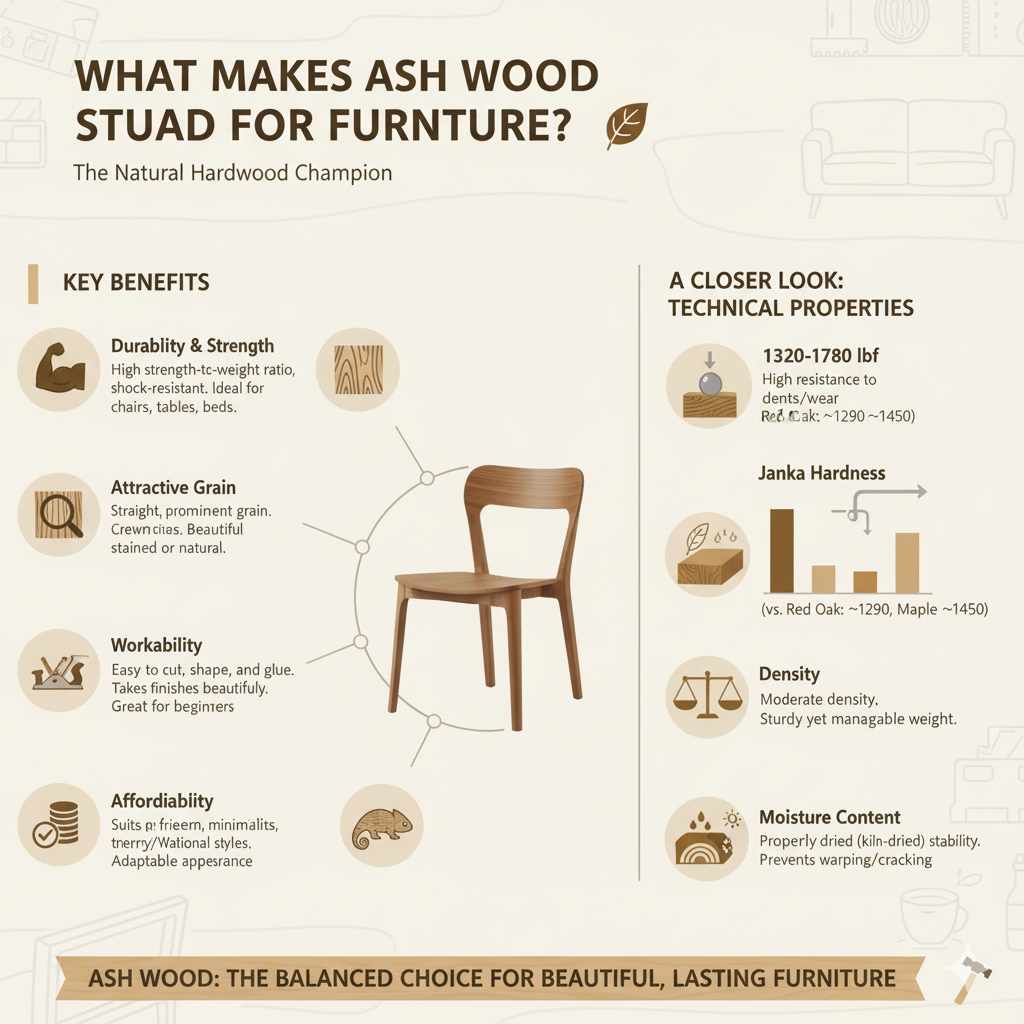
Durability and Strength: Ash is known for its impressive strength-to-weight ratio. It can withstand heavy use without showing significant wear and tear. This makes it ideal for furniture that sees a lot of action, like dining tables, chairs, and bed frames. It has excellent shock resistance, making it a great wood for tool handles and sports equipment too, showcasing its resilience.
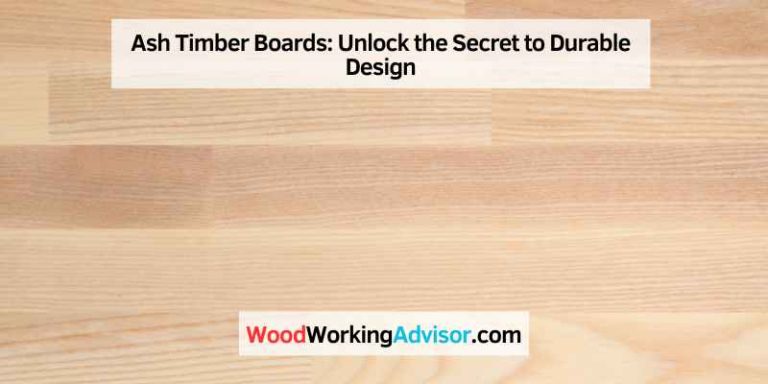
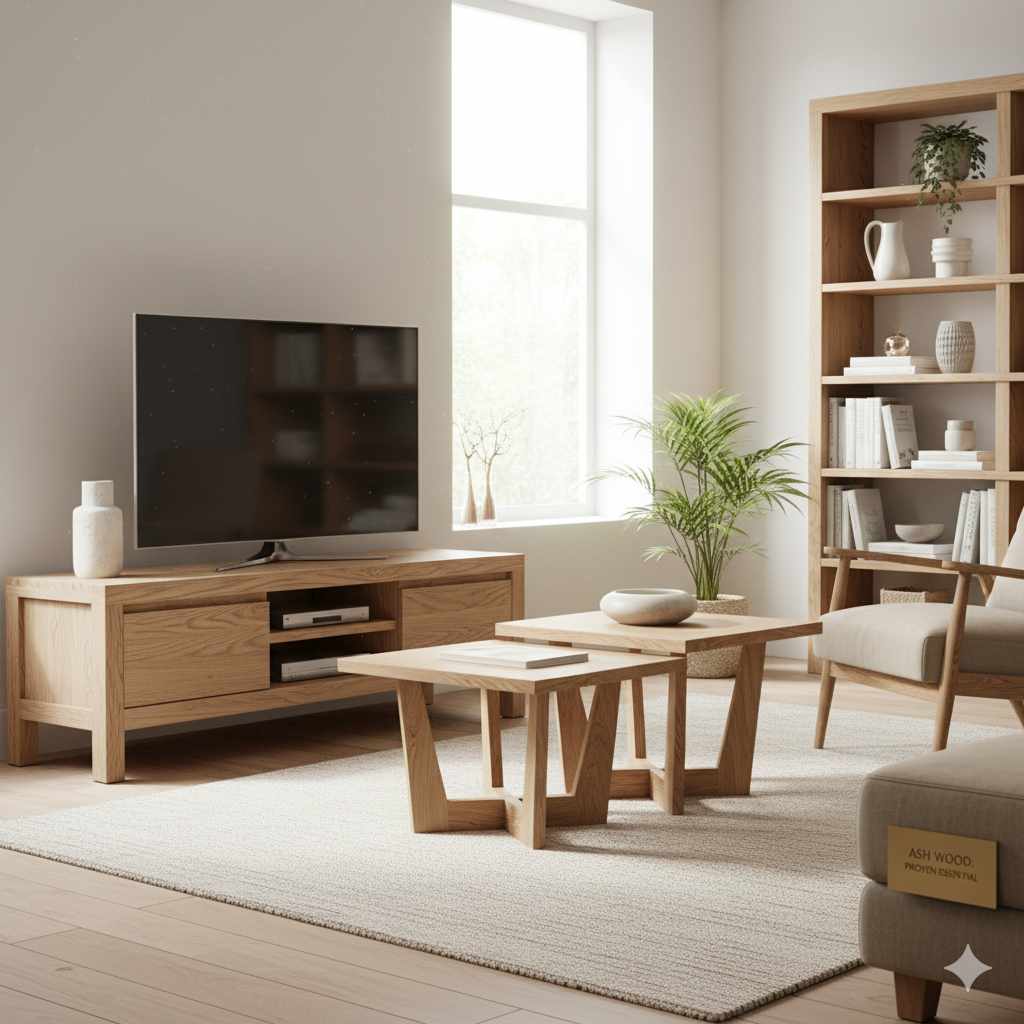
Attractive Grain and Appearance: Ash wood typically features a straight, prominent grain pattern with a medium to coarse texture. It can range in color from a creamy white to a light brown, often with darker streaks. This natural beauty allows for stained or clear finishes that highlight the wood’s character. It can mimic the look of other more expensive woods, like oak, especially when stained.
Workability: Despite being a hardwood, ash is surprisingly easy to work with using both hand tools and power tools. It glues well, takes finishes beautifully, and can be shaped and carved with relative ease. This makes it less intimidating for beginners who might be nervous about tackling tougher woods.
Affordability: Compared to some other high-quality hardwoods like cherry or walnut, ash is generally more budget-friendly. This makes it an accessible option for creating beautiful furniture without a hefty price tag. You get a lot of quality and beauty for your money.
Versatility: Ash wood is suitable for a wide range of furniture styles, from modern and minimalist to traditional and rustic. Its natural grain and ability to accept stains mean you can achieve many different looks.
A Closer Look at Ash Wood Properties
Let’s explore some of the technical aspects that make ash wood so suitable for furniture. Understanding these properties can help you make informed decisions for your projects.
Janka Hardness: The Janka scale measures the resistance of wood to denting and wear. Ash wood typically scores between 1320 and 1780 on the Janka scale, depending on the species. For comparison, red oak scores around 1290, and maple can be around 1450. This means ash is a strong, resilient wood that can handle everyday use. You can find more details on wood hardness from resources like:Forest Products Laboratory – Janka Hardness Data (PDF)
Density: Ash wood has a moderate density, contributing to its strength and stability. This prevents it from being too heavy to move but keeps it sturdy.
Moisture Content: Like all solid wood, ash needs to be properly dried (kiln-dried is common) before being used for furniture. This ensures stability and prevents warping or cracking in your finished pieces. Reputable lumber suppliers will always provide properly dried wood.
Types of Ash Wood Used in Furniture Making
While there are many species of ash, a few are more commonly found in furniture production. The most popular types include:
White Ash (Fraxinus americana): This is perhaps the most common type of ash used in North America. It’s known for its strength, stiffness, and attractive, pale color.
Green Ash (Fraxinus pennsylvanica): Often found in urban settings and along riverbanks, Green Ash is also used for furniture, though it can sometimes be less strong than White Ash.
European Ash (Fraxinus excelsior): This species is prevalent in Europe and is highly regarded for its strength, elasticity, and beautiful grain. It’s often used for bentwood furniture due to its flexibility.
You might also hear about “swamp ash,” which is a term often used in the guitar-making industry, referring to lighter-weight ash found in wet environments. While primarily for musical instruments, it highlights the variations within ash species that can influence weight and density.
Pros and Cons of Using Ash Wood for Furniture
Like any material, ash wood has its advantages and disadvantages. Understanding these will help you decide if it’s the right fit for your specific project.
Advantages of Ash Wood:
- Excellent Strength and Durability: Resists impacts and wear, making it great for high-traffic furniture.
- Aesthetically Pleasing Grain: Offers a beautiful, natural wood pattern that looks great with clear or stained finishes.
- Good Workability: Easysaws, glues, sands, and finishes, making it beginner-friendly.
- Affordable Price Point: More budget-friendly than many other hardwoods, offering great value.
- Versatile Finishes: Accepts stains and varnishes exceptionally well, allowing for a variety of looks.
- Good Machinability: Responds well to shaping and carving.
- Resilience: Known for its elasticity and shock resistance.
Disadvantages of Ash Wood:
- Susceptible to Ash Yellow Decline: In some regions, ash trees are affected by pests and diseases like the Emerald Ash Borer (EAB), which can impact availability and cost. You can learn more about the EAB from sources like the USDA Animal and Plant Health Inspection Service (APHIS).
- Can Be Prone to Staining: While it takes finishes well, the open grain can absorb stains unevenly if proper pre-treatment isn’t applied, leading to blotching.
- Not as Hard as Some Other Woods: While strong, it’s not as hard as hickory or some exotic hardwoods, which might be a consideration for extremely high-wear surfaces if you want maximum scratch resistance.
- Color Variation: The natural color can vary from very pale to medium brown, which might be a concern if you need absolute color uniformity without careful lumber selection or finishing.
How to Best Use Ash Wood in Your Furniture Projects
Ash wood is incredibly versatile. Here are some popular furniture types and applications where ash truly shines:
Table Tops
Ash is a fantastic choice for dining tables, coffee tables, and desks. Its strength means it can support significant weight, and its beautiful grain adds warmth and character to the centerpiece of your dining or living space.
Chairs and Seating
The shock resistance and durability of ash make it ideal for chair legs, seats, and backrests. It can withstand the demands of daily use, making it a long-lasting investment in comfort and style.
Cabinets and Shelving
The attractive appearance and ease of finishing make ash a great wood for cabinet doors, drawer fronts, and shelving units. It can create a clean, modern look when finished clear or a richer, more traditional feel with stains.
Beds and Frames
Its strength and stability are perfect for bed frames and headboards, ensuring a sturdy and reliable foundation for a good night’s sleep.
Decorative Elements and Turnings
The ease with which ash can be worked makes it suitable for turned legs, spindles, and decorative moldings. Its grain can create visually interesting patterns on turned pieces.
Outdoor Furniture?
While ash is a hardwood, it’s generally not the best choice for untreated outdoor furniture. It lacks the natural rot and insect resistance of woods like cedar or teak. If used outdoors, ash must be thoroughly sealed and finished with protective coatings.
Working with Ash Wood: Tips for Beginners
This is where we get hands-on! Ash wood is a great teacher itself because it’s forgiving. Here are some tips to make your experience smooth and successful:
1. Selecting Your Lumber
Inspect for Defects: Look for boards that are flat, straight, and free from major knots, cracks, or warping.
Consider Grain: Decide if you prefer a more uniform grain or one with pronounced, darker streaks.
Moisture Content: Ensure the wood is properly dried (kiln-dried is best). Look for lumber stamped with MC (moisture content) or ask your supplier. Reputable lumberyards are a great resource.
2. Cutting and Shaping Ash
Use Sharp Tools: Sharp blades and bits will make cleaner cuts and require less effort. This is crucial for both safety and a good finish.
Grain Direction: Pay attention to the grain direction when cutting, especially when doing cross-cuts, to minimize tear-out.
Dust Collection: Ash dust can be an irritant. Always use a dust mask and ensure good ventilation or dust collection when cutting or sanding.
3. Joining Ash Wood
Gluing: Ash glues well. Use a good quality wood glue and clamp the pieces firmly until the glue cures.
Fasteners: Pilot holes are recommended when screwing into ash, especially near the ends of boards, to prevent splitting. Nails also work well.
4. Sanding and Finishing
Sanding Progression: Start with a coarser grit sandpaper (like 80 or 100) to smooth out any inconsistencies and then move to finer grits (150, 180, 220) for a smooth surface.
Addressing Open Grain: Ash has an open grain. To achieve a perfectly smooth surface, you might consider using a grain filler, especially if you’re aiming for a very glossy finish. Alternatively, using a Danish oil or a thicker finish can fill minor gaps.
Staining Challenges: To prevent blotching on ash, especially with blotch-prone stains, you can apply a pre-stain conditioner or use a washcoat (a thinned layer of shellac or polycrylic) before staining. This helps the stain to penetrate more evenly.
Top Coats: Ash takes to various top coats like polyurethane, lacquer, or oil finishes beautifully. A clear coat will highlight the natural color and grain, while a tinted stain can dramatically change the wood’s appearance.
Ash Wood vs. Other Popular Furniture Woods
It’s always helpful to compare. How does ash stack up against other common furniture woods?
Here’s a quick comparison table:
| Feature | Ash Wood | Oak (Red/White) | Maple (Hard) | Pine (Softwood) |
|---|---|---|---|---|
| Hardness (Janka) | 1320-1780 | 1290 (Red), 1360 (White) | 1450 | 690-870 |
| Strength | Excellent | Excellent | Excellent | Good (for softwood) |
| Grain Pattern | Prominent, straight | Pronounced, often with rays (White Oak) | Fine, subtle, often straight | Knotty or straight, can be prominent |
| Color | Creamy white to light brown | Pinkish-brown to light brown | Creamy white to pale brown | Yellowish-white to light brown |
| Workability | Good | Good | Good | Very Good |
| Cost | Mid-range | Mid-range | Mid to High | Low |
| Typical Uses | Chairs, tables, cabinets, tool handles | Tables, chairs, flooring, cabinetry | Cabinetry, furniture, tables, flooring | Rustic furniture, simple projects, framing |
As you can see, ash offers a great balance. It’s stronger and often more attractive than pine, while being more affordable and easier to work with than some of the denser maples or exotics. Its strength is comparable to oak, with a different, often smoother, grain appearance.
When Should You Avoid Ash Wood?
While ash is fantastic, there are a few scenarios where it might not be your first choice:
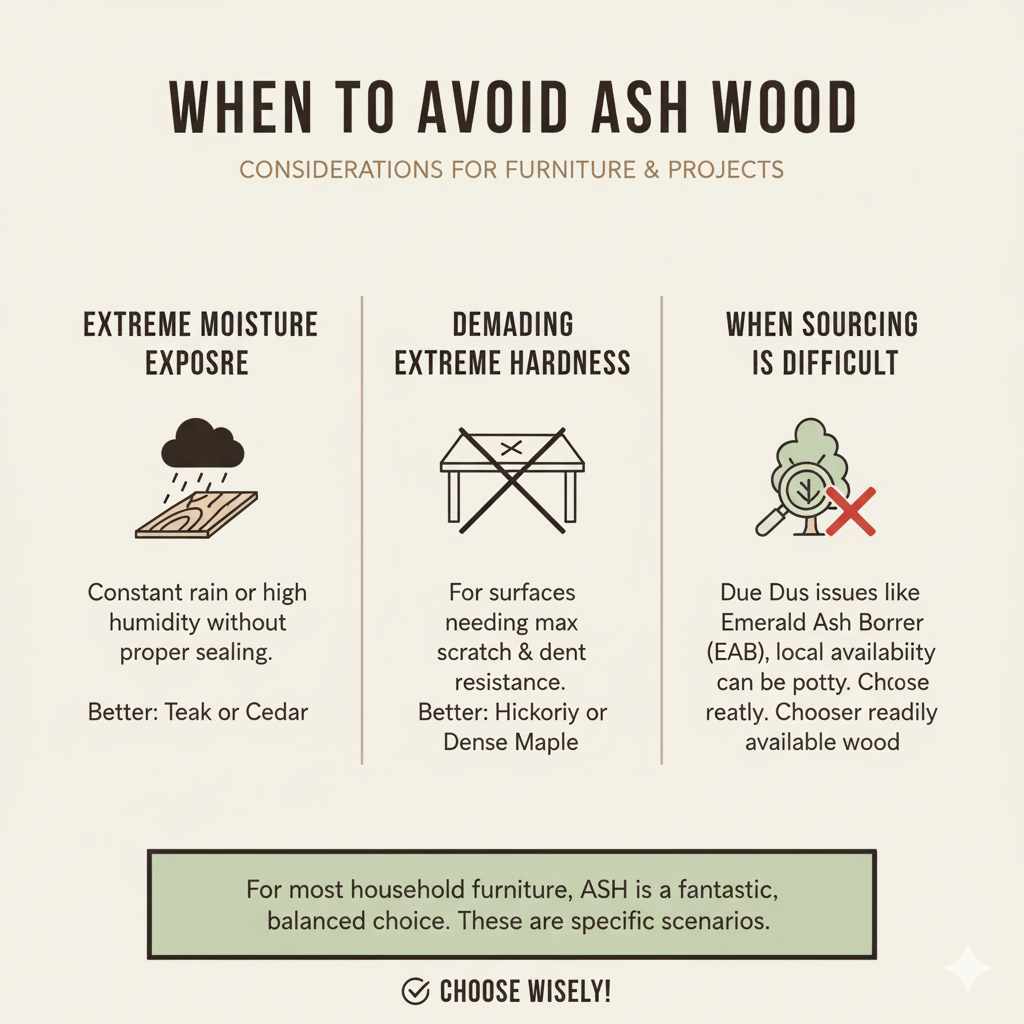
Extreme Moisture Exposure: If you’re building furniture that will be directly exposed to constant rain or high humidity without proper sealing, woods with higher natural resistance like teak or cedar are better.
Demanding for Extreme Hardness: For tabletops that must resist every possible scratch and dent, woods like hickory or dense maple might offer an edge. However, for most household furniture, ash is perfectly adequate.
When Sourcing is Difficult: Due to issues like the Emerald Ash Borer (EAB), ash availability can be spotty in certain regions. If you’re having trouble finding good quality ash lumber, it might be simpler to choose another readily available wood.
FAQ: Your Ash Wood Questions Answered**
Q1: Is ash wood naturally rot-resistant?
No, ash wood is not naturally highly rot-resistant. It’s a hardwood with good durability for indoor use but will decay if left exposed to the elements without proper, robust sealing and protective finishes.
Q2: Can I stain ash wood to look like another wood, like walnut?
Yes, you can stain ash wood to achieve a darker color that mimics walnut or other dark woods. However, remember that the underlying grain pattern of ash will still be visible, giving it a unique look even when stained.
Q3: Is ash wood safe to use for cutting boards?
Ash is a very hard and durable wood, but it’s not typically recommended for food-contact surfaces like cutting boards. Woods with tighter, less porous grains like maple or cherry are generally preferred for cutting boards as they are easier to clean and less likely to harbor bacteria. For more on safe wood choices, you can check out resources from organizations like the Woodworking Network’s guide on food-safe woods.
Q4: What’s the difference between Ash and Oak?
Ash and Oak are both strong hardwoods, but Oak has a more pronounced grain, especially White Oak with its distinctive medullary rays, while Ash has a straighter, more uniform grain. Oak is also slightly harder on average. Ash tends to be lighter in color than Red Oak but similar to White Oak.
Q5: How should I store ash wood?
Store ash wood in a dry, well-ventilated area away from direct sunlight and extreme temperature fluctuations. This helps prevent warping, cracking, and moisture absorption. Ideally, store it flat on stickers (small wooden supports) to allow air circulation.