Bandsaw vs. Table Saw: Which Should You Buy First?
A table saw is the better first purchase for straight rips, crosscuts, and sheet goods; a bandsaw is the better choice for curves, resawing, and safer cutting of small or irregular pieces. Most woodworkers eventually own both, because they’re not really competing tools — they’re built for different cuts, and the real question is which one matches the projects you’re doing right now.
Bandsaw vs. Table Saw: Quick Comparison
If You Decide a Bandsaw Fits Your Work
 |
WEN 10-Inch Benchtop Band Saw with Stand – $399.25 A two-speed 10-inch bandsaw with its own stand, sized right for a home shop doing curves, resawing, and detail work.
|
| Bandsaw | Table Saw | |
|---|---|---|
| Best at | Curves, irregular shapes, resawing thick stock into thinner boards | Straight rips, crosscuts, sheet goods |
| Blade type | Continuous loop blade on two or three wheels | Fixed circular blade rising through the table |
| Kickback risk | Very low — the blade only cuts downward into the table | Real risk if the wood binds or a riving knife/splitter isn’t used |
| Cut speed on straight cuts | Slower, more prone to blade drift on long rips | Fast and accurate for straight cuts |
| Typical first purchase for | Scroll-style work, cutting boards, curved furniture parts | Framing, cabinetry, general dimensioning of lumber |
Why Kickback Risk Is the Real Safety Difference
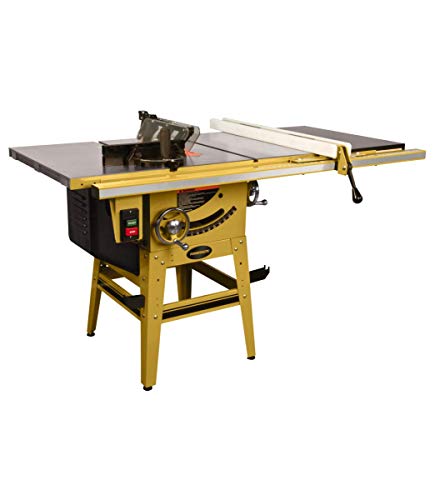
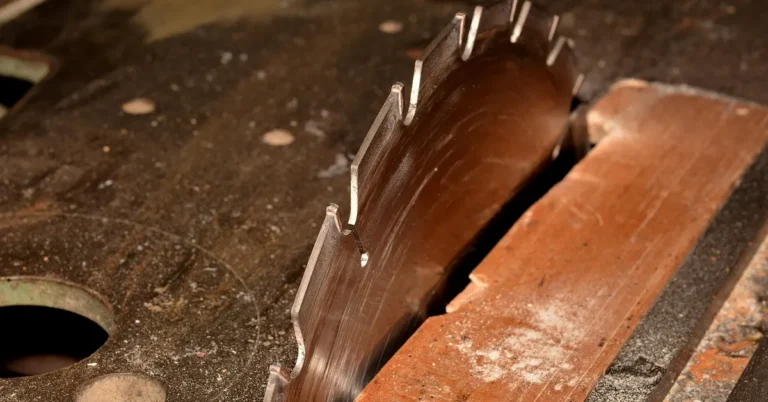
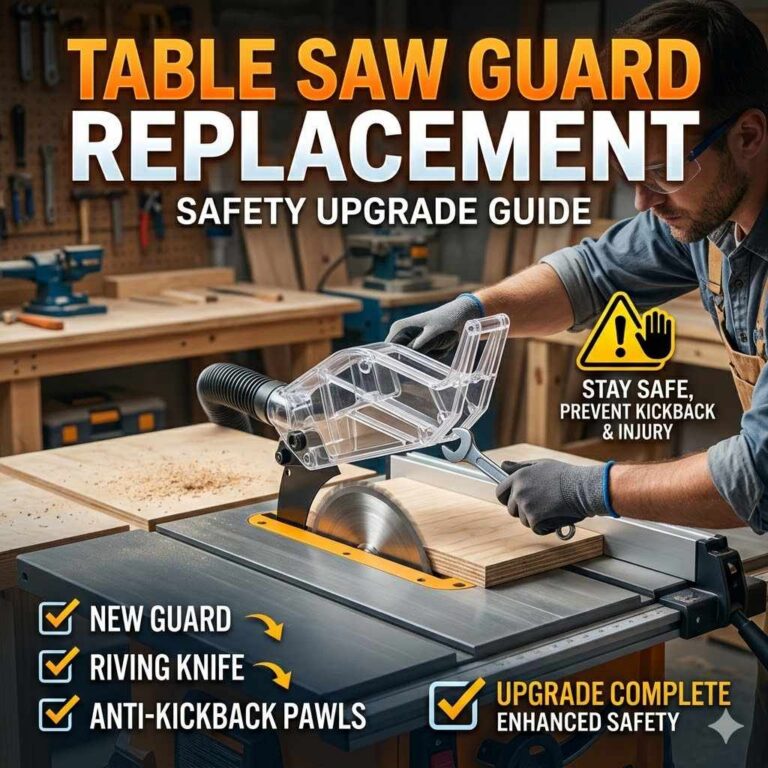
A table saw’s blade spins upward out of the table toward you, so if the wood binds against the blade or the fence, it can be thrown back at the operator — that’s kickback, and it’s the leading cause of serious table saw injuries. A riving knife or splitter, a sharp blade, and a push stick for narrow rips all reduce that risk significantly, but it never fully disappears. A bandsaw’s blade only travels downward, into the table, so there’s no equivalent force pushing material back at you. That’s a real reason many shops introduce a bandsaw before a table saw for beginners working with smaller pieces, even though a table saw is still the more common first purchase overall for general dimensioning work.
Which Should You Buy First?
- Buy a table saw first if you’re building furniture, cabinets, or anything that starts with dimensioning sheet goods and lumber into straight, square pieces.
- Buy a bandsaw first if your projects lean toward cutting boards, curved shapes, small parts, or resawing thick stock into thinner boards for veneer or drawer sides — see our desktop bandsaw comparison for current model picks in that size class.
- If budget allows only one tool and your work is mixed, a table saw covers more general-purpose cutting needs, while a bandsaw is the better second tool once you start needing curves or resaws a table saw genuinely can’t do.
Frequently Asked Questions
Can a bandsaw replace a table saw?
Not fully. A bandsaw can rip and crosscut in a pinch, but it’s slower and less precise for long straight cuts than a table saw, and it can’t handle sheet goods as cleanly.
Is a bandsaw safer than a table saw?
Generally yes, mainly because a bandsaw’s blade only cuts downward into the table, which removes the kickback risk that comes with a table saw’s upward-spinning blade.
What is resawing, and which saw does it better?
Resawing means cutting a thick board into thinner slices along its width, often to make veneer or matched panels. A bandsaw does this far better than a table saw because its blade is thinner and its cutting depth is much greater.
Do I need both a bandsaw and a table saw eventually?
Most active woodworkers end up with both, since each covers cuts the other can’t do well. Which one to buy first just depends on which cuts your current projects actually need.
Sponsored / affiliate links. As an Amazon Associate I earn from qualifying purchases. I may earn additional commission from eligible campaigns.