AC vs BC Plywood: The Real Grading Difference (And Which to Buy)
AC and BC plywood are graded the same way and often cut from the same core — the only real difference is the letter on the good side. AC has an A-grade face (smooth, sanded, virtually no defects), while BC has a B-grade face (a step down, with a few small repaired knots or streaks). Both usually carry a C-grade back. That one-letter gap changes the price and the finish quality you’ll get, but not the strength of the sheet. Here’s what each grade actually means, how to read it off the stamp on the sheet itself, and which one is worth paying for.
AC vs BC Plywood in One Sentence
AC plywood has a near-flawless A-grade face for surfaces you’ll stain or paint up close; BC plywood has a slightly less perfect B-grade face for surfaces that just need to look decent. Both have a rougher C-grade back meant to be hidden. If you’re cutting sheets down to size for either one, a straight, splinter-free cut on that good face matters more than the grade letter does — a cheap freehand cut can chip out the very veneer you paid extra for.
Best For Clean Cuts On A-Face & B-Face Plywood
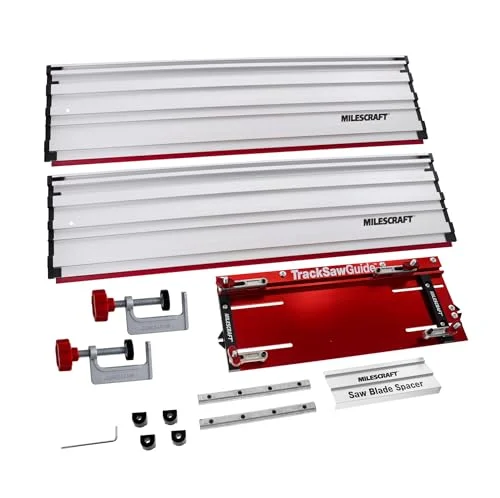 |
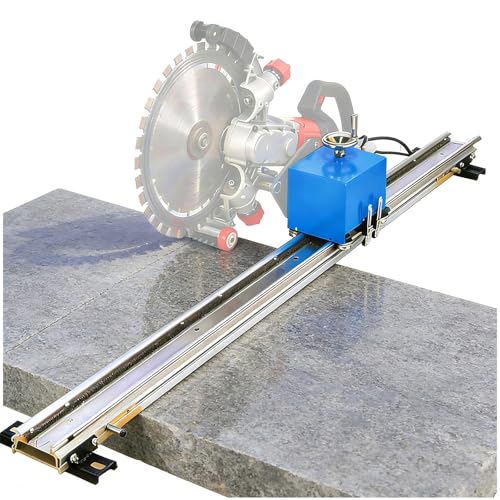
Milescraft 1409 Track Saw Guide – $119.99 Clamps to the sheet and guides any 7-1/4″ circular saw in a dead-straight line, which is what actually protects the good face of AC or BC plywood when you’re breaking down a full sheet.
|
How the A-B-C-D Grading System Actually Works
Every sheet of sanded plywood gets two letters, always in the same order: face grade first, back grade second. So “AC” is an A-grade face over a C-grade back, and “BC” is a B-grade face over a C-grade back. The letters only describe appearance — they say nothing about thickness, species, or how many inner plies the sheet has.
Grade A
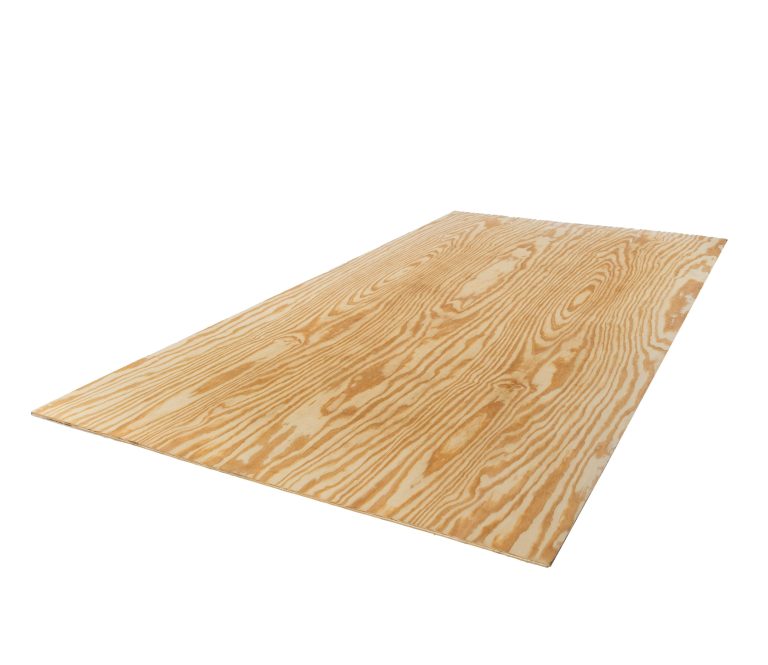
Sanded smooth at the mill, with no open knots, splits, or patches. Color and grain run fairly consistent across the sheet. This is the only grade meant to take a clear or lightly tinted stain without extra prep — anything less and you’re filling and sanding before you finish it.
Grade B
Solid and paintable, but not flawless. Expect a few small football-shaped wood patches or tight repaired knots — neat, but visible if you look closely. Stain will show them; paint mostly won’t. This is the face grade on BC sheets.
Grade C
Sound but visibly rough — knotholes up to about 1.5 inches across, some left open rather than patched, plus discoloration. It’s still structural, just not something you’d want facing outward. This is the standard backer grade on both AC and BC sheets, so the “C” side is functionally identical either way.
Grade D
The bottom of the scale — unrepaired knots up to about 2.5 inches, occasional splits. It only shows up on interior-rated panels (sheathing, some underlayment), never on an exterior or Exposure 1 sheet, and you won’t see it on AC or BC stock at all. If cost matters more than looks and the panel will be fully covered, D-back sheets exist for exactly that.
Reading the Grade Stamp Yourself
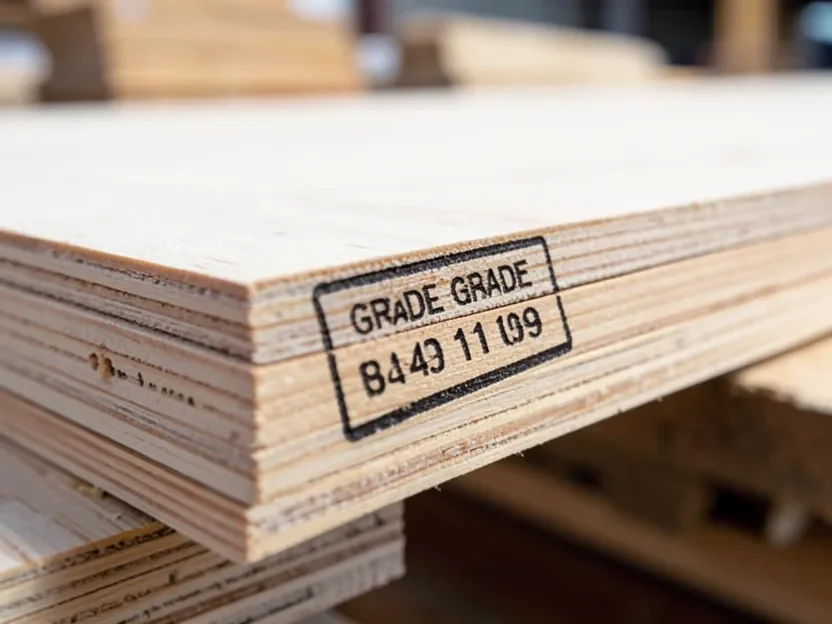
Most guides stop at the letters, but the ink stamp on the sheet’s edge (or an APA-certified stamp) carries three more pieces of information worth checking before you buy, since the shelf tag doesn’t always match what’s actually on the sheet:
- Panel grade — the face/back letters (A-C, B-C) or a use-based name like “Rated Sheathing” or “Underlayment.”
- Species group — a number, 1 through 5, ranking the strength and stiffness of the wood species used. Group 1 (Douglas fir, southern pine) is the strongest; Group 5 is the weakest. Two AC sheets with the same face grade can still differ in stiffness if they’re different species groups.
- Exposure rating — “Exterior,” “Exposure 1,” or “Interior.” Exposure 1 glue resists moisture during construction delays, not permanent weather exposure; only true Exterior panels are rated for that.
If a sheet is going somewhere it might get rained on before you can seal it — a sub-roof, an outdoor project frame — check that exposure rating, not just the face grade. AC and BC both exist in Exterior-rated versions, and it’s easy to grab an Interior-only sheet by mistake if you’re only reading the “AC” or “BC” sticker.
When to Choose AC Plywood
Reach for AC when the good side will be seen up close and finished with stain, clear coat, or anything that shows the wood grain: tabletops, cabinet doors that get a natural finish, display shelving behind glass, drawer fronts. The A-face takes stain evenly because there’s no patched knot to interrupt the grain. The C-back goes wherever it’s hidden — the underside of the tabletop, the inside of the cabinet.
It’s not worth the extra cost for anything that gets fully painted in a solid color, since primer and paint hide a B-grade patch just as well as an A-grade face — save AC for the projects where the wood itself is part of the look.
When to Choose BC Plywood
BC is the better call for anything getting painted, anything where the surface just needs to look “clean” rather than “flawless,” or any budget-driven build: garage shelving, workshop cabinets, utility furniture, the visible side of built-ins that will be painted rather than stained. Primer covers the small B-grade patches without a trace, so you get a finished look for less money. The C-back is the same rough grade you’d get on an AC sheet anyway, so you’re not losing anything there by stepping down from A to B on the face.
Is the Extra Cost of AC Worth It?
AC plywood runs noticeably more per sheet than BC of the same thickness and species — A-grade veneer takes more careful log selection and more sorting at the mill, and that labor shows up in the price. BC is the more economical pick whenever the face is going to be painted or the sheet won’t be seen at all, which covers most shop and utility work. AC earns its premium specifically on the projects where an unfinished, natural-grain look is the point — anything else, BC gets you the same core strength for less.
Same Strength, Different Face — Why the Core Doesn’t Change
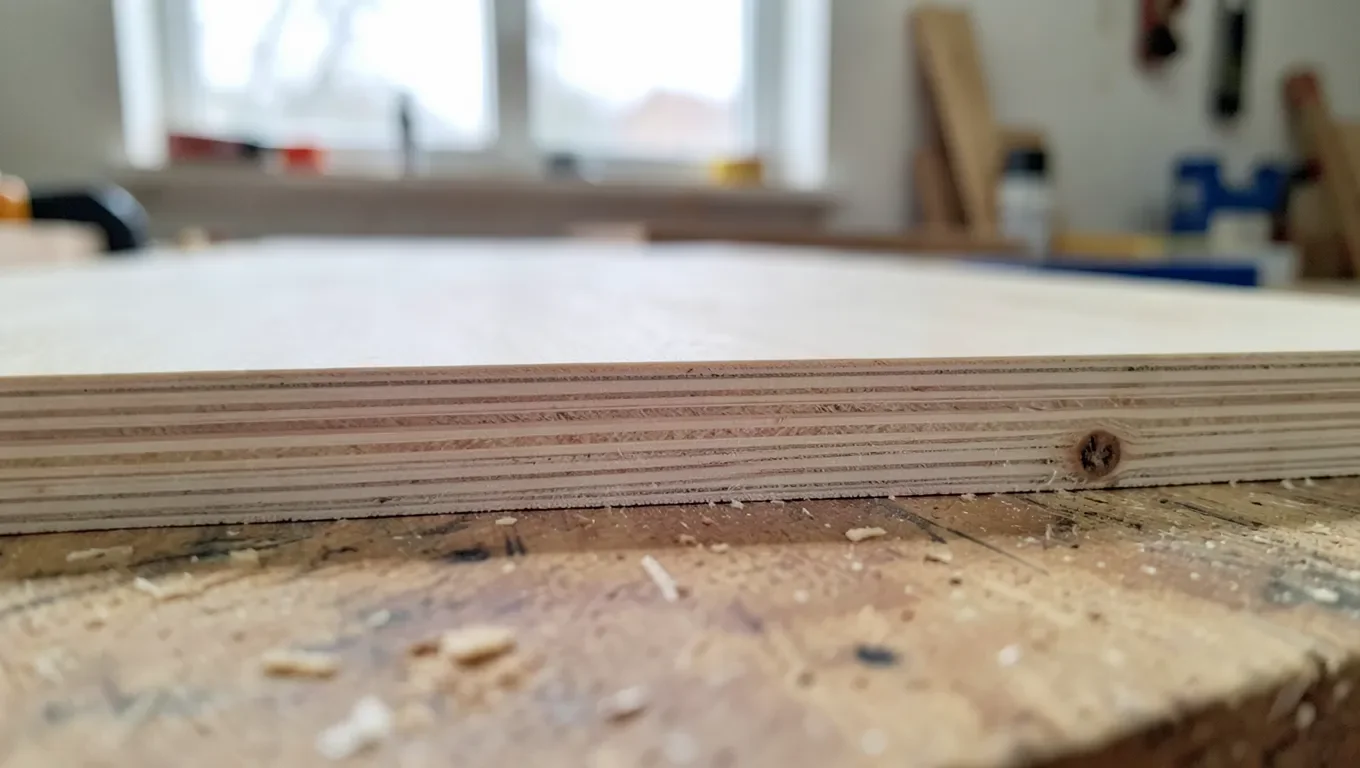
The letters only grade the outer veneers. A and B faces, and the C backs under both, are typically laid over the same number of inner plies at the same thickness, so an AC sheet and a BC sheet of the same thickness and species group carry the same load and hold fasteners the same way. If you’re building something structural that gets covered anyway — subflooring, a workbench top under a vise mat, wall sheathing — the grade letters stop mattering and BC is the practical choice every time.
Cutting Sheets Without Wrecking the Good Face
A freehand circular saw cut can tear out splinters along the top face of the cut line — exactly the surface you paid the AC or BC premium to protect. Two things fix that: score the cut line first with a utility knife to sever the face veneer’s fibers before the blade gets there, and cut with the good face down if you’re using a standard circular saw (the blade exits upward through the bottom face on the down-stroke, so the face touching the saw’s base plate tears less). A clamp-on guide rail — like the one above — does the same job as a fence on a table saw, letting you break down a full 4×8 sheet in a straight line on sawhorses without wrestling the sheet to a stationary saw.
For related plywood-sizing questions, our guide on squaring plywood on a table saw covers the stationary-saw version of the same problem.
Frequently Asked Questions
What does the plywood grading system mean?
Answer: Each sheet gets two letters — face grade first, back grade second — ranging from A (smooth, no visible defects) down to D (unrepaired knots and splits, interior-only panels). The letters describe surface appearance, not strength or thickness.
Is AC plywood stronger than BC plywood?
Answer: No. Strength comes from the core plies and species group, not the face grade. An AC sheet and a BC sheet of the same thickness and species group carry the same load — the only difference is how the visible face looks.
Can I paint BC plywood?
Answer: Yes, and it’s one of the best uses for it. A coat of primer hides the small repaired knots and patches on a B-grade face completely, so you get a paint-ready surface for less than an A-grade sheet would cost.
Which plywood is better for furniture?
Answer: AC for anything that gets stained or clear-coated, since the grain needs to be free of patches. BC is fine for furniture that will be painted, or for any hidden structural parts, since the extra cost of an A-face buys you nothing under paint.
What’s the difference between the C side of AC and BC plywood?
Answer: Nothing — the back grade is C on both. The only letter that changes between AC and BC is the face grade (A vs. B); the backer sheet is the same rougher grade either way.
Wrap Up
AC and BC plywood are the same sheet with a different face: A-grade for a near-flawless, stain-ready surface, B-grade for a solid, paint-ready surface at a lower price, and an identical C-grade back either way. Check the actual grade stamp for species group and exposure rating before you buy, not just the AC/BC sticker on the shelf — and however you cut it down, protect that face with a scored line and a straight guide so you don’t lose the finish you paid for.
Sponsored / affiliate links. As an Amazon Associate I earn from qualifying purchases. I may earn additional commission from eligible campaigns.