Best Outdoor Rugs For Wood Decks All Weather
Finding the right outdoor rug can feel tricky sometimes, especially when you want it to look great and hold up outside no matter what the sky throws at it. You want your deck to be a cozy spot, but the thought of picking the Best Outdoor Rugs for Wood Decks in Any Weather can stop you in your tracks. Don’t worry, it’s not as hard as it sounds.
We’ll walk through it step by step so your deck looks amazing and lasts longer.
Choosing Best Outdoor Rugs for Wood Decks in Any Weather
Selecting the perfect rug for your wooden deck means looking for materials that can handle sun, rain, and everything in between. A good outdoor rug makes your deck feel like an extension of your home, adding comfort and style. It’s important to pick one that won’t fade quickly or get ruined by moisture.
We will explore the key features that make an outdoor rug a great choice for any weather condition, helping you make a smart decision for your outdoor space.
What Makes a Rug “Outdoor Ready”
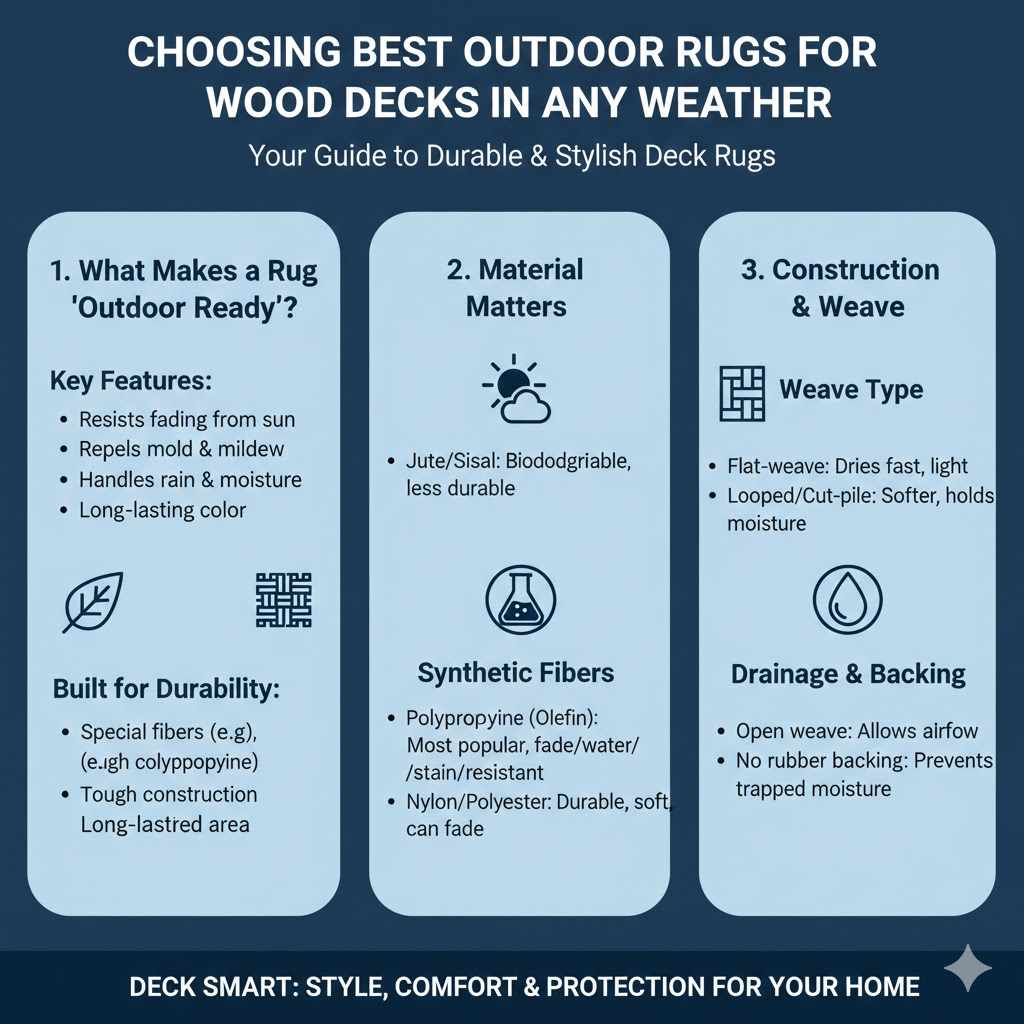
An outdoor rug is built differently than an indoor rug. It needs to resist damage from the elements. This means it can’t just be any fabric.
Special fibers and construction methods are used to make sure these rugs can live outside all year long. They are designed to be tough and look good for a long time, even with constant exposure to sun and rain. This durability is what separates a great outdoor rug from one that won’t last.
The primary goal is to resist fading, mold, and mildew. This is achieved through the materials used and how the rug is made. When you see terms like “weather-resistant” or “water-repellent,” these are good signs.
They tell you the rug is designed with outdoor life in mind. This makes caring for your deck and the rug much easier.
Material Matters For Outdoor Rugs
The type of material used in an outdoor rug is the most important factor in its durability and suitability for various weather conditions. Different fibers have unique properties that affect how they perform when exposed to sun, rain, and foot traffic. Understanding these properties helps you pick a rug that will last and look good season after season.
- Polypropylene (Olefin): This is a very popular choice for outdoor rugs. It is known for being highly resistant to moisture, stains, and fading from UV rays. Polypropylene rugs are also quite durable and can withstand heavy foot traffic.
- They are relatively inexpensive and easy to clean, making them a practical option for many homeowners. This material does not absorb water, which helps prevent mold and mildew growth. It’s also soft enough to be comfortable underfoot, making it a versatile choice for patios and decks.
- Nylon: Nylon is a strong and resilient synthetic fiber that holds up well outdoors. It is resistant to wear and tear, abrasion, and mildew. Nylon rugs can handle a lot of use without looking worn.
- They also have good colorfastness, meaning the colors won’t fade too quickly in the sun. However, nylon can absorb some moisture if not treated, so it’s important to look for rugs specifically designed for outdoor use with water-repellent coatings. Its strength makes it a good option for high-traffic areas on a deck.
- Polyester: Polyester is another synthetic option that offers good durability and resistance to fading. It is often used in outdoor rugs because it is less expensive than nylon. Polyester rugs can be soft and comfortable.
However, they might not be as resistant to stains or as quick-drying as polypropylene. If you choose a polyester rug, look for one with a tight weave and a good backing to help with water drainage. It’s a budget-friendly choice but may require a bit more care in damp climates.
Weave And Construction Techniques
Beyond the material itself, how the rug is woven or constructed plays a huge role in its ability to withstand the elements and perform well on a wood deck. Different weaving methods affect water drainage, durability, and overall appearance. Understanding these construction types helps you choose a rug that will not only look good but also last longer and be easier to maintain in outdoor conditions.
- Flatweave: Flatweave rugs are made without a pile. They are woven tightly, often with a pattern on both sides. This construction makes them very durable and low-profile, which is great for outdoor use.
- They dry quickly because there is less material to hold moisture. This also means they are less likely to develop mold or mildew. Flatweave rugs are excellent for areas with a lot of foot traffic and are easy to clean by simply hosing them down.
- Their flat nature also prevents them from being a tripping hazard on a deck.
- Loop Pile: In loop pile construction, the yarn is looped and left intact. This creates a durable surface that can withstand wear. Loop pile rugs are often found in outdoor settings because they are resilient.
- However, the loops can sometimes catch on things, and if the loops are too tight, they might not drain water as well as flatweave. For outdoor use, it’s best to choose a tight, low loop pile construction to maximize durability and water resistance.
- Cut Pile: Cut pile rugs have their loops cut, creating a softer, more plush surface. While comfortable, cut pile can be more prone to matting and wear in high-traffic outdoor areas. It also tends to hold moisture more than flatweave or loop pile, increasing the risk of mold and mildew.
If you opt for a cut pile outdoor rug, ensure it is made from a highly weather-resistant material like polypropylene and has a dense construction for better durability.
Durability Factors For Deck Rugs
When we talk about durability for outdoor rugs on wood decks, we’re looking at how well they hold up against everyday wear and tear and harsh weather. This means the rug needs to resist fading, tearing, and damage from moisture or pests. A durable rug saves you money and hassle because you won’t have to
Sun Exposure And Fading
One of the biggest challenges for outdoor rugs is direct sunlight. UV rays from the sun can break down the fibers in a rug over time. This causes the colors to fade, making the rug look old and worn, even if the material itself is still strong.
For decks that get a lot of sun, choosing a rug with excellent UV resistance is key. Materials like polypropylene and specially treated nylon are designed to resist fading much better than other options. Look for rugs that are advertised as “UV-resistant” or “colorfast” for extended sun exposure.
The intensity and duration of sunlight your deck receives will influence how quickly fading occurs. Rugs in shaded areas will naturally last longer in terms of color. However, even in partial sun, UV damage can still occur.
The weave of the rug can also affect fading; tightly woven rugs with dense fibers often show fading less dramatically than loosely woven ones.
Water Resistance And Mold Prevention
Wood decks are often exposed to rain, humidity, and even spills from drinks or food. A rug that absorbs too much water can become a breeding ground for mold and mildew. This not only damages the rug, causing discoloration and unpleasant odors, but it can also be unhealthy.
The best outdoor rugs for wood decks are water-resistant or quick-drying.
Materials like polypropylene naturally repel water. Rugs with a tight weave and good drainage also help. If water can’t sit on the surface or soak deep into the fibers, it can evaporate more quickly.
This prevents the growth of mold and mildew. Some rugs also have special treatments or backing that enhances their water resistance. Regularly cleaning and drying your rug, especially after heavy rain, is also a good practice to maintain its condition and prevent mold.
Resistance To Wear And Tear
Decks are high-traffic areas. People walk on them, furniture is placed on them, and sometimes pets and children play there. A rug that isn’t built for this kind of use will quickly show signs of wear.
This can include matting, fraying, and thinning of the fibers. For a deck rug, durability means the ability to withstand constant foot traffic and the weight of furniture without becoming permanently damaged. Materials like nylon and tightly woven polypropylene are excellent for this.
They are strong fibers that can bounce back even after being stepped on or compressed by heavy objects.
The construction technique also impacts wear resistance. Flatweave rugs, for example, are incredibly durable because they have no pile to crush or wear down. They offer a consistent surface that handles traffic well.
When choosing, consider how your deck is used and select a rug construction that matches that level of activity. A rug designed for a quiet patio might not hold up on a busy family deck.
Best Outdoor Rug Materials Explored
Let’s take a closer look at the specific materials that shine when it comes to outdoor rugs for wood decks. We’ll break down why they are good choices and what to look for when you’re shopping. These materials are the backbone of any rug that aims to survive and thrive in the elements, keeping your deck looking great.
Polypropylene The Star Player
Polypropylene, often called olefin, is the reigning champion for outdoor rugs, and for good reason. Its inherent properties make it almost perfectly suited for life on a deck. It’s naturally resistant to moisture, stains, and the damaging effects of sunlight.
This means fewer worries about mildew, spills, or your rug fading into a dull shadow of its former self. Its fibers don’t absorb water, which is a major plus for outdoor use. It’s also surprisingly soft for a synthetic material, making it comfortable underfoot.
Plus, it’s quite affordable, offering excellent value for its performance. Many manufacturers use polypropylene because it’s easy to clean and maintain, often just needing a good hosing down. Its durability means it can handle the daily hustle and bustle of a busy deck.
A key benefit is its resistance to mold and mildew. Because it doesn’t hold moisture, these pesky organisms have a hard time growing. This is especially important on wood decks where moisture can be an issue.
The colorfastness of polypropylene is also remarkable. Even after prolonged exposure to bright sunlight, the colors tend to stay vibrant. This means your rug will continue to add style to your deck for seasons to come.
For a balance of performance, aesthetics, and cost, polypropylene is hard to beat for the Best Outdoor Rugs for Wood Decks in Any Weather.
One homeowner, Sarah, shared her experience: “I bought a polypropylene rug for my deck three years ago. It gets full sun all day, and we’ve had some heavy rainstorms. I’ve spilled wine on it, and my dog tracked mud through it.
Honestly, it still looks almost new! I just hose it off a couple of times a year. It’s been the best outdoor purchase I’ve made.” This kind of real-world feedback highlights the practical benefits of this material.
Nylon Toughness And Resilience
Nylon is another robust material that stands up well to outdoor conditions. It’s known for its incredible strength and resilience, making it resistant to wear, tear, and abrasion. This means it can handle a lot of foot traffic and furniture placement without showing significant damage.
Nylon also possesses good colorfastness, helping to keep its colors bright and resistant to fading from the sun. For decks that see a lot of activity, nylon’s toughness is a major advantage. It’s a material that’s built to last and maintain its appearance.
While nylon is strong, it can absorb some moisture if it’s not specifically treated for outdoor use. Therefore, when choosing a nylon outdoor rug, it’s essential to look for products that explicitly state they are suitable for outdoor environments or come with water-repellent finishes. These treatments enhance the rug’s ability to shed water and prevent mildew growth.
A well-constructed nylon rug offers a great blend of durability and comfort, making it a solid choice for outdoor living spaces that demand resilience.
Polyester An Affordable Alternative
Polyester offers a more budget-friendly option for outdoor rugs. It provides decent durability and is quite resistant to fading from UV exposure, which is a significant plus for any outdoor item. Polyester rugs can also feel soft and comfortable underfoot, adding a touch of coziness to your deck.
They are a popular choice for those looking to add style without a hefty investment. The materials are also relatively easy to clean, usually responding well to simple washing methods.
However, polyester might not be as resistant to stains or as quick-drying as polypropylene. It can absorb more moisture, which might increase the risk of mold and mildew if not properly cared for. If you choose a polyester rug, opt for one with a dense weave and a backing that promotes water drainage.
Regular drying and cleaning are important to keep a polyester rug in good condition, especially in humid or rainy climates. Despite these considerations, polyester remains a viable and attractive option for adding comfort and style to your deck on a budget.
Styles And Designs For Your Deck
The look of your outdoor rug matters just as much as its performance. Today’s outdoor rugs come in a dazzling array of styles, colors, and patterns. You can find everything from classic geometric designs to vibrant contemporary prints.
The goal is to find a rug that complements your deck’s existing style and your personal taste, turning your outdoor space into a welcoming retreat. The right design can tie everything together, making your deck feel more inviting and complete.
Matching Rugs To Your Deck Style
Your deck’s style should guide your rug choice. For a modern deck with clean lines, a rug with geometric patterns or a solid, bold color might be perfect. If you have a rustic or natural wood deck, a rug with a more organic pattern, like a subtle floral or tribal design, could blend in beautifully.
Consider the color of your wood. Lighter woods might pair well with lighter or pastel rugs, while darker woods can handle richer, deeper colors. The rug should enhance, not clash with, your existing outdoor furniture and decor.
Think about the overall mood you want to create. Do you want a calm, serene space? Opt for softer colors and simpler patterns.
Are you aiming for a lively, energetic area? Go for brighter colors and more dynamic designs. The rug is a key element in setting this tone.
It acts as an anchor for your outdoor seating area, defining the space and making it feel more cohesive and inviting. Don’t be afraid to experiment with different looks.
A recent trend shows homeowners using patterned rugs to add a pop of personality to their decks. For instance, a deck with plain grey composite boards might be instantly livened up by a rug featuring a bright blue and white Moroccan trellis pattern. This adds visual interest and makes the space feel more intentional and styled.
It transforms a simple deck into a fashionable outdoor room.
Color Palettes And Patterns
The color palette and patterns available for outdoor rugs are vast. You can find rugs in muted earth tones that create a natural, calming effect. Or, you might prefer vibrant hues like reds, blues, or yellows to make a bold statement.
Patterns range from subtle textures and small dots to intricate paisley, floral, or abstract designs. The choice often depends on how much you want the rug to stand out.
For example, if your outdoor furniture has a strong pattern or color, a more neutral rug might be best to avoid overwhelming the space. Conversely, a simple set of furniture can be elevated by a rug with a striking pattern. Consider how the colors will interact with the natural light on your deck.
Some colors can appear more intense in bright sunlight. It’s also worth thinking about practicalities; lighter colors might show dirt more easily, while darker or patterned rugs can help camouflage minor stains.
Popular Outdoor Rug Sizes
The size of your outdoor rug is critical for both aesthetics and functionality. A rug that’s too small can make your deck feel choppy and incomplete. A rug that’s too large might overwhelm the space or not fit well with your furniture arrangement.
Standard sizes help you envision how a rug will fit. Common sizes include 5×7 feet, 8×10 feet, and 9×12 feet, but larger and smaller options are also available.
For a seating area, a good rule of thumb is to have at least the front legs of your furniture sitting on the rug. This anchors the space. A rug that is too small might only fit under a coffee table, making the seating area feel disconnected.
For a larger deck, consider using multiple rugs to define different zones, such as a dining area and a lounging area. Measuring your deck and furniture layout before you shop is the best way to ensure you pick the right size rug that enhances the proportion and flow of your outdoor space.
Maintaining Your Outdoor Rug
Keeping your outdoor rug looking its best and lasting for years requires a little care. Regular maintenance helps prevent damage from dirt, moisture, and the elements. It’s not complicated, and a few simple steps can make a big difference.
The goal is to keep the rug clean and dry, which in turn protects your wood deck as well.
Routine Cleaning And Spot Treatment
For everyday dirt and dust, a quick sweep with a broom or a vacuum cleaner (without the beater bar for most outdoor rugs) is often enough. This prevents dirt from getting ground into the fibers. For spills or spots, address them immediately.
Most outdoor rugs can handle mild soap and water. Blot the stain gently with a clean cloth, working from the outside in. Avoid harsh scrubbing, which can damage the fibers.
For more stubborn stains, check the manufacturer’s cleaning instructions. Some rugs might require a specific cleaner. Always test any cleaning solution on an inconspicuous area first to ensure it doesn’t damage the color or material.
Rinsing the area thoroughly after spot cleaning is important to remove any soap residue, which can attract dirt. Keeping up with these small cleaning tasks will significantly extend the life and appearance of your rug.
Deep Cleaning And Seasonal Care
At least once or twice a year, or more often if your rug is in a high-traffic area or experiences heavy use, it’s a good idea to give it a deep clean. Most outdoor rugs can be cleaned by hosing them down thoroughly. Lay the rug flat on your deck or lawn and spray it with water.
You can use a mild detergent solution or a specialized outdoor rug cleaner. Gently scrub with a soft brush if needed.
After washing, rinse the rug very well to remove all soap. The key to deep cleaning is ensuring the rug dries completely. Lay it flat in a sunny, well-ventilated area.
Flip it periodically to ensure both sides dry evenly. Never put a damp rug back on your deck, as this can trap moisture against the wood and lead to mold or mildew. Storing the rug during harsh winter months can also help preserve it.
Storing Your Rug
If you live in an area with severe weather, such as heavy snow, freezing temperatures, or prolonged periods of rain, storing your outdoor rug during the off-season can greatly extend its lifespan. Before storing, make sure the rug is completely clean and dry. Any lingering moisture can lead to mold or mildew while it’s packed away.
Roll the rug up tightly, rather than folding it, as folding can create creases that may not come out and can weaken the fibers.
Once rolled, secure it with ties or straps. You can then wrap it in a breathable fabric or a tarp to protect it from dust and pests. Store the rolled rug in a cool, dry place, such as a garage, shed, or basement.
Avoid areas with extreme temperature fluctuations or high humidity. Proper storage protects your rug from physical damage and the harsh effects of the elements when it’s not in use, ensuring it’s ready for the next season.
Best Outdoor Rugs for Wood Decks in Any Weather
We’ve covered the essential aspects of choosing and caring for rugs designed to withstand the elements on your wood deck. From understanding material benefits like polypropylene’s water resistance to considering weave styles and essential maintenance. This knowledge empowers you to select rugs that will not only look beautiful but also provide lasting durability.
Making informed choices ensures your deck remains a comfortable and stylish outdoor extension of your home year-round.
Choosing The Right Size For Your Deck Space
The size of the rug plays a vital role in how your deck looks and functions. A well-sized rug can anchor your outdoor furniture and create a cozy, defined area. It helps make the space feel more intentional and inviting.
When selecting a rug, consider the overall dimensions of your deck and the furniture arrangement you plan to use. Measuring your space beforehand is a crucial step that many people overlook. This prevents frustration and ensures you end up with a rug that fits perfectly and enhances the visual appeal of your deck.
For a seating arrangement, aim for a rug large enough to have at least the front legs of your furniture resting on it. This creates a sense of unity and stability. If you have a dining set, the rug should be expansive enough to accommodate the table and chairs, even when they are pulled out.
For larger decks, you might even consider using multiple rugs to delineate different functional zones, like a lounging area and a dining space. The right size rug can transform a basic deck into a stylish and comfortable outdoor room, making it feel more like an extension of your home.
Furniture Placement And Rug Size
The way you arrange your furniture on the deck is directly related to the rug size you should choose. A common guideline for seating areas is to select a rug that is large enough so that the front legs of your sofa, chairs, and coffee table all rest on it. This connects the furniture and makes the seating arrangement look cohesive and grounded.
If the rug is too small, only the coffee table might fit, making the arrangement look disconnected and unbalanced.
For dining areas, the rug should be significantly larger. It needs to accommodate the table and chairs, allowing you to pull out chairs for seating without them falling off the rug. A good rule of thumb here is to add at least 24 to 36 inches around the perimeter of the table for chair clearance.
This ensures comfort and aesthetics. If your deck is quite large, you can use two or more appropriately sized rugs to define different zones, creating distinct areas for dining, lounging, or entertaining, all while maintaining a harmonious flow.
Defining Zones With Rugs
Larger decks offer the opportunity to create multiple distinct areas, and outdoor rugs are excellent tools for defining these zones. For instance, you might place a larger rug under a dining table and chairs to create a dedicated eating space. Then, a smaller, perhaps more comfortable rug could be placed in a corner with lounge chairs and a small side table, creating a cozy reading nook or a relaxation spot.
This helps to visually break up a large space and give it purpose and structure.
Using rugs to define zones can make a deck feel more organized and functional. It guides movement through the space and provides visual cues for different activities. For example, a bright, patterned rug might mark a lively conversation area, while a solid, muted rug could indicate a quieter space.
The key is to ensure the rug sizes are proportionate to the zones they define and that their placement enhances the overall flow and usability of your deck, making it a versatile outdoor living area.
Weather Resistance Features To Look For
When selecting rugs for your wood deck, prioritizing weather resistance is paramount. This involves understanding the specific features that allow a rug to endure sun, rain, and temperature changes without deteriorating. These features ensure your rug remains attractive and functional for a long time, protecting your investment and keeping your deck looking its best.
UV Protection And Colorfastness
Direct sunlight is a major culprit in fading outdoor rug colors. Look for rugs explicitly labeled as having UV protection or being colorfast. This means the dyes used in the rug are treated to resist breaking down when exposed to ultraviolet rays.
Materials like polypropylene and nylon are naturally more resistant to fading than natural fibers. Colorfastness ensures that your rug’s vibrant hues will endure, preventing it from looking washed out and old after just a season or two in the sun. This feature is critical for maintaining the aesthetic appeal of your deck.
Water Repellency And Quick Drying
A rug’s ability to repel water and dry quickly is essential for preventing mold and mildew. Look for materials like polypropylene that naturally don’t absorb water. Additionally, rugs with tight weaves and breathable backing help water drain away effectively.
Quick-drying properties mean that even after a rain shower, your rug will be ready to use again in a short amount of time, reducing the risk of moisture-related damage to both the rug and your wood deck. Some rugs also come with a water-repellent treatment that adds an extra layer of protection.
Mildew And Mold Resistance
Mold and mildew thrive in damp, dark environments. For an outdoor rug on a deck, especially one that might not get direct sunlight constantly, resistance to these issues is vital. Materials like polypropylene are inherently resistant because they don’t absorb moisture.
Furthermore, rugs constructed with antimicrobial treatments or those designed for excellent drainage will significantly reduce the chances of mold and mildew growth. This not only keeps your rug looking and smelling fresh but also contributes to a healthier outdoor environment.
| Feature | Benefit | Ideal For |
|---|---|---|
| UV Protection | Prevents color fading from sun exposure. | Sunny decks. |
| Water Repellency | Keeps rug dry, prevents mold and mildew. | Rainy climates, poolside decks. |
| Quick Drying | Rug is usable soon after rain. | Humid areas, areas with frequent showers. |
| Mildew Resistance | Prevents mold growth and odors. | Shady or damp deck areas. |
Durability Against Foot Traffic And Furniture
Decks are high-traffic areas, and furniture can cause significant wear. Outdoor rugs need to be tough. Look for rugs made from strong synthetic fibers like nylon or tightly woven polypropylene.
These materials are resilient and can withstand constant pressure from feet and furniture without becoming matted or damaged. A dense weave adds to the durability, preventing fibers from fraying or pulling. This ensures your rug maintains its appearance and integrity over time, even with daily use.
Sample Scenario 1: A Sunny Backyard Deck
Imagine a backyard deck that gets direct sun for most of the day, from morning to late afternoon. This deck is used frequently for entertaining, with kids playing and adults relaxing. Given these conditions, the top priorities for an outdoor rug would be exceptional UV resistance to prevent fading and durability to withstand heavy foot traffic and occasional spills.
A rug made from polypropylene with a tight, flatweave construction would be an excellent choice. Polypropylene’s inherent UV resistance and moisture-repelling properties make it ideal for prolonged sun exposure. The flatweave construction is low-profile, easy to clean, and extremely durable, able to handle the constant wear and tear of a busy family deck.
Such a rug would maintain its color and structural integrity, providing a comfortable and attractive surface for years.
Sample Scenario 2: A Shaded, Humid Balcony
Consider a balcony that is mostly shaded, even during the sunniest parts of the day. It’s also located in a region with high humidity and frequent light rain. In this scenario, the primary concerns are mold and mildew resistance, as well as quick-drying capabilities.
While UV fading might be less of an issue, moisture management is critical. A rug made from polypropylene or a synthetic blend specifically designed for moisture resistance would be recommended. A rug with a loose weave or good drainage holes in its backing would also be beneficial, allowing air to circulate and water to escape quickly.
Regular hosing down and ensuring the rug dries thoroughly between periods of dampness would be important to prevent any unwanted growth. A rug that doesn’t absorb much water and dries fast is key to keeping this balcony space fresh and usable.
Considering The Wood Deck Itself
The type of wood deck you have and its condition can also influence your choice of outdoor rug. Some rugs might be better suited for certain wood finishes or types of wood. It’s also important to think about how the rug might affect the wood over time, especially regarding moisture and airflow.
Protecting Your Wood Deck
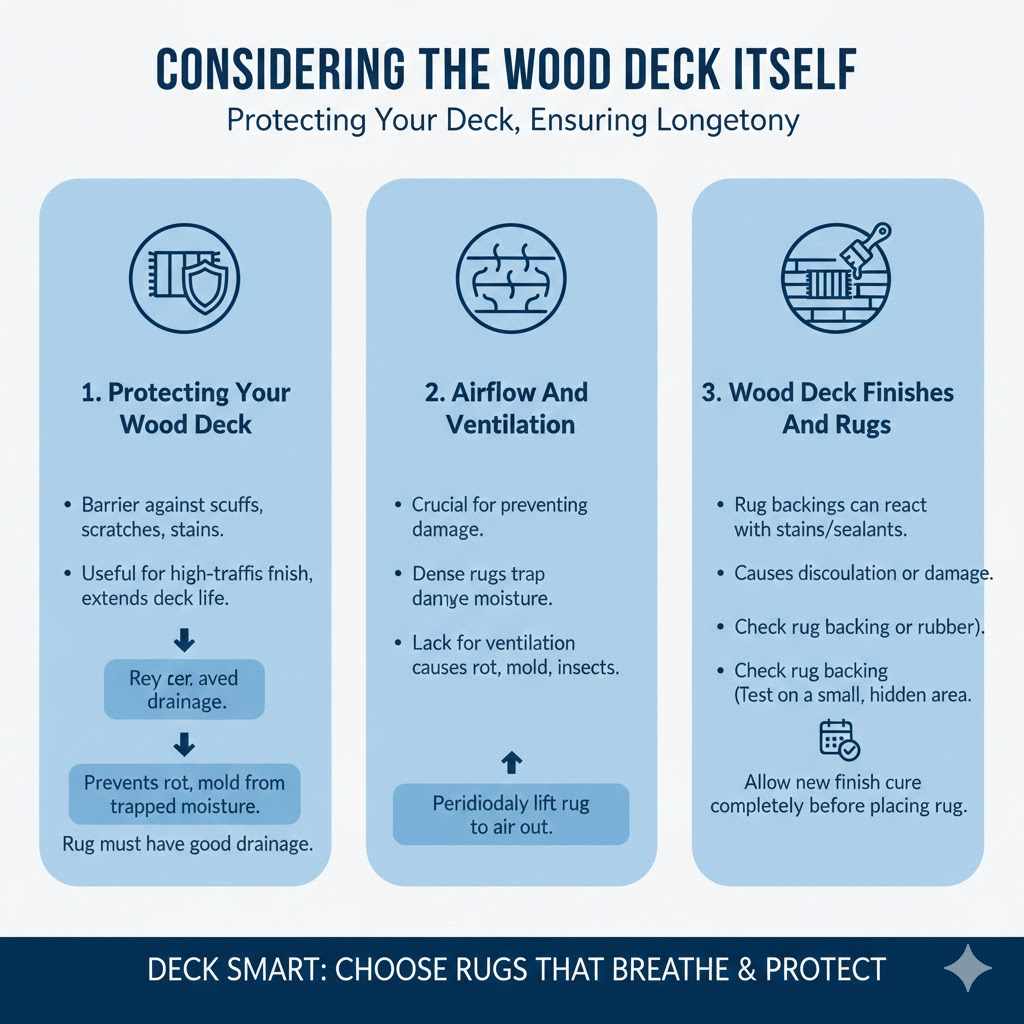
Outdoor rugs can actually help protect your wood deck from wear and tear. They act as a barrier against scuffs, scratches, and stains from furniture legs or dropped items. This is particularly useful for high-traffic areas or where furniture is frequently moved.
By providing a protective layer, the rug helps maintain the original finish and appearance of your deck, extending its life and reducing the need for frequent refinishing. A good rug makes your deck more enjoyable and easier to maintain.
However, it’s also important for the rug not to trap moisture against the wood. Trapped moisture can lead to rot, mold, and mildew on the deck itself. Therefore, choosing a rug with good drainage properties, as discussed earlier, is essential not just for the rug’s longevity but also for the health of your wood deck.
Letting the deck breathe is as important as the rug itself.
Airflow And Ventilation
Adequate airflow beneath your outdoor rug is crucial for preventing issues on your wood deck. If a rug is too dense or sits directly on the wood without any gap, it can trap moisture. This lack of ventilation can lead to the wood deteriorating, developing mold, or becoming a breeding ground for insects.
Rugs with open weaves, raised patterns, or those made from materials that allow air to pass through are beneficial. Even simple practices like periodically lifting or removing the rug to allow the deck to air out can make a significant difference in preventing these problems. Ensuring your deck can breathe is key to its longevity.
Wood Deck Finishes And Rugs
The finish on your wood deck can sometimes interact with outdoor rugs. Some rug backings, especially those made of rubber or certain plastics, could potentially react with deck stains or sealants, causing discoloration or damage to the finish. It’s always a good idea to check the rug’s backing material and, if possible, test a small, inconspicuous area of the rug on a hidden part of your deck.
If you have a freshly sealed or stained deck, allowing it to cure completely before placing a rug on it is also advisable. This helps prevent any unwanted chemical reactions or adhesion issues between the rug and the deck surface.
Frequently Asked Questions
Question: What is the best material for an outdoor rug on a wood deck
Answer: Polypropylene (olefin) is generally considered the best material due to its excellent resistance to moisture, stains, fading, and mildew, making it ideal for outdoor use.
Question: How often should I clean my outdoor rug
Answer: For everyday dirt, sweep or vacuum regularly. For deeper cleaning, aim for once or twice a year, or more often if it experiences heavy use or spills. Always ensure it dries completely.
Question: Can an outdoor rug damage my wood deck
Answer: Yes, if it traps moisture against the wood. Choose rugs with good drainage and airflow. Periodically lift the rug to let the deck air out.
Avoid rubber-backed rugs on stained decks.
Question: Should my outdoor rug be waterproof
Answer: While true waterproofing is rare, high water resistance and quick-drying properties are essential. This prevents moisture absorption, mold, and mildew, which is more important than being completely waterproof.
Question: What is the best way to dry an outdoor rug
Answer: Lay the rug flat in a sunny, well-ventilated area. Flip it periodically to ensure both sides dry evenly. Never place a damp rug back on your deck.
Wrap Up
Choosing the best outdoor rugs for wood decks in any weather involves looking at materials like polypropylene for durability, weave types for drainage, and UV resistance for color retention. Proper cleaning and storage will ensure longevity. Your deck will look great and remain protected, making it the perfect outdoor spot.