Best Way To Chop Firewood: Expert Secrets
The best way to chop firewood involves understanding your tools, prioritizing safety, and using proper technique for efficient splitting. This guide breaks down everything a beginner needs to know, from selecting the right axe to the most effective swinging motion, ensuring you can confidently prepare your wood with expert insights.
Hello, fellow DIYers and homeowners! Md Meraj here. Have you ever looked at a pile of logs and wondered, “How do I even start splitting this?” You’re not alone! Chopping firewood can seem daunting, especially for beginners. Images of seasoned lumberjacks might come to mind, but the truth is, with the right knowledge and a few simple secrets, anyone can learn to chop firewood safely and effectively. Forget bruised hands and ineffective swings; this guide is here to make wood chopping accessible and even satisfying. We’ll walk through each step, ensuring you feel confident and ready to tackle your woodpile!
Why Learning to Chop Firewood Matters
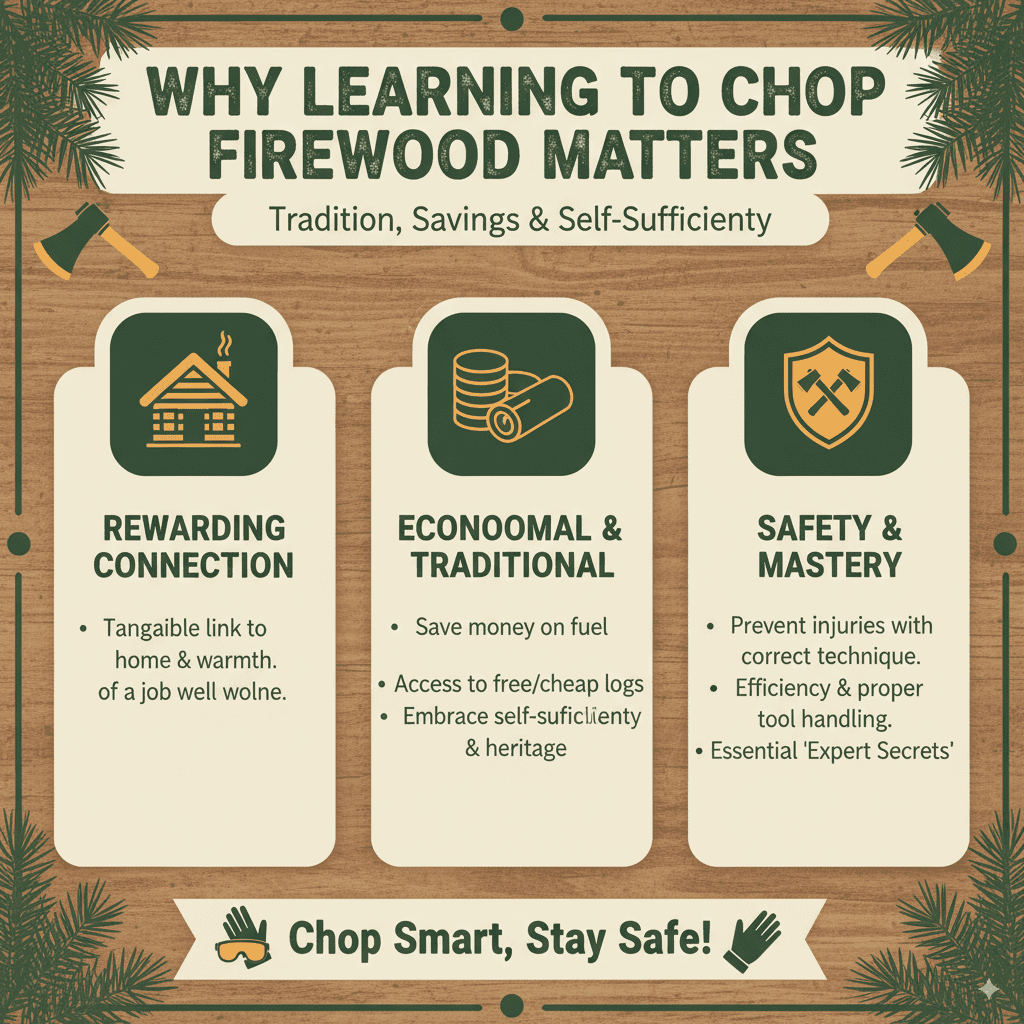
Splitting your own firewood can be incredibly rewarding. Beyond the satisfaction of a job well done, it offers a tangible connection to your home and the warmth it provides. For many, it’s a way to save money, especially if you have access to free or inexpensive logs. Plus, there’s a certain traditional charm and self-sufficiency that comes with preparing your own fuel. However, safety is paramount. Mishandling tools or using incorrect techniques can lead to serious injuries. That’s why understanding the ‘best way to chop firewood’ isn’t just about efficiency; it’s about ensuring you come back to the workshop (or woodshed!) injury-free, ready for your next project.
Essential Tools for Chopping Firewood
Before you can start swinging, you need the right gear. Using the proper tools makes the job easier, safer, and more effective. Here’s what you’ll need:
1. The Axe: Your Primary Weapon
The type of axe you choose makes a significant difference. For splitting, you want a dedicated splitting axe or a maul.
- Splitting Axe: These are thinner and wedge-shaped, designed to force wood apart rather than cut through it. They are lighter and easier to control for beginners.
- Maul: A maul is heavier and has a more bulbous, wedge-shaped head. It uses weight and momentum to bust through difficult logs. They are very effective but can be more tiring to use.
Key Features to Look For:
- Head Weight: Typically ranges from 3.5 to 6 pounds. A heavier head means more force, but a lighter head is easier to manage.
- Handle Material: Fiberglass or synthetic handles are durable and shock-absorbent. Wooden handles, like hickory, offer a classic feel and good grip but require more maintenance and can break more easily if not cared for.
- Handle Length: Longer handles (30-36 inches) provide more leverage and force.
For absolute beginners, a 3.5 to 4-pound splitting axe with a 30-inch handle is often a great starting point.
2. Safety Gear: Non-Negotiable!
This is where we absolutely cannot cut corners. Protecting yourself is the number one priority. I can’t stress this enough – always wear your safety gear!
- Safety Glasses or Goggles: Protect your eyes from flying wood chips and splinters.
- Gloves: Sturdy work gloves improve grip and prevent blisters and cuts.
- Steel-Toed Boots: Essential for protecting your feet from dropped logs or the axe itself.
- Long Pants and Sleeves: Protect your skin from scratches and splinters.
3. A Stable Chopping Block
Your chopping block is crucial for both safety and effectiveness. It should be:
- Sturdy and Stable: It shouldn’t wobble or shift when you strike it. A thick, round of a large hardwood tree, at least 20 inches high, is ideal.
- At the Right Height: When standing next to it, the top of the block should be about hip-high. This allows you to swing comfortably without bending too low or reaching too high.
Preparing Your Firewood for Splitting
Before you even pick up the axe, a little preparation goes a long way in making the job easier and safer.
1. Inspect Your Logs
Not all logs are created equal, and some are much harder to split than others. Look for:
- Knots: Knots are dense and make splitting difficult. Try to place your split near or between knots if possible.
- Cracks (Checks): Logs that are already starting to crack will split more easily. It’s often best to split wood that has seasoned for a few months, as this can encourage checking.
- Wood Type: Hardwoods like oak and maple are tougher to split than softwoods like pine.
2. Position Your Logs
Arrange your logs around your chopping block so they are easy to grab. You don’t want to be reaching for a log across the entire yard in the middle of your work. Ensure they are on a stable, flat surface.
The Expert Secrets: Mastering the Swing
Now for the core of it – how to swing the axe effectively and safely. It’s a combination of technique, balance, and a little bit of physics!
Step-by-Step Guide to Chopping Firewood
- Position Yourself: Stand facing the chopping block. Place one foot slightly forward, about shoulder-width apart, for stability. Ensure you have plenty of clear space around you – no tripping hazards, pets, or people nearby!
- Grip the Axe: There are two main grips for the swing:
- Top Hand Grip: Your dominant hand should be near the top of the axe handle, closer to the head. This gives you control and precision for the initial swing.
- Bottom Hand Grip: Your non-dominant hand slides down to the very end of the handle. This hand acts as a pivot point and provides power on the downswing.
- The Wind-Up: Slowly and smoothly bring the axe up and over your head. Keep your eyes on the point on the log where you want to strike. As you bring the axe down, your top hand slides down the handle to meet your bottom hand. This sliding motion is key to building momentum.
- The Swing: Let gravity and momentum do most of the work. Swing the axe in a controlled arc. Aim for the center of the wood, or slightly above the center of the log on the block. Your body should naturally twist to follow the swing.
- The Release and Strike: As the axe head makes contact with the wood, your hands should be together near the end of the handle. The force of the swing, combined with the wedge shape of the axe, will split the wood.
- Follow Through: Allow the axe to continue its natural arc after striking. Don’t try to stop it abruptly. If the log splits cleanly, the axe will likely stick into the chopping block.
- Retrieving the Axe: If the axe is stuck firmly in the block or a log, be careful. Often, a slight twist or using a limb of the log toLeverage against the axe head can help free it. Never YANK forcefully upwards. For heavily stuck axes, sometimes splitting another piece of wood near it can help release tension.
- Reset for the Next Swing: Retrieve your chopped wood pieces. Reposition yourself and the next log to be split. If the log didn’t split completely, reposition it on the block and aim for the crack to finish the job.
Common Mistakes and How to Avoid Them
Even with clear instructions, beginners often make a few common errors. Knowing these can help you avoid them:
- Swinging too hard or wild: This reduces accuracy and increases the risk of injury. Focus on a smooth, controlled motion.
- Not using the sliding hand technique: This is crucial for building momentum. As you swing down, your top hand slides to meet your bottom hand.
- Aiming for the very edge of the log: Aim for the center. The wedge shape of the axe is designed to force the wood apart.
- Standing too close or too far: Find that sweet spot where you can swing comfortably with good leverage. The chopping block height is key here.
- Not wearing safety gear: This is non-negotiable. Always, always wear your safety glasses and sturdy boots.
Advanced Tips for Efficient Wood Chopping
Once you’ve got the basic swing down, you can refine your technique to become even more efficient.
Leveraging Log Grain and Cracks
The ‘best way to chop firewood’ often means working smarter, not just harder. Pay attention to the wood itself:
- Follow the Grain: Often, logs have internal grain patterns that make them easier to split along certain lines. If a log resists, try rotating it to see if a different angle is more favorable.
- Exploit Existing Cracks: If your log has checks or cracks, aim your axe right at the opening of the crack. This will usually result in a quick split.
- The ‘V’ Notch Method: For particularly stubborn logs, you can sometimes make an initial split on one side, then make another nearly parallel split on the other side. This creates a ‘V’ shape internally, weakening the log for a final, easier split.
Splitting Different Types of Wood
Wood density and grain structure vary significantly:
- Hardwoods (Oak, Maple, Ash): These are dense and often have interlocking grains, making them tough. They require strong, consistent swings. Mauls can be particularly helpful here.
- Softwoods (Pine, Fir): These are much easier to split, often with fewer, cleaner strokes. Be careful not to bury your axe too deeply if you’re using a maul, as they can get stuck easier.
- Green vs. Seasoned Wood: Green wood (freshly cut) is generally easier to split than seasoned wood because its fibers are more pliable. However, seasoned wood often develops internal checks as it dries, which can make splitting easier. The real challenge is often with wood that has been cut and dried improperly, developing extreme hardness.
For a comprehensive guide on wood types and their seasoning needs, check out resources from forestry services, such as the U.S. Forest Service’s Firewood Production Guide.
Using a Maul vs. Axe
While both are for splitting, their usage can differ:
| Feature | Splitting Axe | Wood Maul |
|---|---|---|
| Head Shape | Thinner, wedge-like | Thicker, more bulbous wedge |
| Primary Action | Forces wood apart | Busts through wood with weight |
| Best For | General splitting, easier for beginners, less chance of getting stuck | Tougher woods, larger logs, very stubborn pieces |
| Weight | Lighter (3.5-5 lbs) | Heavier (6-8 lbs) |
| Recommended For | Beginners, those with less physical strength | Intermediate to experienced users, those needing extra power |
Many experienced wood splitters have both and choose based on the log. As a beginner, starting with an axe is usually recommended.
Beyond the Swing: Storing Your Firewood
Once you’ve successfully chopped your wood, proper storage is key to ensuring it burns efficiently and lasts. Good airflow is crucial.
- Seasoning is Key: Firewood needs to dry out (season) for at least 6-12 months, ideally longer for hardwoods, before it’s ready to burn. Wet wood burns poorly, produces creosote, and is difficult to light.
- Airflow: Stack your wood off the ground to prevent rot and allow air to circulate underneath. A simple wood rack or even laying pallets on the ground can achieve this.
- Orientation: Stack your woodpile with the split ends facing outwards, as this is where most of the drying occurs.
- Covering: Cover the top of the pile to protect it from rain and snow, but leave the sides open for ventilation. Avoid covering the entire pile, as this traps moisture.
For more detailed advice on wood seasoning, the University of Idaho Extension offers excellent resources.
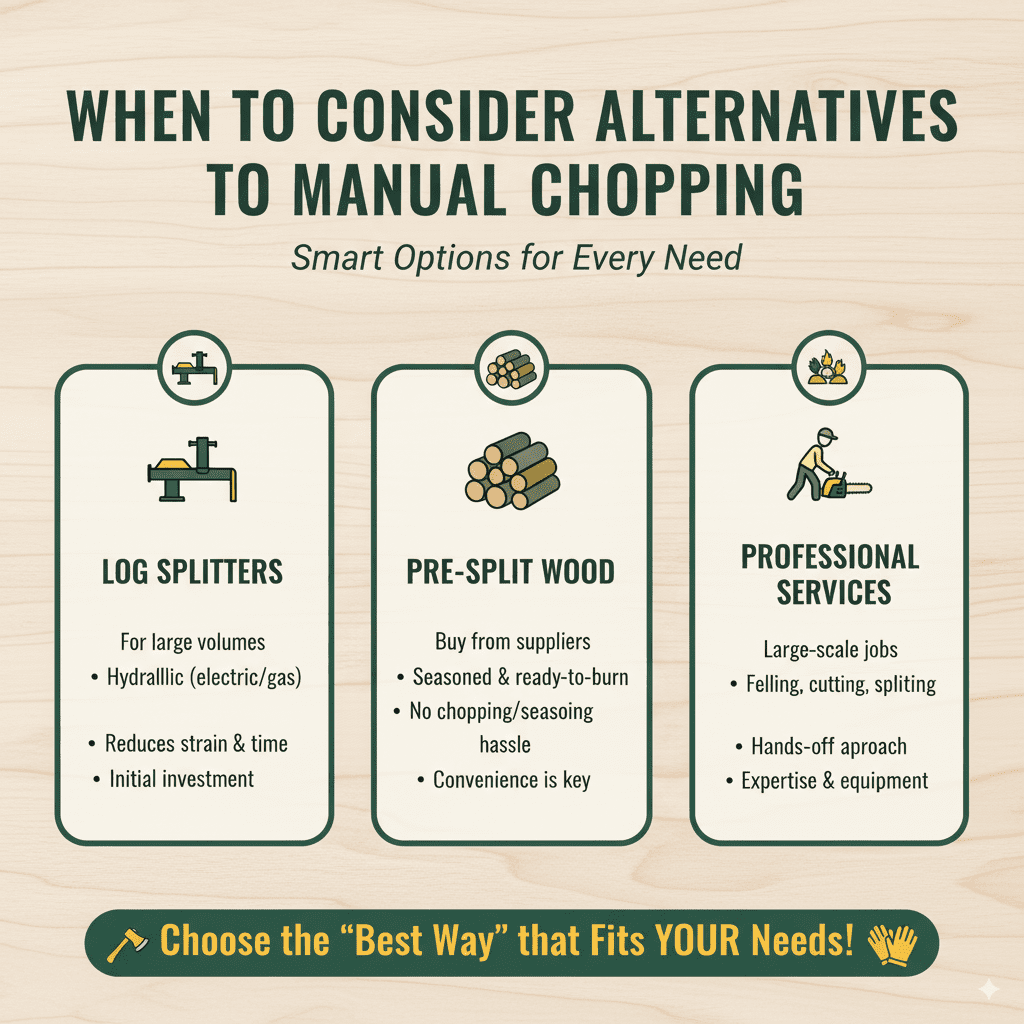
When to Consider Alternatives to Manual Chopping
While manual chopping is rewarding, it’s not always the best or only method. Consider these if your needs are different:
- Log Splitters: For large volumes of wood, a hydraulic log splitter (electric or gas-powered) can do the work of hours in minutes. They are an investment but can significantly reduce physical strain and time.
- Pre-Split Wood: Many people opt to buy pre-split, seasoned firewood from local suppliers. This saves all the hassle of chopping and seasoning.
- Professional Services: If you have a large job or simply want a hands-off approach, various services can fell trees, cut them into logs, and even split them for you.
The “best way” is the one that fits your needs, physical capabilities, and available resources. For those who enjoy the process and want to get the most out of their effort, learning to chop manually is incredibly valuable.
Frequently Asked Questions About Chopping Firewood
Q1: What is the safest way to chop firewood?
The safest way involves wearing all recommended safety gear (glasses, gloves, steel-toed boots), using a stable chopping block at the correct height, ensuring a clear swing radius, and employing proper axe-handling techniques with controlled swings rather than wild ones.
Q2: How do I know if my firewood is ready to burn?
Seasoned firewood will have cracks (checks) on the ends, will be lighter in weight, will sound hollow when two pieces are banged together, and will have a grayish color rather than green. It should have been air-dried for at least 6–12 months.
Q3: Can I use a regular axe to chop firewood?
While a regular axe can technically split wood, it’s not ideal. A dedicated splitting axe or maul has a wedge-shaped head specifically designed to force logs apart, making the job much more efficient and less labor-intensive than using a felling axe (designed for cutting down trees) or a hatchet.
Q4: My axe keeps getting stuck in the wood. What am I doing wrong?
This often happens with mauls, especially on softer woods. Ensure you’re hitting the log at a slight angle, not straight on. If your axe is stuck, try splitting another piece of wood next to it, as this might release tension. You can also try a gentle twisting motion or using a piece of smaller fallen wood as a lever against the axe head.
Q5: How can I make chopping easier if I’m not very strong?
Focus on technique: use controlled swings that leverage gravity and momentum. A lighter splitting axe with a longer handle can provide good leverage and still be manageable. Ensure your chopping block is at the right height so you aren’t bending excessively. For truly stubborn logs, consider using a maul or, if consistently splitting large volumes, a log splitter.
Q6: What’s the ideal height for a chopping block?
The ideal height is generally around hip-level when you are standing next to it. This allows for a comfortable swing with good leverage without excessive bending or reaching, minimizing strain and maximizing your power.
Conclusion
There you have it – the essential secrets to chopping firewood like a pro! We’ve covered everything from selecting the right axe and essential safety gear to mastering the swing and even storing your wood for optimal burning. Remember, the “best way to chop firewood” is about combining safety, efficiency, and respecting the material you’re working with. Start slow, focus on your technique, and always prioritize your well-being. With practice, you’ll not only become proficient but might even find a rhythm and satisfaction in this age-old craft. So grab your axe, put on your safety gear, and get ready to transform those logs into warmth. Happy chopping!