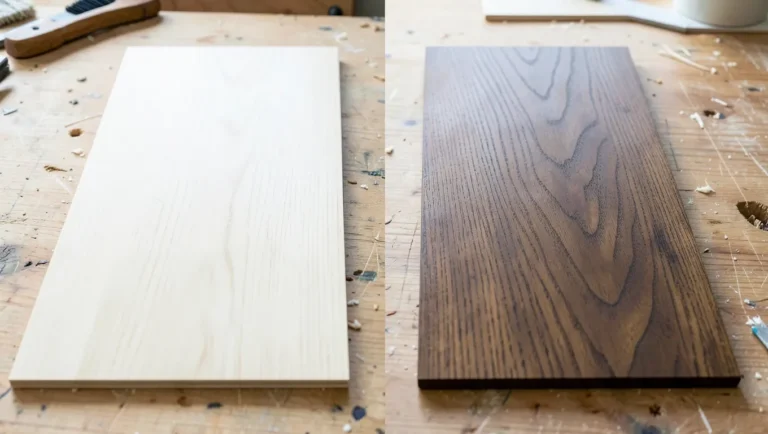
Wood Grain Comparison Chart: 14 Species by Grain, Pores and Color
Wood grain means three different things (fiber direction, pore structure and figure), and this chart sorts 14 common species on all three. Oak, ash and hickory are ring-porous with large visible pores, while maple and birch are diffuse-porous with a fine, even texture. Use the tables to identify a board, then match its grain to the right finish.
What Wood Grain Means: Direction, Texture and Figure
Best Wood ID Book Pick
 |
Wood Identification & Use (Terry Porter), $25.20 A species reference to check against the chart below when a board turns out to be something this page does not list.
|
As an Amazon Associate we earn from qualifying purchases.
People say "grain" for three separate properties, and mixing them up is why most grain charts confuse more than they help:
- Grain direction is how the fibers run along the board: straight, wavy, interlocked or irregular.
- Grain texture is how coarse or fine the surface feels, which comes from pore size. This is what "open grain" and "closed grain" describe.
- Figure is the decorative pattern, such as the ribbon stripe in sapele or the birdseye in hard maple.
Texture and direction are independent. Red oak has straight grain but a coarse, open texture. Black cherry has a similarly straight grain with a fine, even texture. Same direction, very different finishing behavior.
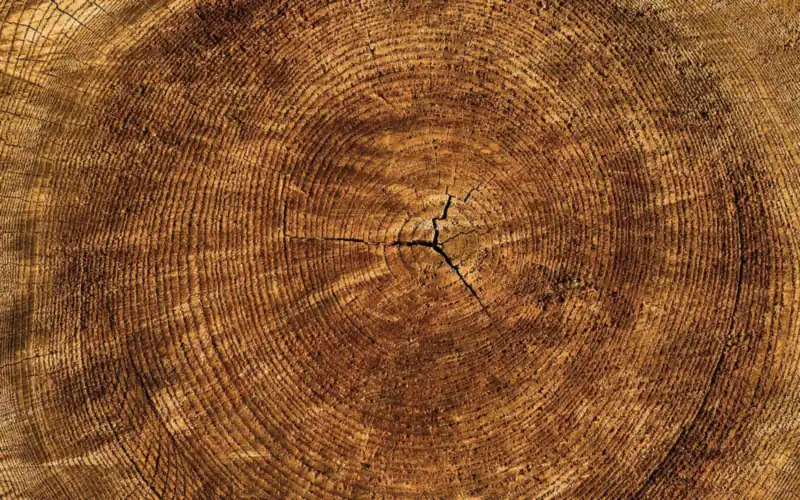
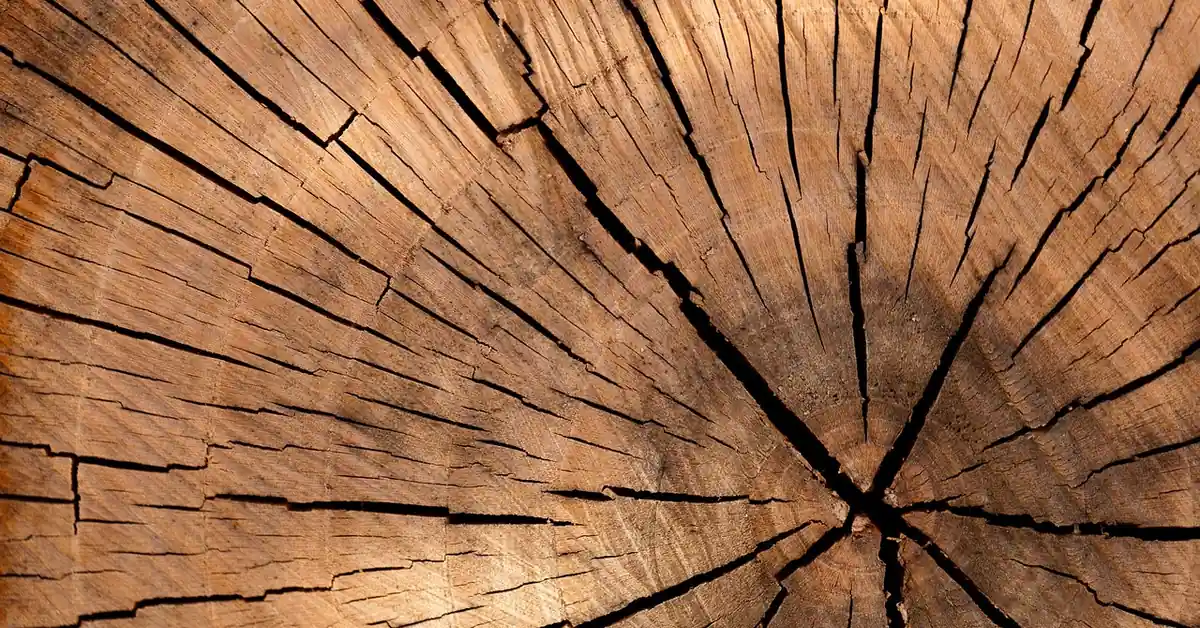
The pattern on a face comes from how the log was sawn. Cutting through the growth rings at a shallow angle gives the stripes and cathedral lines of flat-sawn boards, while quartersawn faces expose the rays: The Wood Database notes quartersawn oak displays prominent ray fleck.
Wood Grain Identification Chart: Common Species
This chart compares 14 species on direction, pore structure and texture, with Janka hardness for reference. All entries come from the species profiles at The Wood Database.
| Species | Grain direction | Pore structure | Texture | Janka (lbf) |
|---|---|---|---|---|
| Red oak | Straight | Ring-porous | Coarse, uneven | 1,220 |
| White oak | Straight | Ring-porous | Coarse, uneven | 1,350 |
| White ash | Almost always straight | Ring-porous | Medium to coarse | 1,320 |
| Shagbark hickory | Usually straight, sometimes wavy | Ring-porous | Medium | 1,880 |
| Hard maple | Generally straight, may be wavy | Diffuse-porous | Fine, even | 1,450 |
| Yellow birch | Straight or slightly wavy | Diffuse-porous | Fine, even | 1,260 |
| Black cherry | Usually straight | Semi-ring to diffuse-porous | Fine, even | 950 |
| Black walnut | Usually straight, can be irregular | Semi-ring-porous | Medium | 1,010 |
| Honduran mahogany | Straight, interlocked, irregular or wavy | Diffuse-porous | Medium, uniform | 900 |
| Sapele | Interlocked, sometimes wavy | Diffuse-porous | Fine, uniform | 1,360 |
| Teak | Straight, occasionally wavy or interlocked | Ring or semi-ring-porous | Coarse, uneven, oily feel | 1,070 |
| Eastern white pine | Straight | Softwood: resin canals | Even, medium | 380 |
| Douglas fir | Straight or slightly wavy | Softwood: resin canals | Medium to coarse | 620 |
| Western red cedar | Straight | Softwood: resin canals | Coarse | 350 |
A correction worth knowing: many grain charts list pine and cedar as "open grain" and cherry as "closed." Pore structure is a hardwood property. Softwoods do not have vessel pores, and black cherry is semi-ring-porous to diffuse-porous per the table above. The Janka values here also replace figures this page used to show, which had red oak at 1,290 lbf and mahogany at 800 lbf.
Open Grain vs Closed Grain: What the Pores Tell You
Open-grained woods (the ring-porous group: oak, ash, hickory, plus teak) have large pores that stay visible after sanding. A clear finish sinks into them and leaves a textured surface unless you fill the pores first. Closed-grained woods (the diffuse-porous group: maple, birch, mahogany, sapele) have small, evenly spread pores and sand smooth. Black walnut and black cherry sit between the two.
Closed grain is not automatically easier to stain. The Wood Database notes hard maple can blotch when stained and suggests a pre-conditioner, gel stain or dye, and it lists staining as the main difficulty with black cherry. Black walnut is rarely stained at all. For finish selection, see our wood finishing guide.
Wood Grain Color Chart: Natural Tones by Species
Wood grain color is the heartwood tone before any finish, and heartwood is usually darker than the paler sapwood beside it. These are the natural colors reported by The Wood Database:
| Species | Heartwood color | Sapwood color |
|---|---|---|
| Red oak | Light to medium brown, often a reddish cast | Paler, not sharply separated |
| White oak | Light to medium brown, often an olive cast | Paler, not sharply separated |
| White ash | Light to medium brown | Wide, beige to light brown |
| Hard maple | Darker reddish brown (rarely used) | Nearly white to cream, sometimes a reddish or golden hue |
| Yellow birch | Light reddish brown | Nearly white |
| Black cherry | Light pinkish brown fresh, darkening to medium reddish brown | Pale yellowish |
| Black walnut | Pale brown to dark chocolate with darker streaks | Pale yellow-gray to nearly white |
| Honduran mahogany | Pale pinkish brown to darker reddish brown, darkens with age | Not listed |
| Teak | Golden to medium brown, darkens with age | Not listed |
| Eastern white pine | Light brown, sometimes reddish, darkens with age | Pale yellow to nearly white |
Hard maple is the exception to the heartwood rule: its pale sapwood is the part most commonly used, which is why maple looks creamy white rather than brown. Black cherry is the one that changes most visibly, deepening from pink-tan to reddish brown with light exposure.
Types of Wood Grain Patterns
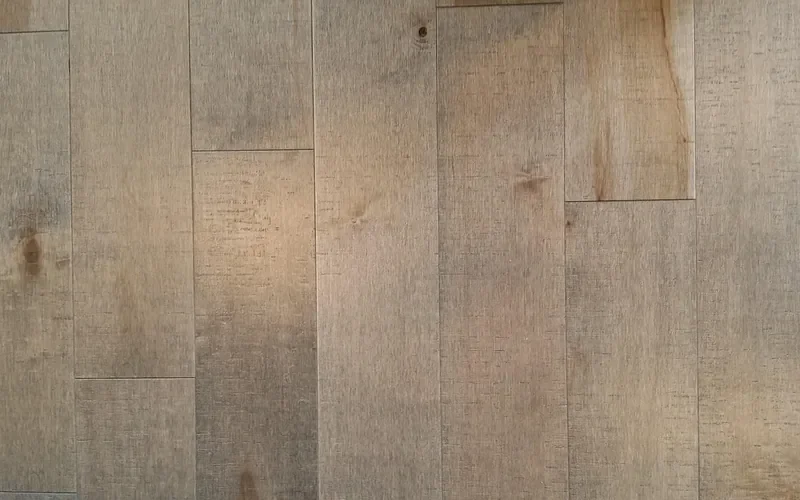
Direction is what you feel under a plane. These are the patterns you will meet, with species where The Wood Database reports them:
| Pattern | What it looks like | Species that show it | Working note |
|---|---|---|---|
| Straight | Fibers run parallel to the board edge | Red and white oak, white ash, black cherry, western red cedar | Cuts and planes cleanly |
| Wavy | Fibers undulate gently | Hard maple (may be), Douglas fir (slightly), yellow birch (slightly) | Take light passes with sharp blades |
| Interlocked | Fibers alternate direction between growth layers | Sapele, Honduran mahogany (can be), teak (occasionally) | Planing and routing can tear out the surface |
| Irregular | Fibers deviate unpredictably | Black walnut (can be), Honduran mahogany (can be) | Planer tearout can occur; scrape or sand |
| Figured | Decorative curl, quilt, birdseye or burl | Hard maple (birdseye, curly), black walnut (curl, crotch, burl), sapele (pommele, quilted, fiddleback) | Striking, but the hardest to machine |
Sapele shows how direction and figure interact: its interlocked grain gives the ribbon stripe on quartersawn boards, and The Wood Database warns it can tear out when planed or routed. The practical habit is the same for every species: read the slope of the grain on the board edge and feed the cut so the blade lifts fibers rather than digs under them.
How to Tell Species Apart by Grain in 3 Steps
- Check the pores on the end grain. Use a hand lens or raking light. A band of large pores at the start of each growth ring means ring-porous (oak, ash, hickory).
- Look for evenly spread pores. Small, uniform pores across the whole ring mean diffuse-porous (maple, birch, mahogany, sapele). Pores that change gradually in size point to semi-ring-porous (walnut, cherry).
- Use color last. The Wood Database says color alone is not a reliable way to separate red oak from white oak, so confirm with pore detail or a species reference.
For the full end-grain method, including weight and smell checks, see how to identify wood types. If you are choosing between two specific species, our oak vs walnut grain and walnut vs cherry pages compare them directly, and the types of wood guide covers hardwood, softwood and engineered wood. Mahogany buyers can use the mahogany types comparison.
Choosing and Finishing Wood by Grain
- Want a flat, glass-smooth clear coat: pick a closed-grained wood such as maple, birch or cherry, or fill the pores of oak and ash first.
- Want visible texture and strong stain contrast: choose a ring-porous wood such as red oak or ash.
- Staining maple, birch or cherry: use a pre-conditioner, gel stain or dye to reduce blotching.
- Working interlocked or irregular grain: use sharp blades, light passes, and a scraper or sanding for the last pass.
- Soft and easy to cut: pine (380 lbf) and cedar (350 lbf) work easily but dent far more readily than oak or maple.
Hardness is the other half of the choice: the Janka column in the chart ranges from 350 lbf for western red cedar to 1,880 lbf for shagbark hickory, so the grain you like and the wear you can tolerate do not always point to the same species.
Frequently Asked Questions
What is the difference between open grain and closed grain wood?
Open grain means the wood has large, visible pores (vessels) on the surface, as in oak, ash and hickory. Closed grain means the pores are small and evenly spread, as in maple, birch and cherry. The terms apply to hardwoods. Open-grained boards usually need pore filler for a glass-smooth finish, while closed-grained boards sand smooth on their own.
Is oak an open grain or closed grain wood?
Oak is open grain. Both red oak and white oak are ring-porous with a coarse, uneven texture, and The Wood Database notes that red oak’s pores are so large that air can pass through a straight-grained board from end to end..
How can I tell oak from maple by grain?
Look at the end grain with a hand lens. Oak shows a band of large pores at the start of each growth ring, which is ring-porous. Maple shows small pores spread evenly across the ring, which is diffuse-porous. On a flat face, oak looks coarse with bold lines, while maple looks fine, pale and even.
Is walnut open grain or closed grain?
Walnut sits in between. The Wood Database lists black walnut as semi-ring-porous, with pore size changing across each growth ring, and it has a medium texture. It is more open than maple but finer than oak. Whether it needs filler depends on how smooth you want the finished surface.
Do softwoods like pine have open or closed grain?
The open versus closed label does not really apply to softwoods. Pine, fir and cedar do not have the vessel pores that hardwoods have. Their end grain shows resin canals and growth ring bands instead. What changes how they finish is the density gap between earlywood and latewood, which The Wood Database says can make western red cedar sand unevenly.
Sponsored / affiliate links. As an Amazon Associate I earn from qualifying purchases. I may earn additional commission from eligible campaigns.