Fractal Burning Machine: The Lethal Voltage Risk Before You Buy
A Fractal Burning Machine is a name for a homemade high-voltage rig – usually a microwave-oven or neon-sign transformer wired to a wetted piece of wood – used to burn lightning-like Lichtenberg patterns into the surface. Before you look for one to buy or build: this exact process has killed dozens of people, and there is no version of the DIY method that’s actually safe.
⚠️ Serious Safety Warning
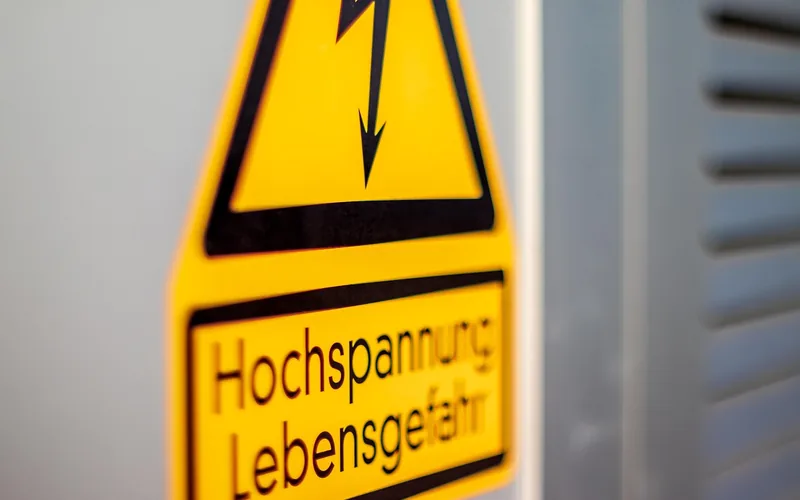
Fractal/Lichtenberg wood burning uses lethal voltages (typically 1,000 – 15,000V from a microwave, neon-sign, or oil-burner transformer). The American Association of Woodturners’ own safety page documents 35 known deaths since 2016, including 33 reported since the AAW Board banned the practice from its events in 2017 – most from accidental contact with the electrodes, the electrolyte solution, or a live wire. Never touch the wood, electrodes, or solution while the power source is energized – fully disconnect and wait before adjusting anything, and know that a microwave transformer’s paired capacitor can hold a lethal charge even after it’s unplugged. Work on a dry, non-conductive floor, never work alone, and keep others away from a live setup. No fractal-burning unit, homemade or commercially sold, carries a UL safety rating.
Source: American Association of Woodturners, Safety: Fractal Burning / Lichtenberg Burning (woodturner.org)
Fractal burning, also known as Lichtenberg wood burning, follows water pathways across a wetted wood surface with a high-voltage current to burn intricate, branching patterns – the same kind of pattern you see in a lightning bolt or the veins of a leaf. The finished look is genuinely striking, which is exactly why it keeps circulating on social media despite the danger.
Introduction To Fractal Burning
Lichtenberg figures are named after the German physicist Georg Christoph Lichtenberg, who first recorded these branching discharge patterns in the 1770s while experimenting with static electricity on dust-coated resin. The woodworking version repurposes that same physics: electricity takes the path of least resistance through a salt-water or baking-soda solution painted onto the wood, and it burns a visible channel as it goes. The pattern looks organic because it’s forming the same way lightning, river deltas, and blood vessels branch – through repeated, self-similar splitting.
The Science Behind Fractal Patterns
Fractals are shapes that repeat their own structure at different scales – a small branch looks like a miniature version of the whole tree. In fractal burning, the moisture content and salinity of the electrolyte solution control how far and how densely the current spreads before finding ground, which is why two boards with the same voltage applied can produce very different pattern density. None of that changes the danger: the current doing the “drawing” is the same current that can stop a heart.
Why This Went Viral – And Why It Shouldn’t Have
Fractal burning spread quickly on social media in the mid-2010s because the visual payoff is dramatic and the build looks deceptively simple: a transformer, two probes, and a bucket of saltwater. That simplicity is the trap. There’s no reliable way for a hobbyist to isolate the output side of a microwave or neon-sign transformer, no consumer safety switch that interrupts current fast enough at that voltage, and no visual cue that a piece of “dead” wood is still carrying a charge. The American Association of Woodturners banned the technique from its events, its publications, and its chapter demonstrations in 2017 for exactly this reason – the risk doesn’t scale down with experience or caution the way it does with most woodworking tools.
Best Safe Alternative To A DIY Machine
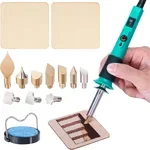 |
YIHUA 930-IV Pyrography Wood Burning Pen Kit – $15.99 Freehands the same branching, lightning-like pattern as fractal burning, using standard household current instead of a lethal transformer.
|
Selecting The Right Wood

Whether you’re finishing a piece that already carries a Lichtenberg-style pattern or planning a branching-pattern project with a safe tool like a pyrography pen or CNC laser, the wood choice matters just as much as the technique – see our Lichtenberg wood guide for more on grain and species selection.
Ideal Wood Types For A Branching Pattern
Softer, more porous woods take a burned or lasered pattern more readily because they hold moisture and heat differently along the grain. Woods commonly used for this look include:
- Basswood – very even grain, the standard choice for pyrography
- Pine – inexpensive, forgiving for practice pieces
- Birch – smooth surface, good contrast between burned and unburned wood
- Maple – tighter grain, holds fine detail well
- Walnut – darker base tone gives a different visual contrast than lighter woods
Prepping Wood For A Clean Result
Preparation is the same regardless of which safe tool you’re using:
- Start with dry, seasoned wood – green or high-moisture stock burns unevenly and can scorch instead of lining cleanly.
- Sand to at least 220 grit. A rough surface makes a pyrography tip skip and can cause a laser to burn inconsistent line widths.
- Wipe away sanding dust with a tack cloth before starting – dust on the surface will smoke and discolor the burn line.
- Test your settings (pen temperature or laser power/speed) on an offcut of the same board before working the final piece.
Good prep is what actually determines whether a branching pattern looks crisp or muddy – not the voltage of whatever made the mark.
Why We Don’t Publish A Machine Build Or Burn Guide
Earlier versions of this page included a parts list and step-by-step assembly guide for building a fractal burning machine, plus setup and burn-execution instructions. We removed all of it. The American Association of Woodturners’ own safety page documents 35 known deaths tied to homemade fractal/Lichtenberg wood-burning rigs since 2016, and the organization has banned demonstrating or promoting the technique at its events since 2017.
A common but dangerous myth: using a residual current device (RCD) — the international term for what’s called a GFCI in the US — does not make this safe.
- An RCD/GFCI does not protect you. It monitors the transformer’s primary (input) wiring. The lethal output comes from the secondary coil, which is galvanically isolated from that circuit — the RCD/GFCI cannot detect a fault on the output side and will not trip while current is passing through a person.
- Unplugging the transformer does not make it safe to touch. The capacitor paired with a microwave oven transformer stores a charge and can deliver a lethal shock long after the unit is disconnected from the wall.
Getting The Look Without The Risk
If the branching, lightning-like pattern is the appeal, these routes get a comparable result without building or operating a high-voltage machine (see our full breakdown of the best solution for fractal burning for more detail on each):
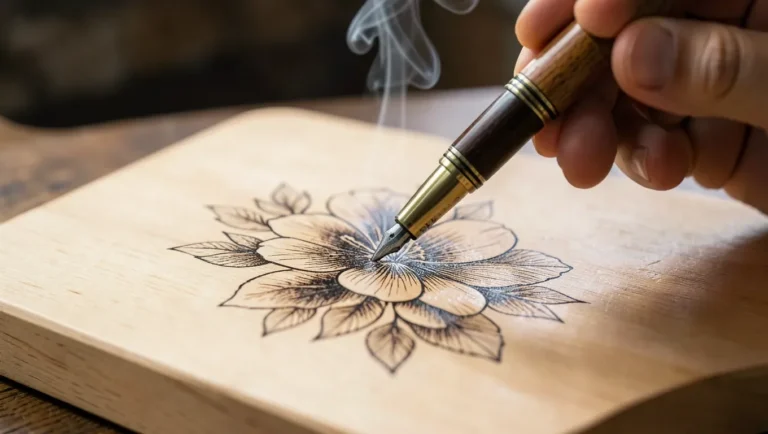
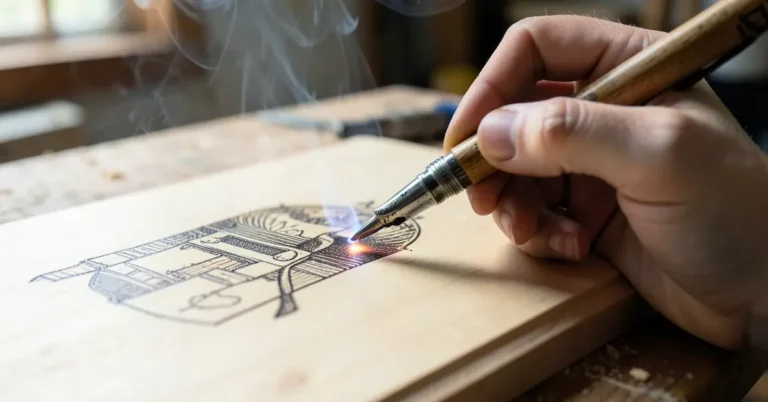
- Pyrography (wood-burning) pen. Freehand a branching pattern at low, safe voltage – the pen itself runs on standard household current at a tip temperature you control, with no current passing through the wood or your body.
- CNC laser engraver. Load or design a Lichtenberg-style pattern file and let the laser burn it in — no electrical current passes through the workpiece or the operator at any point.
- Commercially built, interlocked units. A small number of enclosed Lichtenberg machines exist with engineered safety interlocks. They’re meaningfully safer than a garage-built rig, but none carry a UL safety rating and they still use lethal voltage — “safer” is not “safe,” and we don’t recommend buying one.
Post-Burning Finishing
Whichever safe method produced your branching pattern, the finishing steps are the same: clean up the burn residue, then seal the wood to protect the design.
Cleaning and smoothing. Wipe away loose soot with a dry cloth first, then a barely damp one – a lot of water can lift the char and blur the pattern’s edges. Once dry, hand-sand the surrounding (unburned) area with fine-grit paper to remove any raised grain, working around the burned lines rather than over them so you don’t soften their edges.
Sealing for longevity. A wipe-on polyurethane or a hardwax oil (like Rubio Monocoat) both work well over a fractal-style pattern – both are thin enough not to fill in the fine branching detail. For a piece that will see handling or moisture, such as a serving board or coaster, food-safe epoxy poured over the surface gives a high-gloss, fully sealed finish, but let the wood dry completely first and apply it in a dust-free space, since anything that lands in the epoxy before it cures is permanent.
Getting More Detail Into The Pattern
Once the basics are working, the difference between a flat-looking branching pattern and one with real depth comes down to line variation and finishing choices – not voltage.
Varying Line Weight And Density
With a pyrography pen, slowing your stroke and using a slightly higher tip temperature darkens and widens a line, while a fast, light pass gives a thin, pale one – mimicking how a real Lichtenberg discharge tapers from a thick main channel into fine branches. With a CNC laser, the same effect comes from adjusting power and speed settings in the design software before cutting, then running a few test passes on scrap to dial in the taper.
Adding Color And Contrast
Once the pattern is burned or lasered in, a light coat of aniline dye or alcohol ink brushed across the surface (then wiped back before it fully sets) will pool slightly in the recessed burn lines and add contrast without covering the surrounding wood grain. Some woodworkers also pair a branching pattern with a contrasting wood inlay or a different finish sheen (matte field, satin lines) to make the pattern read more clearly from a distance.
Showcasing Your Work
Once you have created a striking branching-pattern piece, it’s time to showcase it properly. Displaying your work well can make the difference between a piece that gets noticed and one that doesn’t.
Display Ideas
Consider a few different presentation approaches:
- Mounting the piece on a gallery wall to create a focal point.
- Using a custom stand or easel to showcase an individual piece.
- Arranging smaller pieces on open shelving for a curated look.
- Using raking (side-angle) lighting, which makes a burned or lasered line’s texture stand out far more than flat overhead light.
Selling Your Art: Tips And Platforms
If you’re interested in selling branching-pattern work, a few things matter more than others:
- Photograph it at an angle. Raking light in your product photos shows the texture of the burned line, not just its color.
- Disclose your method. If a buyer asks how the pattern was made, being upfront that it’s pyrography or laser-burned (not a DIY high-voltage process) is both honest and, frankly, a selling point given how many buyers now know about the safety issues with the electrical method.
- Online marketplaces. Etsy and Amazon Handmade both have dedicated woodcraft/pyrography categories.
- Local art fairs. Branching patterns photograph well for social promotion but sell better in person, where buyers can see the texture up close.
Frequently Asked Questions
Is fractal wood burning legal?
It isn’t illegal to attempt in the US, but it is banned from every American Association of Woodturners (AAW) event, publication, and chapter demonstration, and AAW-chartered chapters that allow it can lose their insurance coverage. The ban exists because of the documented death toll, not a legal restriction.
What is the voltage of a fractal burning machine?
Homemade rigs typically use 1,000–15,000V, sourced from a transformer like those in microwave ovens, neon signs, or oil burners. This is well into the range that’s lethal on contact, and neither a GFCI/RCD outlet nor unplugging the unit makes it safe to touch – the transformer’s capacitor can hold a charge after disconnection.
What is needed for fractal wood burning?
We don’t publish the DIY steps. The traditional method uses a high-voltage transformer and a wetted wood surface, and this exact setup has been linked to 35 documented deaths since 2016 according to the American Association of Woodturners. A pyrography pen or CNC laser engraver produces a similar branching pattern without the electrical risk.
What is the best wood for fractal burning?
Basswood, pine, and birch are common choices for a branching pattern because they’re soft and even-grained, which helps both a pyrography pen and a CNC laser produce a cleaner line. Wood choice affects pattern clarity, not the safety of whichever tool made the mark.
Conclusion
A fractal burning machine – the homemade, high-voltage kind – isn’t a project worth the risk. Dozens of documented deaths and the American Association of Woodturners’ own ban are about as clear a warning as woodworking safety guidance gets.
The good news is that you don’t have to give up the look. A pyrography pen or a CNC laser engraver produces the same branching, lightning-like pattern using standard household current, with no electrical path through you or the workpiece – and both are tools you can pick up and use safely the same day they arrive.
Sponsored / affiliate links. As an Amazon Associate I earn from qualifying purchases. I may earn additional commission from eligible campaigns.