Best Way to Paint MDF Doors: Expert Tips Revealed
The best way to paint MDF doors is to seal every surface – including the edges – with a proper primer before any color goes on, because MDF’s biggest weakness is how readily its exposed fibers absorb moisture and swell. Get the sealing step right and MDF actually paints better than solid wood in some ways: no grain to telegraph through the finish, and a naturally flat, smooth surface. Here’s the correct sequence, the primer choice that actually matters, and the mistakes that cause most MDF paint jobs to fail.
Why MDF Needs Different Prep Than Solid Wood
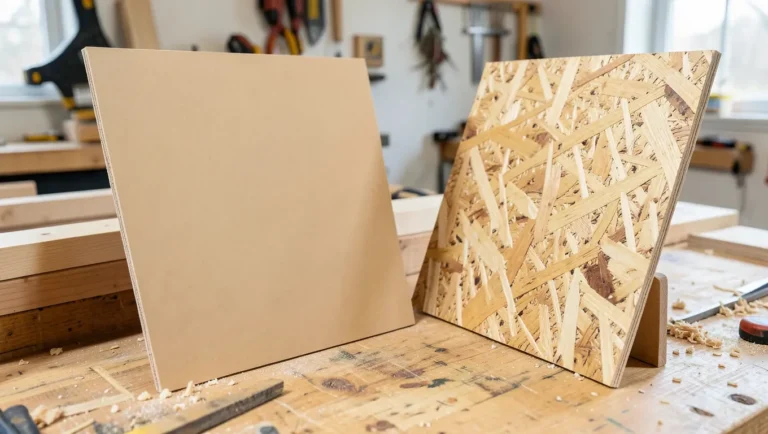
MDF (medium-density fiberboard) is made of compressed wood fibers and resin, with no natural grain or protective bark layer the way solid lumber has. Raw, unsealed MDF is highly absorbent – it soaks up moisture from water-based products fast, and that moisture causes the fibers to swell, especially at cut edges where the fibers are most exposed. A swollen edge doesn’t shrink back down once it dries; the surface stays rough and raised, which shows clearly under paint. This is why edge-sealing gets specific attention in every real MDF painting guide, when the same step is often skipped entirely on solid wood.
Preparation
- Clean thoroughly. Wipe down with a damp cloth and mild soap to remove dust, grease, and residue, then let it dry completely.
- Fill any dents or damaged edges with wood filler before sanding, especially on cut edges where the fiber structure is roughest.
- Sand lightly with fine-grit sandpaper (220 or finer) – MDF doesn’t need heavy sanding like solid wood might, just enough to knock down any raised fibers and give primer something to grip.
- Wipe away all dust with a tack cloth before priming – dust trapped under primer telegraphs through the final coat.
Best Primer Made Specifically For MDF
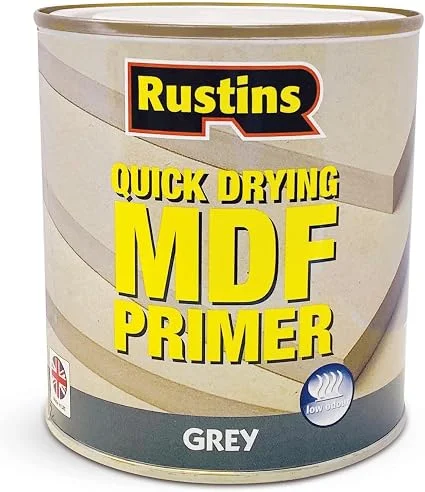 |
Rustins Quick Drying MDF Grey Primer, 500ml – $25.00 Formulated specifically to seal MDF’s absorbent fibers (edges included) before topcoat, rather than a general-purpose wood primer not built for MDF’s specific moisture-absorption problem.
|
Priming and Painting
Prime every surface, including edges, with an MDF-specific or high-quality oil-based/alkyd primer – oil-based primers seal MDF’s absorbent fibers more effectively than water-based primers, which is exactly backwards from what many general painting guides assume. Once that first sealing coat is down and cured, water-based topcoat paint (acrylic or latex) applies fine over it, and is easier to clean up and less prone to yellowing over time than an oil-based topcoat.
- Apply thin coats, not one thick coat – thick paint on MDF is more prone to sagging and takes longer to cure fully.
- Light sand between coats (fine grit) to knock down any texture and help the next coat bond.
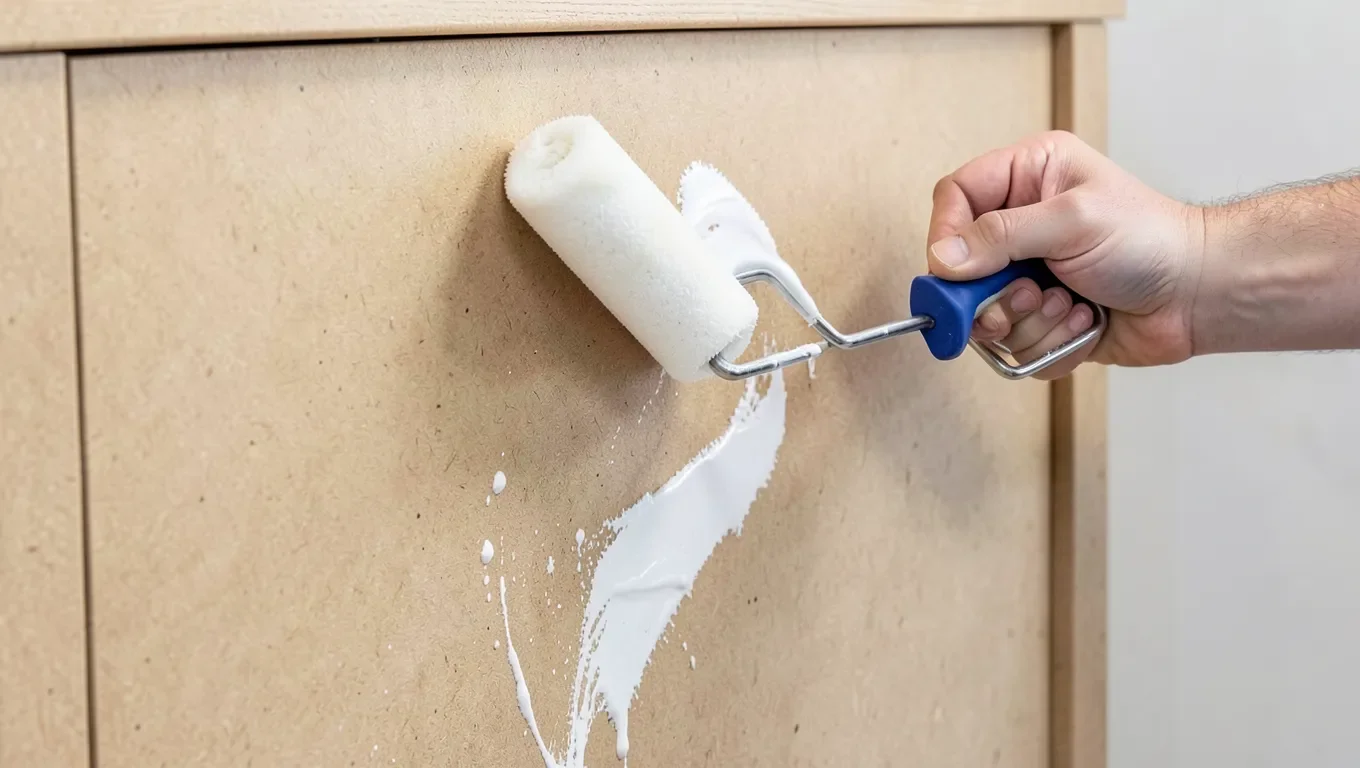
- Use a foam roller for large flat panels for the smoothest, most even finish, and a quality brush for edges and detail work.
- Let each coat cure fully per the product’s stated time before handling or recoating – rushing this is the most common cause of a soft, easily-marred finish.
Common Mistakes
- Skipping edge priming. Edges are the most vulnerable part of an MDF panel – unsealed edges swell first, even if the face is properly primed.
- Using a water-based primer directly on raw MDF. This is the fastest way to raise the fiber surface and end up with a rough, telegraphing texture under the topcoat.
- Applying paint too thick. Heavy coats sag, take longer to cure, and are more likely to show brush or roller marks.
- Skipping the sand-between-coats step. This is what actually produces a smooth, professional-looking final surface versus a visibly textured one.
Conclusion
MDF doors paint beautifully once the real issue is addressed: sealing the absorbent fiber surface, edges included, with a proper primer before color goes on. An oil-based or MDF-specific primer for that first sealing coat, followed by thin, evenly-sanded coats of your chosen topcoat, produces a smooth, durable finish that holds up as well as painted solid wood.
Frequently Asked Questions
Should you paint MDF with a roller or a brush?
Use a foam roller for large flat panel areas for the smoothest, most even coverage, and a quality brush for edges and detail work where a roller can’t reach cleanly.
What is the best primer for MDF doors?
An oil-based or MDF-specific primer seals the absorbent fiber surface more effectively than a water-based primer, especially on cut edges. This first sealing coat is the step that determines whether the finish holds up long-term.
Can MDF doors be painted?
Yes. With proper sanding, an oil-based or MDF-specific primer sealing every surface including edges, and thin, evenly-cured topcoats, MDF doors take paint just as well as solid wood doors.
Should I use water-based paint directly on raw MDF?
No. Water-based products applied directly to unsealed MDF cause the fibers to absorb moisture and swell, especially at edges. Seal with an oil-based or MDF-specific primer first, and water-based topcoat paint applies fine over that sealed surface.
Sponsored / affiliate links. As an Amazon Associate I earn from qualifying purchases. I may earn additional commission from eligible campaigns.