Bosch 10 Glide Miter Saw: The Perfect Addition to Your Woodworking Tools
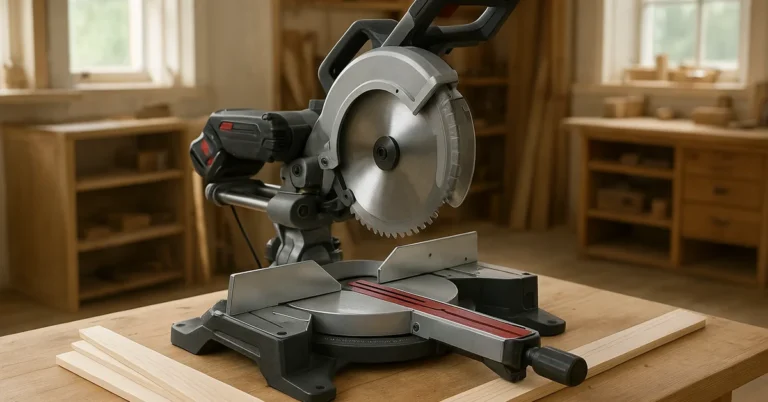
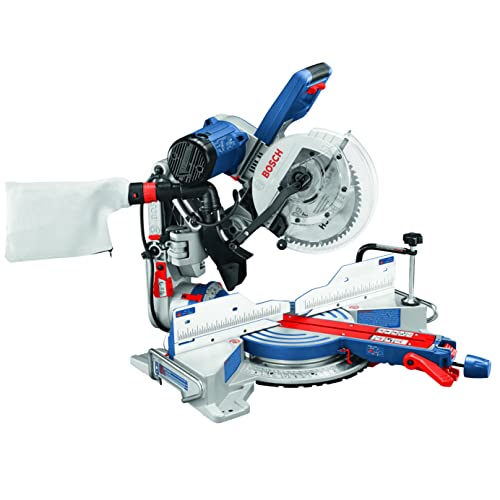
The Bosch CM10GD is a 15-Amp, 10-inch dual-bevel miter saw that uses Bosch’s Axial-Glide System — an articulating arm instead of the usual sliding rails — to get slide-saw crosscut capacity in a saw that needs up to 10 inches less bench depth. That’s the whole pitch: full-size cutting range without needing a bench deep enough for a rail-slider’s full travel.
We haven’t run this saw through a lab, so this review is built from Bosch’s published specs, the saw’s actual current Amazon listing and pricing, and what shows up consistently across owner reviews and independent tool-site write-ups — not a first-hand cut-by-cut test. Here’s what actually matters if you’re deciding between this and a conventional slider.
Bosch CM10GD: Specs and Real-World Fit
Best Compact-Footprint Miter Saw
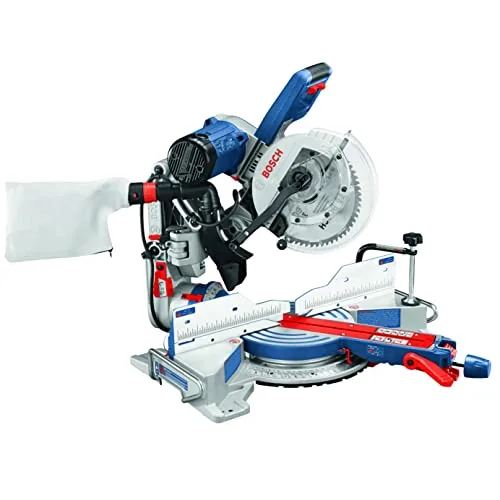 |
Bosch CM10GD 10″ Dual-Bevel Glide Miter Saw – $629.00 A slide-saw-level 12″ horizontal crosscut in a saw that needs up to 10 inches less bench depth than a rail slider.
|
| Spec | Bosch CM10GD |
|---|---|
| Motor | 15 Amp, 4,800 RPM no-load |
| Blade | 10″, 60-tooth carbide blade included |
| Bevel range | 0°–47°, both directions (true dual-bevel) |
| Miter range | Detents to 47° left and right |
| Horizontal crosscut | Up to 12″ |
| Vertical baseboard (against fence) | Up to 5-1/2″ |
| Crown molding, nested (45° spring, against fence) | Up to 6″ |
| Weight | 64 lbs |
| Mechanism | Axial-Glide (articulated arm) — not a rail slider |
The number that actually explains this saw is the 12-inch horizontal crosscut capacity from a 10-inch blade. A conventional non-sliding 10″ miter saw tops out around 5-6 inches of crosscut; you normally need a slide rail to get into double digits. Bosch gets there with the Axial-Glide arm instead, which is the entire reason this saw costs more than a basic 10″ chop saw and weighs more than you’d expect from something without rails hanging off the back.
Where It Actually Helps: Bench Space
A 10-12 inch sliding miter saw with rails typically needs close to 40 inches of front-to-back clearance to fully extend — a real problem if your saw station sits against a wall or in a garage corner. The Axial-Glide arm folds that travel into an articulating linkage instead of a straight rail, so Bosch’s own spec sheet claims up to 10 inches less depth than an equivalent slider. If your bench is against a wall and you’ve measured a rail-slider and come up short, this is the specific problem this saw is built to solve — not raw power or price.
Pros and Cons
What Works
- Real dual-bevel range: 0–47° in both directions without flipping the workpiece, which matters for crown molding and compound angles where a single-bevel saw forces you to reposition the board.
- 12″ crosscut from a 10″ blade: covers most dimensional lumber and wide trim without stepping up to a 12″ saw and its larger, pricier blades.
- No rails to keep clean or bump into: the articulating arm has no exposed sliding rail to collect dust or get knocked out of alignment in a cramped shop.
- Owner reviews consistently mention accurate factory calibration — a saw arriving cut-ready out of the box, without needing an immediate bevel/miter recalibration, which isn’t universal even at this price point.
What to Weigh Before Buying
- 64 pounds: that’s heavier than most 10″ saws, including several rail sliders. It’s a bench-mounted tool, not something you’re carrying to a job site daily without a stand with wheels.
- $629 list price: that’s well above entry-level 10″ miter saws and in the range of some 12″ sliders. You’re paying for the footprint solution specifically, not just for cutting capacity.
- Bosch has been narrowing this line: several related Bosch corded and cordless glide models (the GCM12SD, GCM18V-10SDN) have been discontinued over the past couple of years, so parts and accessory availability going forward is worth checking before you buy into the ecosystem.
If You Need Something Bosch Doesn’t Currently Sell
Bosch has discontinued its larger and cordless glide saws without a direct like-for-like replacement in every size. If the CM10GD’s 10-inch capacity isn’t quite what you need, here’s what actually fills those gaps right now:
- Need a full 12″ dual-bevel and don’t need it cordless: Bosch’s 12″ corded glide saw (GCM12SD) has been discontinued with no direct corded replacement at that size; the FLEX 24V Brushless 12" Dual-Bevel Sliding Miter Saw is the closest current match if you’re open to a cordless, different-brand option.
- Need cordless and job-site portable, and 7-1/4″ capacity is enough: the Bosch GCM18V-07SN PROFACTOR 18V 7-1/4" Slide Miter Saw (bare tool) stays in Bosch’s battery ecosystem, trading blade size for cordless mobility.
- Want the CM10GD plus crown-molding hardware in one purchase: Bosch also lists the CM10GD bundled with the MS1233 Crown Stop Kit, which is worth it if crown molding is a regular part of your work — buying the kit separately later costs more than the bundle discount.
- Want a smaller, single-bevel corded slider instead: the Bosch CM8S 8-1/2" Single-Bevel Sliding Miter Saw keeps Bosch’s glide feel in a lighter, cheaper package if you don’t need the dual bevel or the full 12″ crosscut.
For everyday accessories — a replacement dust bag, an aftermarket universal dust collector bag, or a length stop for repeat cuts — check the specific port size and mounting style against your exact saw model before buying; Bosch’s own accessories (like the genuine Bosch GCM 12 SD dust bag or the MS1234 length stop) are model-specific and won’t necessarily fit a different Bosch saw.
Frequently Asked Questions
What is the maximum blade size for the Bosch CM10GD?
10 inches. It ships with a 60-tooth carbide blade, and 10 inches is the largest blade the saw is designed to accept.
How does the Axial-Glide System differ from a normal sliding miter saw?
A conventional slider moves the saw head back and forth on exposed rails behind the saw, which needs deep bench clearance. The Axial-Glide System uses an articulating arm instead, folding that same range of motion into a mechanism that needs up to 10 inches less front-to-back space, according to Bosch’s specs.
Is the Bosch CM10GD heavy for a 10-inch miter saw?
Yes, at 64 pounds it’s on the heavier end for a 10-inch saw, including compared to some 12-inch sliders. It’s best treated as a bench-mounted tool rather than something moved between job sites daily, unless it’s on a rolling stand.
Does the CM10GD come with a stand?
No, the saw itself doesn’t include a stand. Bosch and third parties sell compatible miter saw stands separately, which is worth budgeting for if you don’t already have a dedicated bench for it.
What’s a current alternative if I need a 12-inch cordless dual-bevel slider?
Bosch no longer sells a 12-inch cordless glide saw. The FLEX 24V Brushless Cordless 12-Inch Dual Bevel Sliding Miter Saw is the closest current match if you need that specific combination of capacity and cordless operation, though it means leaving the Bosch battery ecosystem.
Bottom Line
The Bosch CM10GD earns its price with one specific advantage: a 12-inch crosscut and true dual bevel in a saw that fits benches a rail-slider physically can’t. If bench depth isn’t a constraint for you, a conventional 10″ or 12″ slider likely gets you similar cutting capacity for less money. If it is, the Axial-Glide System is solving a real problem, not just adding a marketing feature.
Sponsored / affiliate links. As an Amazon Associate I earn from qualifying purchases. I may earn additional commission from eligible campaigns.