Bunkie Board vs Plywood Beds
Figuring out the best support for your bed can seem tricky, especially when you’re new to mattress shopping. You see terms like “bunkie board” and “plywood” and wonder what the difference is and which one you actually need. Don’t worry, it’s a common question and we’ll break it down step by step so you can pick the perfect base for your mattress. You’ll soon know exactly why this choice matters for a great night’s sleep.
What Is a Bunkie Board
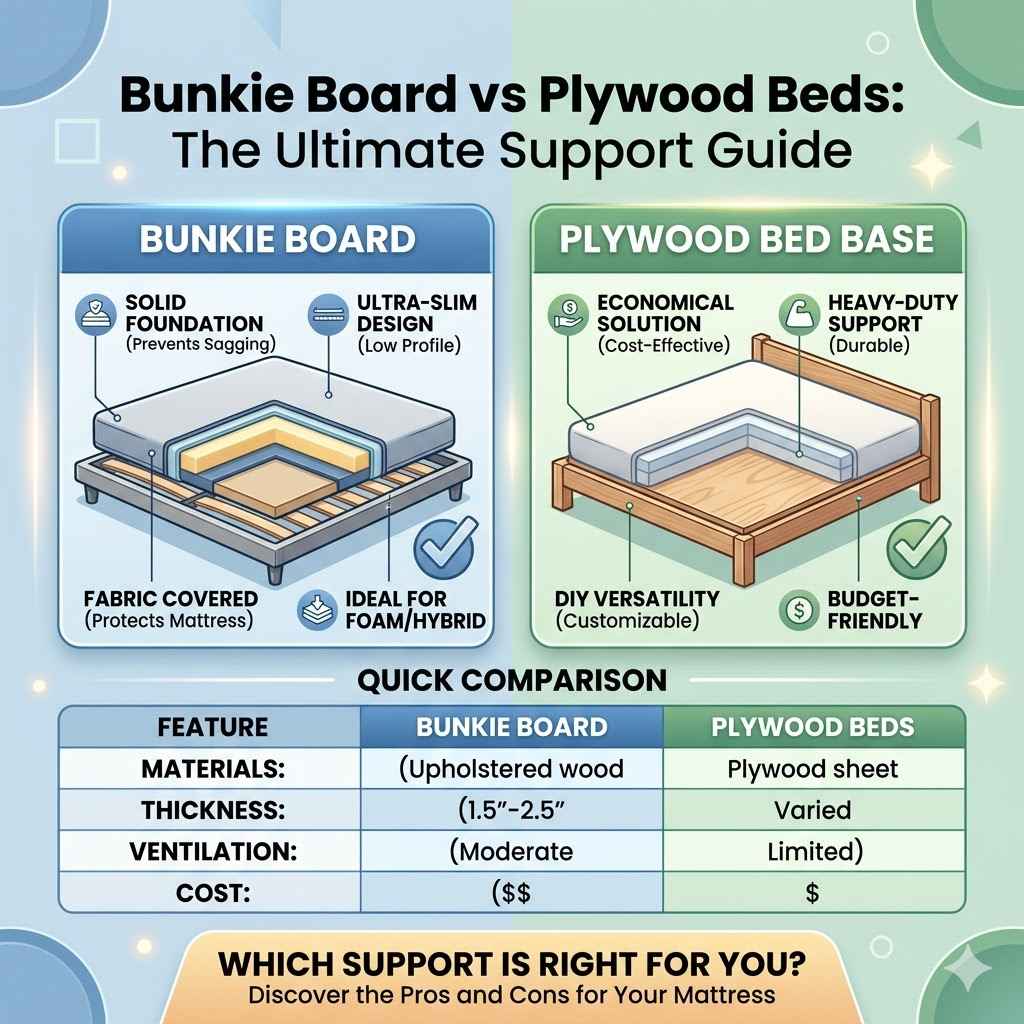
A bunkie board is a simple, flat piece of material, usually made of wood or particleboard, that sits directly on top of your bed frame. Its main job is to provide a solid, flat surface for your mattress. This prevents the mattress from sagging through the slats of a bed frame and helps extend its lifespan. Think of it as a sturdy platform that gives your mattress the support it needs to stay in good shape.
Purpose and Design of Bunkie Boards
Bunkie boards are designed to be thin and low-profile, meaning they won’t add much height to your bed. This is great if you want to keep your bed from sitting too high. They often have a fabric cover that helps keep the mattress from sliding around. The main goal is to create a smooth, even surface.
Materials Used in Bunkie Boards
Most bunkie boards are made from wood, like pine or poplar, or from engineered wood products such as particleboard or MDF. Some higher-end versions might use metal components for added strength. The choice of material affects the board’s durability and cost.
Benefits of Using a Bunkie Board
Using a bunkie board offers several advantages for your mattress and sleep setup. It’s a straightforward way to improve mattress support.
- Extended Mattress Lifespan: A bunkie board prevents your mattress from dipping between bed frame slats. This even support stops premature wear and tear, helping your mattress last longer. A mattress that sags can lead to discomfort and reduced support over time.
- Improved Mattress Performance: Many modern mattresses, especially foam or hybrid types, require a solid, flat surface. A bunkie board ensures they perform as intended by the manufacturer. This means better contouring and pressure relief, exactly what you bought the mattress for.
- Reduced Motion Transfer: A sturdy bunkie board can help absorb some of the movement on the bed. This means less disturbance when your partner tosses and turns, leading to a more restful sleep for both of you.
- Aesthetically Pleasing: For bed frames with wide gaps between slats, a bunkie board creates a clean, finished look. It hides the view of the mattress from underneath and provides a uniform surface that looks good.
When Is a Bunkie Board Necessary
A bunkie board is often recommended or even required by mattress warranties, especially for certain types of mattresses like memory foam or latex. These materials need solid support to maintain their shape and function. If your bed frame has widely spaced slats, it’s a good idea to get one.
What Is Plywood for Beds
Plywood is a manufactured wood product created by gluing thin layers, or “plies,” of wood veneer together. These layers are typically oriented with the grain running in alternating directions, which gives plywood its strength and stability. When used for beds, plywood essentially serves the same purpose as a bunkie board: to provide a solid base for a mattress.
How Plywood Is Used as a Mattress Foundation
People often use plywood as a DIY solution for bed support. They cut a piece of plywood to fit the dimensions of their bed frame and place it on top of the slats or directly onto the frame. This creates a uniform surface that prevents the mattress from sagging. The thickness of the plywood can vary, with thicker pieces generally offering more support.
Types of Plywood and Their Suitability
Not all plywood is created equal, and some types are better suited for bed bases than others. The grade and thickness play a big role.
- Birch Plywood: This is a strong and durable option. It’s known for its smooth surface and resistance to warping. Birch plywood is a good choice for a long-lasting mattress base.
- Pine Plywood: More affordable than birch, pine plywood is still a viable option. It’s lighter and easier to work with. However, it might be more prone to dents and scratches over time compared to harder woods.
- Cabinet-Grade Plywood: This type of plywood is generally smooth on both sides and has fewer knots, making it a cleaner look for your bed. It’s often made from hardwoods and offers good strength.
Thickness Considerations for Plywood Bed Bases
The thickness of the plywood is important for providing adequate support. Too thin, and it might sag under the weight of the mattress and sleepers.
A common recommendation for plywood mattress bases is at least 1/2 inch (about 1.27 cm) thick. For larger beds like queen or king sizes, or if you need extra durability, 3/4 inch (about 1.9 cm) thick plywood is even better. This thickness helps distribute weight evenly and prevents the board from flexing too much.
Cost-Effectiveness of Plywood as a Mattress Base
Plywood can be a very budget-friendly option, especially if you’re comfortable with a bit of DIY. You can often buy a sheet of plywood from a hardware store and cut it to size yourself, saving money on pre-made bunkie boards or expensive foundation systems.
Bunkie Board vs Plywood Which Is Better for Beds Comparison
Choosing between a bunkie board and plywood for your bed comes down to several factors, including cost, convenience, and the specific needs of your mattress and bed frame. Both aim to provide essential support, but they differ in construction, availability, and the overall user experience. Understanding these differences will help you make the best decision for your sleep setup.
Durability and Support
When it comes to how well they hold up and support your mattress, both bunkie boards and plywood can be very effective. However, their construction methods can lead to differences in long-term performance.
Structural Integrity
Bunkie boards are typically manufactured with support in mind. They often use a frame construction, sometimes with internal supports or reinforced edges, which can make them very strong for their size. Plywood, on the other hand, relies on the inherent strength of the wood layers glued together. A good quality, thick piece of plywood can be extremely durable and resist bending or breaking.
Weight Capacity
The weight capacity of a bunkie board or a plywood base depends on its construction and material. A standard bunkie board is usually designed to support the weight of a mattress and one or two average-sized adults. Thicker, high-quality plywood, especially in 3/4-inch thickness, can often handle significant weight, making it a robust option for heavier individuals or those who need extra assurance.
Convenience and Installation
The ease of acquiring and setting up each option is a significant factor for many consumers. One might be readily available and simple to put in place, while the other might require more effort.
Availability and Purchasing
Bunkie boards are widely available online from mattress retailers and furniture stores. They are usually sold in standard mattress sizes (twin, full, queen, king) and are ready to use right out of the box. Plywood, however, needs to be purchased from a lumber yard or home improvement store. You’ll likely need to have it cut to size or cut it yourself, which adds an extra step.
Ease of Setup
Setting up a bunkie board is incredibly simple. You just place it on your bed frame, and it’s ready to go. No tools are needed. Installing plywood requires a bit more effort. You might need to measure, cut the wood, and then place it on the frame. Some people might also choose to secure the plywood to the frame with screws for extra stability, which involves using tools.
Aesthetics and Profile
The visual appeal and how much height each option adds to your bed can also influence your choice. Some people prefer a low-profile look, while others might not mind a bit of added height.
Height of the Base
Bunkie boards are generally designed to be very low-profile, typically only a few inches high. This is great for maintaining the original height of your mattress and bed frame, making it easier to get in and out of bed. Plywood can also be quite low, especially if you use a thinner sheet like 1/2 inch. However, if you opt for thicker plywood, it will add more height to your mattress.
Finished Look
A bunkie board often comes with a fabric cover, giving it a clean and finished appearance. This hides the raw wood underneath and can make your bed look neater. Plywood, especially if you cut it yourself, will have exposed edges. While functional, it might not look as polished as a fabric-covered bunkie board unless you take extra steps to finish it, like sanding and painting or adding a fabric wrap.
Cost Comparison
Price is often a major deciding factor for consumers. Understanding the typical costs associated with each option can help you budget effectively.
Price Ranges
Bunkie boards vary in price depending on their size, material, and brand. A basic twin-sized bunkie board might cost anywhere from $40 to $80, while a king-sized one could range from $70 to $150 or more. Plywood costs can be lower. A sheet of plywood suitable for a mattress base might cost between $30 and $70, depending on the type and size of the sheet. If you’re DIY-savvy, the cost of plywood can be significantly less than a pre-made bunkie board.
Value for Money
The “better value” option depends on your priorities. If you prioritize convenience and a finished look with minimal effort, a bunkie board offers good value. If you’re on a tight budget and don’t mind a little DIY, plywood can offer excellent value by providing solid support at a lower material cost.
Comparing Bunkie Board vs Plywood for Mattresses
When deciding between a bunkie board and plywood for your mattress, it’s helpful to see the differences side-by-side. This comparison highlights key features that matter most for your sleep quality and mattress care.
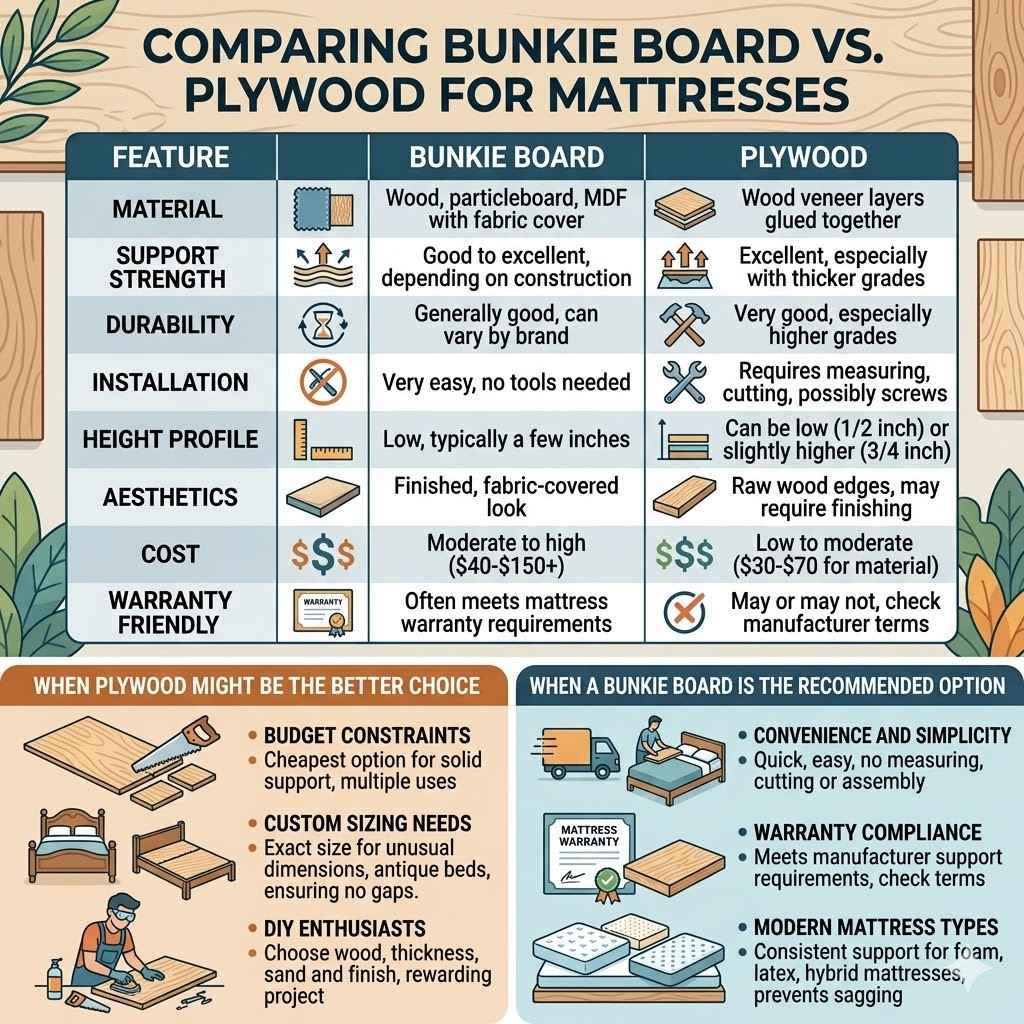
| Feature | Bunkie Board | Plywood |
|---|---|---|
| Material | Wood, particleboard, MDF with fabric cover | Wood veneer layers glued together |
| Support Strength | Good to excellent, depending on construction | Excellent, especially with thicker grades |
| Durability | Generally good, can vary by brand | Very good, especially higher grades |
| Installation | Very easy, no tools needed | Requires measuring, cutting, possibly screws |
| Height Profile | Low, typically a few inches | Can be low (1/2 inch) or slightly higher (3/4 inch) |
| Aesthetics | Finished, fabric-covered look | Raw wood edges, may require finishing |
| Cost | Moderate to high ($40-$150+) | Low to moderate ($30-$70 for material) |
| Warranty Friendly | Often meets mattress warranty requirements | May or may not, check manufacturer terms |
When Plywood Might Be the Better Choice
There are specific situations where opting for plywood might be more advantageous than purchasing a standard bunkie board. These often involve budget constraints or a need for highly customized support.
- Budget Constraints: If you are looking for the most affordable way to provide solid support for your mattress, a sheet of plywood that you cut yourself is likely the cheapest option. You can get a large sheet and cut it for multiple beds or have leftover material for other projects. This can save you a significant amount of money compared to buying several pre-made bunkie boards.
- Custom Sizing Needs: Some bed frames have unusual dimensions or shapes that standard bunkie boards don’t fit. Plywood allows you to cut the exact size and shape needed for a perfect fit, ensuring no gaps or overhangs. This is especially useful for antique beds, custom-built frames, or platform beds with unique interior designs.
- DIY Enthusiasts: For those who enjoy do-it-yourself projects, using plywood offers a sense of accomplishment and control over the final product. You can choose the type of wood, the thickness, and even sand and finish the edges for a more polished look. This hands-on approach can be very rewarding.
When a Bunkie Board Is the Recommended Option
In many common scenarios, a bunkie board is the go-to choice for its simplicity and effectiveness. It’s designed to meet the needs of most mattress types and bed frames without any fuss.
- Convenience and Simplicity: If you want a quick and easy solution without any hassle, a bunkie board is ideal. You can order it online and have it delivered to your door. Once it arrives, you simply unbox it and place it on your bed frame. There’s no measuring, cutting, or assembly required, saving you time and effort.
- Warranty Compliance: Many mattress manufacturers require specific types of support to keep your warranty valid. Bunkie boards are often designed to meet these requirements, ensuring your mattress is properly supported and any potential warranty claims are less likely to be denied due to improper foundation. Always check your mattress warranty terms for specific guidance.
- Modern Mattress Types: For memory foam, latex, or hybrid mattresses, which need solid, consistent support, a bunkie board is an excellent choice. These mattresses can sag or lose their shape if placed on traditional slatted frames with wide gaps. A bunkie board provides the necessary flat surface to maintain the mattress’s integrity and comfort for years to come.
Frequently Asked Questions
Question: Do I really need a bunkie board or plywood for my mattress
Answer: It depends on your mattress and bed frame. Memory foam, latex, and hybrid mattresses often need solid support, so yes, a bunkie board or plywood is usually a good idea. If your bed frame has wide slats or you want to prevent mattress sagging, it’s also recommended.
Question: Can I use a bunkie board with a platform bed
Answer: Some platform beds already have solid surfaces or closely spaced slats that provide enough support. However, if your platform bed has wide gaps, a bunkie board can still be beneficial to ensure even support and prevent sagging.
Question: Is plywood strong enough to support a mattress
Answer: Yes, plywood can be very strong. Using a thickness of at least 1/2 inch, and preferably 3/4 inch, will provide excellent support for most mattresses and sleepers. Ensure it’s properly placed on the bed frame.
Question: Will a bunkie board make my bed feel harder
Answer: A bunkie board provides support and can slightly firm up the feel of your mattress, but it generally doesn’t make it uncomfortably hard. It helps your mattress perform as intended by preventing sagging, which can actually improve comfort and pressure relief.
Question: How do I know if my bed frame needs a bunkie board
Answer: Look at the slats on your bed frame. If they are more than 2-3 inches apart, or if they feel flimsy, you probably need a bunkie board or plywood. Also, if your mattress is sinking between the slats, it’s a clear sign you need additional support.
Summary
Choosing between a bunkie board and plywood for your bed support is straightforward once you know the basics. Both offer excellent ways to keep your mattress in great shape. Bunkie boards are convenient and ready to use, while plywood offers a budget-friendly DIY solution. Either choice will help your mattress last longer and ensure a more comfortable sleep.