Best Wood for Bed Frame: 7 Compared by Strength & Price (2026)
The best wood for a bed frame is hard maple — it has the highest bending strength (15,800 psi MOR) and stiffness (1.83 million psi MOE) of any commonly available bed-frame species, it costs less than white oak per board foot, and a full queen frame’s worth runs about $317 in lumber. Below are 7 species compared on the numbers that actually decide whether a frame sags in five years or holds for fifty: bending strength, joinery ease, and real cost for a full frame — not just Janka hardness.
Bed Frame Wood Comparison Table: Strength, Cost & Joinery
Every number below is pulled from primary mechanical-property data (Janka hardness, Modulus of Rupture, Modulus of Elasticity, density and shrinkage) and cross-checked against live per-board-foot pricing from a hardwood dealer, both gathered directly for this comparison — not copied from another roundup. MOR (Modulus of Rupture) is the bending strength that determines when a rail snaps under load; MOE (Modulus of Elasticity) is the stiffness that determines how much a rail flexes — and sags — before it gets anywhere near breaking. For a bed frame, MOE matters more day-to-day than Janka hardness, which only measures resistance to denting.
| Species | Janka (lbf) | MOR — Bending Strength (psi) | MOE — Stiffness (M psi) | Density (lbs/ft³) | Price ($/bd ft, 4/4) | Cost, Full Queen Frame* | Joinery Ease |
|---|---|---|---|---|---|---|---|
| Hard Maple | 1,450 | 15,800 | 1.83 | 44.0 | $8.35 | $317.30 | Good |
| White Oak | 1,350 | 14,830 | 1.76 | 47.0 | $10.00 | $380.00 | Good |
| White Ash | 1,320 | 15,000 | 1.74 | 42.0 | $6.10 | $231.80 | Excellent |
| Black Walnut | 1,010 | 14,600 | 1.68 | 38.0 | $16.50 | $627.00 | Good |
| Black Cherry | 950 | 12,300 | 1.49 | 35.0 | $6.75 | $256.50 | Excellent |
| Yellow Poplar | 540 | 10,100 | 1.58 | 29.0 | $5.35 | $203.30 | Excellent |
| Eastern White Pine | 380 | 8,600 | 1.24 | 25.0 | $3.75 | $142.50 | Excellent (easy, but see caveat) |

How We Calculated “Cost for a Full Queen Frame”
Most articles quote a per-board-foot price and stop there, which hides the real number you’ll actually pay. We built a core structural cut list for a queen frame (60″ × 80″ mattress) and priced every species against it at the same 4/4 (1″) thickness tier, so the comparison holds size constant instead of comparing a small dealer cutoff against a full 8-foot board.
- 2 side rails, 2″ × 6″ × 80″ — 13.33 bd ft
- 2 end rails (headboard + footboard), 2″ × 6″ × 62″ — 10.33 bd ft
- 1 center support beam, 2″ × 4″ × 78″ — 4.33 bd ft
- 4 legs, 4″ × 4″ × 15″ — 6.67 bd ft
- 2 slat-support cleats, 1″ × 3″ × 78″ — 3.25 bd ft
Total: 37.9 board feet, rounded to 38 for the table above. Board footage is calculated as (thickness″ × width″ × length″) ÷ 144 per piece. This is the core load-bearing structure only — it doesn’t include the cross-slats that support the mattress directly, since most builders use inexpensive pine or 3/4″ plywood slats regardless of which species the frame itself is built from, adding roughly 10–15 more board feet at whatever species you choose for that piece — see our guide on what thickness plywood works for a bed base if you’re going that route. It also doesn’t include the usual 15–20% waste allowance for defects and crooked grain when milling rough hardwood — budget for that separately when you buy.
Best Wood for a Bed Frame, Ranked
1. Hard Maple — #1 Best Overall
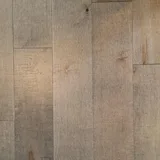
- Janka: 1,450 lbf
- MOR: 15,800 psi (highest of the seven)
- MOE: 1.83 million psi (highest of the seven)
- Price: $8.35/bd ft — $317.30 for a full queen frame
Pros:
- Highest bending strength and stiffness of any species compared here, at a lower price than white oak
- Dense enough to hold screws and bolts tightly for decades of getting in and out of bed
- Fine, consistent grain that finishes evenly without much blotching if you use a pre-stain conditioner
Cons:
- Burns on router bits and other high-speed cutters if you’re not running sharp tooling
- Hard enough that hand-tool joinery (hand-cut mortises, for example) takes real effort
- Can blotch when stained without a conditioner, same as cherry and pine
Maple wins the #1 spot on the numbers, not on reputation: 15,800 psi MOR and a 1.83 million psi MOE beat every other species in this comparison, including oak. For a bed frame specifically — which sees years of repeated flexing every time someone sits on the edge or the mattress shifts weight — that stiffness matters more than Janka hardness, which only measures resistance to denting from a dropped object.
It’s also the rare case where the strongest option isn’t the most expensive. At $8.35 a board foot it undercuts white oak by nearly $2 a board foot, which adds up to about $63 less for a full frame’s worth of lumber. The main drawback is workability: maple is hard on router bits and hand tools alike, so if you’re building with hand tools rather than a table saw and drill, ash or cherry will be easier going.
2. White Oak — Best Widely Available Hardwood

- Janka: 1,350 lbf
- MOR: 14,830 psi
- MOE: 1.76 million psi
- Price: $10.00/bd ft — $380.00 for a full queen frame
Pros:
- Stocked at nearly every hardwood dealer and most big-box lumber departments, in a way maple and ash aren’t always
- Responds well to steam-bending, which matters if your headboard design has a curve
- Classic open-pore look that takes stain evenly and is instantly recognizable as “real wood furniture”
Cons:
- Highest T/R shrinkage ratio of the true hardwoods here (1.9) — flat-sawn boards specifically are prone to cupping as humidity swings between seasons
- Most expensive true hardwood per board foot in this table apart from walnut
- Open pores need a grain filler if you want a glass-smooth painted finish
Oak is the wood most people picture when they hear “solid wood bed frame,” and the numbers mostly back that reputation up — 14,830 psi MOR is close behind maple, and it’s the easiest of the seven to actually find in stock without a special order. The catch is dimensional stability: its own published workability notes flag flat-sawn oak boards specifically for cupping, which is a real consideration for long, wide side rails that see seasonal humidity swings in a bedroom.
If you can source quarter-sawn stock instead of flat-sawn, that cupping risk mostly disappears, but quarter-sawn oak costs more and is harder to find. At standard flat-sawn pricing, oak is a completely sound choice — just not a numerically better one than maple for the same job.
3. White Ash — Best for Kids’ Rooms (Shock Resistance)
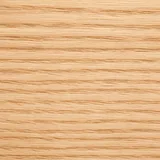
- Janka: 1,320 lbf
- MOR: 15,000 psi (2nd highest)
- MOE: 1.74 million psi
- Price: $6.10/bd ft — $231.80 for a full queen frame
Pros:
- Same species used for axe handles, hammer handles and baseball bats — built to absorb repeated shock without splitting
- Second-highest bending strength of the seven, behind only maple
- Cheapest of the top four structural performers by a wide margin
Cons:
- Ash lumber supply has been inconsistent in parts of the US due to emerald ash borer damage to ash forests — check local availability before committing to a design
- Open, straight grain looks similar to oak, so it won’t read as a distinct “premium” wood to guests
- Sapwood-heartwood color variation can be pronounced on some boards
Ash’s whole reputation is built on absorbing repeated impact without failing — it’s the wood inside a wooden baseball bat for exactly that reason. That property translates directly to a kid’s bed frame, where the real-world stress isn’t a static load but repeated jumping and bouncing. At 15,000 psi MOR it’s essentially tied with maple for bending strength, and at $6.10 a board foot it’s the cheapest way to get that kind of structural performance.
The honest caveat is sourcing: ash populations in many US regions have been hit hard by the emerald ash borer, and supply can be spottier at some dealers than oak or maple. Call ahead before you plan a whole frame around it.
4. Black Cherry — Best for Easy DIY Joinery
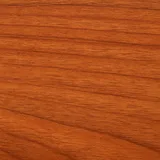
- Janka: 950 lbf
- MOR: 12,300 psi
- MOE: 1.49 million psi
- Price: $6.75/bd ft — $256.50 for a full queen frame
Pros:
- Described in primary wood-property references as one of the best all-around woods for workability — stable, straight-grained, machines cleanly
- Warm reddish-brown color that darkens attractively with age and UV exposure, no stain required
- Among the easiest of the seven to cut accurate mortise-and-tenon joints in by hand
Cons:
- Lowest MOR and MOE of the true hardwoods here — noticeably less stiff than maple, oak or ash
- Can blotch when stained, though most builders use an oil finish instead and skip the issue entirely
- Sapwood is common and pale against the heartwood, which increases waste if you want uniform color
Cherry is the pick for a first bed-frame build where joinery confidence matters more than squeezing out the last few hundred psi of bending strength. It’s flagged in primary workability references as one of the most forgiving hardwoods to cut, glue and finish cleanly — straight grain, minimal tearout, and a color that looks finished with just an oil topcoat.
The trade-off is real: at 12,300 psi MOR and 1.49 million psi MOE, it’s meaningfully behind maple, oak and ash on raw structural numbers. For a queen frame under normal use it’s still well within safe margins — but if you’re building for a heavier-than-average sleeper or you want maximum sag resistance over 20+ years, cherry isn’t the strength-first pick.
5. Black Walnut — Best Premium Pick
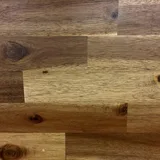
- Janka: 1,010 lbf
- MOR: 14,600 psi
- MOE: 1.68 million psi
- Price: $16.50/bd ft — $627.00 for a full queen frame
Pros:
- Lowest T/R shrinkage ratio of any species in this table (1.4) — the most dimensionally stable board here across seasonal humidity swings
- The classic deep chocolate-brown furniture look, with no stain needed
- Bending strength within a few hundred psi of oak despite being noticeably lighter and easier to move
Cons:
- By far the most expensive option — nearly double oak’s cost and more than 4x pine’s for the same frame
- Planer tearout can be a real problem on boards with irregular or figured grain
- Lower Janka hardness than the other true hardwoods means it dents more easily from dropped objects
Walnut earns its price premium on stability, not just looks: its T/R shrinkage ratio (the relationship between tangential and radial shrinkage that predicts cupping and warping) is the lowest of any species here, meaning a walnut frame moves the least with the seasons. Combined with bending strength within a few hundred psi of white oak, it’s a legitimate structural choice, not just a furniture-grade upgrade.
At $627 for a full frame’s worth of lumber, though, it’s a genuinely premium purchase — more than four times the cost of a pine frame for a strength advantage that pine can’t match but that maple or ash already deliver for a third of the price. Walnut is the right call when the look matters as much as the engineering. (For an even darker, richer premium look, see our dedicated mahogany wood bed frame guide.)
6. Yellow Poplar — Best Value
- Janka: 540 lbf
- MOR: 10,100 psi
- MOE: 1.58 million psi
- Price: $5.35/bd ft — $203.30 for a full queen frame
Pros:
- Cheapest true hardwood in this comparison, with real bending strength well above any softwood
- Described in primary workability references as very easy to work in almost all regards
- Takes paint exceptionally well, which is the usual finish for poplar furniture anyway
Cons:
- Janka hardness of only 540 lbf means it dents and scratches noticeably more easily than oak, maple or ash
- Low density can leave a slightly fuzzy surface when cut or sanded, needing a finer sandpaper grit to clean up
- Pale greenish-gray mineral streaks are common and read as “budget wood” if left natural instead of painted
Poplar is the wood most experienced builders reach for when a design calls for paint rather than a clear or stained finish — it’s inexpensive, stable, and takes paint better than almost anything else on this list. At 10,100 psi MOR it’s also meaningfully stronger than any softwood option, which is easy to miss if you’re only comparing it on Janka hardness.
The real limitation is surface hardness, not bending strength: at 540 lbf Janka it dents more easily than any hardwood here, so it’s a better fit for a frame that will stay covered by a bed skirt or mattress than for an exposed, showpiece headboard.
7. Eastern White Pine — Best for a Painted Frame / Best Budget Pick
- Janka: 380 lbf (lowest of the seven)
- MOR: 8,600 psi (lowest of the seven)
- MOE: 1.24 million psi
- Price: $3.75/bd ft — $142.50 for a full queen frame
Pros:
- By far the cheapest option — less than half the cost of the next-cheapest hardwood
- Very easy to work with both hand and machine tools, glues and finishes well
- Light weight makes a finished frame noticeably easier to move and assemble solo
Cons:
- Lowest bending strength and stiffness in this entire comparison, by a wide margin
- Low density means wood screws and bolts have less material to bite into and grip
- Dents and scratches easily — not a good bare surface for a frame without a protective finish
Pine is the honest budget answer, not a compromise dressed up as one: at $142.50 for a full queen frame it’s less than half the price of the cheapest true hardwood on this list. For a guest room frame, a kid’s first bed before they’re fully grown, or a temporary build, that math is hard to beat.
The real, specific caveat — and one most “pine is a great budget wood” articles skip — is fastener retention. Screw and bolt holding power correlates directly with wood density, and at 25 lbs/ft³ pine has the lowest density of any species here. Bed frame hardware sees years of repeated racking stress every time someone gets in or out of bed, and low-density wood loosens its grip on threads faster than a dense hardwood does. A pine frame is a completely reasonable choice — just plan to check and re-tighten the bolts every six months, or use threaded inserts instead of driving screws directly into end grain.
How We Picked These
No lumber changed hands for this comparison — there’s no way to physically load-test seven species of bed frame to failure in a home shop, and we’re not going to pretend otherwise. What we did instead: pulled Modulus of Rupture, Modulus of Elasticity, Janka hardness, density and shrinkage figures for each species from published mechanical-property data, live-checked current per-board-foot pricing from a hardwood dealer’s own posted price list at the same 4/4 thickness tier for every species, and built the board-footage cut list ourselves with the formula shown above so you can check the arithmetic. Where a claim needed a specific fact — ash’s use in shock-absorbing tool handles, cherry’s rating as an easy-to-work species, oak’s flat-sawn cupping tendency — it’s sourced from that same published property data, not from another roundup’s prose.
We did not fabricate star ratings or review counts for these species — lumber doesn’t carry Amazon reviews the way a finished product does, so any “4.8 stars” you see on a competing article for a species of wood is not real data. If you want a genuine test of a specific board, buy from a local supplier who lets you inspect grain and moisture content before you commit, which is the standard practice for hardwood buying regardless of what any article recommends.
What to Consider When Choosing Wood for a Bed Frame
Load-Bearing Strength & Sag Resistance
This is the number competing articles skip almost entirely in favor of Janka hardness, which actually measures resistance to denting — a completely different property. What determines whether a rail sags or snaps under a mattress and an occupant’s weight over years is Modulus of Rupture (max bending strength before failure) and Modulus of Elasticity (stiffness, or how much the board flexes under load before it gets anywhere near breaking). A queen mattress plus two adults regularly puts 400+ lbs of distributed, cyclical load on a frame’s rails and center support — MOE is what keeps that load from producing a visible sag line down the middle of the mattress within a few years. If you’re dealing with an existing frame that’s already sagging rather than building new, see our guide on how to reinforce a wooden bed frame.
Joinery & Assembly
Mortise-and-tenon joinery — a classic wood-to-wood connection with no metal hardware — outperforms bolt-and-dowel construction on nearly any species, because it distributes racking stress across a much larger glued surface instead of concentrating it on a few threaded holes. Softer, easier-to-cut woods like cherry and poplar make hand-cut mortise-and-tenon joints realistic for a first build; denser woods like maple reward a router jig or hollow-chisel mortiser instead of hand tools. If you’re building bolt-together instead (the more common approach for a first frame), the joinery-ease column above matters less than fastener retention, which is a function of density — see the pine caveat above.
Weight & Moving the Finished Frame
Density swings from 25 lbs/ft³ (pine) to 47 lbs/ft³ (white oak) across this list — nearly double. A finished queen oak frame built from the cut list above weighs meaningfully more than the same frame in pine or poplar, which matters if you’ll ever move it up a stairwell or through a tight doorway alone. Walnut splits the difference: nearly oak’s strength at 38 lbs/ft³, about 20% lighter.
Stability & Warping
The T/R (tangential-to-radial) shrinkage ratio in the comparison table predicts how evenly a board shrinks and swells with seasonal humidity — a ratio close to 1.0 means a board moves almost evenly in both directions and stays flatter; a high ratio means the board shrinks much more one way than the other, which is what causes cupping. Walnut’s 1.4 ratio is the most stable in this table; pine’s 2.9 is the least, though pine’s low overall shrinkage percentages partly offset that. Oak’s own workability notes specifically flag flat-sawn boards for cupping despite a mid-table T/R ratio, which is why we call that out directly on the oak pick above rather than just trusting the raw ratio.
Cost for a Full Frame vs. Price per Board Foot
A $2 difference in price per board foot sounds small until it’s multiplied across the roughly 38 board feet a queen frame’s core structure needs — that’s about $76 difference in the finished cost, before waste factor. A bed frame uses far more lumber than a desktop or a small project, so the per-board-foot number alone is misleading; always price against the actual cut list, which is why the comparison table above includes a real full-frame total instead of stopping at $/bd ft.
Softwood vs. Hardwood
Every species in this comparison except pine is a hardwood, and the strength numbers show why that’s the default recommendation: even the weakest hardwood here (poplar, 10,100 psi MOR) beats pine’s 8,600 psi by a meaningful margin, and the strongest hardwoods beat it by nearly double. Pine remains a legitimate choice for a budget or temporary frame — it’s just going into the build with eyes open about the fastener-retention trade-off covered on the pine pick above.
Sustainability & Availability
All seven species here are domestic North American hardwoods and softwoods, not tropical imports, which keeps transport impact and sourcing risk lower than mahogany, teak or other imported options. Poplar, cherry and maple are fast-growing and abundant in US hardwood forests, which is part of why they’re priced lower than walnut. Ash is the one exception worth flagging twice: beyond the sourcing-availability note on the ash pick above, buying ash also supports demand for a domestic species whose population has been significantly reduced by the emerald ash borer in parts of the Midwest and Northeast. If FSC certification matters for your build, ask your dealer directly — certification varies by mill and region rather than by species, so it’s not something we can state as a blanket fact for any wood on this list.
Sourcing: Rough Hardwood vs. Dimensional Lumber
Pine and other softwoods are sold pre-dimensioned (a “2×6” at a home center is already surfaced to 1.5″ × 5.5″) and ready to cut to length. True hardwoods — oak, maple, ash, walnut, cherry, poplar — are usually sold rough-sawn by the board foot at a dedicated hardwood dealer and need to be jointed, planed and ripped to final dimension yourself, or milled to order by the dealer for an added fee. Factor a table saw, jointer or planer access (or a dealer’s milling service) into the real cost and timeline of a hardwood build, not just the lumber price itself. (If you’re weighing the same hardwood-vs-cost decision for a different project, our best wood for a desk comparison uses the same MOR/MOE approach for a very different set of buying criteria.)
Real Cost to Build a Queen Bed Frame: Budget vs. No-Compromise
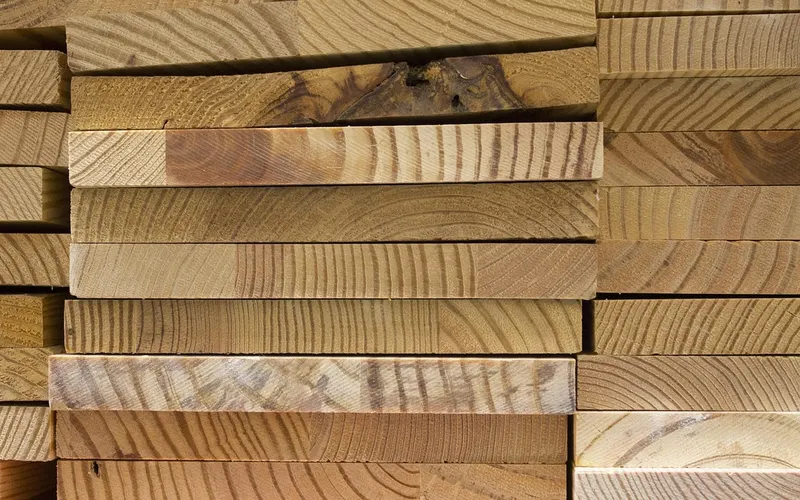
Both routes below use the same 38-board-foot cut list from the methodology section above, plus basic bolt-together hardware (non-mortise bed rail brackets and wood glue). Neither includes slats, a mattress, finish, or sales tax.
Budget Route: Eastern White Pine
| Item | Cost |
|---|---|
| Lumber (38 bd ft @ $3.75/bd ft, Eastern White Pine) | $142.50 |
| Bed rail brackets (4-piece, non-mortise) | $16.99 |
| Wood glue (16 oz) | $9.58 |
| Total | $169.07 |
This is a genuinely serviceable frame for a guest room, a kid’s first bed, or a temporary setup — just plan to check and re-tighten the rail bolts every six months, per the fastener-retention note on the pine pick above.
No-Compromise Route: Hard Maple
| Item | Cost |
|---|---|
| Lumber (38 bd ft @ $8.35/bd ft, Hard Maple) | $317.30 |
| Bed rail brackets (4-piece, non-mortise) | $16.99 |
| Wood glue (16 oz) | $9.58 |
| Total | $343.87 |
Roughly double the pine build’s cost, for the highest bending strength and stiffness of any species compared here — built to hold its shape under decades of daily use rather than years. If walnut’s aesthetics matter more to you than shaving weight off the final structural cost, swap in its $627 lumber total and the rest of the math stays the same.
What Else You’ll Need
Two adjacent purchases apply no matter which species you build with. We didn’t force Amazon links onto the wood picks themselves — full-length structural boards (60–80″) for bed rails aren’t sold on Amazon in any species; searches there return only small hobby-craft boards under 4 feet long, which can’t build a bed rail. Source your actual lumber from a real hardwood dealer like the one cited in the pricing above. These two items, on the other hand, are genuinely available and commonly purchased online:
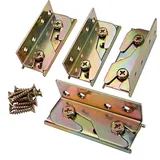
Bed rail brackets (non-mortise, 4-piece set) — $16.99 — the standard bolt-together connector for joining rails to headboard and footboard posts without cutting a mortise.
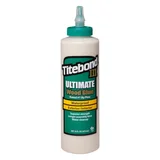
Titebond III Ultimate Wood Glue (16 oz) — $9.58 — a Type I waterproof PVA glue rated for structural interior joinery; reinforces any mortise-and-tenon or dowel joint in the frame.
How to Build a Basic Wood Bed Frame
This is the general assembly sequence for a bolt-together platform frame using the cut list from the methodology section above. Exact steps vary by design, but the order matters regardless of species.
- Mill and cut to final dimension. If you bought rough-sawn hardwood, joint one face and edge, plane to final thickness, then rip and crosscut every piece to the lengths in the cut list.
- Dry-fit the whole frame before any glue or permanent fasteners. Assemble rails, legs and center support with clamps only, and confirm square corners and a level top edge on all four rails.
- Attach the bed rail brackets to the headboard and footboard posts, following the hardware’s own screw-spacing template — pre-drill every hole to avoid splitting, especially in denser species like maple and oak.
- Glue and clamp the center support beam to its mounting blocks or brackets; this is the piece that keeps a queen or king mattress from sagging in the middle, so don’t skip it even on a design that doesn’t strictly require one. See our walkthrough on how to make a center support for a bed frame for the full build.
- Bolt the side rails into the bracket hardware and check the frame for square again before fully tightening — it’s much easier to correct a slight racking error now than after slats and mattress are on.
- Install slat supports or cleats along the inside of both side rails, then lay and space the slats (typically 2–3″ apart) across the frame — our DIY bed slats guide covers spacing and material options in more depth.
- Sand, then finish before final assembly if possible — it’s far easier to get an even finish on individual rails and posts than on a fully assembled frame.
Frequently Asked Questions
What is the best wood for a bed frame that won’t sag?
Hard maple, based on the numbers in the comparison table above — it has the highest Modulus of Elasticity (1.83 million psi) of any commonly available bed-frame species, meaning it flexes the least under sustained load. White oak and white ash are close behind. Sag resistance depends more on MOE (stiffness) than on Janka hardness, which many articles focus on instead.
Is oak or maple better for a bed frame?
Maple is measurably stronger and stiffer (15,800 psi MOR / 1.83 million psi MOE vs. oak’s 14,830 psi MOR / 1.76 million psi MOE) and costs less per board foot. Oak’s advantage is availability — it’s stocked at more dealers — and its classic open-grain look. On pure structural performance, maple wins.
What wood should I avoid for a bed frame?
Avoid low-density softwoods other than a well-supported design in pine or fir if you want a frame that will see years of daily use without loosening hardware. It’s not that these woods can’t work — it’s that their low density (see the pine pick above) means screws and bolts grip less firmly over time, so the joinery needs more attention (threaded inserts, larger fasteners, periodic re-tightening) than a hardwood frame does.
Can I use pine for a bed frame, or do I need hardwood?
Pine works, and it’s the cheapest option in this comparison at $142.50 for a full queen frame’s worth of lumber — but its Modulus of Rupture (8,600 psi) is roughly half that of the strongest hardwoods here, and its low density means fasteners loosen faster under repeated racking stress. It’s a sound choice for a guest room or temporary frame; for a primary bed meant to last decades, a hardwood like maple, oak or ash is the stronger long-term investment.
How much lumber do I need to build a queen bed frame?
The core structural frame (two side rails, two end rails, a center support beam, and four legs) works out to about 38 board feet using the cut list detailed in the methodology section above, before adding slats or a 15–20% milling waste allowance for rough hardwood. A king frame needs proportionally more for the wider rails; a twin needs less.
Does the wood species affect how much a bed frame squeaks?
Indirectly, yes — squeaking is almost always caused by wood-on-wood or wood-on-metal friction at a loose joint, not by the species itself. A denser wood (maple, oak, ash) holds fasteners tighter for longer before a joint loosens enough to squeak, while a lower-density wood like pine or poplar loosens faster and squeaks sooner. Regardless of species, the actual fix is tightening the hardware or adding a thin felt or rubber pad at contact points — see our breakdown of whether you should screw down bed slats for the squeak-prevention trade-offs of each mounting method.
Is mortise-and-tenon or bolt-together construction stronger for a bed frame?
Mortise-and-tenon, in nearly every case — it distributes racking stress across a large glued surface instead of concentrating it on a few threaded holes, which is exactly the stress pattern a bed frame sees every time someone gets in or out of bed. Bolt-together construction with quality hardware (like the non-mortise brackets referenced above) is faster to build and disassemble for moving, and is perfectly adequate for most home use — it just requires more periodic maintenance (checking and re-tightening bolts) than a glued mortise-and-tenon joint does.
Final Thoughts
Hard maple is the strongest, stiffest option in this comparison at 15,800 psi MOR and 1.83 million psi MOE — and at $317.30 for a full queen frame’s worth of lumber, it’s also cheaper than white oak, which most buyers assume is the default “best” choice. If your priority is joinery ease over maximum strength, black cherry is the most forgiving of the seven to cut and finish. If your priority is pure budget, Eastern White Pine gets a frame built for $142.50 — just plan on checking the hardware every few months, since low-density wood loses its grip on fasteners faster than any hardwood here. For more builds like this one, browse our full woodworking projects category.
Sponsored / affiliate links. As an Amazon Associate I earn from qualifying purchases. I may earn additional commission from eligible campaigns.