Buy Wood Online: What to Check Before You Order Hardwood Lumber
You can buy wood online, but the boards you get depend entirely on specs you check before you click “Add to Cart” – moisture content, grade, and board-foot pricing matter more than the seller’s photos. Unlike picking through a lumber rack in person, an online order means the seller chooses which face of the board you see, so a little label-reading up front saves you a warped, cupped, or overpriced shipment later.
Whether you need a single project’s worth of hardwood or you’re stocking a home shop, online lumber shopping has genuinely gotten better in the last few years – small hobby-quantity sellers now ship pre-sorted mixed-species boxes, and specialty hardwood dealers post moisture readings and grain photos of the actual boards, not stock images. This guide covers what those numbers mean, where to actually buy, and the checkout details that separate a good shipment from a pile of firewood-grade scraps.
How Buying Wood Online Actually Works
Most online lumber sellers fall into three groups: specialty hardwood retailers that ship full boards cut to your length, hobby-pack sellers that box up an assortment of shorter offcuts for small projects, and marketplace sellers (Amazon, Etsy) reselling either. The hobby-pack route is the easiest starting point if you don’t need matched grain or a specific board length – you’re paying a premium per board foot compared to a lumberyard, but you skip the minimum-order quantities and freight-shipping headaches that come with ordering full-length hardwood boards.
Best Hobby-Pack Pick For Small Projects
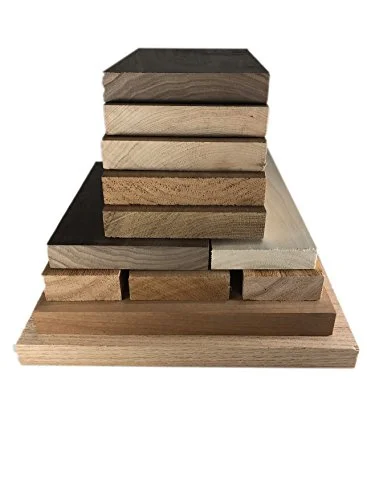 |
Hardwood Lumber Assortment, Mixed Species – $40.26 A no-minimum-order way to buy real hardwood online in small board sizes – exactly the quantity most of the projects on this site call for.
|
If you outgrow hobby packs and start needing matched grain, specific thicknesses, or full 8-foot lengths for furniture-scale work, that’s when it makes sense to move to a dedicated online hardwood dealer instead of a marketplace assortment box.
What a Board Foot Actually Costs You
Online lumber is priced by the board foot, not the board – one board foot is 144 cubic inches, which works out to a piece 12 inches long, 12 inches wide, and 1 inch thick (or any combination that multiplies to the same volume). A 6-foot 1×6 board is 3 board feet; a 6-foot 1×12 is 6 board feet. Get comfortable with that math before you check out, because sellers quote per-board-foot prices that look small until you multiply them by an actual project’s cut list.
Rough per-board-foot ranges you’ll see online: construction softwoods like pine and fir usually run $2-4/bf, domestic hardwoods like oak, maple, and poplar land around $5-9/bf, walnut and cherry typically run $8-14/bf, and figured or exotic species (curly maple, purpleheart, bocote) can run $15-30+/bf. Kiln-dried, surfaced (S2S or S4S) stock costs more per board foot than rough-sawn – you’re paying for someone else’s planer time and a dry board that won’t move on you.
Moisture Content: The One Spec Sight-Unseen Buyers Skip
A board’s moisture content matters more than its grain pattern when you can’t inspect it in person, because wood that’s too wet will shrink, cup, or twist after it reaches your shop. For interior furniture and cabinetry, look for kiln-dried stock in the 6-8% moisture range. Stock intended for outdoor use or rough framing can run higher, up to 12-15%, without causing problems. Reputable online hardwood dealers list the moisture content on the product page or in the listing description – if a seller doesn’t mention it anywhere, e-mail and ask before you order a large quantity.
Green or air-dried wood bought online without a stated moisture reading is the single most common reason DIYers end up with warped boards a few weeks after delivery. If a listing’s price looks unusually low compared to similar species and thickness, an unlisted moisture content is one of the first things to check – it’s a common way sellers move green lumber at a discount without saying so directly.
Where to Actually Buy Wood Online
- Specialty online hardwood retailers (Bell Forest Products, Hearne Hardwoods, Woodworkers Source) sell full-length boards cut and dried to project specs, with moisture content and grading listed per item. Best when you need matched grain or a specific board length.
- Big-box woodworking retailers (Woodcraft, Rockler) ship smaller domestic and exotic species packs online even where their physical stores stock more, useful if you already shop those brands for tools.
- Marketplace hobby packs (Amazon, Etsy) are the fastest way to get a small, no-minimum-order box of assorted species shipped in a few days – the trade-off is you don’t choose exact species or dimensions.
- Local sawmills with online ordering often beat shipped prices if you’re within driving distance for pickup, and many now take web orders for will-call even though they don’t run a full storefront.
Grading Terms You’ll See at Checkout
Hardwood grading follows standards set by the National Hardwood Lumber Association, and the same terms show up whether you’re buying online or at a yard. FAS (First and Seconds) is the top grade, with boards yielding the highest percentage of clear, defect-free cuttings – expect to pay the most per board foot for it. Select is a step down, still largely clear on one face. No. 1 Common allows more knots and character but yields smaller clear cuttings, and it’s usually the best value if your project doesn’t need long clear runs. Listings that skip a grade entirely and just say “hardwood” are worth a follow-up question before you buy in any quantity.
Weight matters too when you’re comparing a shipped grade against buying locally: FAS boards from a species like walnut or cherry are often worth ordering online even at a shipping premium, because a local yard may only stock those species in No. 1 Common. For everyday project wood like poplar or pine, the grading gap matters less and a local yard almost always wins on total cost once freight is factored in.
Reading a Listing Before You Order
A good online lumber listing tells you four things without having to ask: species, moisture content, grade, and actual dimensions (thickness, width, and length – not just “1 inch” nominal, since surfaced boards are thinner than rough-sawn). If a listing photo shows a single perfect board but the fine print says “random widths and lengths,” expect the batch that ships to look more like the worst board in the photo than the best one. Sellers who photograph the actual pallet or box going out, rather than a single staged board, are generally more reliable for repeat orders.
Red Flags Before You Click Buy
- No moisture content listed anywhere on the page or in the description.
- Only stock or generic photos, never a picture of the actual boards or box you’d receive.
- No stated return or claims policy for lumber damaged or warped in transit.
- Shipping cost that’s a large multiple of the lumber price – heavy hardwood species get expensive to ship fast, and a seller who buries that cost until checkout is worth avoiding.
Frequently Asked Questions
Is It Cheaper to Buy Wood Online or at a Local Lumberyard?
A local yard is almost always cheaper per board foot once you factor in shipping, since hardwood is heavy and freight adds up fast. Buying online makes the most sense when you need a species or grade your local yard doesn’t stock, or when you only need a small hobby quantity and a full-size order or a trip isn’t worth it.
What Moisture Content Should Kiln-Dried Wood Have?
For interior furniture and cabinetry, look for 6-8% moisture content. Stock meant for outdoor projects can run somewhat higher, up to 12-15%, without causing problems. If a listing doesn’t state a moisture reading, ask before ordering more than a test quantity.
How Many Board Feet Do I Need to Order?
Calculate the board footage of every piece in your cut list (length in inches × width in inches × thickness in inches, divided by 144), add 15-20% for waste from defects and cutting to length, and order that total. Ordering the bare minimum leaves no margin if a board has a hidden defect once you cut into it.
Can I Buy a Small Amount of Hardwood Online Without a Minimum Order?
Yes – marketplace hobby packs, like mixed-species assortment boxes, are built for exactly this and ship without the minimum board-footage requirements that specialty hardwood dealers often apply to keep shipping cost-effective.
Conclusion
Buying wood online works well once you know which numbers to check: board-foot math so the price actually makes sense, a stated moisture content so the boards don’t move on you after delivery, and a real grade instead of a vague “hardwood” listing. Start with a small hobby pack if you’re testing a new species or a small project, and move to a specialty dealer once you need matched grain or full-length boards for furniture-scale work.
Sponsored / affiliate links. As an Amazon Associate I earn from qualifying purchases. I may earn additional commission from eligible campaigns.