Can Flex Seal Be Sanded? Spray vs Epoxy vs Paste Explained
Flex Seal spray and liquid rubber sealant should not be sanded, according to the manufacturer, but Flex Seal Epoxy is the exception and can be sanded, drilled, and painted once fully cured. Sanding the standard spray strips its flexible waterproof layer and can expose bare wood underneath. This guide covers which Flex Seal product you actually have, the grit and cure-time numbers that matter, and how to smooth a rough repair without breaking the seal.
Quick Answer
No, not the original Flex Seal Spray or Liquid Rubber – the maker says don’t sand it. Flex Seal Epoxy is different: once cured (usually 24–48 hours), it can be tooled, sanded, drilled, and painted. Flex Paste falls in between – skip sanding and smooth it with a putty knife while it’s still wet instead.
Which Flex Seal Product Do You Actually Have?
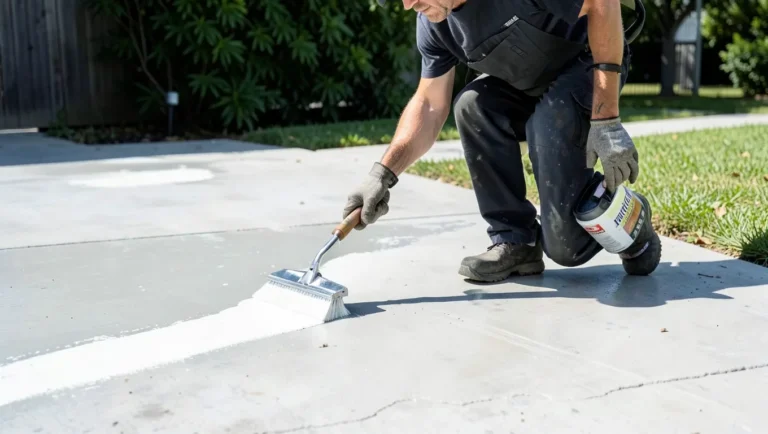
Flex Seal is a brand name that covers several different rubberized sealant products, and that’s exactly where the sanding confusion comes from. The spray can and the liquid rubber in a bucket are the same flexible coating, just different application methods. Flex Seal Epoxy is a separate two-part product built to be rigid and sandable. Flex Paste is a thick, trowel-on rubber filler. Each one behaves differently once it sets, so “can Flex Seal be sanded” really has three separate answers, not one.
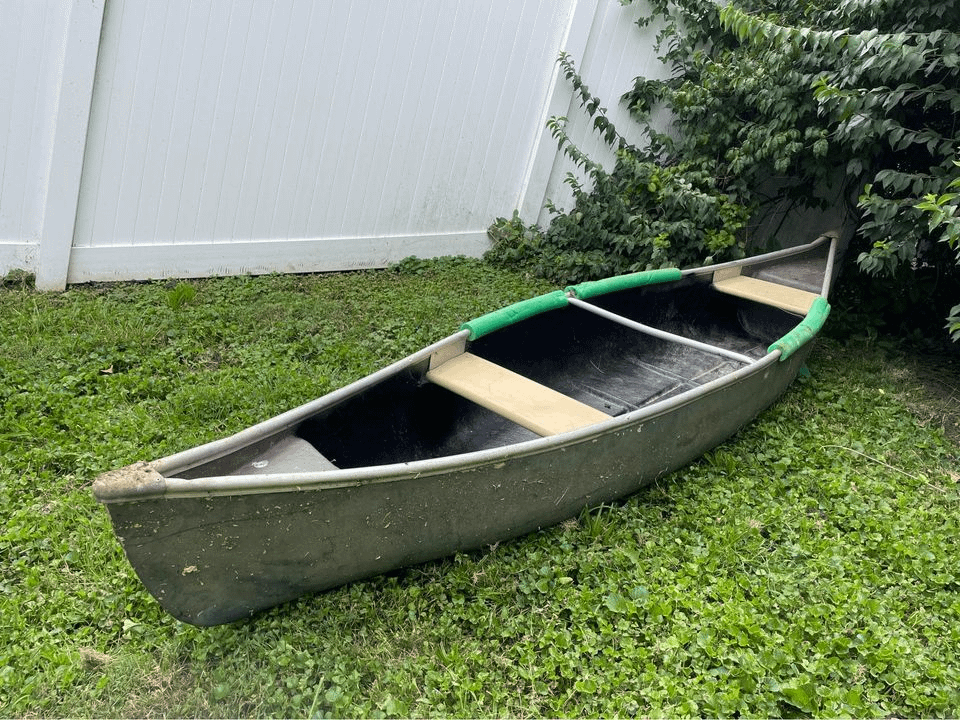
If you’re patching a crack in a boat hull, sealing a gutter, or waterproofing a wood deck board before winter, you most likely used the spray or liquid rubber – that’s the version most woodworkers reach for on outdoor wood and metal repairs. If you’re filling a structural gap or building up a shape you plan to shape afterward, you likely used the epoxy.
Can You Sand Flex Seal Spray or Liquid Rubber?
No. Flex Seal Products’ own guidance is direct: they do not recommend sanding the spray or liquid rubber formula, even after it’s fully cured. The coating stays rubbery and flexible by design, so sandpaper tends to gum up, tear, or peel the seal instead of smoothing it – and removing material this way can expose the wood, metal, or fiberglass underneath to the exact leak you sealed in the first place.
There’s one legitimate use for sandpaper with this product, but it comes before application, not after: if the repair surface has rust or a loose, flaking old coating, lightly sanding that spot first helps the new Flex Seal layer grip. Once the sealant itself is down and cured, put the sandpaper away.
If a cured spot of spray sealant has drips, ridges, or an uneven edge you want to fix, don’t sand it – trim the excess with a sharp utility knife instead, or apply a thin, even second coat over the ridge once the first coat has fully cured (24 to 48 hours, depending on temperature and humidity).
Can You Sand Flex Seal Epoxy?
Flex Seal Epoxy is a two-part liquid epoxy that cures rigid rather than rubbery. Once it’s fully hardened, the manufacturer confirms it can be tooled, shaped, sanded, painted, and drilled for a seamless finish – this is the one Flex Seal product built to take sandpaper. That makes it a reasonable choice for a wood repair you plan to sand flush and paint, like filling a gouge in a porch rail or a rotted spot on a windowsill.
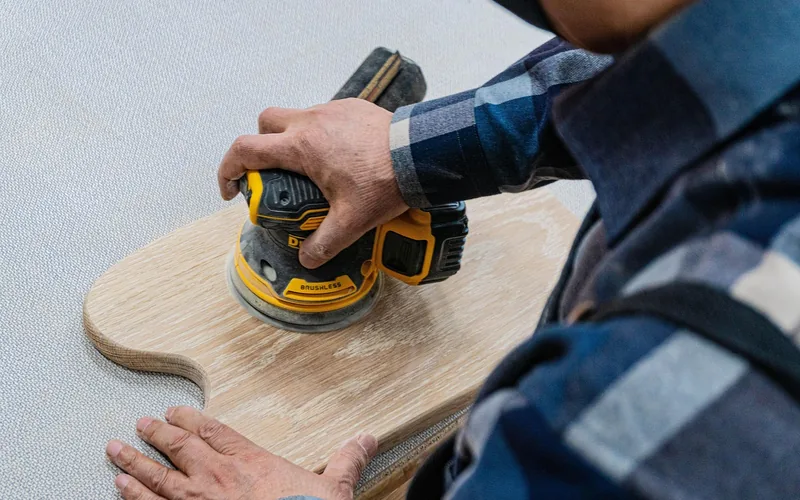
Give epoxy a full cure before sanding – rushing it while the center is still soft is the most common reason a sanded patch looks chalky or gums up the paper. Start with a medium grit (120–150) to knock down high spots, then step up to 220 grit for the final smoothing pass before priming and painting.
Flex Seal Product Comparison: Sandable or Not
| Product | Cures To | Can It Be Sanded? | Best For |
|---|---|---|---|
| Flex Seal Spray / Liquid Rubber | Flexible rubber coating | No – not recommended by the maker | Boat hulls, gutters, roof leaks, garden hoses |
| Flex Seal Epoxy | Rigid, hardened epoxy | Yes, once fully cured | Wood gouges, rot repair, gap-filling before paint |
| Flex Paste | Waterproof rubber paste | No – smooth while still wet instead | Vertical patches, thick gap fills, trowel-on repairs |
How to Sand Cured Flex Seal Epoxy the Right Way
Once you’ve confirmed you’re working with the epoxy (not the spray), sanding it down for a flush, paintable finish is a straightforward process. This is the same basic approach used for general wood repair sanding, adjusted for how epoxy cures.
- Confirm full cure: Wait the full cure window on the packaging – typically 24 to 48 hours – before touching sandpaper to the patch. A soft or tacky spot means it isn’t ready.
- Knock down high spots: Start with 120–150-grit sandpaper on a sanding block, working in the direction of the surrounding surface rather than in circles.
- Smooth the transition: Move to 220-grit to blend the patch into the surrounding wood so there’s no visible ridge or lip.
- Clean the dust: Wipe the area with a dry cloth first, then a slightly damp one, so no grit is left behind before priming.
- Prime and paint: Epoxy patches accept standard latex primer and paint once sanded smooth and free of dust.
Best Sandpaper Pick For Epoxy Repairs
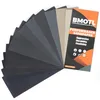 |
BMOTL Wet/Dry Sandpaper Assortment, 120–5000 Grit, 42 Sheets – $9.99 Covers the 120 to 220 grit range this guide’s sanding steps call for, plus finer grits for a final smoothing pass before paint on a cured Flex Seal Epoxy patch.
|
As an Amazon Associate we earn from qualifying purchases.
What About Flex Paste – Can That Be Sanded?
Flex Paste is a thick, trowel-applied rubber compound – it looks like it should sand down like spackle or joint compound, but it doesn’t behave like either once cured. Unlike those materials, Flex Paste dries to a waterproof, flexible rubber, so the manufacturer recommends against sanding it after it sets.
The fix is to shape it before it cures, not after: while the paste is still wet, run a putty knife or trowel over the surface to smooth it to the finish you want. If you’ve already let a paste patch cure and it’s uneven, the more reliable move is applying a thin fresh layer over it and tooling that layer while wet, rather than trying to sand the hardened one down.
Common Mistakes When Trying to Sand Flex Seal
- Sanding the spray or liquid rubber at all. Even fine-grit paper tends to gum up or tear this coating instead of smoothing it – trim or recoat instead.
- Sanding epoxy before it’s fully cured. A patch that’s hard on top but soft underneath will gum up sandpaper and never sand smooth – wait the full 24–48 hour window.
- Pressing too hard on any cured sealant. Aggressive pressure with coarse grit can tear through a thin patch and re-expose the surface underneath, undoing the repair.
- Skipping the dust wipe before painting. Sanding dust left on an epoxy patch shows up as a dull, uneven patch once primer or paint goes on.
📊 Flex Seal’s own product guidance draws a hard line between its two liquid formulas: the spray/liquid rubber line is explicitly “not recommended” for sanding, while Flex Seal Epoxy is described as sandable, drillable, and paintable once cured – Source: Flex Seal Products, Product Resources
“The mistake I see most on outdoor wood repairs is someone reaching for 220-grit sandpaper on a Flex Seal patch the same way they’d sand a wood filler – it just tears the rubber. If you need a sandable patch on a wood repair, use the epoxy formula, not the spray, and give it the full cure time before you touch it with paper.”
Frequently Asked Questions
Can Flex Seal Spray Be Sanded After It Dries?
No. Flex Seal Products does not recommend sanding the spray or liquid rubber formula even after it’s fully cured, since sandpaper tends to tear or gum up the flexible coating instead of smoothing it.
How Long Should Flex Seal Cure Before Any Work Continues?
Most Flex Seal products need 24 to 48 hours to fully cure, depending on temperature and humidity. Warmer, drier conditions cure faster; cold or humid conditions slow it down. Always check the specific product’s packaging for its exact window.
What Grit Sandpaper Works For Flex Seal Epoxy?
Start with 120 to 150 grit to knock down high spots on a cured Flex Seal Epoxy patch, then move to 220 grit to smooth the transition before priming and painting.
Can Flex Seal Be Painted After Sanding?
Yes, once a Flex Seal Epoxy patch is sanded smooth and wiped free of dust, it accepts standard latex primer and paint. The original spray/liquid rubber formula generally is not sanded at all, but can typically still be painted directly once cured – check the product label for paint compatibility.
Can You Smooth Flex Paste Without Sanding It?
Yes. Flex Paste should be tooled with a putty knife or trowel while it’s still wet rather than sanded after it cures, since it dries to a flexible rubber that doesn’t sand the way spackle or joint compound does.
Conclusion
“Can Flex Seal be sanded” doesn’t have one answer – it depends entirely on which product is in your hand. Skip the sandpaper on the spray, liquid rubber, and Flex Paste; save it for Flex Seal Epoxy once that patch has fully cured for 24 to 48 hours. Match the grit to the job (120–150 to shape, 220 to finish), and you’ll get a flush, paintable repair without tearing through the seal you just made. If the project is a wood repair using Flex Seal specifically, confirm which formula the job calls for before you ever pick up sandpaper.
Sponsored / affiliate links. As an Amazon Associate I earn from qualifying purchases. I may earn additional commission from eligible campaigns.