Best Sealer for Ipe Wood Decking: Oil vs. Sealer (5 Compared)
Ipe wood decking doesn’t need a waterproof sealer — its natural oils and 3,680 lbf Janka density already stop rot — but it does need a UV-protective oil, or the rich brown color fades to silver-gray within months. Use a film-forming sealer instead of a penetrating oil and it peels off ipe’s dense grain within a season. This guide compares five real products by VOC content, coverage, and reapplication interval, plus timing and technique.
Quick Answer
For most ipe decks, a penetrating oil like DeckWise Ipe Oil Plus or Penofin Hardwood/Marine Formula outperforms any film-forming sealer, which will peel. Reapply every 1–2 years under average exposure, or every 6–12 months on high-sun decks. California residents in SCAQMD counties need a 100 g/L VOC-compliant formula, such as Ipe Oil Plus.
Does Ipe Wood Decking Actually Need to Be Sealed?
Best Ipe Deck Oil Pick
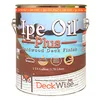
DeckWise Ipe Oil Plus (1-Gallon, 100 VOC) – $97.99
This is the 100 g/L SCAQMD-compliant formula covered in the VOC section below, so it’s the pick that works whether or not your county caps VOC content — matches the wipe-off-after-10-15-minutes technique described in the step-by-step above.
- Best for: Ipe/hardwood decks in California or other VOC-restricted regions
- Why we picked it: Purpose-built for ipe specifically, and compliant everywhere, not just outside SCAQMD counties
- Main drawback: Priced higher per gallon than Penofin or Messmer’s
Compare more ipe deck oil options
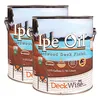 Option 1 DeckWise Ipe Oil, 250 VOC (2-Pack) – $158.99
|
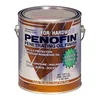 Option 2 Penofin Exotic Hardwood, 1 Gal (250 VOC) – $67.34
|
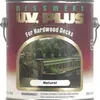 Option 3 Messmer’s UV Plus for Hardwood Decks, Low VOC – $84.95
|
As an Amazon Associate we earn from qualifying purchases.
No — not for waterproofing. Ipe wood (Tabebuia species, often sold as “Brazilian walnut”) is one of the hardest commercially available woods, rated roughly 3,680 lbf on the Janka hardness scale versus about 1,290 lbf for the average hardwood and 690 lbf for pine. That density, combined with the tight grain and natural oils already in the wood, is why ipe resists rot, insects, and fire without any chemical treatment.
This is different from how most deck lumber works, and it’s where the confusion between “sealer” and “oil” starts. Softwood decking needs a waterproofing product to keep moisture out. Ipe already keeps moisture out on its own. If you want to know why most exterior wood does need that waterproofing step, see our guide on how to waterproof wood — ipe is the exception, not the rule.
📊 Ipe is rated approximately 3,680 lbf on the Janka hardness scale — roughly 2.9 times harder than the average hardwood (about 1,290 lbf) and over 5 times harder than pine (about 690 lbf). Source: Ipe Woods USA, Janka Hardness Scale
Sealer vs. Oil: Why the Terminology Confuses Everyone
A sealer, in the traditional sense, is a film-forming product — it cures into a plastic-like layer sitting on top of the wood to block water. That layer is exactly what fails on ipe: the wood is too dense to let the film flex with seasonal movement, so it cracks and peels within a season, which is the opposite of what a searcher looking for a “sealer” usually wants.
An oil — the products actually sold and used for ipe, including DeckWise Ipe Oil, Penofin, Messmer’s, Seal-Once, and CUTEK Extreme — penetrates into the grain instead of sitting on the surface. It doesn’t block water (ipe doesn’t need that); it blocks UV light. Think of it as sunscreen for the wood: it slows the fading of ipe’s rich brown color rather than waterproofing anything. When people search “best sealer for ipe wood decking,” what actually solves their problem is one of these UV-protective oils, not a traditional sealer.
What Happens If You Never Oil an Ipe Deck?
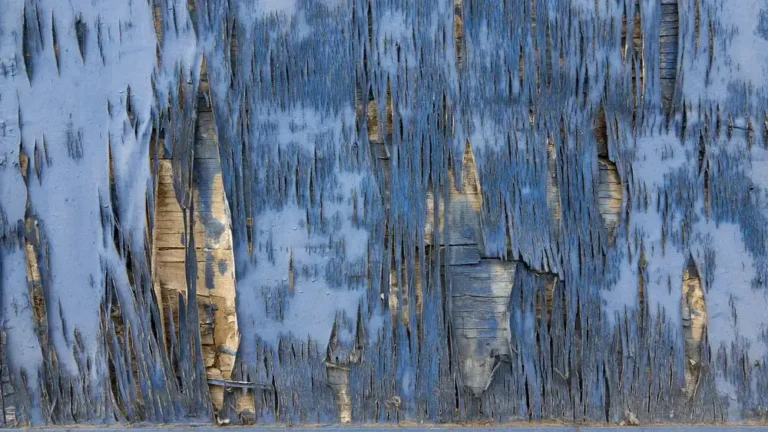
Nothing structural. Skipping oil entirely does not cause rot, insect damage, or any loss of structural integrity — ipe’s density and natural oils handle that regardless of surface finish. What does happen is purely cosmetic: continuous UV exposure breaks down the surface color, and the deck gradually weathers from rich brown to a silver-gray patina, typically over a matter of months to a year or two depending on sun exposure.
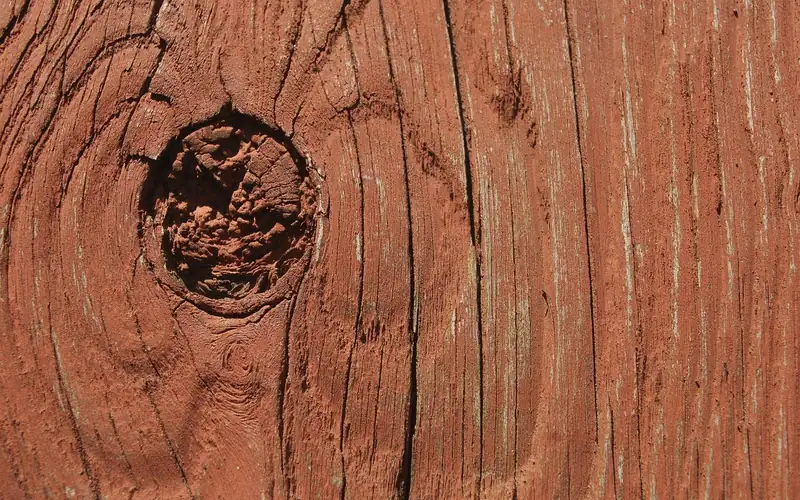
This graying is also reversible. A wood brightener (typically oxalic-acid based), combined with light sanding and a fresh coat of oil, can restore most or all of the original brown color if you later decide you want it back — more on that process below.
When to Apply the First Coat on a New Ipe Deck
Let new ipe decking age 6–8 weeks before the first oil application. Freshly milled ipe carries surface moisture and mill glaze that needs to weather off first — oil applied too early won’t penetrate the grain properly and can cure unevenly or sit on the surface instead of soaking in.
How to Oil an Ipe Deck (Step-by-Step)
- Wait 6–8 weeks: Let a new deck age before the first application so surface moisture and mill glaze weather off.
- Wash the deck: Clean with a low-pressure wash, staying under about 1,200 PSI and holding the nozzle roughly 12 inches from the surface to avoid gouging the wood.
- Let it dry fully: Confirm the boards are completely dry before opening any oil — trapped moisture prevents proper penetration.
- Apply with the grain: Brush, roll, or wipe the oil on following the wood grain, working in manageable sections.
- Wipe off excess: Remove excess oil after roughly 10–15 minutes to prevent a sticky, glossy film from forming on the surface.
- Seal the end grain separately: Treat cut ends with a dedicated end-grain sealant, since face-grain oil alone doesn’t adequately protect exposed end grain from checking.
New decks often need two coats in the first year, since fresh wood absorbs the initial application quickly. After that first year, most decks settle into a longer 1–2 year reapplication cycle as the wood becomes more saturated and stable.
Best Sealer for Ipe Wood Decking: 5 Real Products Compared
None of the major guides on this topic put the real, named products side by side with sourced numbers — most either cover one product or lean on a single manufacturer’s marketing claims. Here’s an honest comparison, with the gaps in publicly available data left visible rather than filled in with guesses.
| Product | Formula Type | VOC Content | SCAQMD (CA) Compliant | Reapplication (per source) | Price (per source) |
|---|---|---|---|---|---|
| DeckWise Ipe Oil / Ipe Oil Plus | Penetrating oil | 250 g/L (standard) / 100 g/L (Plus) | Plus formula only | 5+ years (manufacturer claim) | ~$98–159/gal (current Amazon listings) |
| Penofin Hardwood/Marine Formula | Penetrating oil | 100 / 250 / 550 g/L (varies by formula/region) | Some formulas | 3–4 years (manufacturer claim) | ~$67–90/gal (current Amazon listings) |
| Messmer’s UV Plus for Hardwoods | Oil-based hardwood stain | Standard + separate low-VOC version | Low-VOC version only | Not independently sourced | $79.99–84.99/gal (retail listing) |
| Seal-Once Exotic Premium Wood Sealer | Water-based penetrating sealer | Marketed as “ultra-low VOC” (exact g/L not published) | Marketed for compliance | Not independently sourced | Not independently sourced |
| CUTEK Extreme | Penetrating oil stabilizer | Not independently sourced | Not independently sourced | Not independently sourced | Not independently sourced |
VOC and reapplication figures are manufacturer- or reviewer-published claims, not independently lab-tested by us. Where a cell says “not independently sourced,” we could not verify a specific published number for that product in our research and are not guessing.
The Seal-Once product stands out as the only genuinely water-based, ultra-low-VOC option in the group — the rest are oil-based. CUTEK Extreme is a “stabilizer” rather than a conventional oil: it displaces moisture in the wood cells rather than forming any kind of film, which an independent review site scored 8.63/10 overall for wear resistance and UV color retention, though some users report very long drying times in cold or humid climates.
How Much Oil Do You Need Per Square Foot?
Per DeckWise’s published technical data sheet, its Ipe Oil covers roughly 150–250 sq ft per gallon on rough-sawn wood, or 200–300 sq ft per gallon on smooth, planed wood — smoother surfaces absorb less oil per coat. A typical 300-square-foot deck would need roughly one to two gallons for the first coat, more if the wood is rough-sawn or the first application on very thirsty new wood.
How Often Should You Re-Oil an Ipe Deck?
Every 1–2 years for decks with average sun and rain exposure. Decks that get heavy, direct sun or a lot of rain may need reapplication every 6–12 months to keep the original brown color from fading. That frequency tends to decrease after several consecutive years of consistent oiling, since the wood becomes more saturated and stable and holds each coat longer.
Is There a VOC-Compliant Ipe Oil for California?
Yes. The South Coast Air Quality Management District (SCAQMD) — covering LA-Eastern, LA-Western, Orange, Riverside, and San Bernardino counties — caps wood-coating VOC content at 100 g/L. DeckWise’s standard Ipe Oil is formulated at 250 g/L and is not legal for sale within SCAQMD’s jurisdiction; its Ipe Oil Plus formula is built to 100 g/L specifically to meet that limit, and DeckWise claims it also lasts up to 15% longer. Penofin likewise offers separate 100, 250, and 550 g/L formulas depending on the region, so check the specific product listing’s VOC rating rather than assuming any given can is compliant.
How to Restore an Ipe Deck That’s Already Turned Gray
- Apply a wood brightener: Use an oxalic-acid based brightener to lift the surface gray and reopen the wood’s pores.
- Light sand if needed: A light sanding removes any remaining silvered fibers the brightener didn’t fully clear.
- Let the deck dry completely: Confirm the boards are fully dry before applying any oil.
- Re-oil following the steps above: Apply the oil with the grain and wipe excess after 10–15 minutes, same as a new deck’s first coat.
Don’t Forget the End Grain
Cut ends are the most vulnerable part of any ipe board to checking (splitting along the grain), and unsealed ends can start checking in as little as a day of sun exposure. Face-grain oil alone doesn’t adequately protect end grain, since end grain absorbs and releases moisture far faster than the face of the board. A dedicated wax-emulsion end-grain sealant (such as DeckWise’s Ipe Seal) is made specifically for this and should be applied to every cut end, separate from the regular face-grain oiling. If you’re still cutting boards to length, our guide on how to cut ipe wood covers the blade and technique choices that affect how clean those end cuts come out in the first place.
Ipe isn’t the only dense hardwood decking option worth considering before you build — if you’re still deciding between species, our teak vs. ipe comparison breaks down how the two hold up against each other. And if a film-forming product still sounds appealing for a different project, our roundup of the best wood sealer options covers where those actually make sense — just not on ipe decking.
Frequently Asked Questions
Does ipe wood decking need to be sealed?
No. Ipe’s density (about 3,680 lbf Janka) and natural oils already resist rot and insects without any waterproofing sealer, and a traditional film-forming sealer would actually peel off the dense wood. What ipe does benefit from is a UV-protective oil, applied purely to slow the cosmetic fading of its rich brown color — skipping it doesn’t cause rot, just a silver-gray patina over time.
What’s the difference between a sealer and an oil for ipe?
A “sealer” typically forms a waterproof film on the wood’s surface, which cracks and peels off dense hardwoods like ipe. An “oil,” like Penofin or DeckWise Ipe Oil, penetrates into the wood grain instead of sitting on top, so it doesn’t crack — it works purely as UV protection to preserve color, not as a moisture barrier ipe doesn’t need.
How often should you re-oil an ipe deck?
Every 1–2 years for decks with average sun and rain exposure. High-sun or high-exposure decks may need reapplication every 6–12 months to preserve the original color. New decks often need two coats in the first year since fresh wood absorbs oil quickly, then settle into a longer cycle once the wood becomes saturated.
What happens if you never oil an ipe deck?
The deck won’t rot or lose structural integrity — ipe’s density and natural oils handle that on their own. Left unoiled, the wood naturally weathers to a silver-gray patina as UV exposure breaks down the surface color. This is purely cosmetic and reversible with a wood brightener, light sanding, and re-oiling if you want the brown color back.
How long should a new ipe deck dry before the first oil application?
Let new ipe decking age 6–8 weeks before the first oil coat. This allows the mill glaze and surface moisture from milling to weather off so the oil can actually penetrate the grain instead of sitting on top or curing unevenly.
Is there a VOC-compliant ipe oil for California residents?
Yes. SCAQMD (South Coast Air Quality Management District, covering LA, Orange, Riverside, and San Bernardino counties) caps wood-coating VOC content at 100 g/L. DeckWise sells Ipe Oil Plus specifically at 100 g/L to meet this limit, while its standard Ipe Oil (250 g/L) is not legal for sale in SCAQMD’s jurisdiction. Penofin also offers 100 g/L formulas depending on region.
Bottom line: treat “sealer” searches for ipe as oil searches. Pick a penetrating oil rated for your VOC region, apply it 6–8 weeks after installation, wipe off the excess, seal the end grain separately, and plan on reapplying every 1–2 years — or every 6–12 months if your deck gets heavy sun.
Sponsored / affiliate links. As an Amazon Associate I earn from qualifying purchases. I may earn additional commission from eligible campaigns.