Can OSB Plywood Get Wet? What You Should Know
Many folks wonder, “Can OSB Plywood Get Wet? What You Should Know.” This is a really common question when you’re working on a home project or building something. It can feel a bit tricky to figure out if this material can handle a little water.
Don’t worry, it’s simpler than you might think! We’ll walk through it step-by-step so you know exactly what to do.
Understanding OSB Plywood and Water Exposure
Oriented Strand Board, or OSB, is a popular building material made from wood strands glued together. It’s strong and often more affordable than traditional plywood. However, its makeup means water can cause problems.
Learning how OSB reacts to moisture is key for any DIYer or builder. This section will explain what happens when OSB gets wet and why it matters for your projects.
What Happens When OSB Gets Wet
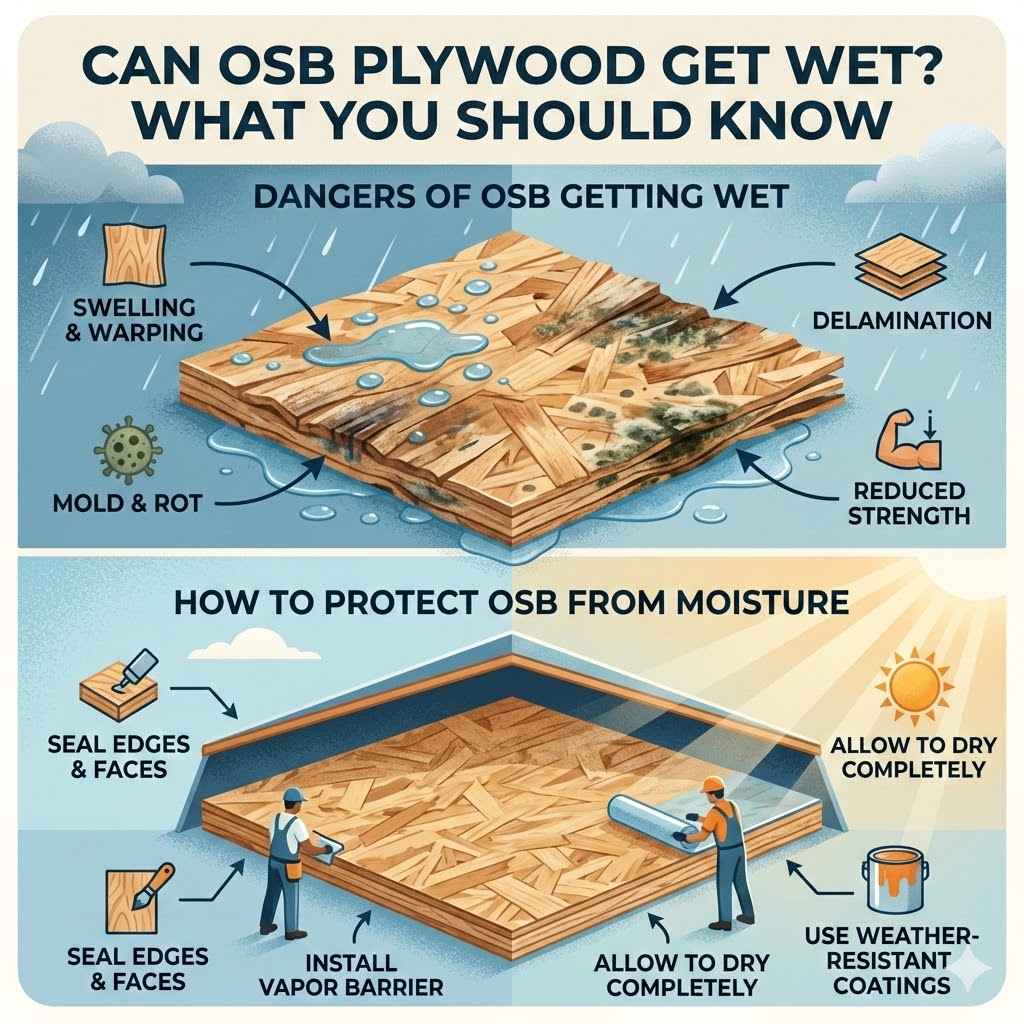
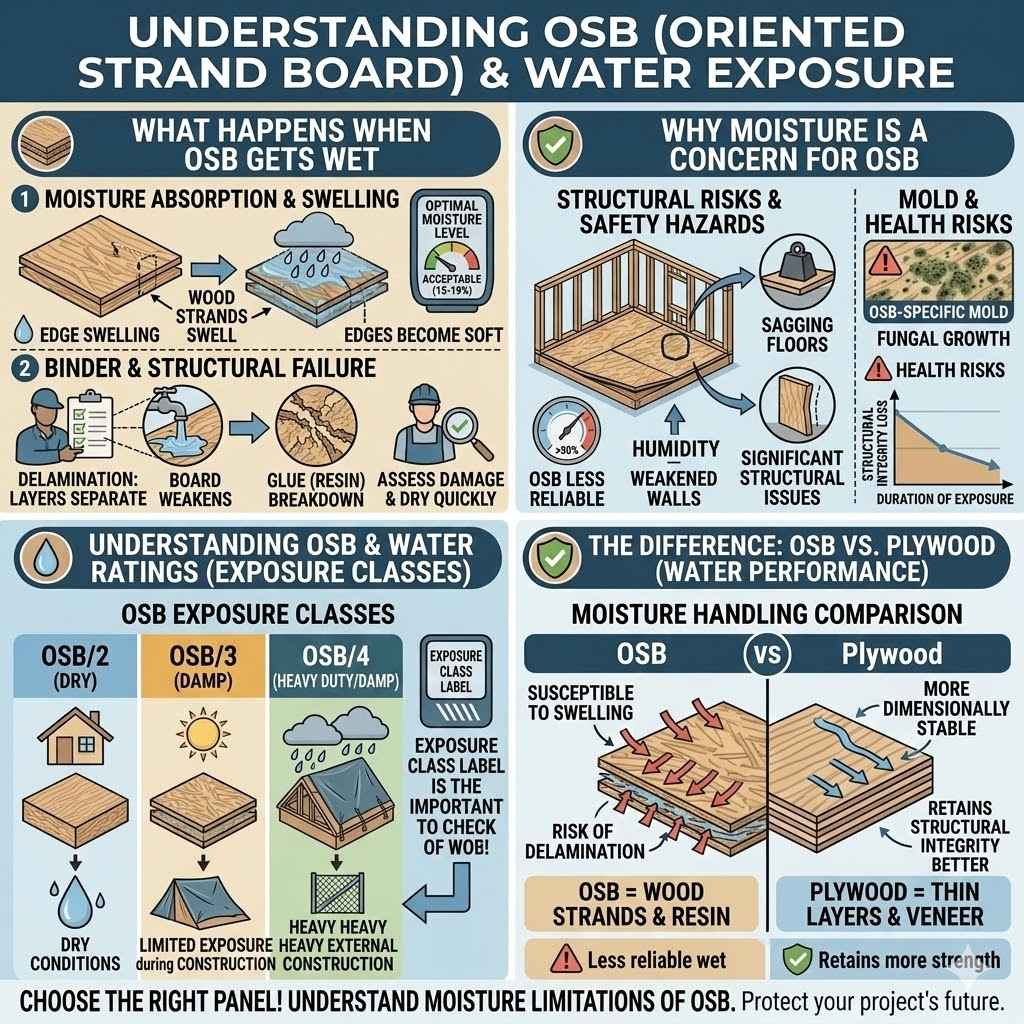
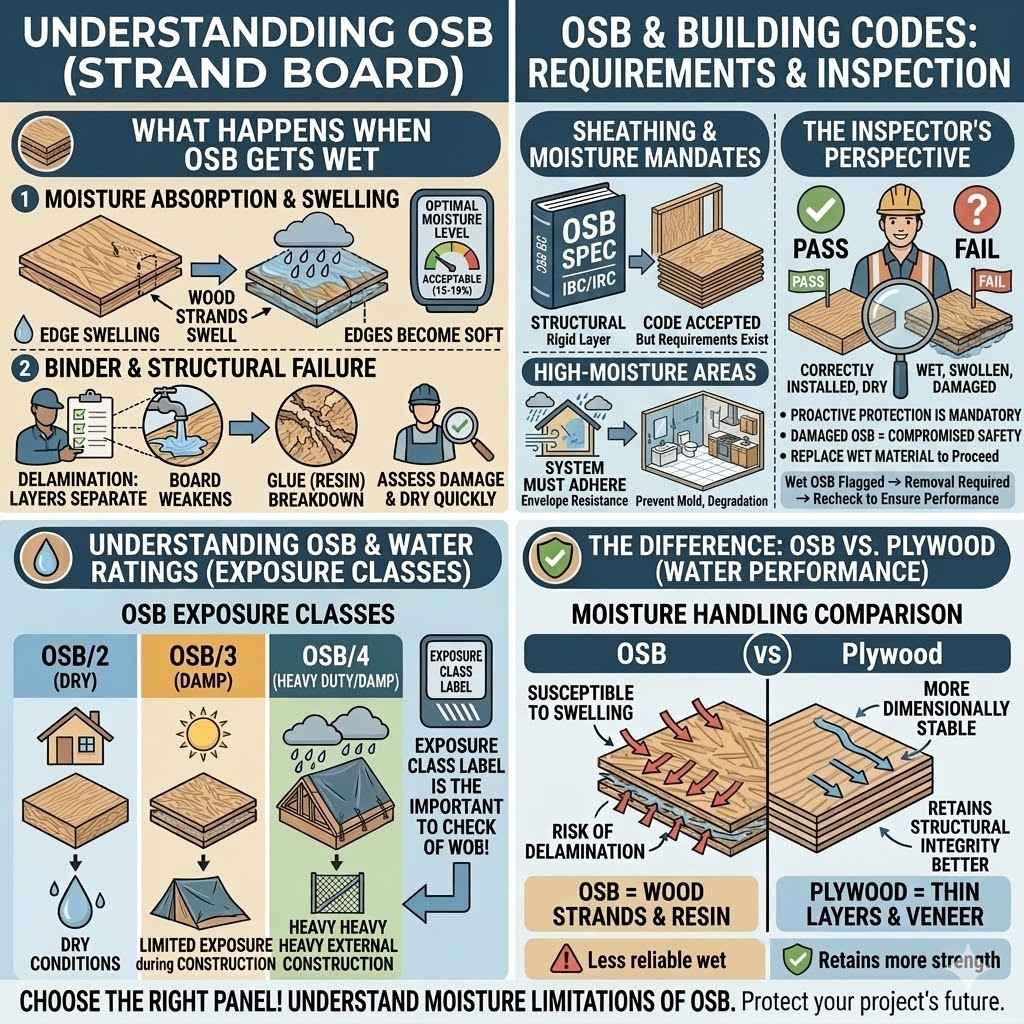
When OSB comes into contact with water, it starts to absorb it. The wood strands swell up as they soak up the moisture. This swelling can cause the OSB panel to expand, and its edges might become soft and mushy.
If it stays wet for too long, the glue holding the strands together can start to break down. This weakens the board, making it less stable and less reliable for building.
The extent of the damage depends on how long the OSB is wet and how much water it absorbs. A quick splash might not cause much harm if it dries out fast. But prolonged exposure, like from a leaky roof or being left out in the rain, can lead to significant structural issues.
This is why proper planning and protection are so important when using OSB.
Why Moisture is a Concern for OSB
The main reason moisture is a concern for OSB is its construction. Unlike some other wood products, OSB is made of wood chips and strands bonded with resins. While these resins are strong, they can be compromised by prolonged water exposure.
Water can penetrate the wood fibers, causing them to expand and contract. This cycle can lead to delamination, where the layers of the board begin to separate.
Furthermore, wet OSB can become a breeding ground for mold and mildew. These fungi can not only damage the OSB itself but also pose health risks. In building structures, compromised OSB can lead to sagging floors, weak walls, and other safety hazards.
Therefore, preventing water damage is crucial for the longevity and safety of any construction using OSB.
The Difference Between OSB and Plywood Regarding Moisture
While both OSB and plywood are wood-based panels, they handle moisture differently. Plywood is made from thin layers of wood veneer glued together with the grain running in alternating directions. This cross-graining makes plywood more dimensionally stable and generally more resistant to moisture than OSB.
If plywood gets wet, it might warp, but it often retains more of its structural integrity compared to OSB.
OSB, on the other hand, uses wood strands oriented in specific directions. This method can make it more susceptible to swelling and delamination when exposed to significant amounts of water. While OSB is a cost-effective material, its performance in wet conditions is a significant consideration.
It’s important to understand these differences when choosing materials for your projects, especially those exposed to the elements.
Can OSB Plywood Get Wet? Assessing the Risk
So, can OSB plywood get wet? The short answer is, it’s not ideal. While a brief encounter with water might be manageable, prolonged or heavy exposure can cause damage.
Understanding the risks helps you make informed decisions. This section breaks down the different scenarios and the potential impact on OSB panels.
Short-Term Exposure to Water
If your OSB project experiences a short burst of rain or a minor spill, it doesn’t necessarily mean disaster. The key here is quick action. If OSB gets a little wet, the most important thing is to dry it out as thoroughly and as quickly as possible.
Use fans, dehumidifiers, or even a clean cloth to remove excess moisture. Once dry, inspect the OSB for any signs of swelling or softness.
Often, if the OSB is dried out promptly, it can recover its structural integrity. However, it’s still wise to monitor it. Sometimes, minor swelling might occur, which can resolve as it fully dries.
For critical structural applications, even minor water damage warrants careful consideration before proceeding.
Long-Term or Heavy Water Exposure
When OSB is subjected to prolonged wetness, like from a leaky roof, flooding, or being left uncovered outdoors for extended periods, the damage can be severe. The wood strands can absorb a lot of water, leading to significant swelling. This swelling can cause the OSB panel to warp, buckle, and even break apart.
The resins that bind the OSB together can also be degraded by constant moisture. This delamination makes the board lose its strength and stability. In such cases, the affected OSB is usually not safe to use and will need to be replaced.
Preventing long-term exposure is crucial to maintaining the integrity of your construction.
Factors Affecting OSB’s Response to Water
Several factors influence how OSB reacts to getting wet. The type of OSB itself plays a role; some manufacturers offer enhanced moisture-resistant OSB panels. The duration of exposure is critical.
A quick shower is less harmful than a week-long downpour. The temperature and humidity of the surrounding environment also affect drying times.
The way the OSB is installed matters too. If it’s part of a wall that has good drainage and airflow, it might dry out faster. If it’s in a confined space with no ventilation, moisture can get trapped, leading to more damage.
Understanding these variables helps predict how your OSB will fare.
Real-Life Example: A Shed Floor Disaster
Consider a DIYer who built a shed and used OSB for the floor. They finished the roof but, due to a supplier delay, left the walls open for a few weeks. During that time, several heavy rainstorms occurred.
The OSB floor became saturated. When the walls were finally up and the weather cleared, the floor had a noticeable sag and the edges felt soft and spongy.
The DIYer had to rip up the entire floor and
Protecting OSB Plywood from Moisture Damage
Knowing that OSB can be damaged by water, the next logical step is to learn how to protect it. Proper handling and protection are essential to ensure your OSB lasts and performs as it should. This section offers practical advice on keeping your OSB dry.
Proper Storage of OSB Panels
Before you even install OSB, how you store it is important. Always store OSB panels in a dry, covered location. A shed, garage, or under a tarp raised off the ground is ideal.
Avoid stacking it directly on concrete or damp ground, as moisture can wick up into the panels.
Ensure good airflow around the stacked panels. This helps prevent moisture from getting trapped and allows any residual dampness to evaporate. Keep it away from areas prone to leaks or high humidity.
Proper storage is your first line of defense against water damage.
Sealing and Waterproofing OSB Surfaces
Once OSB is installed, especially in areas exposed to weather or potential moisture, sealing it is a good idea. You can use various sealants, paints, or waterproofing membranes. A good quality exterior primer followed by two coats of exterior paint can provide a decent barrier.
For areas with higher moisture risk, like subfloors, a liquid-applied waterproofing membrane or a protective underlayment is recommended.
Pay close attention to the edges of the OSB panels, as these are often the most vulnerable spots. Applying sealant generously to all exposed edges will offer extra protection. Always ensure the OSB is completely dry before applying any sealant or paint.
Applying coatings to wet wood can trap moisture, leading to bigger problems later.
Installation Best Practices for Water Resistance
During installation, certain practices can significantly improve OSB’s resistance to water. Always ensure proper flashing and drainage around any areas where OSB is used externally, such as siding or soffits. For subflooring, consider using a vapor barrier between the OSB and the joists if required by building codes or local climate conditions.
When installing OSB siding or sheathing, leave small gaps between panels. This allows for expansion and contraction due to temperature and humidity changes, and also provides some space for water to drain away. Use corrosion-resistant fasteners, as these are less likely to rust and stain the OSB over time.
Using Moisture-Resistant OSB Products
For projects where the OSB is likely to face significant moisture exposure, consider using specially designed moisture-resistant OSB. Some manufacturers produce OSB panels with enhanced moisture resistance, often indicated by specific product names or designations. These products typically use special resins or additives to improve their performance in damp conditions.
While these may come at a slightly higher cost, they can save you money and hassle in the long run by preventing costly repairs. Always check the manufacturer’s specifications and recommendations to ensure you are using the right product for your application and the expected environmental conditions.
Sample Scenario: Deck Construction
Imagine you are building a deck. You plan to use OSB for the deck’s subfloor, which will be covered by the final decking boards. You want to protect it from rain during construction and from potential moisture that might seep through the decking boards later.
- Store the OSB panels in a dry place before installation.
- Once installed, apply a generous coat of a good quality exterior primer to all exposed surfaces and edges of the OSB subfloor.
- Consider installing a waterproof membrane or specialized underlayment over the OSB before laying the final decking boards for added protection.
- Ensure all edges are well-sealed and that water has a clear path to drain away from the structure.
This approach significantly reduces the risk of the OSB getting damaged by moisture, ensuring your deck remains strong and stable for years.
Repairing and Assessing Damaged OSB Plywood
Sometimes, despite best efforts, OSB can get wet and sustain damage. Knowing how to assess the extent of the damage and what repair options are available is important. This section will guide you through the process of dealing with wet OSB.
Signs of Water Damage in OSB
The first step in assessing damage is to know what to look for. Signs of water damage in OSB include swelling, especially around the edges. The surface may feel soft or spongy to the touch.
You might also see visible signs of mold or mildew growth, which often appears as dark spots or fuzzy patches.
Another indicator is warping or buckling of the panels. If the OSB is lifting or curving, it has likely absorbed a significant amount of moisture and is no longer flat. Delamination, where the layers of OSB start to separate, is also a clear sign of serious water damage.
Thorough inspection is crucial.
Can Wet OSB Be Dried Out and Salvaged?
In many cases, if the OSB has only been exposed to water for a short period and the damage is minimal, it can be dried out and salvaged. The key is to remove all moisture as quickly as possible. Use fans to increase air circulation and a dehumidifier to pull moisture from the air.
Ensure the area is well-ventilated.
Once completely dry, inspect the OSB carefully. If it has returned to its original flatness and feels solid, it might be usable for less critical applications. However, if there are still soft spots, signs of swelling, or delamination, it’s best to replace the damaged sections.
For structural integrity, it’s always better to err on the side of caution.
When to Replace Damaged OSB
There are certain situations where OSB is too damaged to be salvaged. If the OSB has delaminated significantly, meaning the wood strands are visibly separating from each other, its structural strength is compromised. This is a strong indication that it needs to be replaced.
Similarly, if the OSB has warped severely or is buckling, it will not lie flat and will cause problems for subsequent layers of your construction.
Any OSB that shows extensive mold growth, especially deep into the material, should also be replaced. Mold can weaken the wood and pose health risks. If the OSB is too soft to support weight or feels compromised, it’s a clear sign for replacement.
For critical structural components, any significant water damage warrants replacement to ensure safety and longevity.
Repairing Minor Water Damage
For minor water damage where the OSB has dried out and regained its shape, you might be able to proceed. However, it’s wise to reinforce the area. You can apply a wood hardener or a wood filler to any small, soft spots once the board is completely dry.
Then, it’s essential to seal the entire surface thoroughly with a good quality primer and paint, paying extra attention to the edges.
If a section of OSB has a small dip or minor warping after drying, you might be able to flatten it slightly by carefully securing it with screws. However, this is only recommended for non-critical areas. Always prioritize structural integrity.
If in doubt, replacement is the safer option.
Case Study: Flood Damage on a Basement Subfloor
A homeowner experienced a minor flood in their basement, and the OSB subfloor became saturated. They managed to pump out the water within 24 hours and then used dehumidifiers and fans for several days to dry the area. After drying, most of the OSB felt firm again, with only slight puffiness at the edges of a few panels.
They decided to test it by placing some heavy objects on the affected areas. Since it held up well and felt solid, they decided to proceed with their flooring installation after thoroughly sealing the OSB. They also made sure to install a moisture barrier before laying the final floor.
This approach allowed them to salvage the subfloor and save on replacement costs, but they remained vigilant about checking for future moisture issues.
OSB Plywood and Building Codes
When working with any building material, understanding how it fits into building codes is essential. Codes exist to ensure safety and durability. This section touches on how OSB’s performance, especially regarding moisture, relates to building regulations.
Building Code Requirements for Sheathing
Building codes often specify the types of materials that can be used for structural sheathing, which is the layer applied over wall studs or roof rafters to provide rigidity and a surface for finishes. OSB is widely accepted for this purpose, but the codes usually have requirements regarding its thickness, span ratings, and installation method.
Crucially, codes also implicitly or explicitly require materials to perform as intended throughout their service life. This means that if OSB is installed in a way that leads to premature failure due to moisture, it would not meet code requirements for durability and structural integrity, even if the initial installation followed specific OSB guidelines.
Moisture Protection Mandates
Building codes generally mandate that structures must be protected from moisture intrusion. This includes requirements for roofing, siding, flashing, and vapor barriers. While codes might not always specify how to protect OSB directly, they require the overall building envelope to be resistant to water damage.
Therefore, any application of OSB must be part of a system that adheres to these moisture protection mandates. This means that if OSB is used where it’s exposed to weather, it must be adequately protected by other building components like siding, roofing, or coatings. The responsibility lies in ensuring the OSB is part of a weather-tight assembly.
Using OSB in High-Moisture Areas
For areas inherently prone to moisture, such as bathrooms, kitchens, or basements, building codes often have specific requirements for materials. In some cases, a higher grade of OSB or even alternative materials like cement board might be recommended or required. Codes aim to prevent issues like mold growth and structural degradation that can result from prolonged dampness.
When using OSB in these environments, it is vital to consult local building codes and the manufacturer’s recommendations. Often, using OSB in these areas necessitates additional vapor barriers, sealants, and ventilation to meet code requirements and ensure long-term durability.
Inspector’s Perspective on Wet OSB
Building inspectors look for materials installed correctly and performing as expected. If an inspector encounters OSB that is visibly wet, swollen, or damaged, they will likely flag it. They may require the damaged material to be removed and replaced before construction can proceed.
Their primary concern is safety and the structural integrity of the building.
An inspector’s job is to ensure that the building will stand up to the intended use and environmental conditions. Wet or damaged OSB compromises that assurance. Therefore, proactive protection of OSB from moisture is not just good practice but also essential for passing inspections and ensuring your project meets all regulatory standards.
Frequently Asked Questions
Question: Can OSB Plywood be used outdoors?
Answer: While OSB can be used outdoors, it requires significant protection from the elements. It must be properly sealed, painted, or covered with a weather-resistant material to prevent water damage. Prolonged exposure to rain or moisture will degrade the material.
Question: How long does it take for OSB to dry out?
Answer: The drying time for OSB depends on several factors, including the amount of moisture, temperature, humidity, and airflow. In ideal conditions with good ventilation and dehumidifiers, it might dry in a few days. In less ideal conditions, it could take weeks.
Question: Is moisture-resistant OSB truly waterproof?
Answer: Moisture-resistant OSB is designed to perform better in damp conditions than standard OSB, but it is not completely waterproof. It can withstand some exposure to moisture and dry out better, but prolonged submersion or constant wetness will still cause damage.
Question: What is the best way to store OSB to prevent water damage?
Answer: Store OSB on a raised platform, off the ground, in a dry, covered location such as a shed or garage. Ensure there is good airflow around the stacks. If storing outdoors, cover it securely with a waterproof tarp, making sure it’s elevated and not in contact with the ground.
Question: Can I use regular OSB for a shed roof?
Answer: Yes, you can use regular OSB for a shed roof, but it must be well-covered with roofing felt and shingles or another waterproof roofing material immediately after installation. It should not be left exposed to the weather at any point.
Final Thoughts
Can OSB plywood get wet? Yes, but it’s best to avoid it. While a little water can be managed if dried quickly, prolonged exposure causes swelling, weakening, and potential delamination.
Always protect OSB during storage and installation with sealants, covers, or proper roofing and siding. If damage occurs, assess it carefully and replace if integrity is compromised. Smart protection ensures your OSB projects stay strong and last.