MDF vs Moisture-Resistant MDF: How to Tell Them Apart
Moisture-resistant MDF (MR MDF) uses melamine-urea-formaldehyde (MUF) resin instead of standard urea-formaldehyde, cutting water absorption dramatically — but it is not waterproof and still swells with direct, prolonged water contact. Using regular MDF under a sink or in a shower surround can mean swollen edges and a failed panel within months. This guide covers how MR MDF differs from standard MDF, how to actually test or identify a board, and what the EN 622-5 standard requires.
Quick Answer
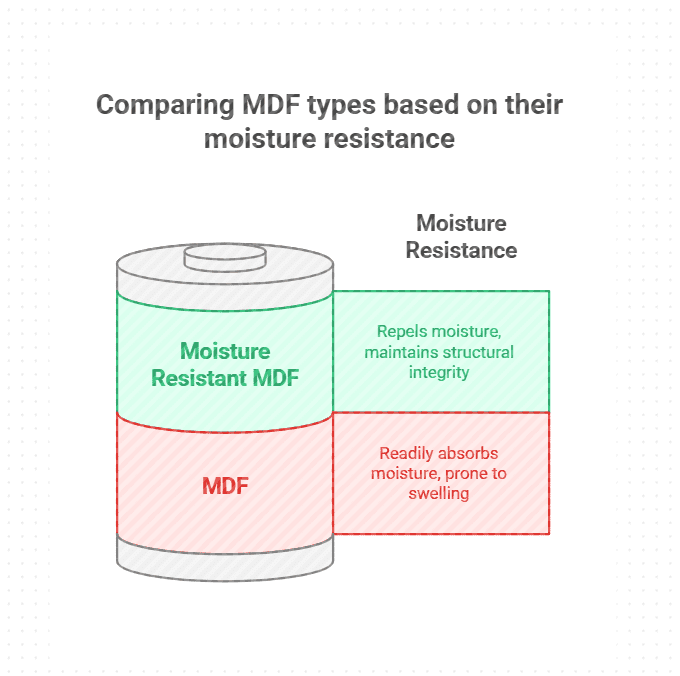
Moisture-resistant MDF (MR MDF, EN 622-5 Type MDF.H) uses a melamine-fortified resin and extra wax sizing so it resists swelling from humidity and occasional damp — it costs about 10–25% more than standard MDF. It is not waterproof: soak it or leave it in standing water and it will still swell. The green dye some brands add is a factory identification mark, not a certification requirement.
What Is MDF?
Best Moisture Meter Pick
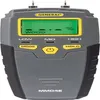
General Tools MMD4E Moisture Meter – $37.70
The water-drop edge test above tells you MDF has already absorbed moisture — a pin-type moisture meter catches it before that, which matters most for MR MDF installed in bathrooms or kitchens.
- Best for: Checking MDF cabinetry or trim for hidden moisture before it swells or delaminates
- Why we picked it: Pin-type readings work directly on MDF edges, matching the edge-test method covered above
- Main drawback: Pins leave tiny marks, so test on an inconspicuous edge or offcut
Compare more moisture meter options
 Option 1 Klein Tools ET140 Pinless Moisture Meter – $49.97
|
 Option 2 Mecurate Digital Pin Type Moisture Meter – $27.99
|
 Option 3 General Tools MMP100 Compact Moisture Meter – $29.75
|
As an Amazon Associate we earn from qualifying purchases.
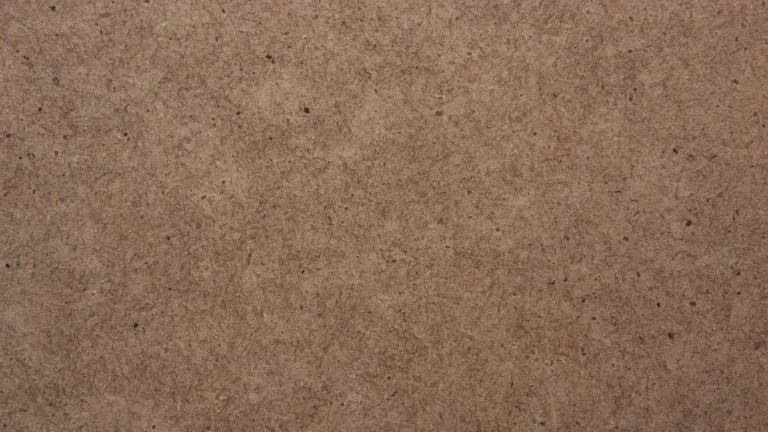
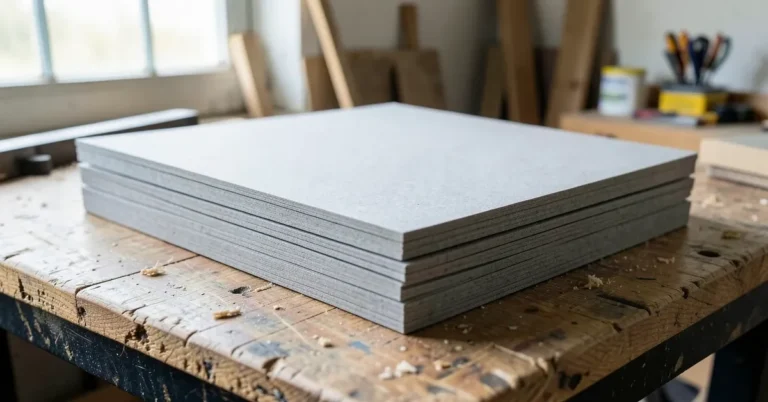
MDF (Medium Density Fiberboard) is engineered from wood fibers bonded with resin and wax under heat and pressure into dense, smooth sheets. Standard MDF uses urea-formaldehyde (UF) resin, which bonds well in dry interior conditions but breaks down when the fibers absorb water, causing the board to swell and lose strength. The core difference between MDF and particle board is fiber size, but the difference between standard and moisture-resistant MDF comes down entirely to which resin binds those fibers.
Composition and Manufacturing
Both board types start the same way: wood fibers are mixed with resin and wax, then pressed into sheets under heat. Standard MDF uses UF resin. MR MDF replaces it with melamine-urea-formaldehyde (MUF) resin and a higher paraffin wax content, which increases resistance to hydrolysis — the process where water breaks resin bonds apart. That single substitution is what separates the two boards; the wood fiber content is otherwise identical.
Common Uses
Standard MDF is used for furniture, cabinet boxes, shelving, and speaker enclosures in dry rooms. MR MDF is used for bathroom vanities, kitchen cabinet carcasses, window sills, and laundry room cabinetry — anywhere humidity or occasional splashing is routine, but not for surfaces that sit in standing water.
MDF vs Moisture-Resistant MDF: Resin, Swelling & Cost Compared
The table below compares the two boards on the specifics that actually change performance — not just “one resists water and one doesn’t.”
| Property | Standard MDF | Moisture-Resistant MDF |
|---|---|---|
| Resin type | Urea-formaldehyde (UF) | Melamine-urea-formaldehyde (MUF) |
| Residual thickness swell (after 24hr soak + drying) | Often 15%+, does not recover | Typically 2–5% under EN 622-5 limits |
| Governing standard | EN 622-5 Type MDF | EN 622-5 Type MDF.H |
| Typical cost premium | Baseline | 10–25% more |
| Best for | Dry indoor furniture, shelving | Bathrooms, kitchens, humid rooms (not standing water) |
📊 MR MDF (EN 622-5 Type MDF.H) typically shows 2–5% residual thickness swell after a 24-hour water immersion and drying cycle, versus 15% or more for standard MDF under the same test — Source: CNC Wood Workshop, moisture-resistant MDF technical guide
Is Moisture-Resistant MDF Always Green?
No. Green dye is a common manufacturer identification color for MR MDF, but EN 622-5:2009 — the European standard that actually defines moisture-resistant MDF — sets no requirement for board color. The tint on its own does nothing for water resistance; it is added purely so installers can tell the boards apart at a glance. Some manufacturers ship MR MDF in blue, gray, or no tint at all, so color alone is not proof a board meets the standard. For the full story on why the dye exists and how to sanity-check a board yourself, see our guide on why MDF is green.
How To Test If MDF Is Moisture Resistant
Since color is not a reliable indicator, use these checks before assuming a board is MR MDF:
- Check the edge stamp or supplier documentation: Legitimate MR MDF is sold with a spec sheet or edge stamp referencing EN 622-5 Type MDF.H (or the manufacturer’s equivalent moisture-resistant grade). Ask the supplier for this before buying if it is not marked.
- Run a water-drop test on an offcut: Place a few drops of water on a cut edge and let it sit for 10–15 minutes. Standard MDF visibly darkens and starts to swell at the edge; MR MDF absorbs more slowly and swells noticeably less over the same time.
- Compare weight and density: MR MDF is typically slightly denser than standard MDF of the same thickness due to the added resin and wax content — a same-size offcut that feels heavier than expected is a secondary clue, though not proof on its own.
What Standard Certifies Moisture-Resistant MDF?
EN 622-5 is the European Norm that defines MDF board types, including Type MDF.H — the moisture-resistant grade for humid conditions. It sets pass/fail limits for thickness swell and internal bond strength after a 24-hour water immersion test (methodology drawn from EN 317). In the US, ANSI A208.2 covers MDF grading, though moisture-resistant grades are more commonly marketed under brand names (Medex, Medite) than a single US-specific moisture code. Meeting EN 622-5 Type MDF.H does not mean the board is waterproof — only that it resists swelling from humidity and occasional dampness better than standard MDF.
Cost And Availability
MR MDF typically costs 10–25% more than standard MDF of the same thickness, because of the higher-cost MUF resin and additional wax sizing. Both types are widely stocked at lumberyards and home centers, though MR MDF selection is usually limited to a handful of common thicknesses (12mm, 18mm, 25mm) versus the fuller range available in standard MDF.
Environmental Considerations
Sustainability
Both board types are made from wood fibers sourced from managed forest waste and small-diameter trees, reducing pressure on larger timber. MR MDF’s higher resin content does not change its recyclability — offcuts from both types can be reprocessed into new board or used as biomass fuel where local facilities accept it.
Health and Safety Concerns
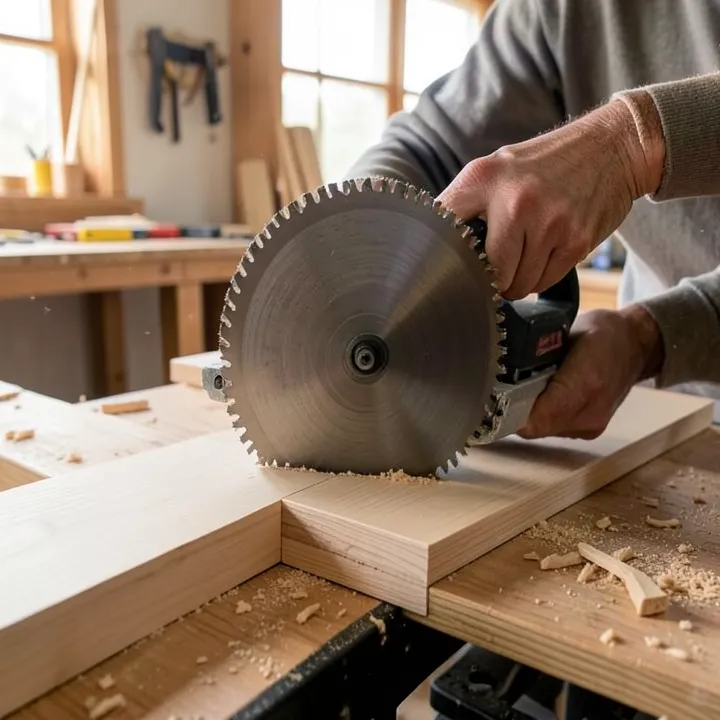
Both MDF types release formaldehyde during cutting and sanding, so seal cut edges before use and wear a NIOSH-rated dust mask, safety glasses, and gloves when machining either board. Work with dust extraction or in a ventilated space. MR MDF’s swelling resistance does not reduce dust hazard — the cutting and sanding precautions are identical for both types.
Choosing The Right Material
Use standard MDF for furniture, shelving, and cabinetry in consistently dry rooms — it costs less and machines identically to MR MDF. Choose MR MDF (EN 622-5 Type MDF.H) for bathroom vanities, kitchen cabinet boxes, laundry rooms, or window sills where humidity or occasional splashing is routine. Neither type belongs in direct water contact — for a shower surround or fully wet area, marine plywood or a water-rated composite is the safer choice.
In our own shop, an MR MDF bathroom vanity carcass with sealed, painted edges has held up through three years of daily shower steam with no visible swelling at the seams — the edge sealing mattered more than the board choice itself.
Frequently Asked Questions
Is Moisture-Resistant MDF Better Than Standard MDF?
For humid rooms, yes — MR MDF’s MUF resin keeps thickness swell to roughly 2–5% versus 15%+ for standard MDF under the same 24-hour water test. For dry rooms, standard MDF performs the same at a lower cost, so “better” depends entirely on the environment the board will sit in.
Can Moisture-Resistant MDF Get Wet?
It can handle humidity and brief splashing, but it is not waterproof. Standing water or prolonged soaking will still cause swelling over time. Seal all cut edges with primer or paint, and avoid using it anywhere it will sit in direct water contact, like a shower pan or under a leaking fixture.
Is Moisture-Resistant MDF Always Green?
No. Green is a common but not universal identification tint — EN 622-5:2009 sets no color requirement for MR MDF. Some manufacturers use blue, gray, or no tint. Confirm moisture resistance through the supplier’s spec sheet or edge stamp referencing EN 622-5 Type MDF.H, not board color alone.
How Do You Test If MDF Is Moisture Resistant?
Check the supplier’s documentation for an EN 622-5 Type MDF.H reference first. If unmarked, drop water on a cut offcut edge and watch for 10–15 minutes — standard MDF darkens and swells noticeably faster than MR MDF over that window. A pin-type moisture meter reading on the edge is a faster, more precise confirmation.
What Is The Difference Between MDF And P2 MDF?
P2 MDF is a load-bearing structural grade with lower formaldehyde emissions and higher internal bond strength, used mainly in flooring and structural panels rather than furniture. It is a separate classification from moisture resistance — a board can be P2-rated without being MR-rated, and vice versa.
Conclusion
Standard MDF and moisture-resistant MDF are made the same way except for one thing: the resin. MUF resin and extra wax sizing give MR MDF (EN 622-5 Type MDF.H) roughly a third of the swelling of standard MDF after water exposure, at a 10–25% cost premium. Green tinting helps identify it at a glance but is not a certification — check the spec sheet or run the water-drop edge test if you need to be sure. Neither board is a substitute for water-rated material in areas with standing water.
Sponsored / affiliate links. As an Amazon Associate I earn from qualifying purchases. I may earn additional commission from eligible campaigns.