Can Paint Be Stored in a Garage Local Climate Expert Advice
Many folks wonder if storing paint in their garage is okay, especially when they’re new to DIY projects or home improvement. It seems like a good place for extra cans, right? But there’s a catch, and it’s all about the weather outside. Don’t worry, though! We’ll break down exactly what you need to know about storing paint safely in your garage. Get ready for a simple guide that will help you keep your paint in tip-top shape.
Can Paint Be Stored in a Garage Local Climate Expert Advice
Many homeowners often find themselves with leftover paint after a project and wonder if their garage is a suitable storage spot. This question, “Can paint be stored in a garage?”, is common because garages are convenient and readily available spaces. However, the success of garage paint storage hinges significantly on local climate conditions, making it a challenging question for beginners to answer confidently.
This section will explore the fundamental reasons why garages are not always ideal for paint and introduce the critical role of climate in determining suitability, setting the stage for understanding the specific precautions and strategies needed for effective paint preservation in this common household space.
Garage Environment and Paint Quality
Garages, by their nature, are often unconditioned spaces, meaning they aren’t heated or cooled like the main living areas of a house. This lack of climate control exposes stored items, including paint, to the full spectrum of outdoor temperatures and humidity levels. For paint, these environmental fluctuations can have detrimental effects on its chemical composition and overall usability.
When temperatures drop significantly, especially below freezing, the water-based components in latex and acrylic paints can freeze. This freezing process causes the water and the binder (the part that makes the paint stick) to separate. Once separated, the paint loses its smooth consistency and its ability to adhere properly to surfaces. It might appear clumpy, curdled, or watery, and even if it seems to mix back together, its performance will be compromised. This can lead to uneven application, poor coverage, and a less durable finish.
Conversely, extreme heat can also damage paint. High temperatures can accelerate the drying process within the can, even if it’s sealed. This can cause the paint to become thick and gummy, making it difficult to stir and apply. In severe cases, the heat can cause the solvents in oil-based paints to evaporate more quickly, altering the paint’s formulation and reducing its shelf life. Over time, repeated exposure to these temperature extremes can render paint unusable, forcing you to discard it and purchase new supplies.
Temperature Extremes and Paint Deterioration
The chemical makeup of paint is sensitive to heat and cold. Latex paints, which are water-based, contain water as a primary ingredient. When water freezes, it expands. This expansion can physically break down the emulsion that holds the paint’s binders and pigments together. This is why frozen latex paint is often described as “ruined.” It might look okay after thawing, but the tiny particles that create a smooth film when the paint dries are permanently damaged.
Oil-based paints, while less susceptible to freezing damage than latex, are still affected by temperature. Extreme heat can cause the solvents in these paints to evaporate prematurely. This leads to a thicker paint that is harder to work with and may not dry properly or adhere well. The binders and pigments can also degrade faster under prolonged heat exposure.
Even moderate temperature swings can be problematic. Paint stored in a garage that experiences daily temperature fluctuations can undergo subtle changes over time. These changes might not be immediately obvious but can contribute to a shorter shelf life and reduced performance when you finally decide to use the paint. Consistent, moderate temperatures are key to preserving paint’s integrity.
Why Experts Advise Against Extreme Temperatures
Climate experts and paint manufacturers universally advise against storing paint in environments with extreme temperatures. They understand the science behind paint formulation and the irreversible damage that can occur when paint is exposed to freezing or excessive heat. The goal of paint storage is to maintain its original consistency and performance, allowing you to use it years down the line for touch-ups or future projects. Garages, particularly those in regions with harsh winters or scorching summers, make this goal incredibly difficult to achieve without special precautions.
The primary reason for this advice is that the cost of replacing ruined paint often outweighs the perceived convenience of garage storage. When paint freezes or bakes, it becomes a waste of money and resources. Protecting your paint investment means finding a more stable storage environment.
Humidity’s Hidden Impact on Paint Storage
While temperature is the most commonly discussed factor, humidity also plays a significant role in how paint degrades when stored in a garage. Garages can often be damp, especially during humid summer months or in areas with high rainfall.
High humidity levels can affect the paint in several ways. For oil-based paints, moisture can interfere with the drying and curing process, potentially leading to a weaker film and decreased durability. It can also promote the growth of mold and mildew on the paint surface or within the can, especially if the paint has been opened and used.
For water-based paints, prolonged exposure to high humidity can encourage rust on the metal lid and rim of the paint can. If the rust penetrates the can, it can contaminate the paint, leading to discoloration and an unpleasant odor. Furthermore, a rusty lid can compromise the seal, allowing air to enter and dry out the paint or let moisture in.
In some cases, excess moisture can also affect the adhesion properties of the paint. If you use paint that has been exposed to high humidity for an extended period, you might find that it doesn’t stick as well to the surface as it should, leading to peeling or flaking later on. Managing humidity is just as important as managing temperature for optimal paint storage.
Can Paint Be Stored in a Garage Local Climate Expert Advice on Freezing Weather
When winter rolls around and temperatures plummet, the question of storing paint in the garage becomes particularly urgent. Freezing temperatures pose a direct threat to the integrity of most types of paint. Understanding how freezing affects paint and what preventative measures can be taken is crucial for anyone living in a climate with harsh winters. This section directly addresses the concerns of cold weather storage and offers practical advice to safeguard your paint supply.
The Science of Paint Freezing
Most common household paints, particularly latex and acrylic paints, are water-based. Water is a primary component of their formulation, acting as a solvent and carrier for the binders and pigments. When water freezes, it expands. This expansion exerts pressure on the surrounding components of the paint.
This physical disruption breaks the emulsion, which is a stable mixture of water, binders, and other additives. The binder particles, which are essential for forming a durable film when the paint dries, can clump together or become permanently altered. Even if the paint appears to thaw and you can stir it, the microscopic structure has been damaged.
This damage means that the paint will likely not spread smoothly. It might appear lumpy, curdled, or grainy. When applied, it can result in an uneven finish, poor coverage, and a significantly reduced lifespan of the paint job. The paint may also fail to adhere properly to the surface, leading to premature chipping or peeling.
Recognizing Ruined Paint After Freezing
If paint has frozen, there are often tell-tale signs. After thawing, it may not mix back to its original smooth consistency. It might remain lumpy, separated, or develop a curdled appearance. Sometimes, you might see a watery layer on top, with a thick, clumpy layer at the bottom.
Even if it looks “okay” after stirring, its performance will be compromised. You might notice streaking when you try to apply it, or the color might not be as vibrant. The dried film might be more brittle and prone to cracking. It’s a difficult call to make, but if the paint shows significant signs of separation or has a strange texture after freezing and thawing, it’s often best to discard it. The risk of a poor paint job is too high.
Expert Recommendations for Cold Climates
Local climate experts strongly advise against storing paint in unheated garages during freezing weather. If your garage is prone to temperatures dropping below 32°F (0°C), it is not a suitable long-term storage location for paint.
The ideal storage location for paint is an interior space with a stable, moderate temperature. Think of a climate-controlled closet, a basement area that stays consistently cool but above freezing, or a temperature-controlled storage unit. These locations protect the paint from the damaging effects of extreme cold.
If you absolutely must store paint in a garage during winter, consider bringing it inside your home during the coldest periods. You can temporarily store it in a heated basement or closet and return it to the garage only when temperatures are consistently above freezing. This might be inconvenient, but it’s a far better option than letting the paint freeze.
Using Insulated Containers as a Last Resort
As a temporary measure or for short-term storage in a garage that experiences occasional dips below freezing, using insulated containers can help. You can place paint cans inside coolers or insulated bags, especially those designed for transporting food.
However, this is not a foolproof solution. In prolonged or extreme cold snaps, even insulated containers may not be enough to keep the paint above freezing. They offer some buffer but do not replace a climate-controlled environment. This method is best for protecting paint for a few days, not for an entire winter season.
Can Paint Be Stored in a Garage Local Climate Expert Advice on Hot Weather Storage
When the sun beats down and temperatures soar, garages can transform into ovens. Storing paint in such environments during hot weather presents a different set of challenges than cold. While paint may not freeze, extreme heat can still degrade its quality, leading to usability issues and wasted product. This section focuses on the impact of high temperatures and offers practical advice for keeping your paint in good condition during summer months.
The Impact of Heat on Paint Components
Paint is a complex mixture of pigments, binders, solvents, and additives. In oil-based paints, solvents are crucial for thinning the paint to the desired consistency and allowing it to spread smoothly. In latex paints, water serves this purpose. High temperatures can accelerate the evaporation of these solvents or water.
When solvents evaporate too quickly, the paint can become thick and gummy. This makes it difficult to stir and apply evenly. You might end up with brush marks or an inconsistent finish. The paint might also start to cure prematurely in the can, meaning the binders begin to harden.
Extreme heat can also degrade the binders themselves. Binders are the resins or polymers that hold the pigments together and allow the paint to adhere to the surface. If the binders break down due to heat, the paint’s ability to form a durable, cohesive film is compromised. This can lead to a weaker paint job that is more prone to cracking, peeling, or fading over time.
Signs of Heat-Damaged Paint
Paint that has been exposed to excessive heat may exhibit several signs. It might be noticeably thicker than usual, making it hard to stir. Even after thorough mixing, it may retain a pasty or gummy consistency. You might also notice a strong odor, as some components have evaporated or degraded.
When applied, heat-damaged paint may go on unevenly, leaving streaks or lap marks. The dried finish might be duller than expected, or the color might appear slightly off. In severe cases, the paint may not adhere properly, leading to future problems like cracking or peeling. It’s important to inspect paint carefully before use if it’s been stored in a hot environment.
Best Practices for Summer Paint Storage
To protect your paint from the heat, the best approach is to store it in a cool, stable environment. This means avoiding areas that experience extreme temperature fluctuations.
For most households, this means keeping paint indoors. A climate-controlled basement, a cool closet, or an interior room that doesn’t get direct sunlight are excellent options. The goal is to maintain a temperature that is consistently below 80°F (27°C) and above 50°F (10°C).
If you must store paint in a garage during the summer, try to find the coolest spot available. This is usually on the north side of the garage, away from direct sunlight, or in a corner that receives less solar heat. However, even the coolest spot in a hot garage can still reach damaging temperatures.
Using Paint Coolers or Insulated Storage
Similar to protecting paint from cold, insulated containers can offer some protection against heat. Storing paint cans in coolers or insulated bags can help buffer them against rapid temperature spikes.
These methods are most effective when used in conjunction with other strategies, such as storing them in the coolest part of the garage. However, like with cold, they are not a perfect solution for prolonged exposure to extreme heat. A garage that consistently reaches over 90°F (32°C) will eventually overwhelm even insulated containers.
Maximizing Paint Shelf Life in Less-Than-Ideal Conditions
Even if your garage is the only viable storage option, there are steps you can take to minimize the damage caused by temperature swings and humidity. While not as effective as climate-controlled storage, these techniques can help extend the life of your paint and improve its usability. This section provides actionable tips for homeowners who need to store paint in a garage, focusing on practical solutions to mitigate environmental risks.
Properly Sealing Paint Cans
The first and most crucial step in preserving paint is ensuring the can is sealed properly. After using paint, clean the rim of the can and the lid thoroughly. Any dried paint or debris on the rim can prevent the lid from creating an airtight seal.
Once clean, place the lid back on the can. Instead of just pressing it down, use a rubber mallet or a block of wood and a hammer to tap the lid firmly around the edges. This creates a tight seal that prevents air and moisture from entering the can. An airtight seal is critical for preventing paint from drying out and for keeping contaminants out.
For an extra layer of protection, especially if you suspect the lid isn’t creating a perfect seal, you can cover the lid with a layer of plastic wrap before hammering it down. This adds another barrier against air and moisture.
Storing Paint Upright
Always store paint cans upright. This might seem obvious, but it’s worth emphasizing. Storing cans on their sides can lead to paint leaking around the lid, even if it was sealed properly. It also exposes more of the lid surface area to potential rust and damage, which can compromise the seal over time.
Storing upright ensures that the paint inside is contained and that the lid remains protected from unnecessary moisture or physical damage. It also makes it easier to handle and access the cans when you need them.
Avoiding Direct Sunlight and Ground Contact
Garages often experience temperature fluctuations due to direct sunlight and proximity to the concrete floor. Position paint cans away from windows or doors that receive direct sunlight, as this can significantly heat up the cans.
Also, avoid placing paint cans directly on a concrete floor. Concrete can absorb moisture and emit it into the air, increasing humidity. It can also be colder than the surrounding air, especially in winter. Elevating paint cans on shelves or wooden pallets can help mitigate these effects.
Using Airtight Storage Containers
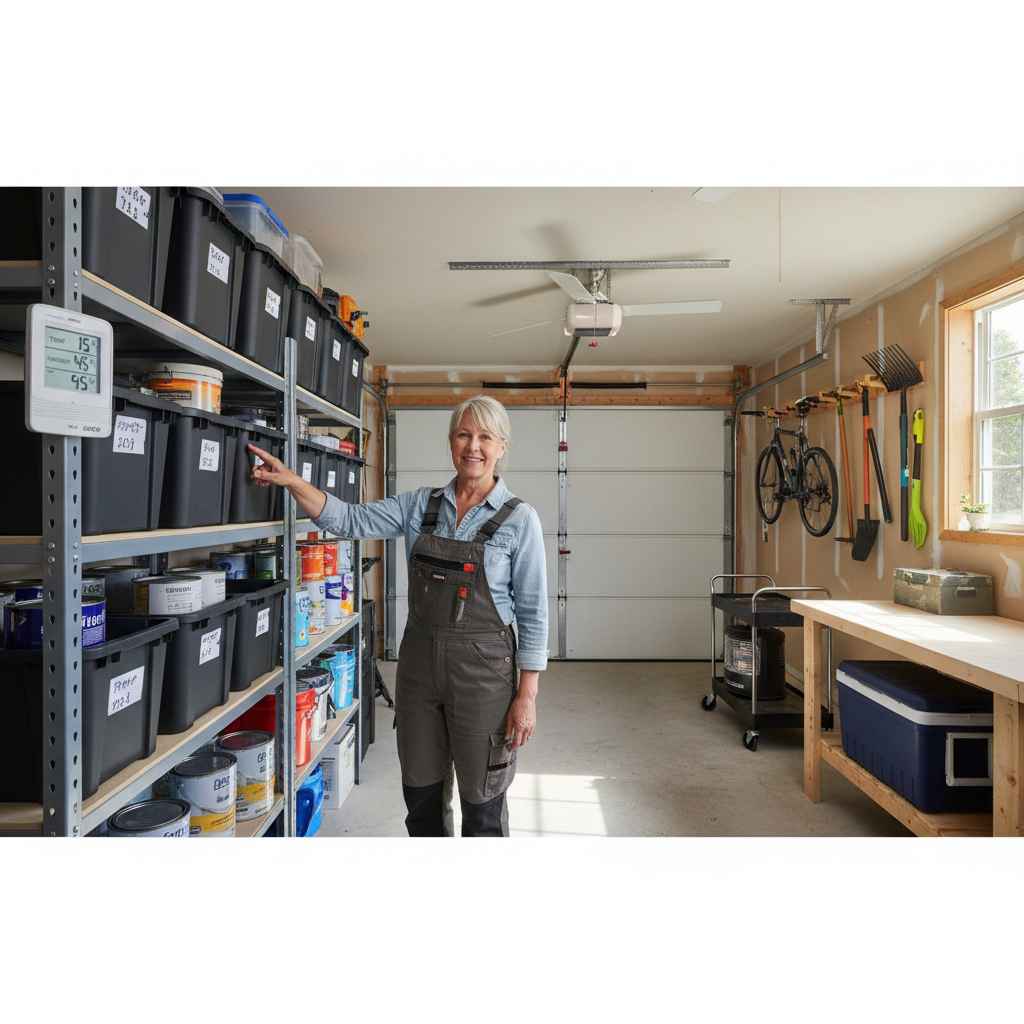
For an extra layer of protection, consider storing paint cans inside larger, airtight plastic bins. These bins can help protect the cans from dust, moisture, and minor impacts. If the cans are stored within a bin, any minor leaks will also be contained.
These bins also offer a level of insulation, providing a buffer against rapid temperature changes. When combined with a good seal on the paint can itself, this can make a noticeable difference in preserving the paint’s quality over time.
Labeling and Inventory Management
Keep track of your paint inventory. Label each can with the color, sheen, and date of purchase or opening. This helps you know what you have and how old it is. It also makes it easier to prioritize using older paint first.
A simple inventory list kept near the paint storage area can be very helpful. This way, you know exactly what colors you have on hand without having to pull out every can. It also helps you avoid buying duplicates of colors you already own.
The Role of Local Climate in Your Garage Paint Storage Decisions
Local climate is the single most critical factor determining whether your garage is a viable storage space for paint. Understanding your specific climate’s patterns – its temperature extremes, humidity levels, and seasonal changes – is key to making informed decisions about paint storage. This section synthesizes previous points by emphasizing the direct link between your geographic location and the success of storing paint in a garage.
Assessing Your Local Climate
Begin by honestly assessing your local climate. Does your region experience harsh winters with prolonged periods of freezing temperatures? Or are summers characterized by intense heat and high humidity? Perhaps you live in a more temperate climate with mild seasons, where garage storage might be less problematic.
Consider the typical range of temperatures your garage experiences throughout the year. If temperatures frequently drop below 32°F (0°C) or rise above 80°F (27°C), your garage is likely not an ideal storage environment for paint without significant protective measures.
Regional Differences and Paint Viability
The viability of garage paint storage varies dramatically by region.
In arid desert climates with hot summers and mild winters, heat is the primary concern. Paint can bake and degrade. In tropical climates with high humidity year-round, moisture and potential mold growth become significant issues. In regions with distinct, severe seasons, both freezing and extreme heat can damage paint.
Even within a single country, climate can differ drastically. A garage in coastal Florida will have different storage challenges than one in northern Minnesota. This is why local climate expert advice is so important.
When Garage Storage is Truly Risky
Garage storage is generally considered risky for paint if any of the following conditions are consistently met:
Temperatures regularly drop below 32°F (0°C) for extended periods.
Temperatures regularly exceed 80°F (27°C) for extended periods.
Humidity levels are consistently very high, leading to condensation and potential mold.
The garage experiences rapid and extreme temperature fluctuations daily.
In these scenarios, the paint is subjected to stresses that can irreversibly damage its chemical structure, rendering it unusable.
Finding a Compromise for Garage Storage
If your climate is not extreme, and your garage is your only option, implementing the protective measures discussed previously becomes essential. Proper sealing, upright storage, insulation, and avoiding direct sunlight can significantly help.
However, it’s important to be realistic. Even with precautions, paint stored in a garage in a challenging climate will likely have a shorter shelf life than paint stored in a temperature-controlled interior space. Always inspect paint carefully before use and be prepared for the possibility that it may no longer be in optimal condition.
The Definitive Answer: Climate is Key
So, can paint be stored in a garage? The definitive answer is: it depends entirely on your local climate. For many, the answer is a cautious “yes, with significant precautions,” while for others in extreme climates, the answer is a firm “no.” Prioritizing the longevity and usability of your paint means understanding your climate and taking appropriate steps to protect your investment.
Frequently Asked Questions
Question: What is the ideal temperature range for storing paint
Answer: The ideal temperature range for storing paint is generally between 50°F and 80°F (10°C to 27°C). This range ensures that the paint’s components remain stable and do not degrade due to extreme heat or cold.
Question: Can I store latex paint in a garage
Answer: Storing latex paint in a garage is risky, especially in climates with freezing temperatures. Latex paint contains water, which can freeze and permanently damage the paint’s consistency and performance. If temperatures in your garage consistently drop below freezing, it is not advisable.
Question: How do I know if my paint has gone bad from improper storage
Answer: Signs of bad paint include a lumpy or curdled texture, separation that won’t mix back together, a foul odor, or dried-out, hardened paint. If the paint has frozen, it might appear clumpy or watery after thawing. If it has baked in heat, it may be overly thick and gummy.
Question: What are the best alternatives to garage paint storage
Answer: The best alternatives to garage paint storage are climate-controlled interior spaces. This includes basements that stay cool but above freezing, interior closets, or dedicated storage rooms that maintain a stable temperature year-round.
Question: How long can paint typically last if stored properly
Answer: If stored properly in ideal conditions, unopened cans of latex paint can last for about 10 years, and oil-based paints can last for about 15 years. However, opened cans will have a shorter shelf life, typically 2-5 years depending on how well they are resealed and stored.
Conclusion
Storing paint in your garage is often a question of climate. Extreme heat and freezing temperatures can ruin paint, so assess your local weather. Always seal cans tightly, store them upright, and keep them away from direct sun. For many, climate-controlled interiors are best, but with careful protection, garage storage might work in milder regions. Protect your paint to ensure it’s ready when you need it.
Sponsored / affiliate links. As an Amazon Associate I earn from qualifying purchases. I may earn additional commission from eligible campaigns.