Can Spray Paint Expire? How To Tell Before You Use It
That feeling of frustration is real. You spent money on the paint, and now your project is on hold. This often leads to the question: can spray paint actually go bad?
The short answer is yes, it can. But understanding how and why is key to avoiding wasted paint and project delays.
In this guide, we’ll dive deep into the life of a spray paint can. We’ll explore the signs that show your paint is past its prime. We’ll also cover how to store it properly so it lasts longer.
You’ll learn to trust your eyes, ears, and even your nose to make the best choice before you spray.
Spray paint can expire or go bad over time, especially if not stored correctly. Signs of expired paint include clumping, separation, foul odors, or a lack of pressure. Proper storage can extend its usable life, but eventually, it will become unusable.
Understanding Spray Paint Shelf Life
Spray paint isn’t like fine wine; it doesn’t get better with age. Instead, its components can break down. This process happens even in a sealed can.
The solvents inside can evaporate slowly. The pigments and binders can settle. The propellant can lose its strength.
Think of it like a soda can. If it sits for a very long time, the fizz might go out of it. The taste might change.
Spray paint is similar, but the effects are more noticeable. They impact how the paint sprays and how it looks on your project.
Several factors influence how long a can of spray paint lasts. The type of paint matters. For instance, enamel paints often last longer than latex ones.
How you store the can is a big deal too. Extreme temperatures and humidity can speed up the aging process.
Even the quality of the paint plays a role. Higher-quality paints might have better sealants. This helps keep the ingredients mixed and stable for longer periods.
But no matter how good the paint is, it won’t last forever. It’s important to know the signs that it’s time to say goodbye to a can.
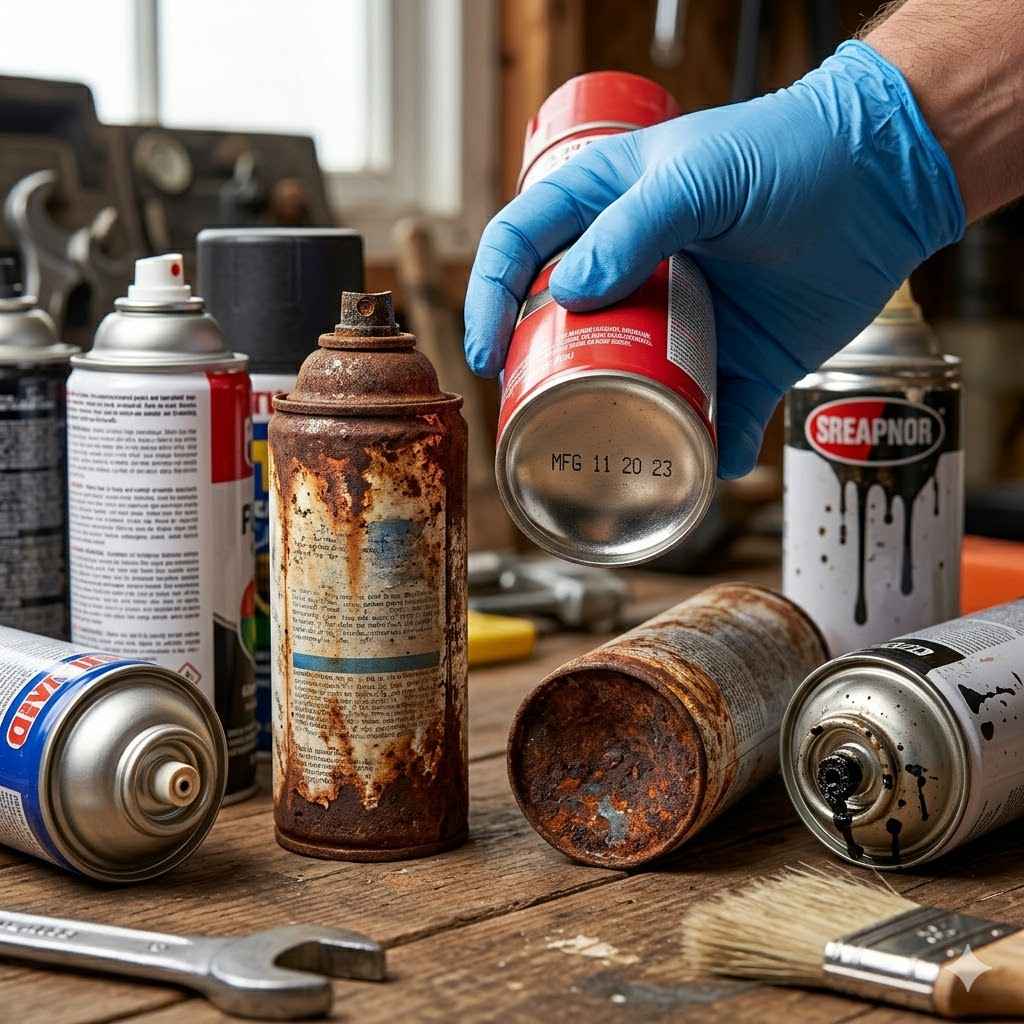
Signs Your Spray Paint Has Gone Bad
Spotting bad spray paint is usually pretty straightforward. Your senses will give you clues. You don’t need to be an expert to notice the differences.
Let’s break down the most common indicators that a can is no longer good.
Visual Clues: What to Look For
When you first pick up a can, give it a good look. Is there rust on the outside? Is the nozzle clogged already?
These are bad signs. Rust can mean moisture got inside the can. A clogged nozzle means old paint has dried and blocked the opening.
Next, shake the can. You should hear the mixing ball (or balls) rattle around inside. This is a good sign.
If you don’t hear it, or if it sounds dull and muffled, the paint inside might be too thick or clumpy to mix properly. This can happen if the paint has dried out a bit.
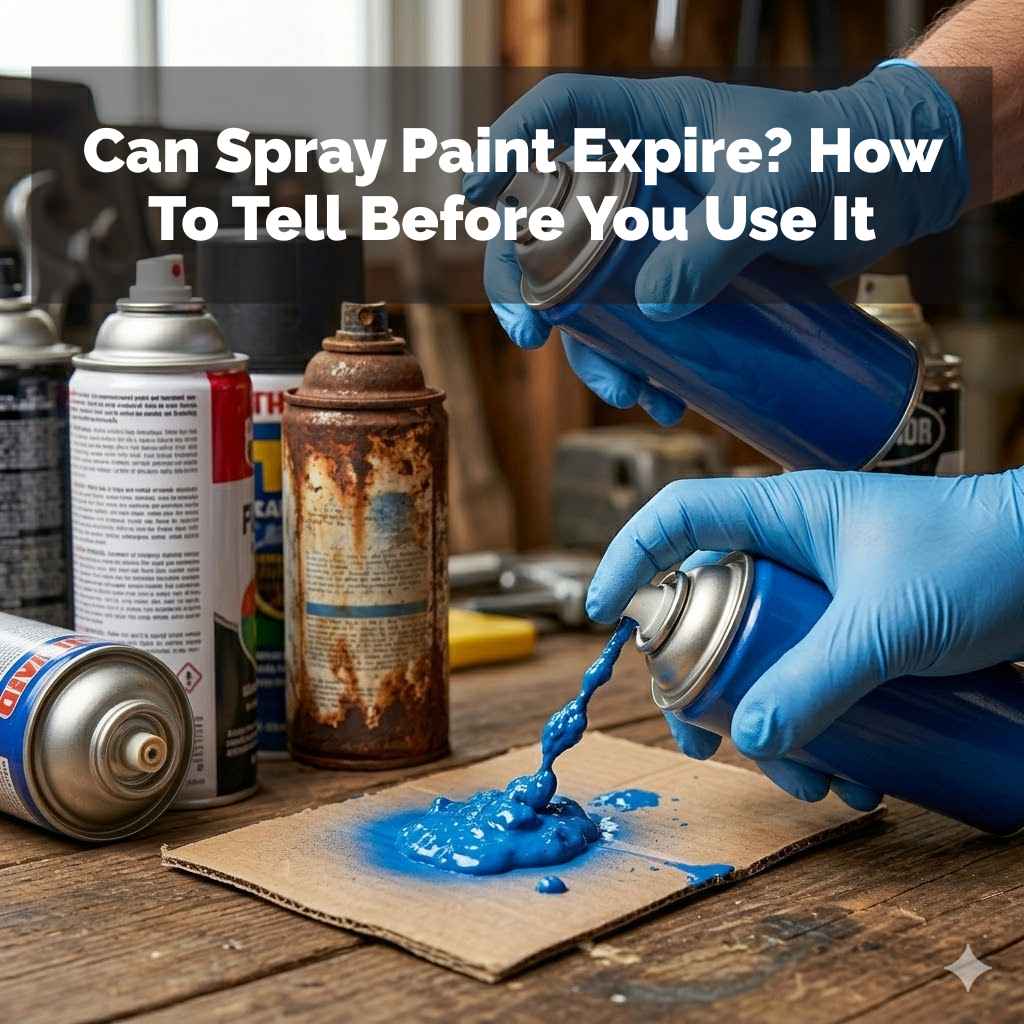
Before you spray, try a test spray on scrap material. Watch how the paint comes out. Does it sputter?
Does it come out in thick globs instead of a fine mist? These are clear signals that the paint is no longer good. You might also see streaks or uneven coverage.
Look at the color too. Has it changed? Sometimes, pigments can degrade.
This might make the color look faded or different from what’s on the label. This is less common, but it can happen with very old paint.
Auditory Clues: The Sound of Old Paint
The sound of the mixing ball is your first audio clue. A healthy can has a distinct, sharp rattle. This ball is made of metal or glass.
It moves freely inside the can. Its job is to break up any settled paint. It mixes the paint thoroughly when you shake the can.
If the rattle is weak, or absent, it suggests the paint inside is hardened. It might be stuck to the sides of the can. Or the ball itself could be stuck.
This means the paint won’t mix well, if at all. You’ll get poor results if you try to use it.
When you press the nozzle, listen to the spray. A good can will have a consistent, hissing sound. If it sputters or makes a weak, airy noise, the propellant might be gone.
This means there isn’t enough pressure to push the paint out effectively.
Olfactory Clues: The Smell Test
Spray paint has a strong smell. That’s the solvents. They are what help the paint flow and dry.
If a can smells much stronger than usual, or if it has a sour or rotten smell, it’s a definite sign of spoilage. This is usually due to chemical breakdown inside the can.
Sometimes, if paint has been exposed to moisture, it can develop a mildew or moldy odor. This is rare in a sealed can, but it can happen if the seal is compromised. A bad smell is a strong indicator that the paint is not safe to use.
It could also mean the fumes will be more harmful.
Performance Clues: How It Sprays
This is the most telling sign. When you spray, does it act like paint should? Or does it act like something else entirely?
Clumpy, splotchy paint is a giveaway. It’s like trying to spray mud instead of fine mist.
The spray pattern should be even. If it’s uneven, with thick drips and thin spots, the paint is not mixed properly. The nozzle might also be partially clogged, even if you just opened it.
This points to old, degraded paint.
If the paint doesn’t stick well, or if it beads up on the surface, it’s also a bad sign. The chemical balance of the paint has likely changed. This affects its adhesion properties.
Your project will end up looking messy and unprofessional.
Quick Check: The Ball Test
What it is: Inside most spray cans is a metal or glass ball. This is the mixer ball.
Why it matters: When you shake the can, the ball moves. It breaks up settled paint. This keeps the paint smooth and sprayable.
How to check: Shake the can vigorously for at least 30 seconds. Listen carefully. Do you hear a clear, sharp rattle?
If yes, the ball is loose. The paint might still be good. If you hear little to no rattle, or a dull thud, the ball might be stuck.
The paint is likely bad.
Why Does Spray Paint Expire?
It seems strange that a sealed metal can could go bad. But several things happen over time that degrade the paint. Understanding these helps you appreciate why storage is so important.
It also explains the signs you see.
Evaporation of Solvents
Spray paint contains solvents. These are liquids that dissolve the binders and pigments. They also help the paint flow smoothly from the can.
And they help it dry evenly on the surface. Over time, even through tiny imperfections in the can’s seal, these solvents can slowly evaporate.
When solvents evaporate, the paint becomes thicker. It can start to dry out inside the can. This makes it harder to spray.
It also causes the paint to clump or become uneven. It’s like leaving a can of regular paint open too long.
Settling of Pigments and Binders
The color in spray paint comes from pigments. The substance that holds the color and makes it stick to the surface is the binder. These are usually heavy particles.
Over time, gravity pulls them to the bottom of the can. They can form a hard layer.
The mixer ball helps to re-suspend these settled particles when you shake the can. But if the paint is very old or has been sitting for years, this layer can become too thick. The ball might not be able to break it up effectively.
This leads to clumpy, uneven paint.
Degradation of Propellant
The spray action comes from a propellant. This is a gas under pressure. It pushes the paint mixture out of the can when you press the nozzle.
Propellants are also susceptible to degradation over long periods. They can slowly leak out or break down chemically.
If the propellant degrades, the can will have less pressure. When you spray, it won’t come out with force. You might get a weak dribble or just air.
This means the paint is essentially unusable, even if the paint itself is still okay.
Chemical Reactions and Separation
The ingredients in spray paint are chemicals. Over time, these chemicals can react with each other. This can cause them to separate.
The liquids might split from the solids. Or the paint might break down into its basic components. This is why some old paint can look oily or have weird layers.
These chemical changes alter the paint’s properties. They affect its flow, its adhesion, and its finish. Often, these reactions lead to the bad smells you might notice.
It’s a sign that the paint is no longer in its intended state.
Contrast Matrix: Old Paint vs. Good Paint
| Sign of Old Paint | Sign of Good Paint |
| Dull, no rattle sound | Clear, sharp rattle sound |
| Thick, gloppy spray | Fine, even mist spray |
| Paint clumps or streaks | Smooth, consistent flow |
| Weak pressure, sputtering | Strong, steady spray |
| Sour or rotten smell | Strong solvent smell (normal) |
| Rust on can, clogged nozzle | Clean can, clear nozzle |
Storing Spray Paint for Longevity
The good news is you can make your spray paint last much longer. Proper storage is the biggest factor. It helps slow down the processes that cause paint to go bad.
Here’s how to keep your cans in good shape.
Ideal Storage Conditions
The best place for spray paint is a cool, dry spot. Think of a closet inside your home, or a workbench in a climate-controlled garage. The temperature should be stable.
It should not get too hot or too cold.
Temperature extremes are the enemy. High heat can cause the propellant to expand. This could potentially lead to a can bursting, though this is rare.
More commonly, heat speeds up the chemical reactions inside. It makes the solvents evaporate faster.
Freezing temperatures are also bad. They can cause the paint to separate. Sometimes, water in the paint can freeze and expand, damaging the can and its contents.
Once paint has been frozen, it rarely sprays well again.
Humidity is also something to avoid. Moisture can lead to rust on the outside of the can. If rust gets bad enough, it can compromise the seal.
This lets air and moisture inside, leading to paint degradation.
Where to Store Your Cans
Indoors is best. A climate-controlled basement or an interior closet is ideal. If you must store them in a garage or shed, try to choose one that doesn’t experience extreme temperature swings.
Insulated garages are better than uninsulated ones.
Never store them in direct sunlight. Sun exposure quickly heats up the cans. This is a recipe for disaster.
Also, avoid storing them near heat sources like furnaces or water heaters.
Keep cans upright. This prevents the propellant and solvents from leaking out around the nozzle over time. It also helps keep the mixer ball in the right position.
What to Avoid
Avoid the trunk of your car. Car trunks get incredibly hot in the summer and cold in the winter. This is one of the worst places to store spray paint.
You’ll significantly shorten its lifespan.
Don’t store them near open flames or sparks. Spray paint cans are under pressure. They contain flammable solvents.
They are a fire hazard. This is a safety issue as much as a preservation one.
Don’t leave them outside. Rain, snow, and extreme temperatures will ruin them. Even a covered porch can get too hot or too cold.
Storage Tips: Quick Scan
- Location: Cool, dry, stable temperature indoors.
- Avoid: Extreme heat, freezing, high humidity, direct sunlight.
- Garage storage: Only if climate-controlled or insulated.
- Position: Store cans upright.
- Safety: Keep away from heat and sparks.
How Long Does Spray Paint Really Last?
This is the million-dollar question! The truth is, there’s no single, definitive answer. It depends on the factors we’ve discussed.
But we can give you some general guidelines.
Most manufacturers suggest a shelf life of around 2 to 5 years from the date of manufacture. You can sometimes find a date code printed on the can. Look for stamps or etched numbers near the rim or on the bottom.
You might need to do some online research to decode specific brand date formats.
However, this is just a guideline. I’ve personally used cans of spray paint that were older than 5 years and they worked perfectly fine. This usually happened when the paint was stored in ideal conditions.
It was kept cool, dry, and stable.
Conversely, I’ve also had cans go bad much sooner. Sometimes, a can might sit in a hot warehouse before it even reaches the store. Or maybe it was left in a car during a particularly hot summer day at the hardware store itself.
These factors can shorten its usable life.
The best advice is to always check the can before you use it. Trust your senses. If it shows any of the signs of spoilage we discussed, it’s better to be safe than sorry.
Replacing a bad can is much cheaper than ruining a project or having to do rework.
Shelf Life Factors
Paint Type: Some formulas last longer.
Storage Conditions: Cool, dry, stable temps are key.
Can Seal: A good seal prevents evaporation.
Manufacturer Quality: Better seals and ingredients may last longer.
Handling: Extreme heat/cold exposure shortens life.
Real-World Scenarios and What to Do
Let’s look at some common situations you might encounter. Knowing what to do helps you make quick decisions.
Scenario 1: The Forgotten Can in the Shed
You find a can of red spray paint in the shed. It looks a bit dusty. You vaguely remember buying it years ago for a garden planter.
You shake it. You hear a faint rattle, but it’s not as sharp as you’d expect.
What to do: Don’t assume it’s bad. First, inspect the can. Is there rust?
Is the nozzle clean? If it looks okay, shake it for a solid minute. Then, try a test spray on cardboard.
If it sprays smoothly and evenly, you’re probably good to go. If it sputters, clumps, or smells off, it’s time to toss it.
Scenario 2: The Slightly Bulging Can
You bought a can of primer last week. You notice the bottom seems a little rounded, or the top seam looks a bit pushed out. It wasn’t like this when you bought it.
What to do: Do not use or even shake this can. A bulging can indicates excessive pressure buildup inside. This is a serious safety hazard. The can could explode.
Take it back to the store for a refund or dispose of it safely according to local hazardous waste guidelines. Never puncture or incinerate a bulging can.
Scenario 3: The Paint That Won’t Spray
You’ve shaken this can for what feels like forever. You press the nozzle. Nothing comes out except a weak puff of air.
The rattle inside is also very weak.
What to do: The propellant is likely gone, or the paint is too thick and has blocked the mechanism. Try cleaning the nozzle first. Soak it in warm, soapy water or a solvent like acetone for a few minutes.
If that doesn’t work, the can is likely finished. You can try to carefully cut the bottom off to get the paint out for other uses (like brushing), but it’s often more trouble than it’s worth.
Scenario 4: The Clogged Nozzle
You’ve used half the can. You put the cap back on and set it aside for a few hours. Now, when you try to spray again, only tiny dots come out or nothing at all.
What to do: This is common. The paint dries in the nozzle tip. Try these tricks:
- Shake it hard again.
- Turn the can upside down and spray for a few seconds. This clears paint from the nozzle using the propellant.
- Use a thin wire or pin. Carefully poke it into the nozzle hole to dislodge dried paint.
Be gentle!
- Clean the nozzle tip. Remove the nozzle and soak it in acetone or warm, soapy water. Then try to rinse and dry it thoroughly.
If the nozzle is permanently clogged, you can buy replacement spray nozzles online or at hardware stores. They often spray better than the original.
When to Toss a Can
Safety First: Bulging cans are dangerous.
No Rattle: If the mixer ball is stuck.
Bad Smell: Foul odors mean spoilage.
Terrible Spray: Globs, drips, or no spray.
Rust Damage: Heavy rust that compromises the seal.
What Happens If You Use Old Spray Paint?
So, what’s the worst that can happen if you decide to use that questionable can of spray paint? Usually, it’s just a disappointing result. But sometimes, it can lead to more problems.
The most common outcome is a poor finish. The paint might spray unevenly. It could be clumpy, streaky, or have visible drips.
This means your project won’t look smooth or professional. You might end up with an unsightly texture or inconsistent color.
Adhesion issues are also common. Old paint might not stick to the surface as well as fresh paint. You could find it peels or flakes off later.
This is especially problematic for outdoor projects or items that get a lot of wear and tear.
In rare cases, using very old paint could lead to unexpected chemical reactions on the surface. This might damage the material you’re trying to paint. For instance, it could etch plastic or react strangely with certain metals.
And then there’s the safety aspect. While less common, if the paint has truly degraded, the fumes might be more potent or harmful. Always spray in a well-ventilated area, regardless of the paint’s age.
If a can smells particularly foul, it’s best to err on the side of caution and discard it.
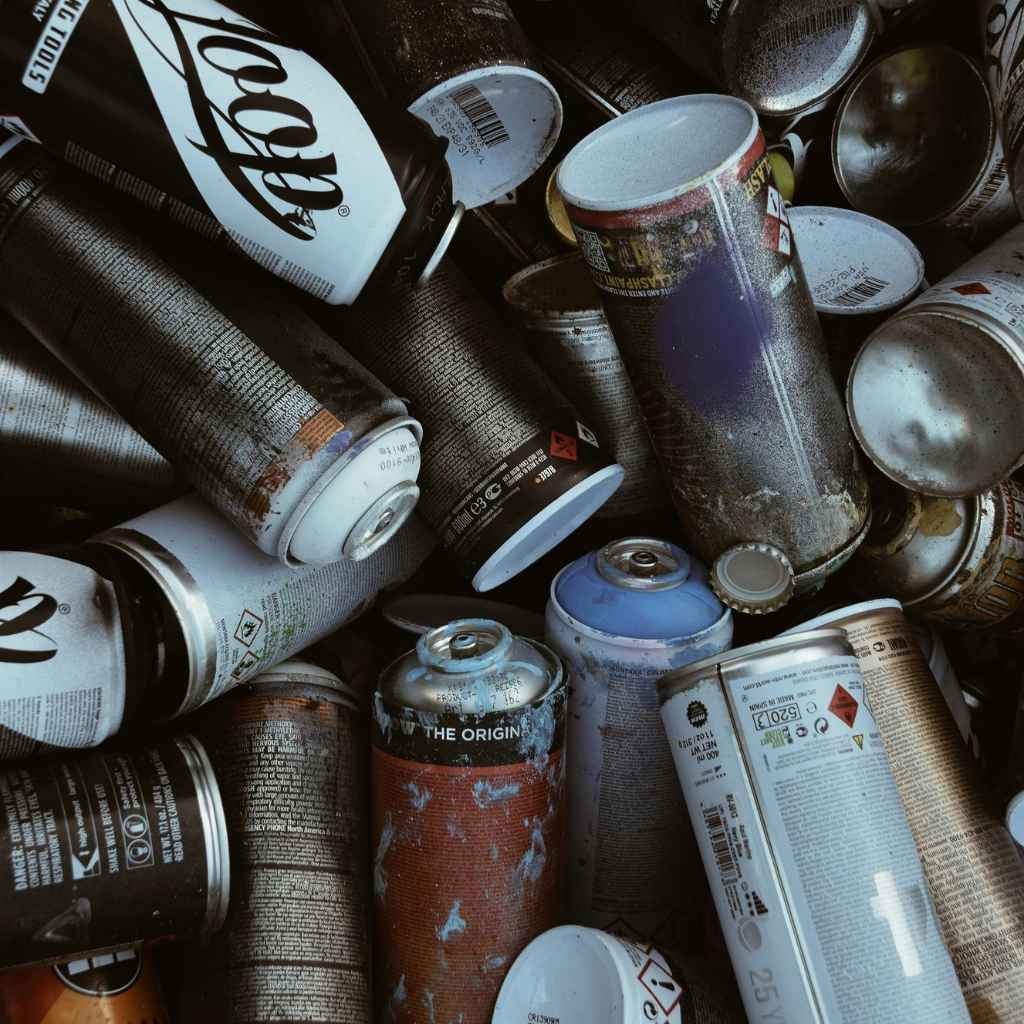
Recycling and Disposing of Old Spray Paint
You can’t just toss old spray paint cans in the regular trash. They are considered hazardous waste. Here’s how to dispose of them properly.
Empty Cans: If a can is completely empty and dry, some local recycling programs accept them. Check with your local waste management authority. You might need to remove the plastic nozzle first.
Make sure there’s absolutely no paint or propellant left inside.
Partially Full Cans: These are trickier. Many areas have household hazardous waste (HHW) collection sites or events. These are specifically designed to take items like old paint, solvents, and aerosols.
You can usually find information on your city or county’s public works or sanitation department website.
Never puncture a can that still has pressure or liquid inside. This can cause the contents to spray out unexpectedly or even lead to a small explosion.
If you can’t find an HHW facility, you might be able to dry out the paint. This is best done by leaving the can in a safe, well-ventilated outdoor area away from children and pets. You can also try to spray out any remaining contents onto cardboard.
Once the can is completely empty and dry, some areas might allow it in the trash, but always check local regulations first.
Disposal Checklist
Check Local Rules: Always the first step.
HHW Facility: Best option for partially full cans.
Empty Cans: Check if recyclable in your area.
No Puncturing: Never puncture pressurized cans.
Ventilated Disposal: Dry out completely in a safe outdoor spot if needed.
Frequently Asked Questions About Spray Paint Expiration
How long can I expect a can of spray paint to last?
Most manufacturers suggest a shelf life of about 2 to 5 years. However, with proper storage in a cool, dry, stable environment, some cans can last much longer, even up to 10 years. It really depends on the storage conditions and the quality of the paint.
What does it mean if the spray paint is separating?
Separation means the different components of the paint, like pigments, binders, and solvents, have broken apart. This is a common sign that the paint is old. The mixer ball might not be able to re-combine them properly.
This results in an uneven spray and poor coverage.
Can I revive old, clumpy spray paint?
Sometimes, you can improve clumpy paint by shaking it very vigorously for several minutes. If the mixer ball is loose, it might break up the clumps. However, if the paint has hardened significantly or if the mixer ball is stuck, it’s usually not possible to revive it.
A test spray will show if it’s improved.
Does the type of spray paint affect its shelf life?
Yes, the type of paint can influence its shelf life. For example, oil-based enamel paints often have a longer shelf life than water-based latex paints. Specialty paints like metallic or fluorescent paints might also have different expiration timelines.
Always check the manufacturer’s recommendations if possible.
What is the best way to clean a clogged spray paint nozzle?
To clean a clogged nozzle, try turning the can upside down and spraying for a few seconds to clear the tip. If that doesn’t work, remove the nozzle and soak it in warm, soapy water or acetone for about 10-15 minutes. Gently try to poke a thin wire through the hole and rinse thoroughly before drying.
You can also buy replacement nozzles.
Should I worry about the expiration date on spray paint?
It’s wise to pay attention to the expiration date or code on the can. While paint might still be usable slightly past its date, using very old paint increases the risk of poor performance, unsatisfactory results, and potential safety issues. It’s always best to test it first or buy fresh paint for important projects.
Final Thoughts on Spray Paint Longevity
Spray paint is a fantastic tool for quick and easy projects. But like any product, it has a lifespan. Recognizing the signs of expired paint is crucial.
It saves you time, money, and a lot of frustration.
By understanding how paint degrades and by storing your cans properly, you can extend their usability significantly. Always trust your senses – sight, sound, and smell – before you spray. And when in doubt, it’s better to invest in a new can.
Happy painting!
Sponsored / affiliate links. As an Amazon Associate I earn from qualifying purchases. I may earn additional commission from eligible campaigns.

![12.25 Oz Clear Brushing Lacquer Spray Gloss [Set of 6]](https://m.media-amazon.com/images/I/41y-ntITa2L._SL500_.jpg)