Where to Buy Plywood in Fort Worth, TX (2026 Guide)
Two real, verified plywood suppliers serve Fort Worth: Plywood Company of Fort Worth and Fort Worth Lumber Company. Both stock construction-grade and cabinet-grade sheets and both sell to walk-in customers, not just contractors. Below is what each one carries, what to ask before you drive out, and how to pick the right grade for your project.
Where to Buy Plywood in Fort Worth
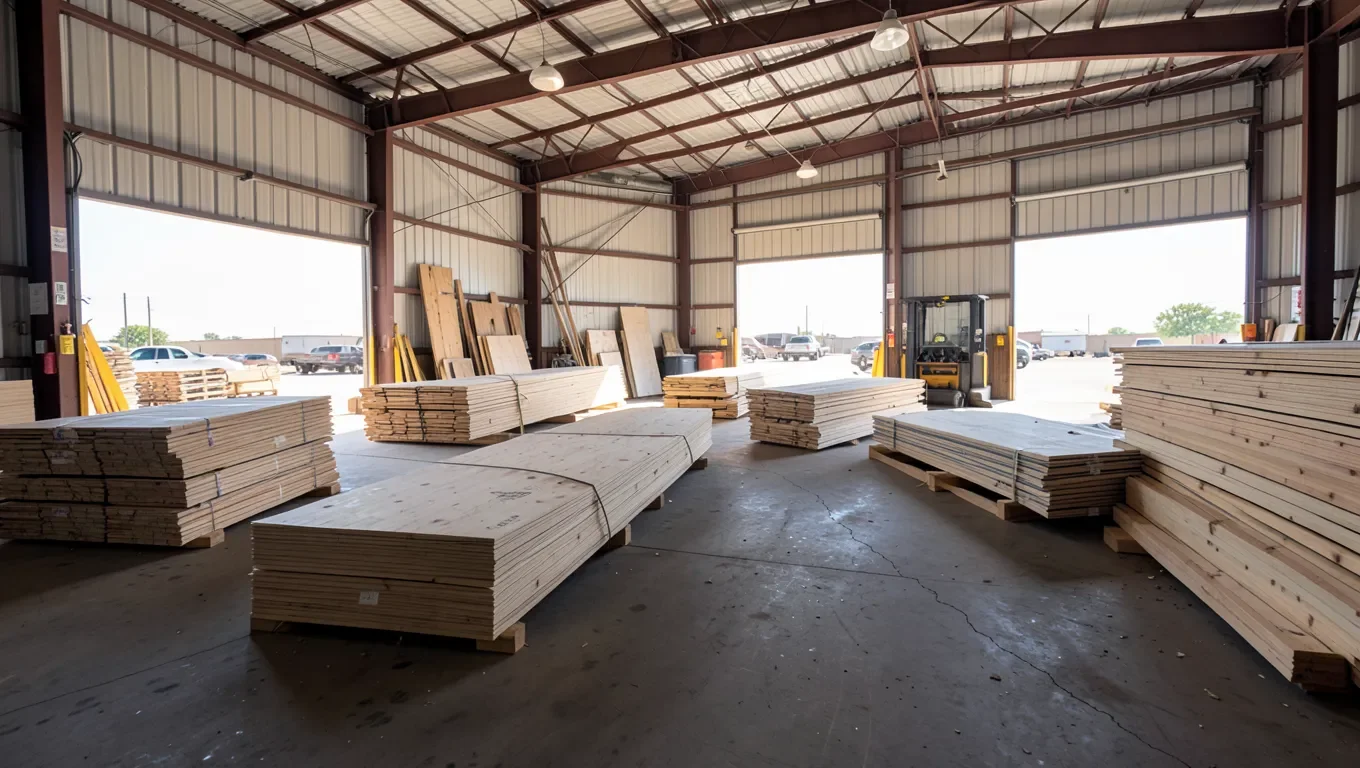
Fort Worth has two established, independent lumberyards that stock a real range of plywood — not just the handful of construction grades you’ll find at a big-box store. Both have been verified against public business listings and their own sites as of 2026.
1. Plywood Company of Fort Worth, Inc.
Family-owned and operating since 1969, this is one of the largest single-location, independent plywood and lumber distributors in North Texas. They stock hardwood and softwood plywood, including marine-grade, MDO, FSC-certified, and fire-retardant panels, plus composite panels like particleboard, MDF, and melamine. They also offer custom milling and next-day delivery.
Address: 2573 Sylvania Cross Dr, Fort Worth, TX 76137
Phone: (817) 831-4206
Website: plywoodcompany.com
Hours: Monday–Friday, 7:30 AM–4:30 PM (closed weekends)
Good for: Cabinet-grade hardwood plywood, marine and exterior grades, custom milling
2. Fort Worth Lumber Company
This yard carries a full line of building materials, including plywood, along with an on-site mill that builds custom roof and floor trusses. It’s a good option if your project involves more than just sheet goods — framing lumber, hardware, and trusses come from the same yard.
Address: 9101 S. Freeway, Fort Worth, TX 76140
Phone: (817) 293-5211
Website: fortworthlumber.com
Hours: Monday–Friday, 7:00 AM–5:00 PM
Good for: Construction-grade sheathing, framing lumber, and custom trusses in one stop
Call ahead either way. Stock, pricing, and cut-off times change, and a two-minute call beats a wasted drive — especially if you need a specific grade or a large quantity. For small jobs where you just need a sheet or two, Lowe’s, Home Depot, or a local Ace Hardware will usually have common construction-grade plywood in stock and can often cut it to rough size on the spot.
Best for Cutting Sheets Down at Home
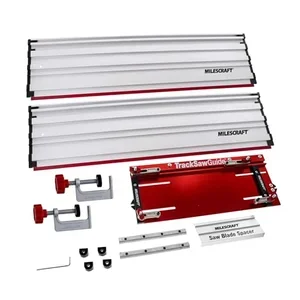 |
Milescraft 1409 Track Saw Guide – $119.99 Once you get a full sheet home from a Fort Worth supplier, this keeps a circular saw running dead straight for breaking it down to size.
|
Plywood Types and Grades, Explained
Plywood is built from thin layers of wood veneer glued together with the grain of each layer running perpendicular to the one below it. That cross-graining is what makes it resist the warping and splitting that a solid board of the same thickness would be prone to.
Softwood plywood, usually made from pine or fir, is the most common type and the one used for wall sheathing, roof decking, and subfloors — jobs where strength matters more than looks. Hardwood plywood, faced with veneers like oak, maple, or birch, costs more but is meant to be seen: cabinet doors, shelving, and furniture. There’s also plywood built to the PS 1 structural standard, marine-grade plywood made with waterproof glue and fewer internal voids, and exterior-grade sheets rated to handle direct weather exposure.
Grading tells you how the plywood looks and, to some extent, how it will perform. Ask your supplier for the grade by letter, not just “good” or “cheap” — the difference between a B-grade and a D-grade sheet is real money and real usability.
Plywood Grades at a Glance
Grade A: Smooth, paintable, very few defects. For furniture and visible surfaces.
Grade B: Small, tight knots and minor patching allowed. Still looks good.
Grade C: Larger knots and some open defects. Fine for utility uses that won’t be seen.
Grade D: The most defects allowed. Structural use only, where appearance doesn’t matter.
Sanded vs. unsanded: Sanded face veneers are ready to finish; unsanded sheets are for structural work under a covering.
What to Ask Your Supplier Before You Buy
This is where an independent lumberyard earns its markup over a big-box store: the staff can actually answer these questions instead of pointing you toward the aisle.
- What grade and thickness do you recommend for this specific project?
- Is this sheet rated for exterior or interior use, and what glue bond does it use?
- What’s the core made of — solid wood, veneer, or particleboard/MDF?
- Does it meet CARB2 or similar low-formaldehyde standards, especially for indoor furniture?
- Can you cut it down to size, and what does that cost per cut?
- Do you deliver, and is there a minimum order for that?
A supplier who answers these without hesitation is one worth going back to. If you get vague answers on core material or glue type, that’s usually a sign to ask to see the sheet’s stamp yourself — the grade and exposure rating are stamped right on the edge or face of legitimate plywood.
Which Plywood Fits Your Project
Fort Worth’s climate matters here: hot, humid summers and enough temperature swing in winter to stress a bad glue bond. That makes the exterior-vs-interior decision less optional than it might be somewhere milder.
Building a Deck, Shed, or Anything Outdoors
Use exterior-grade plywood with a waterproof glue bond. Sheets labeled “Exposure 1” have water-resistant glue and work fine for protected spots like under siding, but full weather exposure — a shed roof with no covering, for instance — calls for the best exterior grade your supplier carries.
Furniture and Cabinets
Go with hardwood plywood in a face grade of A or B on at least one side. Oak, maple, birch, and cherry veneers are the common options; ask about the core, since a solid wood core holds screws better than a particleboard or MDF core hiding under a nice veneer. For cabinet shelves, 1/2″ or 3/4″ is typical; drawer fronts can go thinner.
General Repairs and DIY Projects
For a garage shelf, a quick patch, or a simple built project like a storage box or workbench, construction-grade softwood plywood in a C-D or D-D grade is usually plenty. It’s cheaper, and knots or small gaps don’t matter if the piece is hidden or gets painted over. Standard thickness for this kind of work is 1/2″ or 3/4″, depending on how much weight it needs to carry.
Signs You’re Being Sold Bad Plywood
Inspect every sheet before it leaves the yard, not after you’ve cut into it. A few minutes of checking can save an entire project.
Warping: Sight down the edge of the sheet. Any visible bow means uneven cuts later.
Delamination: Look at the edges for separating layers — a sign the sheet got wet in storage.
Large knots or holes: Fine on the back of a hidden panel, a problem on a face veneer.
Moisture damage: Swelling, discoloration, or a soft, spongy feel anywhere on the sheet.
Voids: Small gaps inside the core layers, visible from the cut edge. A few are normal; a cluster weakens the sheet.
Quick Tips for a Smooth Plywood Run
- Measure first. Know your exact dimensions before you go so you’re not guessing at the yard.
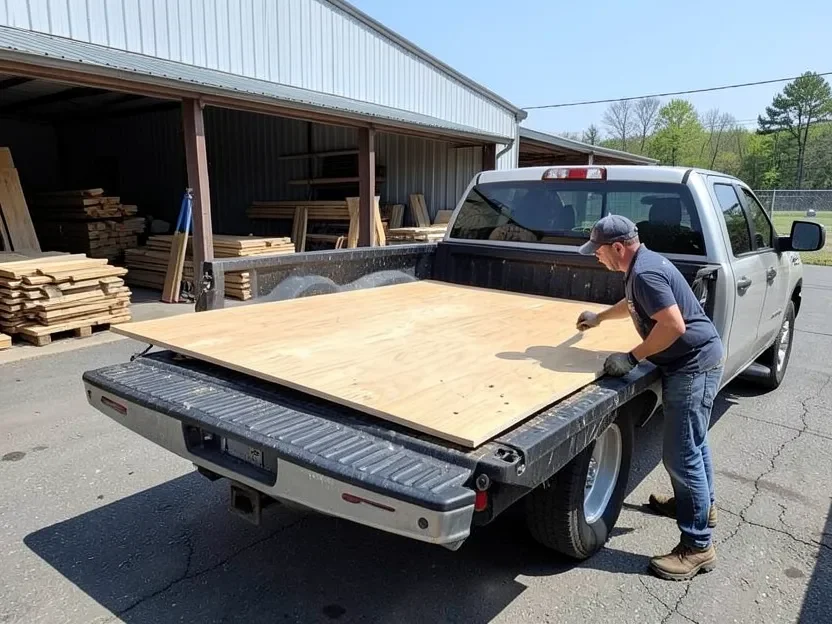
- Bring help and a full-size truck. A 3/4″ 4×8 sheet weighs 60–90 lbs depending on the wood, and it won’t fit in a sedan trunk.
- Inspect each sheet yourself rather than taking the first one off the stack.
- Ask about delivery if you’re buying more than a couple of sheets or don’t have a truck.
- Keep it dry and flat on the way home and in storage — leaning sheets against a wall for weeks is how warping happens.
Frequently Asked Questions
Where can I buy plywood in Fort Worth?
Two verified local options are Plywood Company of Fort Worth, Inc. (2573 Sylvania Cross Dr, (817) 831-4206) and Fort Worth Lumber Company (9101 S. Freeway, (817) 293-5211). Both stock a range of grades beyond what big-box stores typically carry. For a sheet or two, Lowe’s, Home Depot, or a local hardware store will usually have common construction-grade plywood in stock.
What is the most common type of plywood for home building?
For home building, the most common type is softwood plywood, typically made from pine or fir. It’s used for subflooring, wall sheathing, and roof decking because it’s strong and cost-effective.
Can I use regular plywood for outdoor projects in Texas?
No — use plywood specifically rated “Exterior” or “Exposure 1.” Regular interior-grade plywood uses a glue bond that breaks down quickly in Texas’s heat and humidity.
How thick should plywood be for shelves?
For shelves that won’t sag, 3/4-inch plywood is usually the safer choice, especially over a longer span. Lighter loads or shorter shelves can get by with 1/2-inch.
What does “voids” mean in plywood?
Voids are small empty gaps inside the plywood’s core layers, visible when you look at a cut edge. A few small voids are normal in most grades; a cluster of large voids weakens the sheet and is worth rejecting.
Can Fort Worth lumberyards cut plywood to size?
Many can — it’s best to call ahead and ask about their cutting policy, fees, and how precise the cuts can be. Cutting fees and capabilities vary by location and change over time.
Is plywood better than particleboard or MDF?
Plywood is generally stronger and more moisture-resistant than particleboard or MDF, and its layered construction gives it better screw-holding power. Particleboard and MDF are cheaper but swell more easily with moisture and don’t hold screws as well.
Where can I find marine-grade or specialty plywood in Fort Worth?
Plywood Company of Fort Worth carries marine-grade, MDO, and FSC-certified panels alongside standard hardwood and softwood plywood — specialty plywood and accessories like this are more likely to be in stock at a dedicated lumberyard than a general hardware store.
Final Thoughts
Finding the right plywood in Fort Worth comes down to matching the grade to the job and knowing which supplier actually stocks it. For anything beyond a quick repair, a call to Plywood Company of Fort Worth or Fort Worth Lumber Company before you drive out will save you a wasted trip. Once you’re home with the sheet, breaking it down accurately is the next thing that matters most.
Sponsored / affiliate links. As an Amazon Associate I earn from qualifying purchases. I may earn additional commission from eligible campaigns.