Can You Plane MDF? What to Know Before You Do
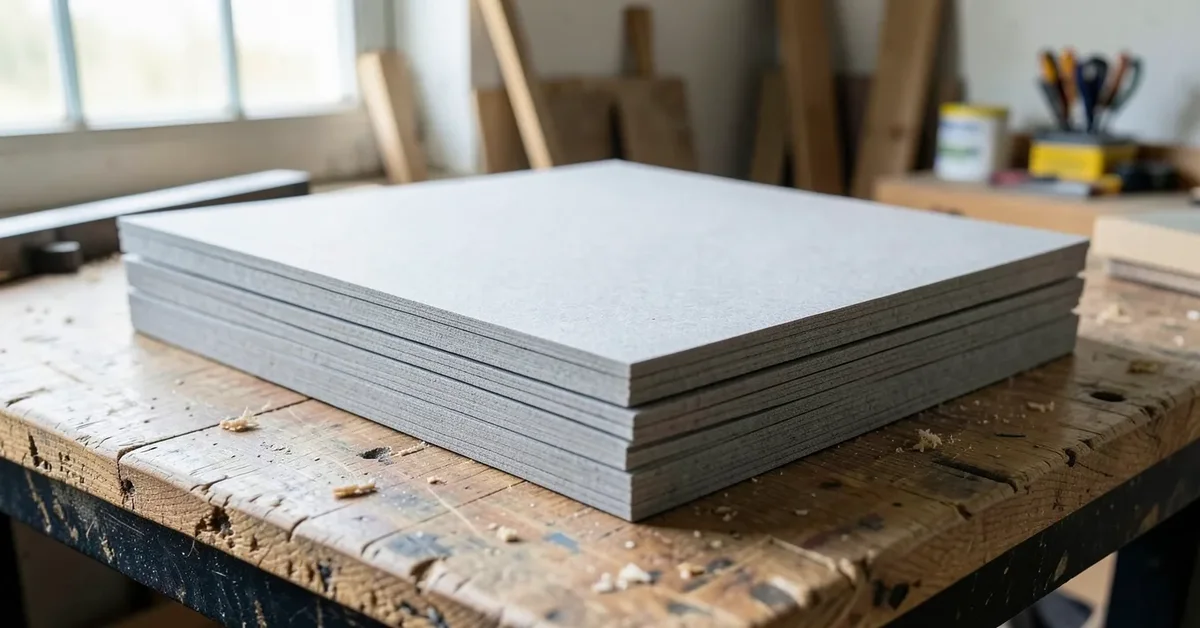
Yes, you can plane MDF, but it’s harder on both you and your tools than planing solid wood. MDF is wood fiber bonded with resin and wax under heat and pressure, and that resin binder is what causes the two real problems: it dulls blades noticeably faster than wood alone, and the dust it creates is finer and more irritating than ordinary sawdust because of the resin content.
Why MDF Is Harder to Plane Than Solid Wood
Proper MDF Dust Protection
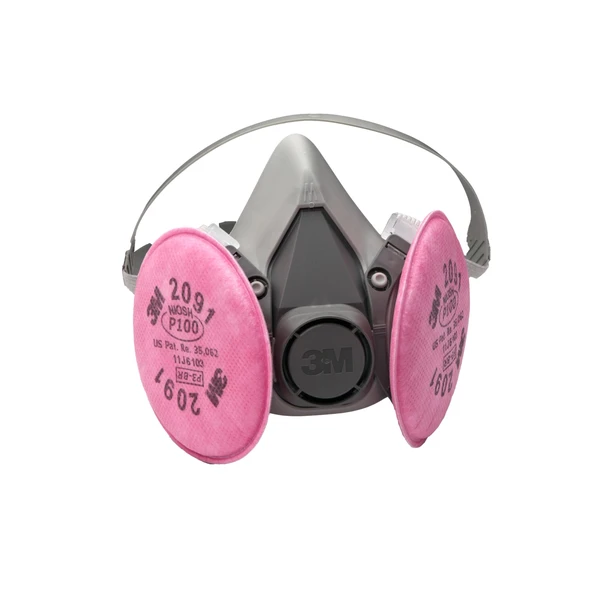 |
3M Half Facepiece Reusable Respirator (P100) – $24.19 A NIOSH-rated P100 respirator, well beyond what a basic paper dust mask filters – worth it for any extended MDF planing, cutting, or routing session.
|
MDF’s resin and wax binder is somewhat abrasive to a cutting edge – closer to shaving through a lightly glued surface than clean wood fiber. That’s why a blade that stays sharp through hours of pine or poplar dulls noticeably faster on MDF, and why carbide-tipped blades or bits hold an edge far longer than standard high-speed steel on this material. It’s also why the resin can build up on a blade and cause it to run hotter, which further speeds up dulling if you don’t clean the tool periodically during a long job.
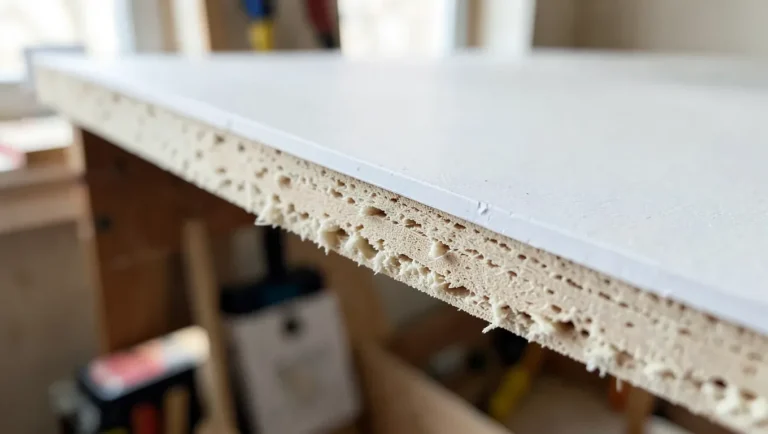
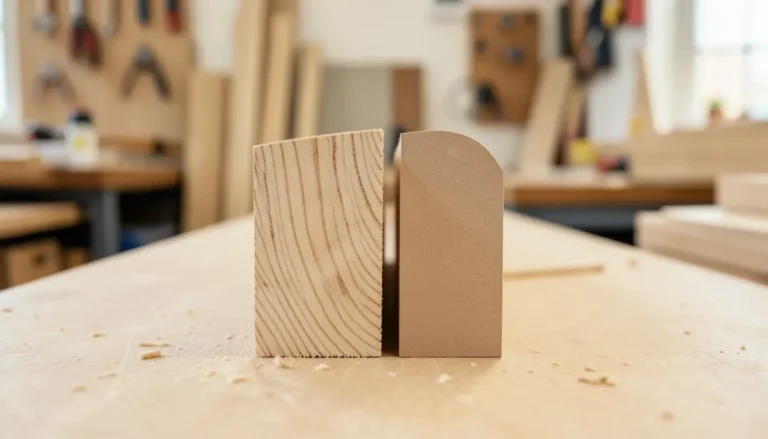
MDF also has no long wood fibers running through it, which is a double-edged sword: it won’t tear out along a grain line the way solid wood can, but it has almost no tensile strength across a thin edge, so it chips and crumbles easily if the blade isn’t sharp or the cut isn’t well-supported.
The Dust Hazard Is a Real Safety Issue, Not Just a Nuisance
Ordinary wood dust is already a respiratory irritant, but MDF dust carries an added concern: the urea-formaldehyde resin used to bind most MDF releases formaldehyde-containing dust when the material is cut, routed, or planed. A basic paper dust mask (the kind rated for nuisance dust) does not filter this fine particulate well. For any real amount of MDF work, use a NIOSH-rated N95 respirator at minimum, and a P100 half-face respirator for extended sessions or if you’re sensitive to dust. Pair that with genuine dust collection or a shop vacuum at the source and good cross-ventilation – a mask alone, in a closed room, still leaves you breathing a dusty atmosphere between breaths.
Tools That Work Well on MDF
Hand Plane
Works fine for light material removal and cleaning up an edge, provided the blade is genuinely sharp – a dull hand plane blade is the single biggest cause of chipped, crumbly MDF edges. Take light passes rather than trying to remove much material at once, and check the blade’s edge periodically through a longer job.
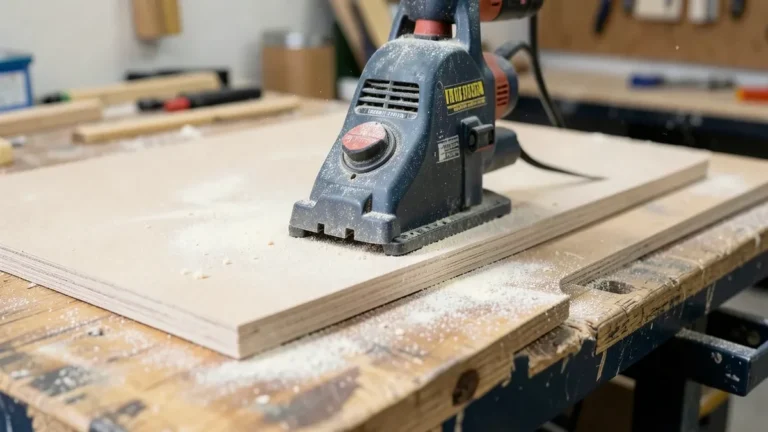
Power Plane
Faster for bigger jobs, but less forgiving of a wrong depth setting – too aggressive a cut can blow out the edge instead of shaving it cleanly. Set a shallow depth, keep the tool moving at a steady pace across the surface, and empty or check the dust port regularly since MDF dust clogs a power plane’s chute faster than wood shavings do.
For either tool, a low cutting angle reduces the chance of chipping the edge, and light, even pressure beats forcing the tool through in fewer passes – MDF doesn’t reward speed the way solid wood sometimes does.
Preparing to Plane MDF
- Respiratory protection: N95 minimum, P100 for extended work, plus dust collection and ventilation as covered above – this is the step most worth taking seriously.
- Safety glasses and gloves: MDF chips and dust can irritate eyes, and edges can be sharp enough to scrape skin.
- Secure the workpiece: clamp the MDF firmly to your bench so it can’t shift mid-pass – movement is what turns a clean plane stroke into a gouge.
- Check the blade before you start: a genuinely sharp edge is non-negotiable on this material, more so than on solid wood.
Finishing After Planing
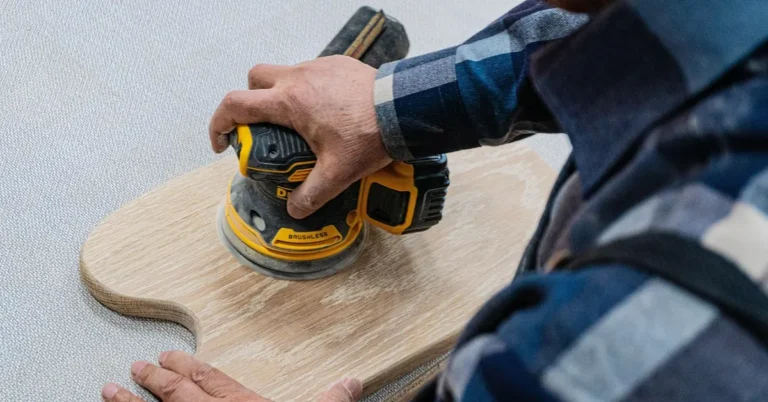
Sand with fine-grit paper (150-220) in light, even passes to clean up any remaining tool marks, then wipe or vacuum the surface completely before finishing – MDF dust is fine enough to interfere with paint or sealant adhesion if it isn’t fully removed. MDF is also naturally porous and will absorb moisture and swell if left unsealed, so apply a sealer or primer to any newly planed edge before the project is finished, not just the show faces.
Avoiding Chipped Edges
- Score the cut line first if you’re planing near a factory edge or corner – a shallow scored line gives the blade a clean place to start rather than tearing into unsupported fiber.
- Support the far edge of the cut with a sacrificial backer board so the plane doesn’t blow out the exit point.
- Keep the blade sharp – this is worth repeating, since a dull edge is the root cause of most MDF chipping complaints, not the material itself.
Tool Maintenance
Wipe blades clean of resin buildup after each MDF session rather than letting it accumulate – dried resin is harder to remove and contributes to the overheating that dulls edges faster. Resharpen more often than you would for an equivalent amount of solid-wood work; MDF’s abrasive binder simply wears an edge down faster, and that’s expected, not a sign you’re doing something wrong.
Frequently Asked Questions
Can you use a plane on MDF?
Yes. A genuinely sharp blade and light, even passes are what actually determine whether the result is clean or chipped – the material itself isn’t the limiting factor.
What tools work best on MDF?
Carbide-tipped blades and bits hold an edge far longer than standard steel, since MDF’s resin binder dulls tools faster than solid wood. A sharp hand or power plane both work for shaping and smoothing.
Is MDF easy to work with?
It’s smooth, uniform, and free of knots or grain to fight against, which makes it easy to cut and shape accurately. The tradeoffs are faster tool wear and dust that needs proper respiratory protection, not casual dust-mask treatment.
How do you smooth MDF edges?
Use fine-grit sandpaper (150-220) in light, even passes after planing. Vacuum or wipe the dust off fully before sealing, since MDF’s porous edges need a sealer or primer to resist moisture and swelling.
Conclusion
Planing MDF is entirely doable with a sharp blade, light passes, and proper dust protection – the resin binder that makes it harder on tools and lungs than solid wood isn’t a reason to avoid the material, just a reason to plan for faster blade wear and take the dust seriously. Get those two things right and MDF planes and finishes cleanly.
Sponsored / affiliate links. As an Amazon Associate I earn from qualifying purchases. I may earn additional commission from eligible campaigns.