Can MDF Be Planed? Yes, But It Makes Fine Dust, Not Shavings
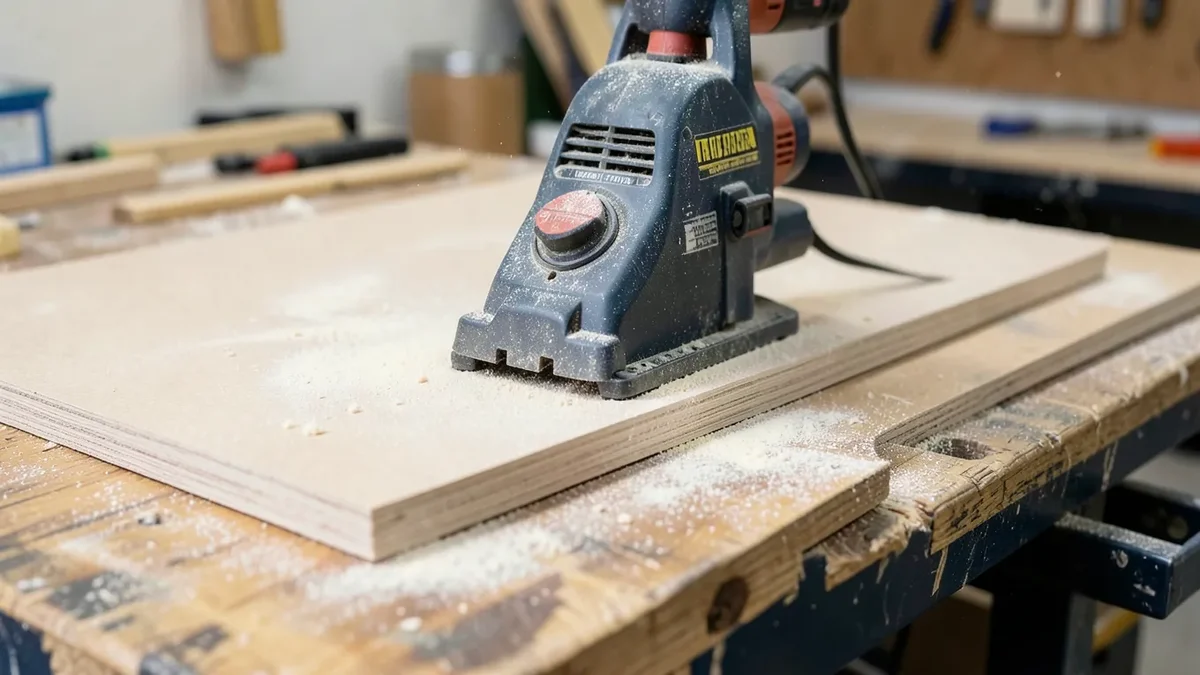
Yes, MDF can be planed, but expect fine powdery dust instead of the curled shavings solid wood produces — MDF has no grain structure, so a plane blade shears through compressed wood fiber and resin rather than peeling a continuous ribbon. That difference in dust matters for two practical reasons: it clogs standard shop-vac filters faster than wood shavings, and it is fine enough to need real respiratory protection, not just a paper dust mask. Here is what actually changes when you plane MDF instead of solid wood.
Why MDF Produces Dust Instead of Shavings
Recommended Respiratory Protection
 |
3M 6391 Half Facepiece Respirator, P100 – $36.56 A paper dust mask is not rated for the fine particulate MDF produces — a P100-rated respirator actually filters it.
|
Solid wood has long fibers running in one direction, so a plane blade lifts a continuous, curling shaving as it cuts along the grain. MDF is made of much shorter wood fibers bonded together with resin under heat and pressure, with no long grain structure to hold a shaving together. A plane blade shears through that fiber-and-resin matrix and it breaks apart into fine particles rather than curling. This is normal, not a sign you are doing something wrong — if you are getting long curls from MDF, you are more likely cutting into a solid-wood edge band or veneer layer, not the MDF core itself.
MDF’s fine dust is small enough to stay airborne longer than wood shavings and penetrate deeper into the lungs, and because most MDF uses a urea-formaldehyde resin binder, that dust can carry trace formaldehyde particulates along with the wood fiber. A basic paper dust mask is not rated to filter particles this fine. Work with dust collection running on the tool if possible, in a ventilated space, and wear a properly-rated respirator (P100 or N100) for anything beyond a quick single pass.
Blade Wear: MDF Dulls Edges Faster
The resin binder that holds MDF‘s fibers together is considerably more abrasive on a cutting edge than solid wood’s natural fibers. Standard high-speed steel plane blades dull noticeably faster on MDF than on an equivalent amount of pine or oak. A carbide-tipped blade, where your plane accepts one, holds an edge far longer and is worth the upgrade if you plane MDF regularly. Either way, plan to sharpen or replace blades more often than you would for an all-wood project.
Avoiding Edge Blowout
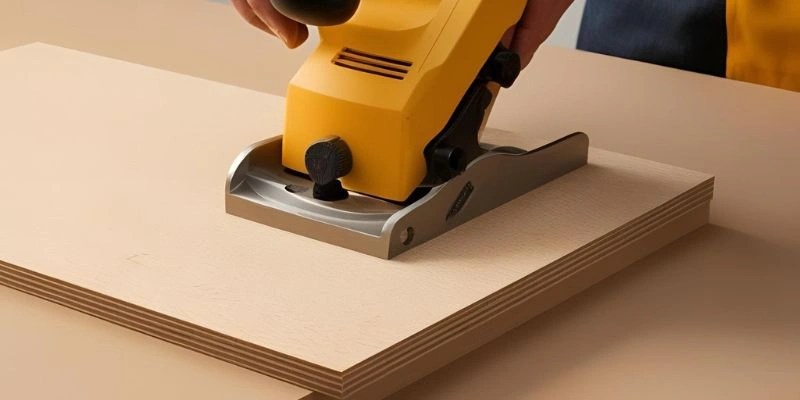
MDF has no grain to tear out mid-cut the way solid wood does, but it has the opposite problem at the far edge of a pass: without long fibers holding the last bit of material together, the trailing edge of a cut can crumble or “blow out” as the blade exits. Two things prevent this: take lighter passes (roughly 1/32 inch or less per pass) rather than trying to remove material in one heavy cut, and either back up the exit edge with a scrap piece clamped flush against it, or plane from both ends toward the middle instead of running the full length in one direction.
Hand Plane vs. Power Planer
A sharp hand plane can plane MDF for small edge-jointing tasks, but a power planer (electric hand planer, benchtop planer, or router with a straight bit) is more practical for anything beyond a quick touch-up, since MDF’s density makes hand planing slower and more fatiguing than on comparably-sized solid wood. Whichever tool you use, the blade sharpness matters more on MDF than on wood — a dull blade on MDF tends to crush and compress the fiber at the surface rather than cutting it cleanly, leaving a fuzzy, slightly burnished surface that telegraphs through paint.
Frequently Asked Questions
Why Does Planing MDF Produce Dust Instead of Shavings?
MDF has no long grain fibers to curl into a shaving the way solid wood does. A blade shears through the compressed fiber-and-resin matrix and it breaks into fine dust instead.
Do I Need a Respirator to Plane MDF?
For more than a quick single pass, yes. MDF dust is fine enough to bypass a basic paper dust mask and may carry trace formaldehyde from the resin binder, so a P100 or N100-rated respirator is the appropriate protection.
Does MDF Dull Blades Faster Than Wood?
Yes. The resin binder in MDF is more abrasive on a cutting edge than solid wood’s natural fiber, so blades dull noticeably faster. A carbide-tipped blade holds up better if you plane MDF often.
How Do I Stop MDF From Crumbling at the Edge?
Take lighter passes instead of one heavy cut, and either back up the trailing edge with a clamped scrap piece or plane from both ends toward the middle rather than running the full length in one pass.
Bottom Line
MDF planes just fine with a sharp blade and light passes — the real adjustments are respecting the fine dust with proper respiratory protection, expecting faster blade wear, and backing up the exit edge to avoid crumbling. None of that makes MDF harder to plane than wood, just different.
Sponsored / affiliate links. As an Amazon Associate I earn from qualifying purchases. I may earn additional commission from eligible campaigns.