MDF vs Plywood: Strength, Cost, and Best Uses (2026)
MDF and plywood are both engineered wood panels, but they aren’t interchangeable — MDF is denser, smoother, and cheaper, while plywood’s cross-grain layers make it roughly twice as resistant to bending and moisture. Picking the wrong one can mean a sagging shelf or a swollen cabinet door within a year. This guide compares weight, strength, cost, and the specific jobs each material actually wins.
Quick Answer
Use MDF for painted, indoor, non-load-bearing pieces like cabinet doors, trim, and speaker boxes. Use plywood for anything that needs to hold weight, resist moisture, or go outside — shelving, subfloors, and furniture boxes. MDF weighs 700–850 kg/m³ and cuts smoother; plywood is lighter, stronger, and handles water far better.
What’s Actually Different Between MDF and Plywood?
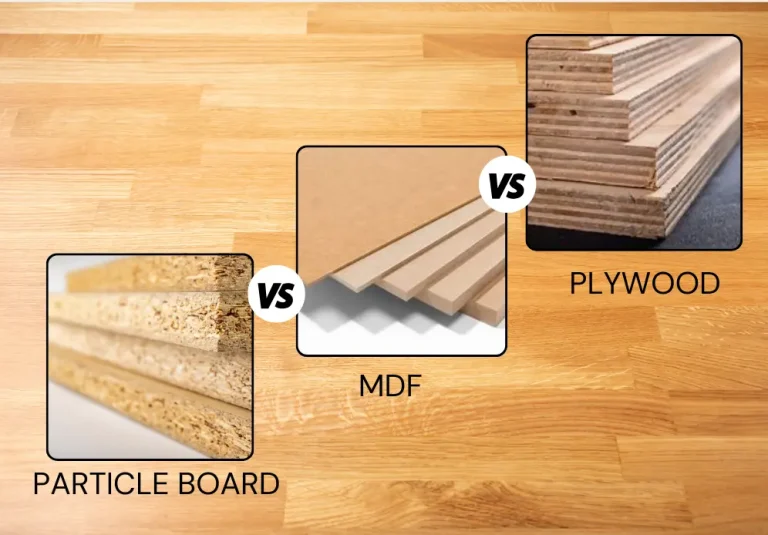
MDF (medium-density fiberboard) is made by breaking wood down into fine fibers, mixing them with wax and resin, then heat-pressing the mixture into flat sheets. It has no grain and no layers — just one uniform density throughout, which is exactly why it machines so cleanly and takes paint without any grain telegraphing through. Density typically runs 700 to 850 kg/m³, noticeably heavier than a same-size sheet of plywood.
Plywood is built the opposite way: thin sheets of real wood veneer, glued together with the grain in each layer running perpendicular to the one below it. That cross-grain lamination is what gives plywood its strength — it resists warping and splitting in any direction, unlike solid lumber or MDF. Plywood typically weighs 500 to 700 kg/m³ depending on species and ply count, roughly 25 to 40% lighter than an equivalent sheet of MDF. For a deeper breakdown of how MDF differs from other engineered panels, see our MDF vs. engineered wood comparison.
Best Plywood Project Panel Pick
 |
Baltic Birch Plywood Panel, 24″ x 24″ x 3/4″ – $45.89 A cross-laminated B/BB-grade panel that demonstrates exactly the strength advantage this guide covers — good screw-holding, resists the sagging MDF is prone to, and takes stain or paint without the fuzzy edges cheaper plywood grades leave behind.
|
As an Amazon Associate we earn from qualifying purchases.
Strength and Durability: Which Holds Up Better?
Plywood wins on structural strength, and it isn’t close. The perpendicular grain layers spread load across the whole panel and resist splitting along any single line, which is why plywood carries real span ratings for floors, roofs, and walls. MDF has no equivalent structural rating — it was never engineered or tested for load-bearing use, and its randomly-oriented fibers give it almost no resistance to shear forces.
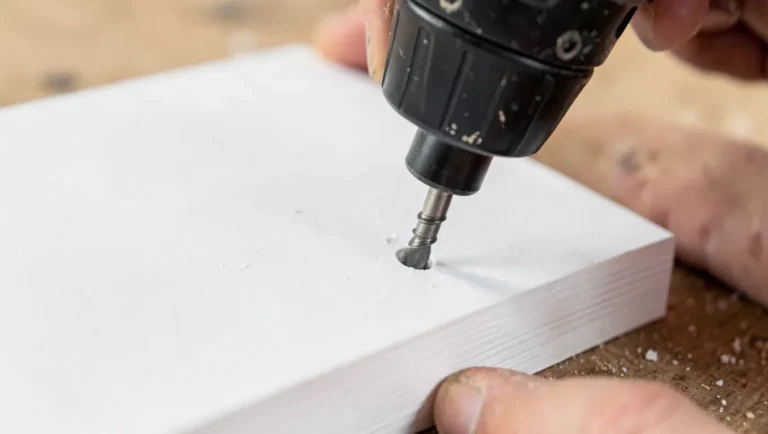
In practice, this shows up as sag. A 3/4″ MDF shelf spanning more than about 24 inches without support will visibly bow under sustained weight (books, dishes) within months. The same span in 3/4″ plywood holds flat for years. MDF also holds screws poorly near an edge — the fibers crush rather than grip — so cabinet hardware and shelf brackets need pilot holes and sometimes fasteners rated specifically for fiberboard. See our guide on how much weight MDF can actually hold for span-specific numbers.
In our shop, the shelf-sag problem is the single most common MDF complaint we hear from readers, and it almost always traces back to the same mistake: skipping a center support on a span over two feet. Add a cleat or a middle bracket and MDF holds up fine for light-duty shelving — the material isn’t defective, it’s just being asked to do a plywood-grade job.
MDF vs Plywood: Weight, Strength, and Cost at a Glance
| Factor | MDF | Plywood |
|---|---|---|
| Density | 700–850 kg/m³ | 500–700 kg/m³ |
| Structural rating | None — not load-rated | Span-rated for floors, walls, roofs |
| Screw/fastener holding | Weak near edges, needs pilot holes | Strong, holds screws well |
| Moisture resistance | Swells and crumbles when wet | Resists moisture, water-resistant grades available |
| Typical cost | 10–15% cheaper per sheet | Higher upfront, often cheaper over the project’s life |
| Best for | Painted cabinet doors, trim, indoor furniture | Shelving, subfloors, outdoor structures, boat/furniture boxes |
Cost Comparison: Is MDF Really Cheaper?
MDF typically runs 10 to 15% cheaper than a comparable sheet of plywood, since fiberboard manufacturing uses recycled wood fiber rather than full veneer sheets. But that upfront saving doesn’t always hold over the life of a project. Plywood’s durability means fewer repairs and replacements on anything load-bearing, while MDF’s savings show up mainly on finishing — a primed MDF door needs far less prep than getting a smooth painted finish out of plywood’s visible grain. See our breakdown of plywood pricing against other sheet materials for more cost context.
Many cabinet shops don’t choose one material exclusively — they use both. Plywood forms the cabinet box (where strength and screw-holding matter most), and MDF forms the door fronts and face frames (where a dead-smooth painted surface matters most). This hybrid approach is standard in the cabinetry trade and is worth considering for any furniture project, not just kitchens. If you’re specifically building cabinets, our dedicated MDF vs plywood for kitchen cabinets guide covers that hybrid approach in more depth.
Moisture Resistance and Water Damage
This is where the two materials diverge most. MDF absorbs water fast at any cut or exposed edge, swelling and softening within hours of sustained contact — it can’t be dried back to its original shape once that happens. Plywood resists moisture far better because its veneer layers and cross-grain glue lines slow water penetration, and exterior-rated plywood grades are specifically formulated to handle direct weather exposure. Our guide on using plywood outdoors covers which grades hold up to weather.
If you do use MDF anywhere near moisture — a kitchen toe-kick, a bathroom vanity side panel — seal every cut edge, not just the factory faces. The exposed core at a cut edge is where MDF absorbs water fastest. A dedicated MDF edge sealer or a few coats of shellac-based primer applied before installation is the most reliable protection.
📊 MDF formaldehyde emissions are regulated under CARB Phase 2 and TSCA Title VI limits, and panels sold in the U.S. must be certified to those standards. — Source: Composite Panel Association
Best Uses for MDF vs Plywood
MDF is the right call for furniture and trim that stays indoors and gets painted: cabinet doors, baseboard and crown molding, speaker box enclosures, and craft or hobby projects where a smooth, grain-free surface matters more than raw strength.
Plywood is the right call anywhere strength, moisture exposure, or weight-bearing capacity is part of the job: shelving, subflooring, wall and roof sheathing, furniture boxes and carcasses, boat building, and any outdoor structure. It’s also the better substrate under veneer or laminate on furniture that will see regular use.

Environmental Impact and Sustainability
MDF is often made from recycled wood fiber and sawmill waste, which sounds sustainable, but the resin binder (usually urea-formaldehyde) is harder to recycle and releases more embodied energy during manufacturing. See our full explainer on why MDF is considered sustainable for the fuller picture. Plywood uses whole veneer sheets from managed forests, generally requires less energy to produce per sheet, and is easier to reuse or recycle at end of life since its layers are just glued wood rather than a fiber-resin composite.
Maintenance and Care
MDF needs dry cleaning only — wipe with a soft, dry cloth, and use a barely-damp cloth for stains, never a soaked one. Keep it away from standing water and humidity swings, which is why it struggles in kitchens and bathrooms without a sealed finish.
Plywood tolerates a damp cloth for cleaning and the occasional light sanding to refresh a worn finish. Check exposed edges periodically for splintering, and re-seal any cut edges on exterior or high-moisture plywood every few years to maintain its water resistance.
Frequently Asked Questions
Which is better, MDF or plywood?
Neither is universally better — it depends on the job. MDF is smoother and cheaper for painted, indoor, non-structural pieces like cabinet doors and trim. Plywood is stronger, lighter, and far more moisture-resistant, making it the right choice for shelving, subfloors, and anything load-bearing or exposed to weather.
Does MDF sag more than plywood?
Yes. MDF’s randomly-oriented fibers give it far less bending resistance than plywood’s cross-grain layers, so an unsupported MDF shelf will visibly sag under sustained weight sooner than an equivalent plywood shelf. Adding a center support every 24 inches largely solves this for light-duty MDF shelving.
What are the disadvantages of MDF?
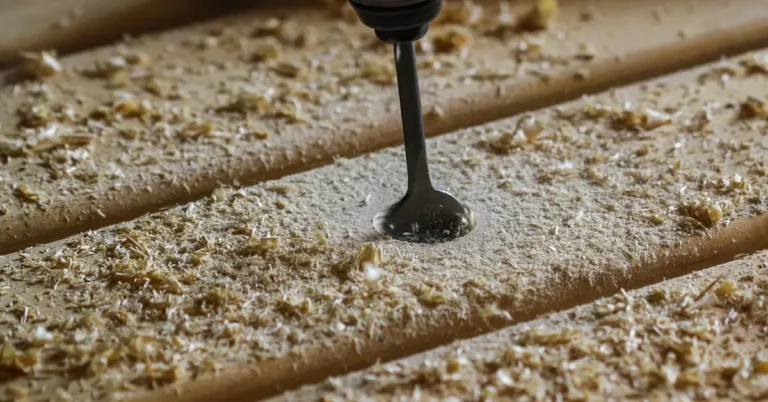
MDF swells and can crumble when it gets wet, has no structural or load rating, sags under weight without support, releases fine dust when cut (a mask and dust collection are recommended), and holds screws poorly near cut edges without pilot holes or specialty fasteners.
Can you use MDF outdoors?
No, not without heavy modification. Standard MDF has no weather-resistant formulation and will swell, delaminate at cut edges, and eventually crumble with repeated rain or humidity exposure. For any outdoor project, use exterior-rated plywood instead.
Is MDF cheaper than plywood?
Usually, yes — MDF typically costs 10 to 15% less per sheet than comparable plywood. That said, plywood’s durability on load-bearing or high-use pieces can make it the cheaper option over the life of a project, since it needs fewer repairs or replacements.
Conclusion
MDF and plywood solve different problems. Reach for MDF when you need a smooth, paintable, budget-friendly surface for indoor furniture or trim. Reach for plywood when strength, moisture resistance, or weight-bearing capacity actually matters. Many projects — kitchen cabinets especially — use both, matching each material to the part of the job it’s actually good at rather than picking one for everything. For material comparisons across the rest of the MDF and engineered wood lineup, including how MDF compares to OSB, see our related guides.
Sponsored / affiliate links. As an Amazon Associate I earn from qualifying purchases. I may earn additional commission from eligible campaigns.
 Baltic Birch Plywood Sheets Box of 45 - Laser Engraving Cutting, Scroll Saw Nature Veneer Color, Stronger Than Basswood, A/A Grade,12 x 12 x 1/8”, 3mm Thickness Perfect for Wood Burning
 Baltic Birch Plywood 1/8'' x 12'' x 18'', 6 Pack, B/BB Grade, Void-Free Core, Laser Cutting Ready, Flat Sheets for CNC, Engraving, DIY Crafts, Art Painting, Wood Burning, Staining