Are MDF Kitchen Cabinets Good? The Honest Verdict
MDF kitchen cabinets are good for painted doors and drawer fronts — but a poor choice for the cabinet box itself if your kitchen sees standing water at the sink or dishwasher. Skip the sealing step and the doors can swell by up to ¼ inch within days of a leak. This guide covers real cost-per-linear-foot numbers, how MDF holds up against solid wood and plywood, and the hybrid build most kitchens actually use.
Insert your Affiliate Disclosure reusable block here
What Is MDF?
Best MDF Cabinet Protection Pick
Zinsser B-I-N Shellac Primer-Sealer
A shellac-based primer that seals bare MDF edges and faces before paint, blocking moisture at the exact spot most cabinet failures start.
- Best for: sealing exposed MDF edges and cut lines before painting
- Why we picked it: shellac blocks moisture penetration at the cut edge, the #1 failure point on MDF cabinets
- Main drawback: strong fumes — needs ventilation and a respirator during application
Compare more MDF cabinet protection options
 Option 1 Birch Iron-On Edge Banding
|
 Option 2 White Wood Filler Putty
|
 Option 3 Gorilla Waterproof Wood Glue
|
As an Amazon Associate we earn from qualifying purchases.
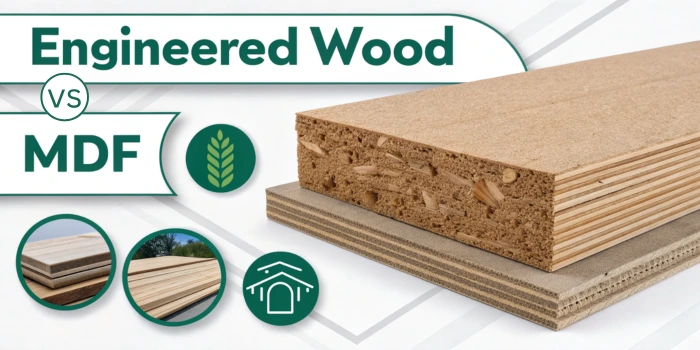
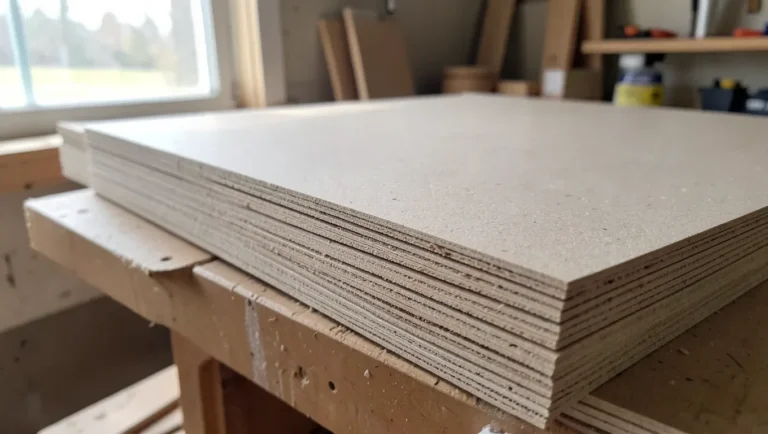
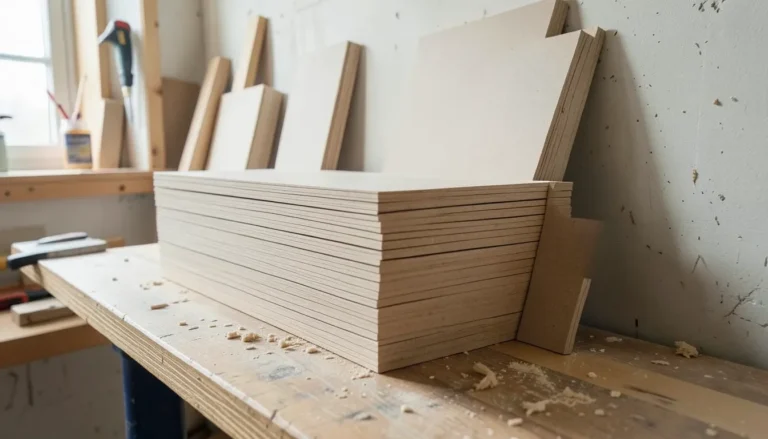
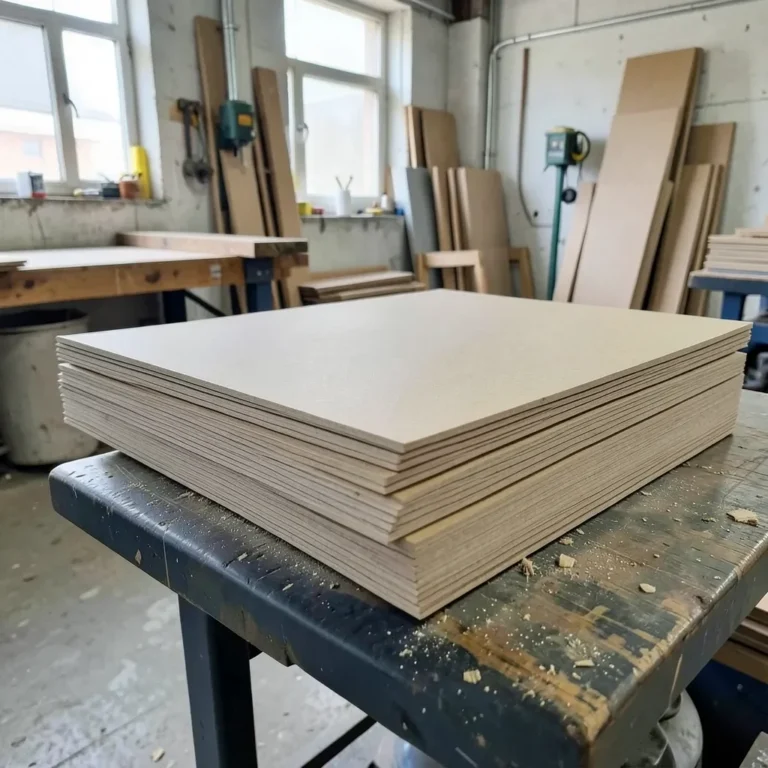
MDF (Medium-Density Fiberboard) is an engineered wood panel made by breaking hardwood and softwood residuals into fine fibers, binding them with wax and resin, then pressing the mixture into flat sheets under high heat. Unlike plywood, it has no layers or grain direction, which is what gives it a completely smooth, splinter-free face on both sides. It is not the same material as particleboard, which uses larger wood chips and a weaker bond — MDF is denser and holds screws and paint noticeably better. For a deeper look at how MDF cabinets are built, see our full breakdown.
Advantages of MDF Kitchen Cabinets
MDF earns its popularity in painted, budget, and contemporary kitchens for three concrete reasons — not just marketing talk. If you want the general case for and against, our broader pros and cons of MDF cabinets guide covers non-kitchen uses too.
- Lower cost: MDF cabinet doors typically run 20–50% less than solid wood and about 20–30% less than plywood for the same size and style.
- Smooth, paint-ready surface: With no grain or knots to telegraph through the finish, MDF gives crisp, flat paint lines — the look most white or two-tone kitchens are going for.
- Dimensional stability in dry conditions: Properly sealed MDF changes size by less than 0.2% with normal humidity swings, versus up to 0.5% for solid wood, so doors stay square and gaps stay even.
- Design flexibility: MDF mills cleanly for routed profiles, shaker panels, and flat-slab fronts without chipping or splintering.
Disadvantages of MDF Kitchen Cabinets
MDF’s weaknesses are real and specific — not just “it’s cheap so it must be bad.” For the cons-focused breakdown, see our dedicated guide to the disadvantages of MDF kitchen cabinets.
- Moisture sensitivity: MDF absorbs standing water quickly. A soaked, unsealed edge can swell as much as ¼ inch and will not return to its original shape once it dries.
- Lower load capacity: An MDF shelf can deflect more than ⅝ inch under 50 lbs without center support — noticeably more sag than plywood at the same thickness.
- Harder to repair: Dents and chips in MDF can’t be sanded and re-stained like solid wood; they have to be filled, re-primed, and repainted.
- Formaldehyde emissions: Some MDF uses urea-formaldehyde resin. Look for CARB Phase II or TSCA Title VI certification, which caps emissions at 0.09 ppm or less — uncertified sheet stock can run higher.
- Weight: MDF runs about 50 lbs per cubic foot, roughly 30% heavier than plywood, which makes tall cabinet doors harder to hang on standard hinges.
📊 MDF swells by up to ¼ inch at an unsealed edge exposed to standing water, and stays swollen even after drying. — Source: MDF cost/durability comparison, Kitchen Cabinet Kings guide, 2026
The Real Cost of MDF Kitchen Cabinets
Stock MDF cabinets typically run $100–$200 per linear foot installed — up to 50% less than solid wood and 20–30% less than plywood boxes of the same size. On an average 20-foot kitchen run, that gap works out to roughly $1,000–$4,000 saved compared to hardwood.
| Material | Typical Cost / Linear Ft (Installed) | Best Use in a Kitchen |
|---|---|---|
| MDF (painted doors) | $100–$200 | Doors, drawer fronts, moldings |
| Plywood | $130–$260 | Cabinet boxes, shelves |
| Solid wood | $200–$400+ | Frames, high-visibility trim |
The catch: that low sticker price only holds up if the MDF stays dry. Water damage isn’t covered by most cabinet warranties, and a swollen door usually has to be replaced outright rather than repaired — so the real lifetime cost depends entirely on where in the kitchen you use it.
MDF Doors on a Plywood Box: The Hybrid Build Most Kitchens Use
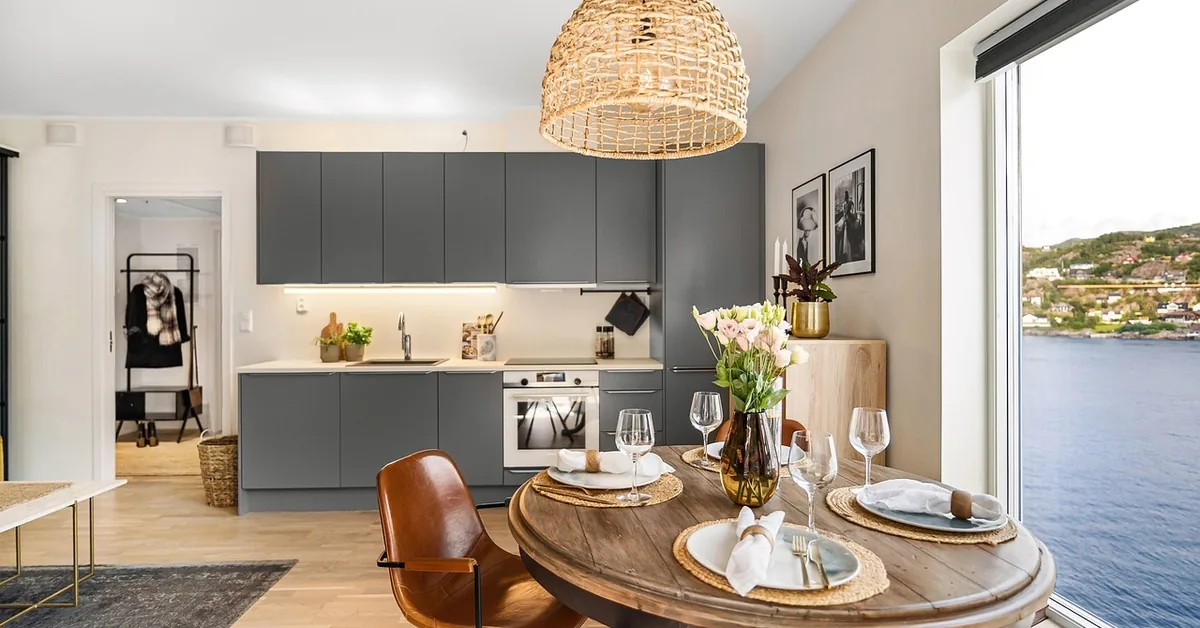
Almost no cabinet shop builds an entire box out of MDF, and that’s worth knowing before you assume “MDF cabinets” means MDF everywhere. The standard approach pairs an MDF door and drawer front — where the smooth paint finish matters — with a plywood cabinet box, which holds screws better, resists sag under load, and shrugs off the occasional splash far better than MDF does.
In 12+ years of shop work, the MDF cabinet doors that have held up longest are the ones where every raw edge got a coat of shellac primer before assembly — not just the face. The edge is where water gets in first, and it’s the one spot factory-finished MDF often skips. If you’re also weighing paint options, see whether you can paint MDF kitchen cabinets yourself versus having doors sprayed.
- Doors and drawer fronts: MDF, painted, all raw edges sealed
- Cabinet box (sides, back, shelves): plywood, ideally moisture-resistant grade near the sink
- Countertop-adjacent toe kick: plywood or solid wood, never bare MDF
MDF vs Solid Wood vs Plywood for Kitchen Cabinets
| Factor | MDF | Plywood | Best For |
|---|---|---|---|
| Paint finish | Smooth, no grain | Grain can telegraph | Painted doors: MDF |
| Moisture resistance | Poor unless sealed | Good | Near sink: plywood |
| Screw holding | Fair, can strip | Strong | Box/hinges: plywood |
| Cost per linear ft | $100–$200 | $130–$260 | Budget: MDF doors |
How to Protect MDF Kitchen Cabinets From Moisture
- Seal every raw edge: Apply a shellac-based primer to all cut edges before installation, not just the visible faces.
- Use moisture-resistant MDF near water: MR-grade MDF costs more but resists swelling far better under the sink or near the dishwasher.
- Wipe spills immediately: Standing water left overnight is what causes irreversible swelling — a quick wipe-down prevents it.
- Repaint chipped edges promptly: An exposed corner is an open door for moisture; touch it up as soon as you notice it.
- Skip MDF for the sink base cabinet floor: Use plywood or solid wood there specifically, since that’s the spot most likely to see a slow leak go unnoticed.
For cleaning, a damp cloth with mild soap is enough — avoid abrasive cleaners, which can dull or scratch the paint finish and expose the MDF underneath.
Frequently Asked Questions
Is it OK to use MDF for kitchen cabinets?
Yes, for doors and drawer fronts, especially painted ones. Seal every raw edge and avoid using bare MDF for the cabinet box floor near the sink or dishwasher, where standing water is most likely.
Is MDF better than wood for kitchen cabinets?
Not universally better — it’s better for a smooth painted finish and lower cost. Solid wood wins on load capacity, repairability, and long-term durability in wet spots. Most kitchens do best with MDF doors on a wood or plywood box.
How long will MDF kitchen cabinets last?
15–20 years with proper sealing and normal use. Cabinets exposed to repeated moisture without sealed edges can fail in a fraction of that time.
What are the disadvantages of MDF kitchen cabinets?
Moisture sensitivity, lower load capacity than plywood, difficulty repairing dents and chips, added weight, and potential formaldehyde emissions in uncertified sheet stock. Look for CARB Phase II or TSCA Title VI certification to avoid the last one.
Should MDF be used for the whole cabinet box, or just the doors?
Just the doors and drawer fronts in most kitchens. Pairing MDF doors with a plywood box gives you the smooth paint finish where it’s visible and better screw-holding and moisture resistance where it structurally matters.
Are MDF kitchen cabinets waterproof?
No. Standard MDF is not waterproof, even when painted — paint protects the face but not an unsealed cut edge. Moisture-resistant (MR) MDF resists swelling better but still isn’t fully waterproof.
Conclusion
MDF kitchen cabinets are good for painted doors and drawer fronts on a budget — not for the whole box in a kitchen with real moisture exposure. Seal every raw edge, pair MDF doors with a plywood or solid-wood box, and keep MDF away from the sink base cabinet floor. Get that split right and MDF cabinets can look sharp and hold up for 15–20 years.
Sponsored / affiliate links. As an Amazon Associate I earn from qualifying purchases. I may earn additional commission from eligible campaigns.