Can You Put Salt on a Wood Deck? Essential Guide
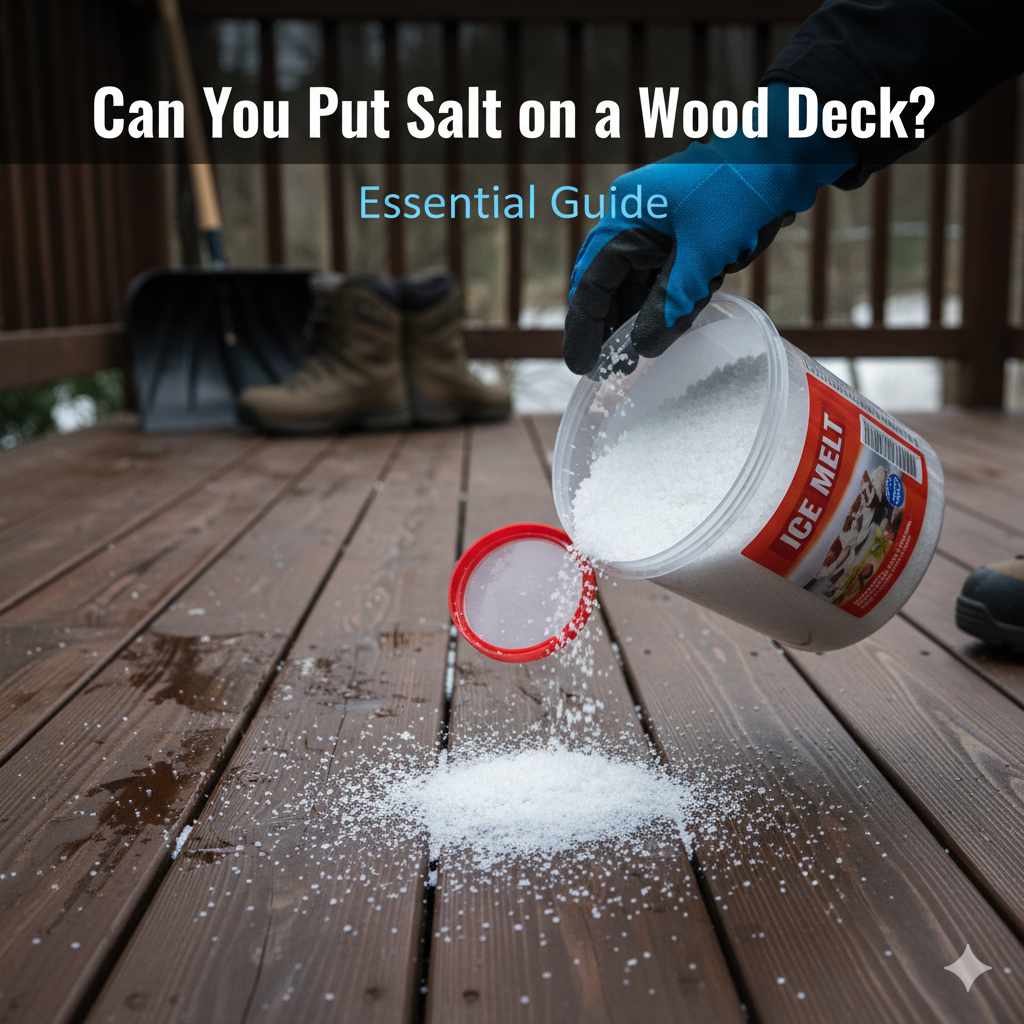
Can you put salt on a wood deck? The short answer is: it’s generally not recommended. While salt can melt ice, it can also cause significant damage to your wooden deck over time. This guide will explain why and offer safer alternatives.
Is your wooden deck covered in snow or ice, and you’re wondering if salt is the quick fix? Many of us have been there, looking for the easiest way to make our outdoor spaces safe and usable again. It’s frustrating when winter weather turns your beautiful deck into a slippery hazard. You want to clear it fast, but you also love your deck and want to keep it looking great for years to come. This guide is here to help you navigate the best and safest ways to de-ice your deck without causing damage. We’ll break down exactly what happens when salt meets wood, explore safer options, and give you a clear path to a well-maintained deck, no matter the season.
Let’s dive into understanding why salt might not be your deck’s best friend and what you can do instead to keep it safe and sound throughout the year.
Why Salt and Wood Decks Don’t Mix Well
It might seem like a simple solution to sprinkle some salt on icy steps or your deck surface, but in reality, salt can be quite damaging to wood. Think of salt as a tiny, persistent troublemaker for your deck. When salt dissolves in water (like melting snow or ice), it creates a corrosive solution. This solution can get into the wood’s pores and fibers, and over time, it breaks them down.
Wood naturally expands and contracts with changes in moisture and temperature. When salty water seeps into the wood, this natural process is disrupted. As the water freezes and thaws repeatedly, the salt solution can accelerate the erosion and weakening of the wood fibers. This leads to a rougher surface, splintering, and a shorter lifespan for your deck.
How Salt Damages Wood: The Science of Spoilage
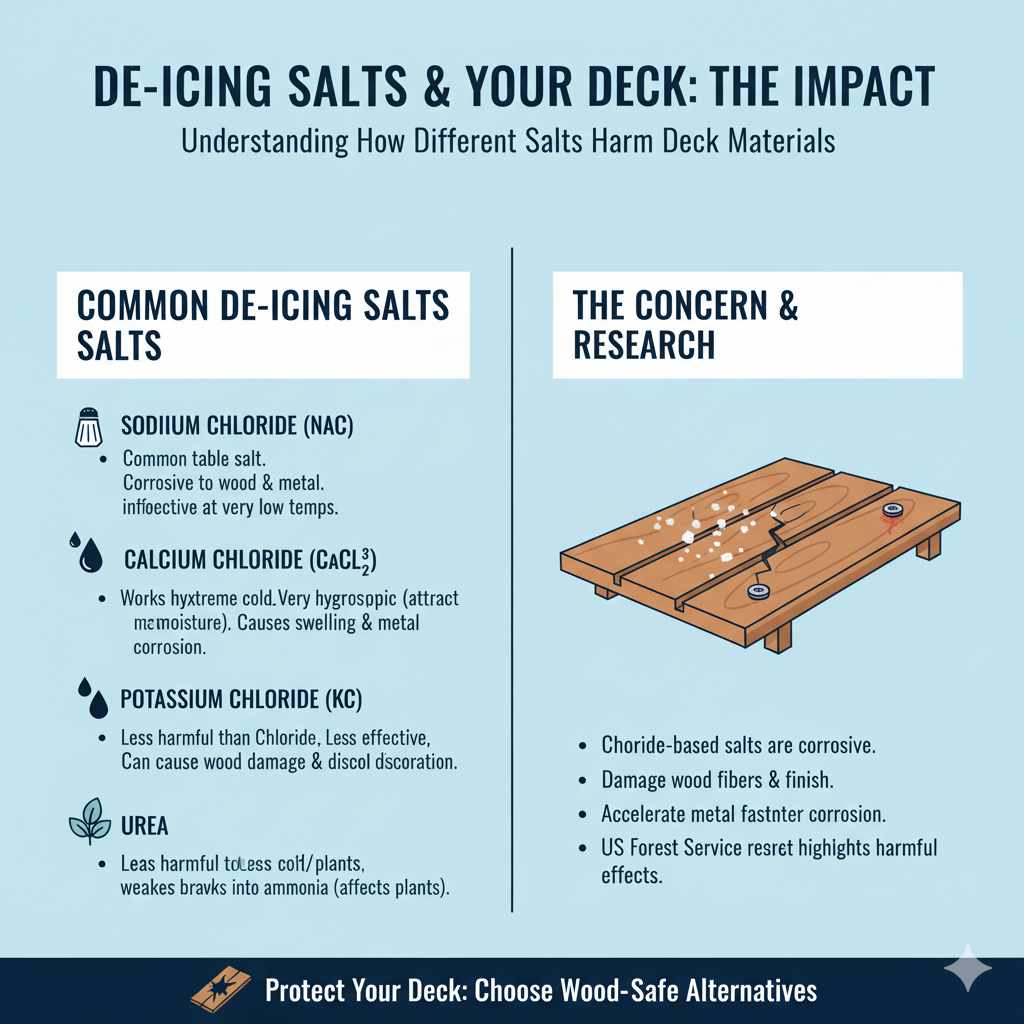
The main culprits are the chemical compounds in common de-icing salts, primarily sodium chloride (table salt), calcium chloride, and magnesium chloride. When these salts interact with water and wood, a few damaging things happen:
- Wood Swelling and Contraction: Salt increases the wood’s ability to absorb moisture. When the wood absorbs this salty solution, it can swell. When it dries out, it contracts. This constant cycle of swelling and shrinking puts immense stress on the wood’s structure, leading to cracks and splits.
- Fiber Degradation: The chlorides in salt can actually break down the lignin, a natural glue that holds wood fibers together. This weakens the wood and makes it more susceptible to physical damage, like splintering.
- Surface Erosion: Over time, the repetitive exposure to salt solutions can lead to the surface of the wood becoming pitted and rough. This is especially noticeable on softer woods.
- Corrosion of Fasteners: If your deck has metal screws, nails, or brackets, salt is highly corrosive to them. It will accelerate rust and can weaken the structural integrity of your deck by damaging these essential components.
- Staining and Discoloration: Some salts can leave behind residue that stains the wood, changing its natural color and making it appear dull or patchy.
It’s worth noting that different types of wood react differently to salt. Tropical hardwoods like Ipe are more naturally resistant to moisture and decay, but even they are not completely immune to the long-term effects of de-icing salts. Softer woods, commonly used in decking like pine or cedar, are much more vulnerable.
The Impact of Different Types of Salt
Not all de-icing salts are created equal, and some are worse for your deck than others:
- Sodium Chloride (NaCl): This is your common table salt and is often the cheapest de-icer. It works well for moderate ice but can be very damaging to wood, especially as temperatures drop significantly. It’s particularly aggressive in its corrosive action.
- Calcium Chloride ($text{CaCl}_2$): Calcium chloride works at much lower temperatures than sodium chloride, making it effective in very cold conditions. However, it’s also more hygroscopic, meaning it attracts more moisture, which can exacerbate wood swelling. It is also very corrosive to metal fasteners.
- Magnesium Chloride ($text{MgCl}_2$): Similar to calcium chloride, magnesium chloride works at low temperatures and is less corrosive than sodium chloride. However, it can still cause wood damage and discoloration over time.
- Potassium Chloride (KCl): This is often used as a fertilizer and a de-icer. It’s generally less damaging to wood than sodium or calcium chloride but is also less effective at melting ice, especially at very low temperatures.
- Urea: Another option that is less harmful to wood and plants. However, it’s not a very strong ice melter and can break down into ammonia, potentially affecting nearby plants.
To understand the environmental friendliness and potential impact of various de-icing products, the US Forest Service has conducted extensive research. Their findings often highlight the damaging effects of chloride-based salts on wood and concrete. You can find valuable resources on wood preservation and protection from environmental factors on sites like the USDA Forest Products Laboratory (.gov).
What Salt Does to Your Deck in the Long Run
Using salt on your deck might seem like a quick fix for slippery ice, but the damage it causes is cumulative. Here’s what you can expect over months and years of repeated salt application:
- Increased Maintenance Needs: You’ll likely find yourself needing to clean, sand, and re-seal your deck more frequently to combat the roughening surface and splintering.
- Reduced Deck Lifespan: The structural integrity of the wood and the fasteners will be compromised, meaning your deck won’t last as long as it could otherwise.
- Aesthetic Deterioration: The wood can become grey, fuzzy, and generally unappealing due to the constant assault from salt and the elements, even after cleaning.
- Costly Repairs: Eventually, you may face expensive repairs or even the need to replace entire decking boards or structural components due to salt-induced rot and corrosion.
It’s a classic case of a short-term convenience leading to long-term problems and costs. Protecting your investment in your home means choosing methods that preserve, rather than degrade, your deck’s materials.
Safer Alternatives for De-Icing Your Wood Deck
Since salt is a no-go for your beloved deck, what are your options? Thankfully, there are several effective and wood-friendly ways to keep your deck safe during icy conditions. The key is using products that melt ice without the harsh chemical reactions that salt causes.
1. Using Sand or Kitty Litter
Sand and non-clumping kitty litter are excellent choices for adding traction to an icy deck without causing chemical damage. They don’t melt the ice, but they provide a gritty surface that dramatically reduces the risk of slips and falls.
- How it works: These materials create friction between your shoes and the icy surface, much like adding gravel to a slippery road.
- Pros: Inexpensive, readily available, safe for wood, doesn’t require melting.
- Cons: Doesn’t melt ice, can be tracked indoors, needs reapplication after snow or melting.
- Application: Simply spread a thin layer over the icy areas. Sweep up excess when the ice melts or when you’re done with it.
2. Natural Ice Melters and Additives
There are several products on the market designed to melt ice quickly and safely. Many are derived from natural sources and are formulated to be less corrosive.
- Magnesium Acetate: This is often considered one of the more environmentally friendly and less damaging options. It works at very low temperatures and breaks down into biodegradable components. However, it can be more expensive than traditional salts.
- Potassium Chloride-Based Products: As mentioned earlier, potassium chloride is less damaging than sodium or calcium chloride, though its effectiveness can be limited in extreme cold.
- Beet Juice Additives: Some de-icing products use beet juice as a natural additive. Beet juice has sugars that lower the freezing point of water, helping to melt ice. It also acts as a binder for other de-icing components, meaning less product can be used. It can sometimes leave a reddish-brown residue.
- Agricultural Byproducts: Look for products made from corn cobs, coffee grounds, or other organic materials. These often provide traction and can help break up ice.
When choosing a de-icer, always check the label for claims of safety on wood. Reputable brands will often specify if their product is safe for decks, concrete, and pets.
3. Manual Ice Removal
Sometimes, the old-fashioned way is the best way. For moderate ice or snow, manual removal is often the safest and most effective method for your deck.
- Use a Plastic Shovel: Metal shovels can scratch and gouge the wood surface. Opt for a sturdy plastic shovel to clear snow and break up thin layers of ice.
- Ice Scrapers: Use a de-icing tool with a wide blade to scrape away ice. Again, choose plastic over metal to avoid damaging the wood grain.
- Work Gently: The goal is to remove the ice and snow without digging into the wood itself.
- Pros: No chemical damage, good exercise, effective for moderate conditions.
- Cons: Labor-intensive, may not be effective for thick or stubborn ice, can still scratch wood if not careful.
4. Snow Melting Mats
For high-traffic areas like deck stairs or entryways, consider investing in heated snow-melting mats. These mats plug in and use gentle electric heat to melt snow and ice, creating a safe, dry path.
- How they work: Similar to heated driveways, these mats create a warm surface that prevents ice from forming or melts it on contact.
- Pros: Extremely effective, completely safe for wood, reduces the need for manual clearing or chemical de-icers.
- Cons: Initial cost can be high, requires electricity which adds to running costs, may not cover your entire deck.
- Installation: These are typically portable and can be placed where needed. Ensure you have outdoor-rated extension cords and GFCI-protected outlets for safety.
For more information on winterizing your outdoor spaces and protecting wood structures, resources from university extension offices or forestry departments can offer valuable insights into material preservation.
Preventative Measures: Protecting Your Deck Before Winter Hits
The best defense against icy deck problems is good preparation. Taking steps before the cold weather arrives can significantly reduce the damage caused by ice and moisture throughout the winter.
1. Thorough Cleaning
Before the first frost, give your deck a good scrub. Remove all leaves, dirt, and debris. These organic materials can trap moisture against the wood, which can lead to rot and ice formation. A clean deck doesn’t give moisture as many places to hide.
Use a deck cleaner appropriate for your wood type. Follow the manufacturer’s instructions carefully. A power washer can be effective, but use it on a low setting and keep the nozzle moving to avoid damaging the wood grain.
2. Sealing and Staining
Applying a high-quality deck sealer or stain is crucial. Sealers create a barrier that repels water, preventing moisture from penetrating the wood. Stains offer a similar protective layer, often with added UV protection to prevent fading.
- Choose the Right Product: Look for water-repellent sealers and stains that are specifically designed for exterior wood. Penetrating sealers are often preferred as they soak into the wood rather than just sitting on the surface.
- Application: Ensure the deck is completely dry before applying any sealer or stain. Apply evenly, following the product’s instructions, and allow adequate drying time.
- Maintenance: Sealing typically needs to be done every 1-3 years, depending on the product and climate.
A well-sealed deck is much more resistant to moisture absorption, which in turn makes it less susceptible to ice damage and the effects of de-icing agents.
3. Proper Drainage
Ensure water can drain effectively away from your deck. Clogged gutters that spill onto the deck, poor grading around your house, or debris buildup underneath the deck can all contribute to excess moisture, which freezes and causes problems.
- Check Gutters: Make sure your home’s gutters are clean and directing water away from the foundation and deck area.
- Deck Ventilation: Ensure there’s good airflow underneath your deck. This helps the wood dry out and reduces the chance of trapped moisture.
- Clear Debris: Regularly clear leaves and other debris from the deck surface and from underneath it.
4. Coverings and Protection
If possible, consider covering your deck during the harshest parts of winter. Furniture covers can protect items, and some people opt for temporary deck covers or tarps, though ensuring proper ventilation underneath is key to prevent mold and mildew.
A Quick Comparison: De-Icing Options for Your Deck
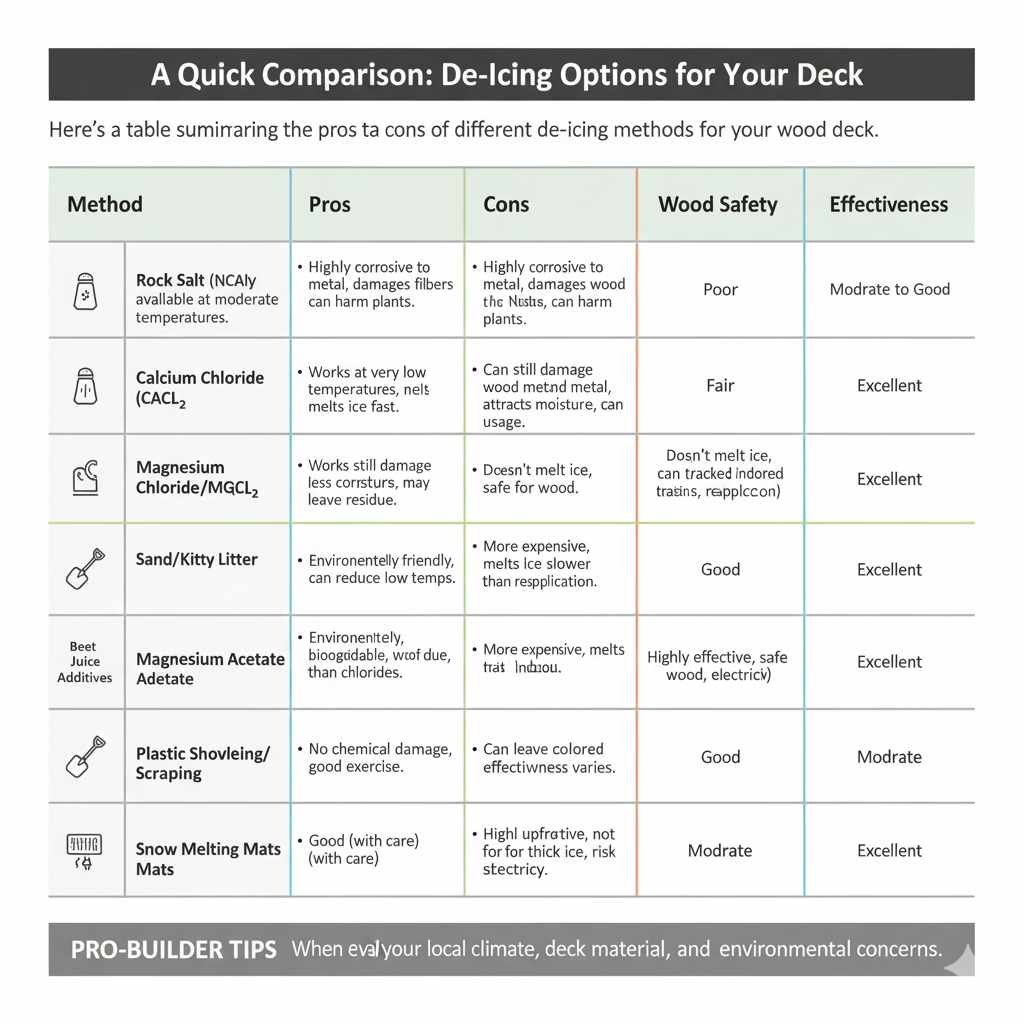
Here’s a table summarizing the pros and cons of different de-icing methods for your wood deck:
| Method | Pros | Cons | Wood Safety | Effectiveness |
|---|---|---|---|---|
| Rock Salt (NaCl) | Inexpensive, widely available, effective at moderate temperatures. | Highly corrosive to metal, damages wood fibers, can harm plants. | Poor | Moderate to Good |
| Calcium Chloride ($text{CaCl}_2$) | Works at very low temperatures, melts ice fast. | Highly corrosive to metal, damages wood fibers, attracts moisture, can harm plants. | Poor | Excellent |
| Magnesium Chloride ($text{MgCl}_2$) | Works at low temperatures, less corrosive than NaCl. | Can still damage wood and metal, may leave residue. | Fair | Good |
| Sand/Kitty Litter | Inexpensive, adds traction, safe for wood. | Doesn’t melt ice, can be tracked indoors, needs reapplication. | Excellent | N/A (provides traction only) |
| Magnesium Acetate | Environmentally friendly, biodegradable, works at low temps. | More expensive, melts ice slower than chlorides. | Excellent | Good |
| Beet Juice Additives | Natural properties, can reduce overall salt usage. | Can leave colored residue, effectiveness varies. | Good | Moderate to Good |
| Plastic Shoveling/Scraping | No chemical damage, good exercise. | Labor-intensive, not for thick ice, risk of scratches. | Good (with care) | Moderate |
| Snow Melting Mats | Highly effective, safe for wood, convenient. | High upfront cost, requires electricity. | Excellent | Excellent |
When evaluating products, look for those certified by organizations like the Environmental Protection Agency (EPA) for their environmental impact or specifically marketed as “deck safe” or “pet safe,” as these often have fewer harsh chemicals.
Frequently Asked Questions (FAQ)
Q1: Can I use ice melt on my treated wood deck?
While treated wood is more resistant to decay, it can still be damaged by the chemicals in traditional ice melts. The preservatives in treated wood (like ACQ or copper-based treatments) do not make it immune to the corrosive effects of salt. It’s still best to avoid salt-based de-icers to protect the wood fibers and any metal fasteners.
Q2: What’s the best way to remove thin ice from my deck if I can’t use salt?
For thin ice, a sturdy plastic shovel or an ice scraper with a plastic blade is your best bet. Gently scrape away the ice. You can also sprinkle sand or birdseed for immediate traction while you work on a longer-term melting solution or wait for warmer temperatures.
Q3: Will salt damage the finish on my deck?
Yes, salt can definitely damage the finish. It can strip away sealers and stains, leaving the wood exposed and vulnerable. It can also cause the finish to haze over or become sticky, making it difficult to clean later.
Q4: How often should I seal my deck to protect it from weather and ice?
The frequency of sealing depends on the type of sealer used, your climate, and how much wear and tear the deck experiences. Generally, you should inspect your deck annually. If water no longer beads up on the surface and instead soaks in, it’s time to reapply sealer. This typically ranges from every 1-3 years for quality penetrating sealers.