What Kind of Wood Is Best for a Picnic Table?
Cedar, redwood, and pressure-treated pine are the top picks for a picnic table – cedar and redwood resist rot with no chemicals, while treated pine costs less but needs a sealant before food touches it. Choose wrong and you’re resealing every year or replacing rotted boards within a decade. This guide compares 7 wood species by cost, lifespan, and food safety, plus the standard lumber sizes for building one.
Quick Answer
For a picnic table, cedar and redwood give the best natural rot resistance with no chemicals; pressure-treated pine is the budget pick but needs a sealant before food touches it. Expect 10-20 years from softwoods, 15-25 years from hardwoods like teak or oak with yearly oiling, and 20+ years from composite lumber with almost no upkeep.
What Makes a Wood Good for a Picnic Table?
Best Picnic Table Sealer Pick
Thompson’s WaterSeal Semi-Transparent Wood Stain & Sealer, Natural Cedar
A penetrating waterproofing stain that lets the wood grain show through while blocking moisture.
- Best for: cedar, redwood, or new pressure-treated tabletops that still need a first seal coat
- Why we picked it: semi-transparent finish keeps the wood grain visible instead of hiding it under an opaque stain
- Main drawback: needs reapplication every 1-2 years like any penetrating sealant
Compare more picnic table sealer options
 Option 1 SEAL-ONCE Marine Penetrating Wood Sealer, 1 Gallon
|
 Option 2 Nordicare Teak Oil for Outdoor Furniture
|
 Option 3 Ready Seal Exterior Wood Stain & Sealer, Natural Cedar
|
As an Amazon Associate we earn from qualifying purchases.
A good picnic table wood is a species dense or oily enough to resist rot, insects, and sun damage while staying outdoors year-round without warping. Cedar and redwood do this with natural oils; pine and fir need a chemical treatment or a sealant coat to match that resistance, and hardwoods like teak or oak do it through sheer density.
Picnic tables provide a classic, customizable look wood can’t match in metal or plastic – you can stain, paint, or leave it to weather naturally. The tradeoff is upkeep: every wood species needs at least occasional sealing to hit its full lifespan, which is where most picnic tables actually fail.
For profiles of individual species beyond the seven compared here, browse our full types of wood section.
Picnic Table Wood Comparison: Cost, Lifespan, and Food Safety
The table below compares the seven wood options covered in this guide side by side. Lifespan figures assume the maintenance schedule listed is actually followed – skipping it can cut every one of these numbers in half.
| Wood Species | Cost Tier | Typical Lifespan | Maintenance | Food-Contact Safe? |
|---|---|---|---|---|
| Pressure-Treated Pine | $ | 10-20 yrs | Reseal annually | Serving surface only – avoid direct food contact |
| Douglas Fir (untreated) | $ | 5-10 yrs | Seal annually or expect faster wear | Yes |
| Western Red Cedar | $$ | 15-25 yrs | Reseal every 1-2 yrs, or let it gray unsealed | Yes |
| Redwood | $$$ | 15-25 yrs | Reseal every 1-2 yrs | Yes |
| Acacia | $$ | 10-15 yrs | Wipe down + oil yearly | Yes |
| White Oak / Teak | $$$$ | 15-25+ yrs | Oil yearly | Yes |
| Composite / Recycled Plastic | $$$ | 20+ yrs | Soap and water only | Yes |
Softwood Options for Picnic Tables
Pine is the most affordable and easiest to find at any lumberyard, and it takes paint or stain well – but untreated pine only lasts a few years outdoors, which is why most pine picnic tables are sold pressure-treated instead. Douglas fir is the next step up: still budget-friendly, with a tight, mostly knot-free grain, though it needs the same annual sealing as pine to hit even 5-10 years.
Pine is a softwood, not a hardwood, which is why it’s lighter and cheaper to work with but wears faster than the hardwoods covered below.
Western red cedar and redwood sit above pine in price but resist rot and insects on their own, thanks to natural oils in the wood – no chemical treatment required. Cedar has a noticeable aroma and a light, workable weight; redwood costs more but has one of the best natural durability ratings of any domestic softwood and ages into an attractive silver-gray if left unsealed.
Hardwood Picks for Durability
Teak is the benchmark hardwood for outdoor furniture: its natural oils shed water and resist pests without any finish at all, and a well-built teak table can outlast every other option on this list. White oak runs a close second – dense, strong, and naturally rot-resistant, though both woods are heavy and cost several times more than treated pine.
Acacia has become a common budget hardwood alternative for outdoor tables. It’s naturally resistant to moisture, decay, and insects, and it only needs a wipe-down and an annual oiling rather than the heavier sealing schedule softwoods require – though it can expand and contract with temperature swings, so keep it off bare soil to avoid the legs decaying from ground contact.
For a full side-by-side of hardness ratings across every common species, see our complete types of wood guide, which ranks woods by Janka hardness.
Pressure-Treated Wood: Is It Food-Safe for a Picnic Table?
Pressure-treated wood is fine for a picnic table’s frame and legs, and current EPA and CPSC guidance treats it as acceptable for tabletops too, since a picnic table is a serving surface rather than a food-prep or cutting surface. The caveat both agencies give: keep food from direct, prolonged contact with the treated wood itself, and reseal the table with a pigmented, penetrating sealant every year to keep preservative chemicals locked in the wood rather than sitting on the surface.
📊 Use a placemat, tablecloth, or tray under food on a pressure-treated tabletop and reseal annually – Source: EPA/CPSC wood preservative guidance
For the full breakdown of what “pressure-treated” actually means and when to seal it, see our guide on using pressure-treated wood for a picnic table. For the underlying chemical guidance, see the EPA’s overview of wood preservative chemicals.
Sealing and Finishing: Keep Any Wood Picnic Table Lasting Longer
Every wood species in this guide, including naturally rot-resistant cedar and redwood, lasts longer with a penetrating sealant applied at least every 1-2 years – annually for pressure-treated and untreated softwoods. Skipping this step is the single biggest reason picnic tables fail early: UV breaks down surface fibers, and standing water gets into any unsealed end grain.
For step-by-step application instructions, see our full guide to sealing a wood picnic table.
Composite and Eco-Friendly Alternatives
Composite lumber – made from recycled wood fiber and plastic resin – trades real wood’s look for close to zero maintenance: no sealing, no staining, just soap and water, with a 20-plus year lifespan in most climates. It costs more upfront than treated pine but usually less than premium hardwood, and it won’t splinter, which matters for a table kids sit at.
Bamboo and reclaimed wood are the two common eco-conscious picks. Bamboo grows fast, is genuinely strong for its weight, and needs the same sealing discipline as a softwood. Reclaimed wood – salvaged from old barns, decks, or furniture – reduces waste and gives each table a one-of-a-kind look, but always confirm its condition and any prior chemical treatment before building a food-adjacent surface from it.
If a full plastic or composite build interests you more than solid wood, our composite decking picnic table guide walks through the entire build.
How Long Does a Wood Picnic Table Actually Last?
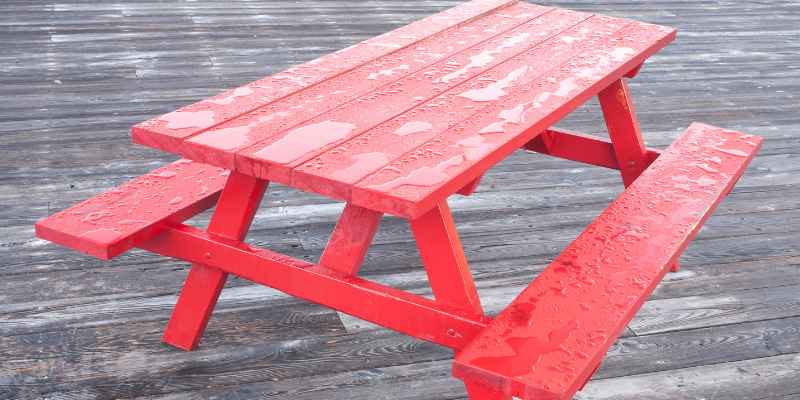
Lifespan varies more by maintenance than by species. Realistic ranges: untreated softwood picnic tables typically last 5-10 years, pressure-treated pine runs 10-20 years, and hardwoods like teak, oak, or well-sealed cedar and redwood can reach 15-25 years with yearly care. Composite lumber holds up longest, often 20 years or more, since it has no grain to rot.
📊 A picnic table resealed on schedule can roughly double its lifespan compared to one left unsealed – Source: outdoor lumber durability data cited above
Standard Picnic Table Size and Lumber You’ll Need
Most picnic tables measure about 72 inches long, 30 inches wide, and 28-30 inches tall, with attached benches around 17-18 inches high – dimensions that seat 6 to 8 adults comfortably at roughly 24 inches of space per person. If you’re building rather than buying, a standard 6-foot table typically uses:
- Tabletop: five or six 2×6 boards cut to 72 inches
- Benches: 2×10 boards cut to 72 inches
- Legs and frame: 2x4s, with the legs cut at a 30-degree angle
- Roughly eight 8-foot 2×6 boards and four 8-foot 2x4s total for a standard build
Whatever species you choose from the comparison table above, buy the lumber a size up if you’re unsure – it’s easier to plane a board down than stretch a short one.
Choosing the Right Wood for Your Climate
In humid or rainy regions, prioritize naturally rot-resistant species – cedar, redwood, teak, or a well-sealed pressure-treated pine – since moisture is what starts decay, not just sun exposure. In dry, high-UV climates, sun damage and surface checking are the bigger risk, so a UV-blocking sealant matters more than rot resistance alone; composite lumber also handles intense sun without fading as quickly as some stains do.
Coastal areas add salt air into the mix, which accelerates corrosion on any metal hardware and speeds up wood weathering – stainless steel fasteners and a slightly shorter resealing interval (yearly instead of every other year) are worth the extra step near the ocean.
Mistakes to Avoid When Choosing Picnic Table Wood
- Skipping the end grain: sealing the flat tabletop but not the exposed end grain on legs and boards – that’s where water gets in first.
- Buying treated wood for a tabletop and never sealing it – it’s rated for outdoor use, not for skipping maintenance entirely.
- Placing any wood table directly on soil or grass – ground contact rots legs years before the rest of the table fails.
- Choosing the cheapest softwood for a high-humidity climate – the upfront savings get eaten up by replacing boards within a few years.
- Ignoring reclaimed wood’s history – old barn or deck wood can carry hidden rot, old fasteners, or prior chemical treatment.
“The mistake we see most often is people sealing the tabletop and calling it done – the legs and the underside of the boards are what actually rot first, not the flat surface that sheds rain.”
Frequently Asked Questions
What is the best wood for a picnic table?
Cedar, redwood, and pressure-treated pine are the best all-around choices. Cedar and redwood resist rot naturally with no chemical treatment; pressure-treated pine costs less but needs a sealant before food contact. Hardwoods like teak or white oak last longest but cost several times more.
How long does a wood picnic table last?
Untreated softwood tables typically last 5-10 years, pressure-treated pine 10-20 years, and hardwoods like teak, oak, cedar, or redwood 15-25 years with yearly sealing or oiling. Composite lumber often exceeds 20 years since it has no grain to rot.
Can I use pressure-treated wood for a picnic table?
Yes. EPA and CPSC guidance treats pressure-treated wood as acceptable for picnic tabletops since they’re a serving surface, not a food-prep surface. Keep food from direct, prolonged contact with the wood and reseal it annually with a pigmented, penetrating sealant.
Is hardwood better than softwood for picnic tables?
Hardwood generally lasts longer – teak and white oak can reach 15-25+ years versus 5-20 years for softwoods. Softwoods like cedar, redwood, and treated pine are lighter, cheaper, and easier to work with, so the better choice depends on budget as much as durability.
How often should you reseal a wood picnic table?
Most species need resealing every 1-2 years, but pressure-treated and untreated softwoods like pine or fir hold up better with annual sealing. Composite lumber is the exception – it needs only soap and water, no sealant at all.
Is acacia wood good for outdoor picnic tables?
Yes. Acacia is naturally resistant to moisture, decay, and insects, and typically lasts 10-15 years outdoors with just a yearly oiling and occasional cleaning. It can expand and contract with temperature swings, so keep it off bare soil and out of standing water.
Conclusion: Choosing the Right Wood for Your Picnic Table
Cedar and redwood are the safest all-around picks for anyone who wants natural rot resistance without chemicals; pressure-treated pine is the budget option as long as you seal it and keep food off direct contact; and teak, oak, or acacia are worth the extra cost if you want a table that outlasts everything else on this list. Whichever species you pick, the maintenance schedule in the comparison table above matters more than the wood itself for how long the table actually lasts.
Sponsored / affiliate links. As an Amazon Associate I earn from qualifying purchases. I may earn additional commission from eligible campaigns.