Deckorators Decking Problems: Fading, Mold & Sagging Fixes
Deckorators composite decking most commonly fails through UV fading, mold in the board grooves, and sagging between joists spaced too far apart. Ignoring these issues can void the fade-and-stain warranty, which only covers color loss beyond 5 Delta E (CIE) units and requires spills to be cleaned within 48 hours. This guide covers why each problem happens, how to fix warped or faded boards, and what the warranty fine print actually protects.
This post contains affiliate links. As an Amazon Associate, we earn from qualifying purchases.
What’s Actually Causing Deckorators Decking Problems?
Best Composite Deck Cleaner Pick
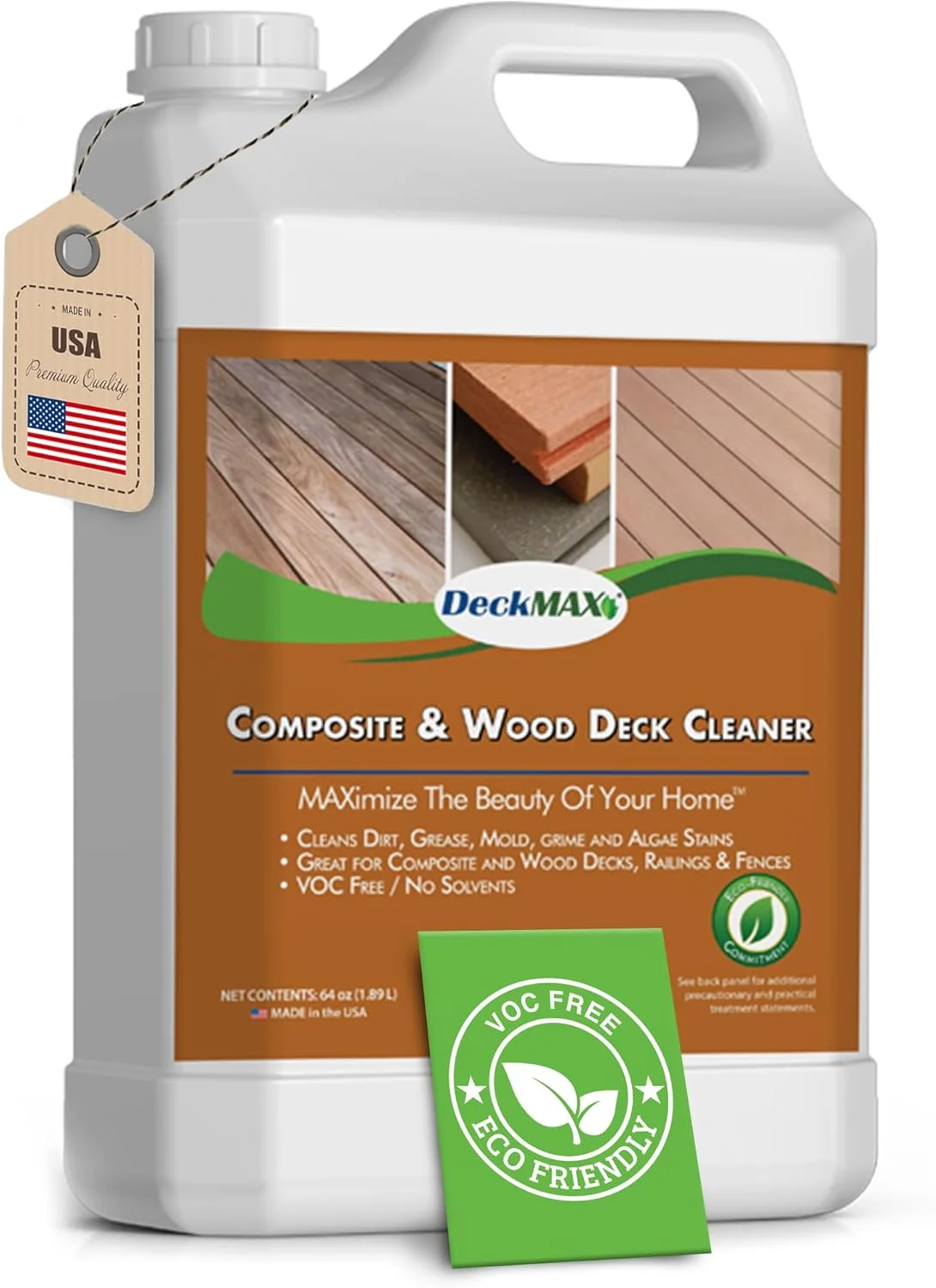 |
DeckMAX Concentrated Composite & Wood Deck Cleaner – $43.95 Formulated to strip mold, mildew, and algae out of the grooved profile composite boards use — the exact buildup described in the mold section below — without stripping the fade-resistant cap layer.
|
Deckorators decking is a capped wood-plastic or mineral-polymer composite board. Most reported problems trace back to three mechanisms: ultraviolet light breaking down the surface resin (fading), moisture trapped in the board’s grooved underside or fastener channels (mold), and joists spaced wider than the board can support under summer heat (sagging). Each has a documented fix — none of them require replacing the deck.
Why Do Deckorators Boards Fade or Discolor?
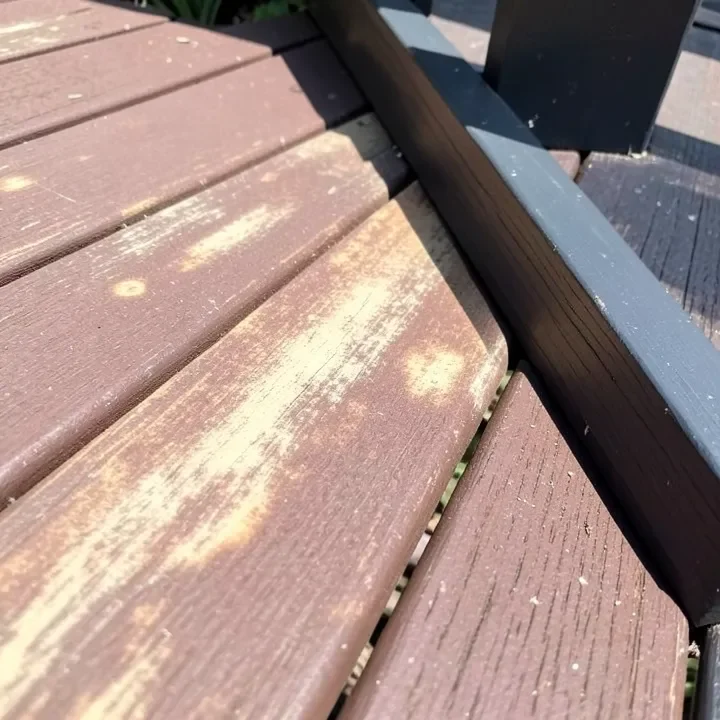
Deckorators boards fade because UV radiation breaks down the plastic resin in the capped surface layer, causing color pigment to leach out over several seasons. Darker earth tones — browns and reds — fade faster than lighter grays because they absorb more UV energy per square inch.
The warranty fine print matters here: Deckorators’ own documentation states the product “will not fade by more than 5 Delta E (CIE) units” — a standardized color-difference measurement, not a visual guess — and coverage requires spilled food, drinks, or other materials to be cleaned off with water and a mild household cleaner within 48 hours of exposure. A board that fades evenly across its whole surface from sun exposure is normal wear, not a warranty claim; uneven fading under furniture or planters that sat too long usually is not covered either.
📊 Deckorators’ fade warranty caps color shift at 5 Delta E (CIE) units and requires spill cleanup within 48 hours — Source: Deckorators Warranties, 2026
Why Does Mold Grow in Deckorators Decking Grooves?
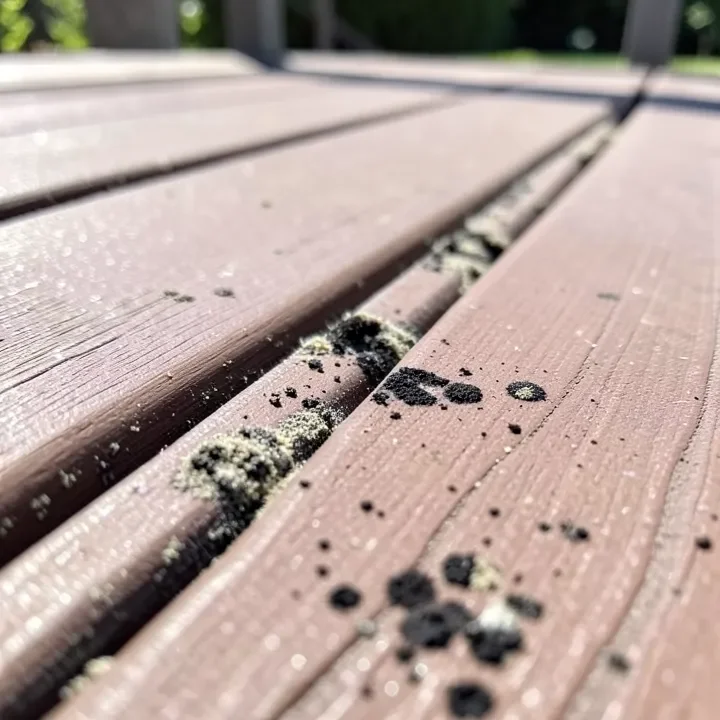
Mold and mildew are organisms that feed on trapped organic debris, and they take hold in Deckorators decking because the board’s grooved underside and hidden-fastener channel hold pollen, leaf litter, and moisture longer than a flat board would. Poor airflow underneath a low deck makes this worse.
Standing water is the real trigger, not the composite material itself — the same mold grows on wood decks in the same conditions. Clearing debris from the gaps between boards every season, and making sure the deck has at least a few inches of ventilation space underneath, prevents most of it before a cleaner is ever needed.
Why Does Deckorators Decking Sag Between Joists?
Deckorators specifies 16-inch on-center joist spacing for standard residential installs where boards run perpendicular to the joists, tightening to 12-inch on-center for diagonal patterns and commercial applications. Boards installed over 16-inch spacing, or fastened with fewer than two fasteners per joist, are prone to visible deflection once summer heat softens the composite slightly.
Contractors have also reported sagging even at the tighter 12-inch spacing during extended heat waves — a sign the underlying joist itself is undersized or has deflected, not that the decking is defective. If a board sags between joists that are correctly spaced, check the joist for rot or an undersized span before blaming the decking.
How to Fix Warped, Faded, Mildewed, or Slippery Boards
- Straighten a warped board: Apply even heat with a heat gun along the warp, then clamp or screw the board flat while it cools.
- Refresh faded color: Clean the surface with a composite-safe cleaner, let it dry fully, then apply a composite-rated deck stain matching the original color.
- Remove mold and mildew: Scrub the grooves with a stiff brush and a composite deck cleaner, working in the direction of the board grain, then rinse thoroughly.
- Improve slip resistance: Add slip-resistant deck strips or mats to stairs and shaded areas where algae film builds up fastest.
- Pressure wash safely: Stay under 1,500 PSI with a 40-degree fan tip held at least 12 inches from the board, spraying with the grain — higher pressure or a narrow tip can strip the capped surface.
Deckorators Warranty: What’s Actually Covered
Deckorators backs its decking with warranties ranging from 25 years on standard composite lines up to 50 years on its premium mineral-polymer Surestone lines (Voyage, Vault, Frontier), covering both structural integrity and fading/staining within the limits described above. Color-matching complaints — boards from different pallets not matching — are a production-lot issue, not a defect covered by the fade warranty, so buy all boards for one project from the same lot number when possible.
Deckorators’ own product documentation states its premium composite decking collections carry “an industry-leading 50-Year Limited Fade & Stain Warranty,” while its Surestone Technology core is separately backed by a 50-year structural warranty.
— Deckorators warranty documentation
For a full brand-by-brand price and warranty comparison, see our composite decking brands comparison.
Frequently Asked Questions
Is Deckorators decking slippery when wet?
Yes, even Deckorators’ slip-resistant lines are more slippery than real wood when wet, because the capped composite surface sheds water rather than absorbing it — the same issue reported on other capped composites like Trex. Regular cleaning to remove algae film reduces the risk, and slip-resistant strips help on stairs and shaded areas.
How long does Deckorators decking actually last?
Deckorators backs its standard composite lines with a 25-year warranty and its premium Surestone lines (Voyage, Vault, Frontier) with warranties up to 50 years. In practice, boards installed at the correct joist spacing with regular cleaning commonly perform well past the warranty period.
Can you pressure wash Deckorators composite decking?
Yes, but stay under 1,500 PSI with a 40-degree fan tip held at least 12 inches from the boards, spraying with the wood grain. Higher pressure or a narrow zero-degree tip can strip the capped surface layer and put the fade-and-stain warranty at risk.
How do I fix scratches on Deckorators decking?
Minor scratches can often be blended out with gentle heat from a heat gun or hairdryer. For deeper scratches, a matching composite deck repair kit fills and colors the damage. Protective furniture pads prevent most scratches from happening in the first place.
Conclusion
Fading, mold, and sagging cover nearly every real Deckorators complaint, and each has a specific, fixable cause rather than a defect that requires replacing boards. Match joist spacing to the installation pattern, clean debris out of the grooves each season, and check the warranty’s 5 Delta E fade limit and 48-hour spill rule before assuming a color change is covered.
Sponsored / affiliate links. As an Amazon Associate I earn from qualifying purchases. I may earn additional commission from eligible campaigns.