Coastal Decking: Materials, Fasteners, and Salt-Air Durability
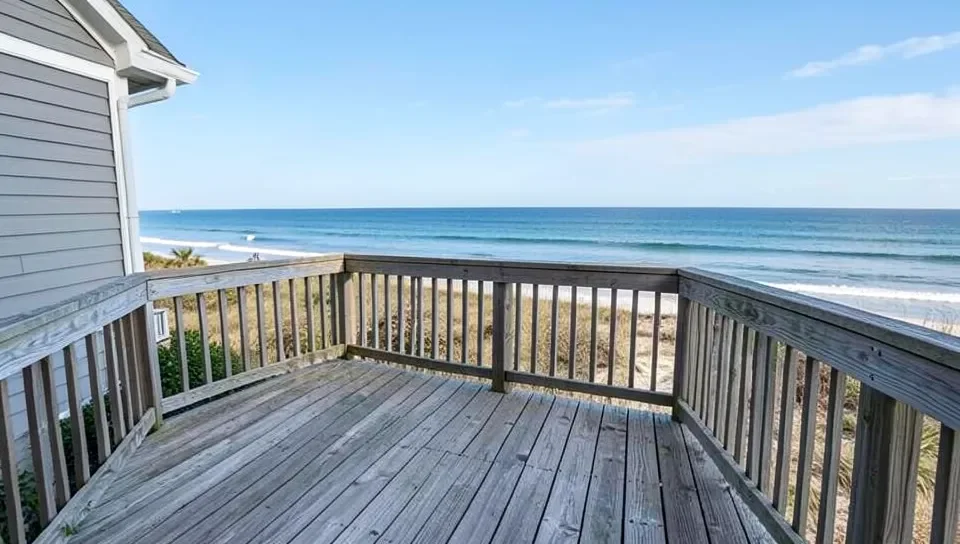
Coastal decking has one real, defining requirement that inland decks don’t: resistance to salt air and salt spray, which corrodes standard hardware and accelerates wear on standard materials far faster than typical outdoor exposure. Material choice matters, but the fastener grade matters just as much — a beautiful deck held together with the wrong hardware fails from the inside.
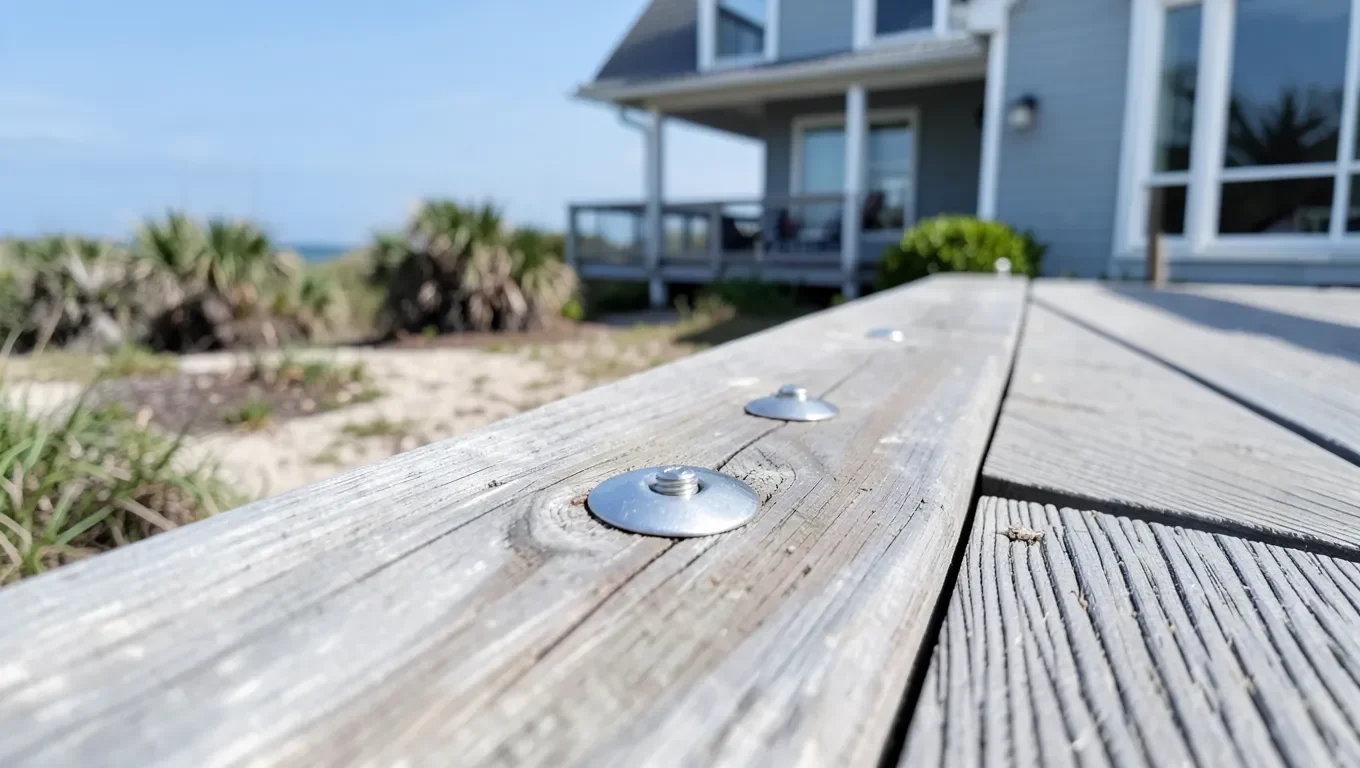
The Fastener Detail Most Guides Skip
The Grade That Actually Resists Saltwater
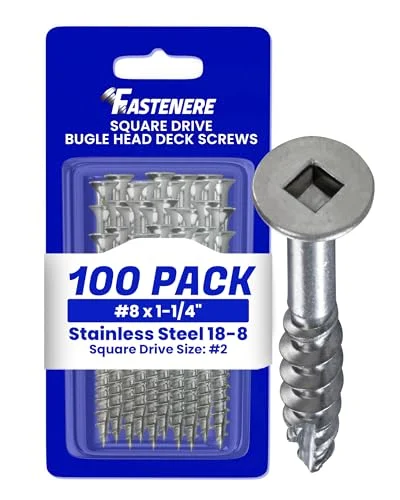 |
Fastenere 316 Marine Grade Stainless Deck Screws, 100-Pack – $18.88 316 stainless (not the more common 304) contains molybdenum, which specifically resists the chloride-induced pitting that generic “stainless steel” hardware suffers near saltwater.
|
“Stainless steel” isn’t one uniform product — the common grade (304) will still rust and pit in a coastal environment, while 316 stainless contains added molybdenum that specifically resists the chloride-induced corrosion salt air causes. Marine-industry guidance treats anywhere within roughly 10 miles of the coast as requiring 316 for any fastener, hinge, or hardware component — inside 5 miles, it’s considered essential, not optional. Even 316 isn’t fully corrosion-proof; it can still stain or pit if salt gets trapped in a poorly-draining joint or crevice, so proper drainage and gapping in construction still matters alongside using the right grade.
Material Options For Coastal Exposure
- Composite/capped composite decking: a strong coastal choice — no wood cellulose to rot, and premium capped lines resist salt-air fading and staining better than base composite. Confirm the specific product’s salt-air/UV warranty coverage, since this varies by line.
- PVC decking: fully synthetic, no wood content at all, making it immune to the rot risk salt-driven moisture accelerates in wood — a strong option specifically for high-exposure coastal sites.
- Naturally rot-resistant hardwoods (Ipe, teak): real, long-established marine and coastal use (teak’s use in boat decking is centuries old) — genuinely durable, at a real cost and maintenance premium versus composite.
- Standard pressure-treated wood: workable but the least well-suited option for heavy salt exposure — salt accelerates the wear that would otherwise be slow, and standard hardware compounds the problem if not upgraded to 316.
Construction Details That Matter More Near Salt Air
- Structural hardware, not just visible fasteners: joist hangers, post brackets, and any hidden structural connector should also be 316-rated or hot-dip galvanized to a marine spec — a corroded hidden connector is a structural risk, not just a cosmetic one.
- Adequate drainage gaps: board spacing that lets water (and salt residue) drain and dry rather than pool matters more in a coastal environment, where trapped moisture concentrates salt against the material.
- Elevated, ventilated framing where possible: airflow underneath the deck reduces the moisture/salt buildup that accelerates both wood decay and hardware corrosion.
- Regular fresh-water rinsing: periodically rinsing salt residue off the deck surface and railings with fresh water is a simple, real maintenance step that meaningfully slows salt buildup between more thorough cleanings.
“Coastline” As A Specific Product, Not Just A Category
Worth knowing if you’ve seen the name in a showroom or online: “Coastline” is also a specific product line within TimberTech’s Vintage Collection (part of the AZEK brand), not just a generic description of decking suited to coastal properties. TimberTech Coastline is a soft gray/silver-toned capped composite board with a wire-brushed texture, engineered with the brand’s own fade and stain-resistance technology. If you’re comparing options and see “Coastline” as a specific SKU or color name rather than a category, that’s this product — worth distinguishing from the general “decking for coastal homes” advice in the rest of this guide, which applies regardless of brand or specific product line.
Regulatory And Environmental Considerations
Waterfront and near-shore construction often falls under additional permitting beyond standard deck codes — setback requirements from the water’s edge, coastal zone management regulations, and sometimes environmental review for projects near protected shoreline or wetland areas. These requirements vary significantly by state and municipality, so confirm with your local building and coastal zone management office before finalizing a design, rather than assuming standard residential deck permitting covers a waterfront property.
Railings And Hardware: The Same Rule Applies
Railing systems and their hardware face the same salt-air corrosion question as decking fasteners, and the same 316 answer applies — a railing post base, cable railing tensioner, or hinge in standard stainless or plated steel corrodes and weakens over time in a coastal environment, and a railing failure is a genuine fall-safety concern, not just a cosmetic one. Aluminum railing systems with a marine-grade powder coat are another reasonable coastal option, since aluminum doesn’t rust the way steel does, though the coating itself still needs to be intact to prevent pitting corrosion underneath. Whatever railing material you choose, ask specifically about its coastal/marine rating rather than assuming a standard product line is automatically suitable — this is exactly the kind of detail that separates a railing rated for general outdoor use from one actually tested for salt exposure.
Frequently Asked Questions
What decking material is best for coastal/saltwater exposure?
Composite, capped composite, and PVC decking generally hold up best against salt air with minimal maintenance. Naturally rot-resistant hardwoods like Ipe or teak are also strong long-term options at a higher cost and maintenance level.
Do I really need 316 stainless steel fasteners near the coast?
Within about 10 miles of the coast, yes — 304 stainless (the more common grade) will still pit and corrode in salt air, while 316’s added molybdenum specifically resists chloride-induced corrosion. This applies to hidden structural hardware, not just visible fasteners.
How do you maintain a deck in a coastal environment?
Rinse salt residue with fresh water periodically, ensure adequate drainage and airflow underneath the deck, and inspect hardware (including hidden structural connectors) for early corrosion signs more frequently than you would inland.
Conclusion
Coastal decking’s real challenge is salt air, and the fastener grade matters as much as the decking material itself — 316 stainless, not standard 304, for anything within about 10 miles of the coast. Composite, PVC, or naturally rot-resistant hardwoods are all reasonable material choices; the fastener and hardware detail is the part a generic decking guide usually misses.
Sponsored / affiliate links. As an Amazon Associate I earn from qualifying purchases. I may earn additional commission from eligible campaigns.