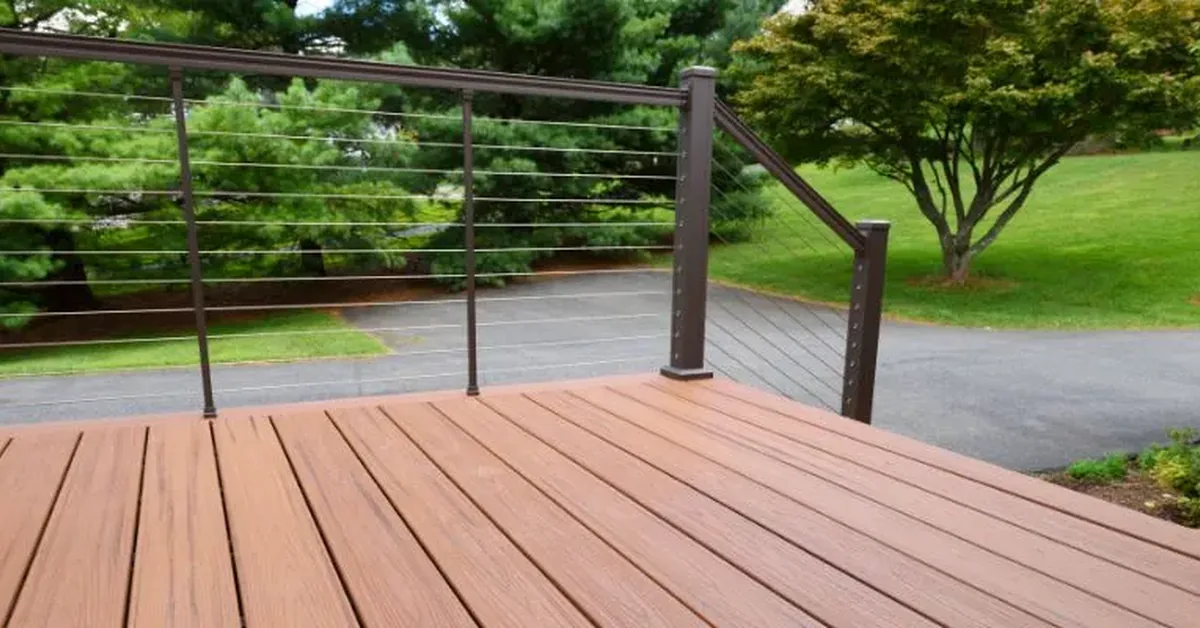
Can You Sand Composite Decking? (Capped vs. Uncapped Rules)
Composite decking can be lightly sanded only if it’s uncapped — capped composite (Trex Transcend, TimberTech, most boards sold since 2015) will melt or lose its protective shell under sanding heat and void the warranty. Sanding the wrong type risks permanent smear marks and a claim denial worth hundreds of dollars. This guide covers how to tell capped from uncapped boards, safe 600-grit hand-sanding steps, and warranty-safe alternatives like deck brighteners.
What Is Composite Decking Made Of?
Composite decking is a manufactured board made from a mix of wood fibers and plastic (usually polyethylene or PVC), pressed into planks that resist rot, splintering, and insect damage far better than solid wood. Most boards made in the last decade are capped, meaning a thin plastic shell is fused over a wood-plastic core specifically to block moisture, UV fading, and stains — that shell is also the reason sanding behaves so differently on composite than on real lumber.
Best Composite Decking Sanding Pick
 |
SACKORANGE 600 Grit Sanding Sponge, 20-Pack – $9.49 Matches the 600-grit, hand-sanding-only approach this guide recommends for uncapped composite boards — foam backing keeps pressure even so you don’t dig into the surface.
|
Capped vs. Uncapped Composite Decking: Why It Changes the Answer
Uncapped composite is a solid wood-plastic blend all the way through — the same material on the surface as in the core. Capped composite is a wood-plastic core wrapped in a separate polymer skin. This single difference is the entire answer to whether sanding is safe: friction heat that a capped shell can’t tolerate is often fine on an uncapped board’s uniform material.
To tell which type you have, look at a cut end of a board (a trimmed edge near stairs or railing posts is usually visible). If you see a thin, distinctly different-colored layer wrapping a core of a different shade, it’s capped. If the color and texture look identical all the way through, it’s uncapped. Brand line is a reasonable shortcut too: Trex Transcend and Enhance, TimberTech AZEK and Prime+, and Fiberon Good Life are all capped; older Trex Select-era boards and many generic or early-2000s composite decks are uncapped.
| Question | Capped Composite | Uncapped Composite |
|---|---|---|
| Safe to sand? | No — friction heat damages the cap | Yes, lightly, with fine grit |
| What sanding does | Melts/smears the plastic shell, exposes fibers | Removes surface oxidation and light stains |
| Warranty impact | Voids the board’s warranty immediately | Usually not warranty-relevant on older lines |
| Common brands/lines | Trex Transcend/Enhance, TimberTech AZEK/Prime+, Fiberon Good Life | Trex Select (older), generic early-2000s composite |
Is Older Composite Decking More Likely to Be Uncapped?
Generally yes. Composite decking that predates roughly the mid-2010s — including early Trex and generic big-box composite from the early 2000s — was typically uncapped, since capping technology wasn’t standard across the industry yet. If your deck is 15–20 years old and has never had a cap layer that peeled, flaked, or discolored separately from the core, it’s a reasonable (though not certain) sign it’s uncapped. Still confirm on a cut edge before sanding — some manufacturers introduced capping mid-line without a clear model-year cutoff, so age alone isn’t proof.
How to Safely Light-Sand Uncapped Composite Decking
Only attempt this on confirmed uncapped boards. Work in the shade on a cool, dry day — heat and direct sun make it easier to scorch the surface.
- Confirm the board is uncapped: Check a cut edge for a uniform color and texture all the way through.
- Clean the surface first: Wash with a mild detergent and soft-bristle brush, then rinse and let the board dry completely.
- Test a hidden spot: Sand a few inches on an inconspicuous board (under furniture or near a rail post) before doing the full deck.
- Hand-sand with 600-grit only: Use a fine-grit sanding sponge and sand in the direction of the grain with light, even pressure — never a random orbital sander, which generates too much heat.
- Wipe and inspect: Clear off dust with a damp cloth and check for glossy or smeared patches, a sign the surface got too hot.
- Rinse and let dry: Finish with a clean water rinse; uncapped boards generally don’t need a sealant coat, but check your specific product’s care sheet.
Can You Use a Power Sander on Composite Decking?
No, not recommended on any composite decking, capped or uncapped. Power sanders spin fast enough to generate the same friction heat that melts a capped shell, and on uncapped boards they remove material unevenly and can gouge the surface in seconds. Hand-sanding with a fine-grit sponge is slower but far safer for both types.
What Happens If You Sand Capped Composite Decking
Sanding friction can push a board’s surface temperature past roughly 180°F, which is enough to soften the plastic cap. Once that happens, the shell smears instead of abrading cleanly — it distorts the printed wood-grain texture, can expose the wood fibers underneath, and permanently ruins the UV-protective layer that was blocking fading and staining in the first place. None of this is fixable with more sanding or a fresh coat of anything; a damaged capped board typically has to be replaced outright.
The financial risk is separate from the physical damage. Composite decking manufacturers write sanding out of their warranty terms entirely — altering the board this way is treated the same as any other unauthorized modification, so any future claim on that board (fading, staining, structural issues) can be denied once it’s been sanded, whether or not the sanding itself caused the later problem.
Alternatives to Sanding
For capped boards especially, skip sanding entirely and reach for one of these instead:
- Composite deck brightener or cleaner: A dedicated brightener lifts dirt, mildew, and tannin stains without touching the cap. Apply with a soft brush or pump sprayer and rinse thoroughly.
- Low-pressure washing: A pressure washer under roughly 1,500 PSI with a fan tip, held at least 12 inches from the surface, clears grime that plain sweeping misses.
- Spot treatment for stains: Oil and grease spots usually respond to a degreasing dish soap and warm water before you reach for anything stronger.
- Professional restoration: For deep scratches on capped boards, a contractor familiar with composite repair can sometimes color-match a filler rather than sand — ask specifically about cap-safe methods before hiring.
📊 Composite decking has grown to roughly a third of the U.S. residential decking market as of the mid-2020s, and the capped segment now represents most new composite board sales — Source: Trex Company FAQ
According to Trex’s own decking FAQ, sanding alters the board’s surface and compromises its ability to resist stains, scratches, and UV damage — the company advises against it and treats it as a warranty-voiding modification.
— Trex Company, official product FAQ
Frequently Asked Questions
Can you sand composite decking?
Yes, but only if it’s uncapped. Capped composite decking (most boards made in the last decade, including Trex Transcend and TimberTech AZEK) will smear or melt under sanding friction and the manufacturer will treat it as a voided warranty. Check a cut edge for a distinct outer layer before sanding anything.
What’s the difference between capped and uncapped composite decking?
Capped composite has a separate plastic shell fused over a wood-plastic core to block moisture and UV fading; uncapped composite is the same wood-plastic blend all the way through with no separate shell. The cap is exactly what makes sanding risky on modern boards.
What grit sandpaper is safe for composite decking?
On uncapped boards only, a fine 600-grit sanding sponge used by hand, in the direction of the grain, is the safest choice. Coarser grits and any power sander generate enough heat and material removal to damage the surface, even on uncapped decking.
Does sanding void a composite decking warranty?
On capped boards, yes, essentially always — manufacturers classify sanding as an unauthorized surface modification. On older uncapped composite lines, sanding is less likely to affect warranty coverage, but always check the specific product’s written warranty terms first.
How do you fix scratches on capped composite decking without sanding?
Try a composite-safe cleaner or brightener first, since many scratches are really surface grime rather than true gouges. For a genuine deep scratch, a color-matched composite filler applied by a contractor experienced with capped boards is the standard cap-safe repair.
Conclusion
Whether you can sand composite decking comes down to one question: capped or uncapped? Uncapped boards can take a light, careful hand-sanding with 600-grit paper. Capped boards — the majority sold today, including Trex and TimberTech lines — should never be sanded, since it melts the protective shell and voids the warranty outright. When in doubt, reach for a composite-safe brightener instead, and save sanding for the specific case where you’ve confirmed uncapped material. For color and style options if you’re shopping for a replacement board instead of restoring an old one, see our AZEK composite decking colors guide, and for general deck upkeep see our wood decking hub.
Sponsored / affiliate links. As an Amazon Associate I earn from qualifying purchases. I may earn additional commission from eligible campaigns.
 SuperStructuring Plugs for Decking - 1/4" Trex Composite Decking Wood Plugs, Weather-Resistant, UV Protection, Hole Covers for Outdoor Home Improvement & Repair - Enhance Naturals Foggy Wharf, 100-PcSuperStructuring Plugs for Decking - 1/4" Trex Composite Decking Wood Plugs, Weather-Resistant, UV Protection, Hole Covers for Outdoor Home Improvement & Repair - Transcend Tiki Torch, 100-Pc