Fortress Metal Deck Framing vs Wood: Why Builders Are Switching
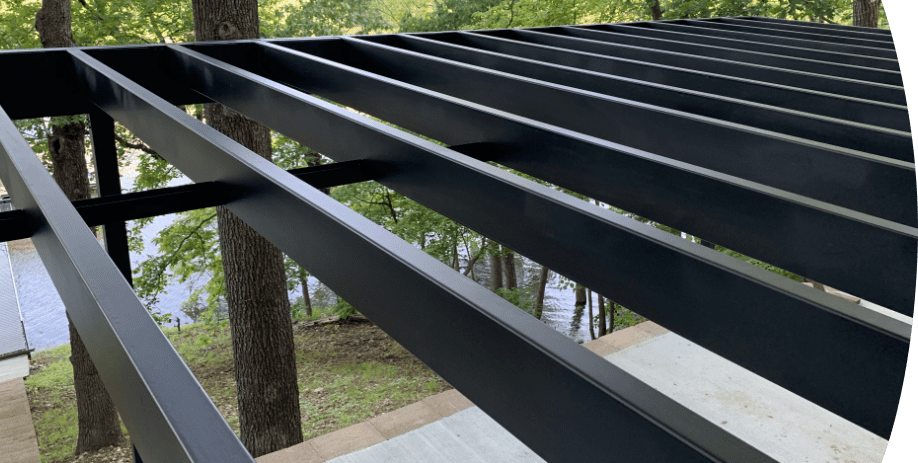
Fortress Metal Deck Framing swaps the pressure-treated 2x8s and 2x10s under your deck boards for galvanized, powder-coated steel joists and beams. It’s made by Fortress Building Products under the “Evolution” line and sold through Lowe’s and professional deck-supply dealers, not as an Amazon DIY kit. The pitch is straightforward: steel doesn’t rot, warp, twist, or feed termites the way wood does. Whether that’s worth the higher price, and what actually changes about how you build the deck, is what this guide walks through.
What Fortress Metal Deck Framing Actually Is
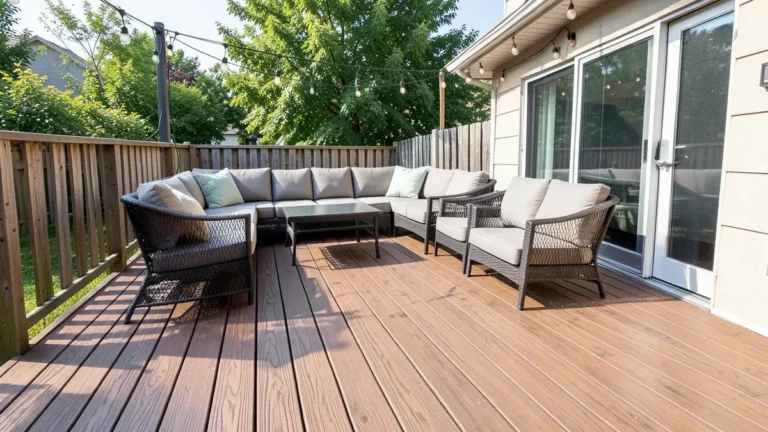
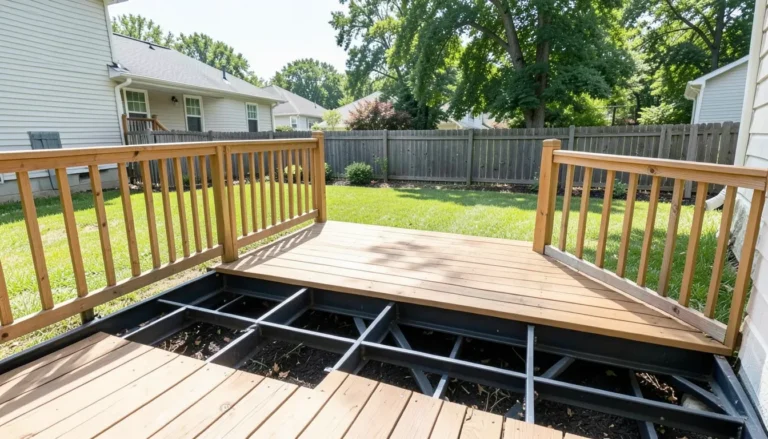
Fortress’s Evolution system covers the whole substructure: joists, beams, ledgers, post brackets, and connecting hardware, not just a single steel part bolted onto an otherwise-wood frame. Joists come in lengths from 12 to 20 feet, so most residential decks need only one piece per run instead of splicing lumber. Beams are a 2-inch by 11-inch steel profile, available in single or doubled-up configurations depending on the span and load the deck needs to carry. Every component is powder-coated, which is what actually keeps moisture off the steel and prevents rust, not just the base metal itself. If you also want the joist-sizing and spacing specifics for a generic steel deck joist system rather than the Fortress brand specifically, that’s covered separately since sizing and spacing rules differ by manufacturer.
Fastener We Recommend For Steel Joists
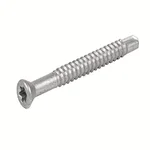 |
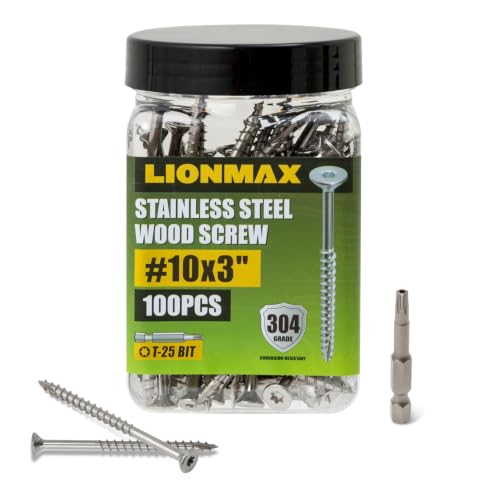
DeckWise #7×1-5/8″ Self-Tapping Metal Joist Screws – $19.20 Standard deck screws won’t bite into steel joists cleanly – this is the fastener type made for it.
|
The Real Durability Difference, Not the Marketing Version
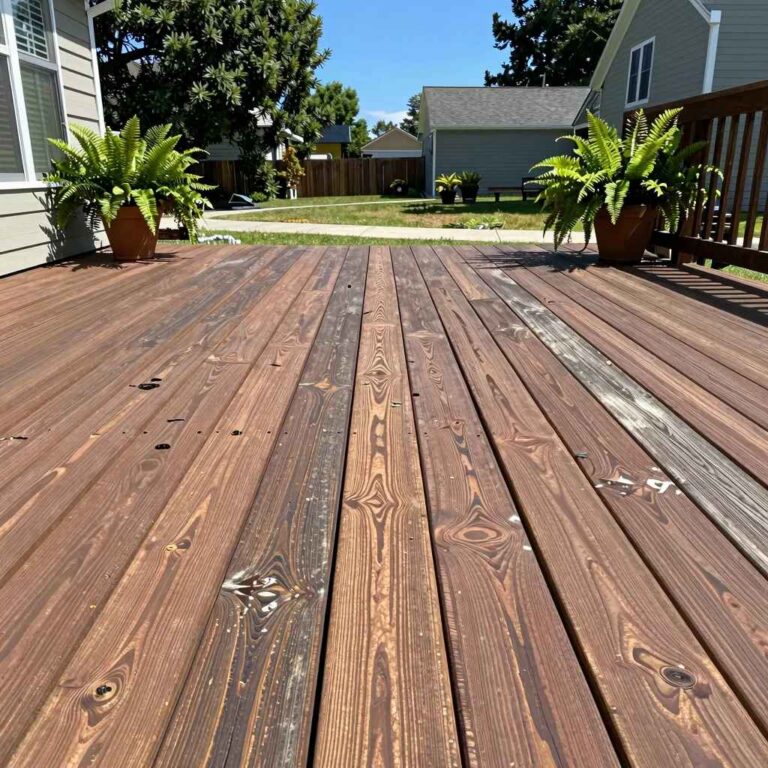
Wood framing doesn’t rot on a fixed timeline the way some sales copy implies – a well-flashed, pressure-treated frame that stays dry can hold up for years. What actually fails wood joists is moisture getting trapped at specific points: ledger-to-house connections, end grain, and the holes left by fasteners, especially in humid climates or decks built low to the ground. Pressure-treated lumber resists this better than untreated wood, but it doesn’t eliminate the failure mode. Steel framing removes that specific weak point since there’s no grain to wick moisture into, and termites have nothing to eat. What steel introduces instead is a different failure mode: if the powder coating gets scratched or cut during installation, that exposed spot can rust, and pairing steel with the wrong fastener metal can cause galvanic corrosion at the connection point.
In practical terms, a wood-framed deck typically lasts somewhere in the 10 to 20 year range depending on climate and maintenance. Fortress backs its steel framing with a 25-year structural warranty against corrosion, and properly installed steel decks are commonly cited as reaching 50 years of service. That gap is the actual argument for steel – not that wood is doomed to fail, but that steel removes the maintenance and inspection cycle wood needs to hit its upper lifespan range.
What It Actually Costs
Wood joist framing typically runs about $15 to $25 per square foot installed, materials and labor combined. Steel deck framing generally costs 30% to 50% more than that upfront – it’s a real premium, not a rounding error. Part of that gap narrows on the labor side: because Evolution’s components are pre-engineered and need less on-site cutting and fitting, some installers report needing roughly a third fewer labor hours than framing the same deck in wood. That doesn’t erase the higher material cost, but it does mean the total installed-price gap is usually smaller than the raw material price difference suggests. If you’re weighing the two against a straightforward wood deck’s typical installed cost, budget for steel to land meaningfully higher, then factor in that you likely won’t be re-decking or sistering joists in year 12 the way you might with wood.
Installation Is Different, Not Just a Material Swap
This is the part most comparisons skip: you can’t frame with steel using the same fasteners and techniques as wood. Standard deck screws are built to bite into and thread through wood fiber – against 14 to 18 gauge steel they’ll either fail to grip or strip out. Steel-joist installation calls for self-tapping, self-drilling screws with a drill-point tip that can punch through the steel itself, usually in 410 stainless to resist corrosion at the cut edge where the coating is broken. Composite and PVC decking manufacturers like Trex and TimberTech publish separate fastener specs specifically for attaching their boards to steel versus wood substructure, and using the wood-rated fastener on the wrong substrate is a common mistake on a first steel build.
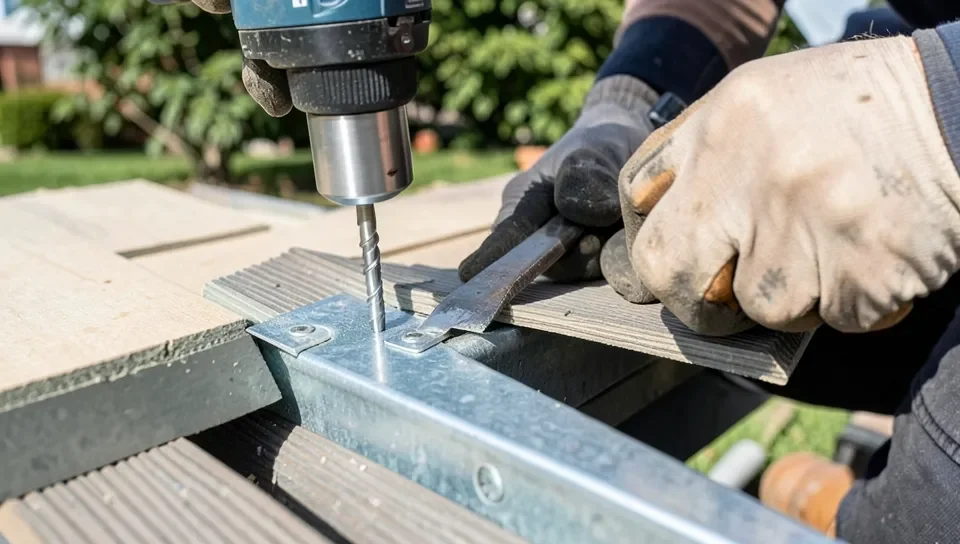
Connections between components change too. Instead of toe-nailing or using a framing nailer, steel components join through pre-punched brackets with self-drilling structural screws or bolts. Joist hangers are steel-specific clips designed for the profile of the beam and joist, not the galvanized hangers sold for wood framing. None of this makes steel harder to work with once you know the parts list, but it does mean a crew experienced only in wood framing will need to source different hardware and, in most cases, a short learning curve before their first steel deck goes as fast as their tenth.
Permits and Inspections Work Differently Too
Most building departments have prescriptive span tables built into their code for standard dimensional lumber, so a wood-framed deck within normal sizes often sails through plan review with minimal back-and-forth. A manufactured steel framing system doesn’t fall under those same prescriptive lumber tables, since it isn’t dimensional lumber. Instead, inspectors typically want to see the manufacturer’s own engineering documentation, such as an ICC-ES evaluation report or equivalent, showing that the specific joist and beam sizes you’re using are rated for your span and load. Fortress publishes this documentation for its Evolution system, and it’s worth pulling before you apply for a permit rather than after an inspector asks for it. In some jurisdictions, a non-standard or unusually large steel deck may also need a stamped engineering plan, something a straightforward wood deck built to code minimums usually avoids. None of this makes steel framing harder to permit, but skipping this step is the most common reason a steel deck project stalls partway through inspection.
When Steel Makes Sense, and When Wood Still Wins
Steel framing earns its premium fastest on decks where wood’s failure points get triggered hardest: low-to-grade decks with limited airflow underneath, coastal or high-humidity regions, and decks built near pools, hot tubs, or irrigation where the frame is regularly wet. It’s also worth it on any deck where tearing up the decking to inspect or repair the frame later would be expensive or disruptive, since steel largely removes that maintenance cycle. Wood framing still makes sense for a straightforward, well-ventilated, ground-level deck in a dry climate, for a budget-constrained build, or for a DIYer without access to steel-specific fasteners and brackets. Pressure-treated lumber, built and flashed correctly, is not an unreasonable choice for most standard decks – steel is the upgrade for the decks where wood’s known weak points are the most likely to actually show up.
Frequently Asked Questions
Does Fortress Steel Deck Framing Rust?
It can, but only where the powder coating is scratched or cut during installation, exposing bare steel. Touching up cut edges with a matching coating product during install and avoiding fasteners made from a different, reactive metal keeps the system corrosion-resistant for the length of its warranty.
Can I Use Regular Deck Screws With Steel Joists?
No. Standard wood deck screws aren’t designed to penetrate 14 to 18 gauge steel and will strip or fail to grip. You need self-tapping, self-drilling screws with a drill-point tip made specifically for metal joists.
Is Fortress Steel Framing Sold On Amazon?
No. Fortress’s Evolution framing system is sold through Lowe’s and professional deck-supply dealers, not through Amazon. The fastener hardware needed to work with steel joists, however, is widely available there.
How Much More Does Steel Deck Framing Cost Than Wood?
Expect roughly 30% to 50% more upfront than a comparable wood-framed deck. Some of that gap is offset by lower labor hours during installation, and further offset over time by the reduced maintenance and longer service life steel framing offers.
Conclusion
Fortress Metal Deck Framing is a legitimate upgrade over wood joists where moisture, humidity, or long-term maintenance are real concerns, not just a marketing angle. It genuinely won’t rot, warp, or feed termites, and it comes with a real warranty behind that claim. The trade-offs are just as real: a 30-50% higher upfront cost and a different set of fasteners and connection hardware than a wood-framing crew is used to. Decide based on where your deck sits and how it’ll be exposed, not just on which material sounds more durable on paper.
Sponsored / affiliate links. As an Amazon Associate I earn from qualifying purchases. I may earn additional commission from eligible campaigns.