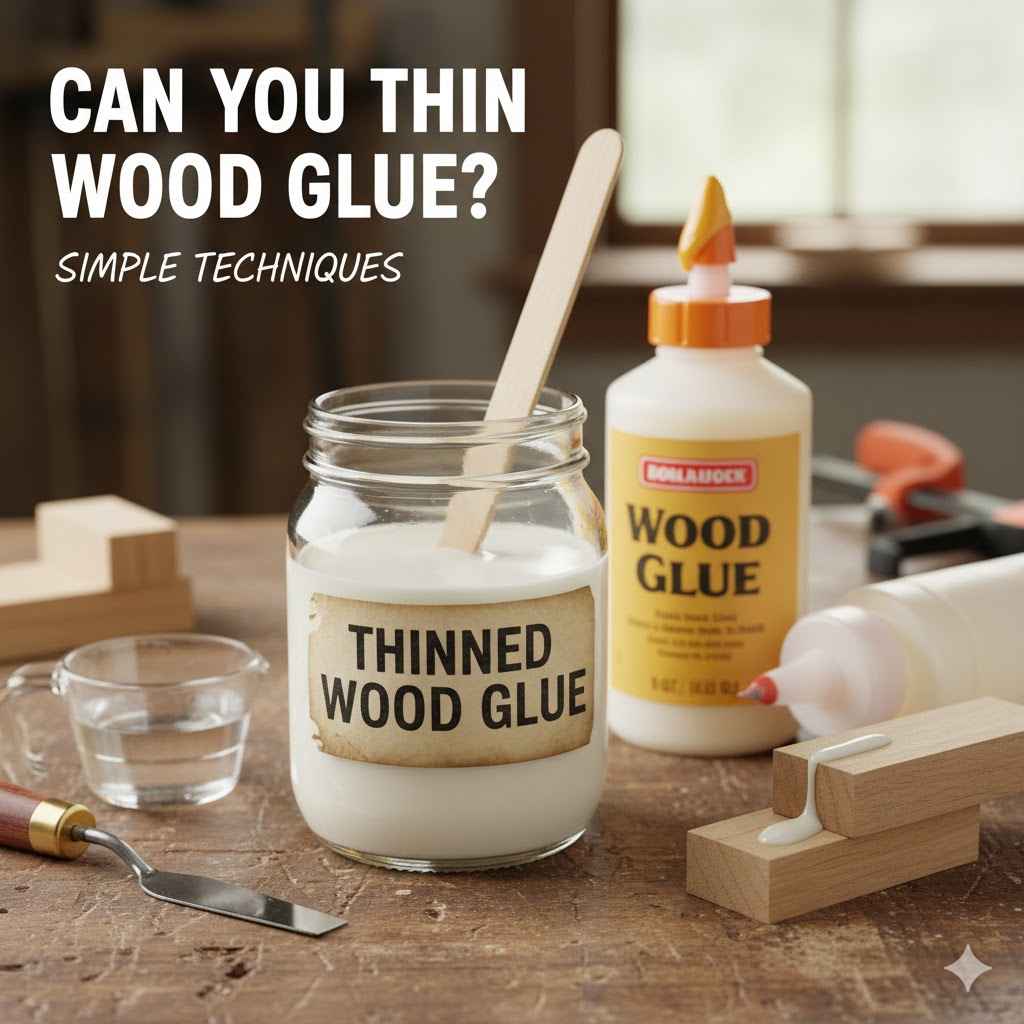
Can You Thin Wood Glue? Simple Techniques
Many woodworkers wonder, “Can You Thin Wood Glue? Simple Techniques” are really that simple. It’s a common question, especially for those just starting out.
Sometimes, glue can get a bit thick, making it hard to spread evenly or fit into tight spots. Don’t worry! This guide will walk you through easy ways to get your wood glue just right.
We’ll cover what you need and how to do it step-by-step so your projects turn out great.
Why Thinning Wood Glue Is Sometimes Needed
Thinning wood glue might seem odd at first. After all, it’s made to be sticky and strong. But there are times when its natural thickness can be a disadvantage.
Understanding these situations helps you know when and why you might want to make your glue a little runnier. This technique can save projects and make your work much smoother. It’s about adjusting the glue to fit the job, not the other way around.
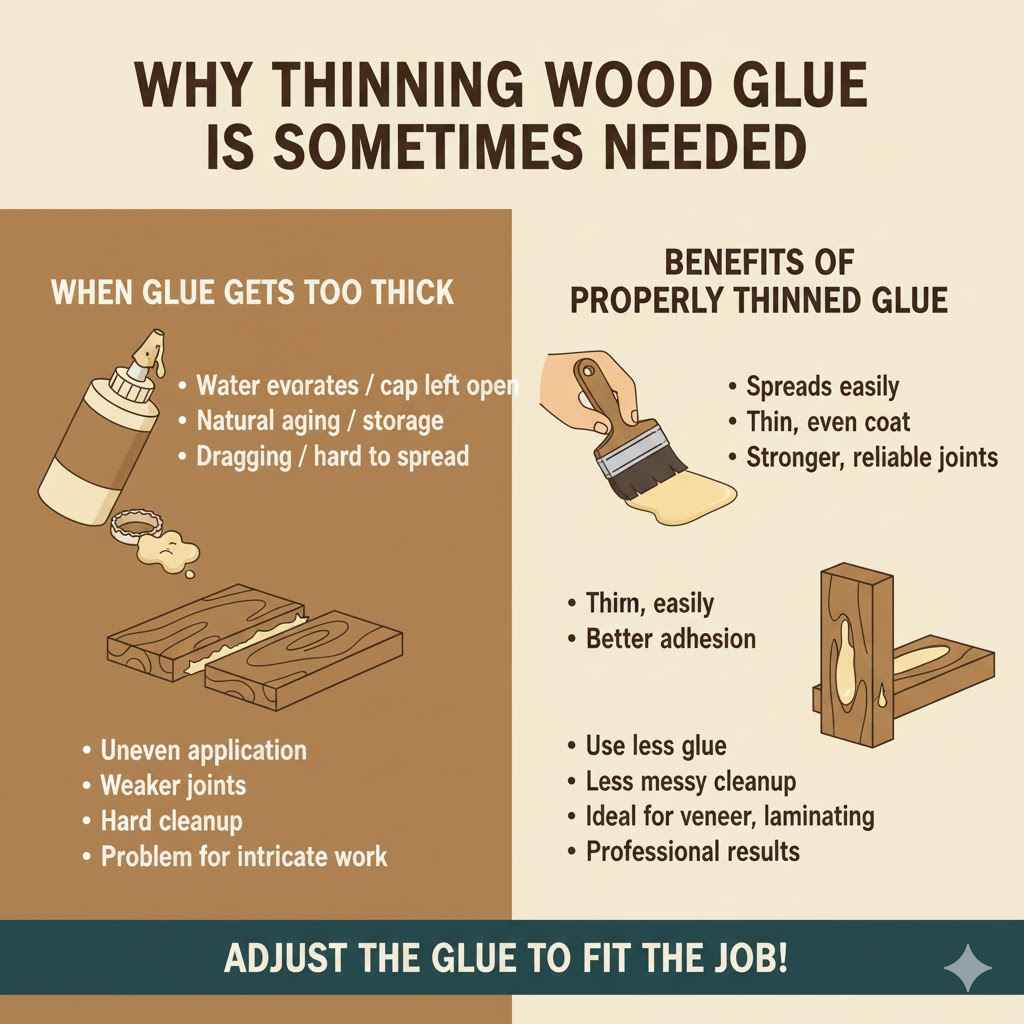
When Glue Gets Too Thick
Wood glue can thicken for a few reasons. As it sits in the bottle, some water can evaporate. This is especially true if the cap isn’t sealed tightly.
Also, depending on the brand and how it’s stored, glue can naturally become more viscous over time. Sometimes, the room temperature can affect its consistency. If your glue feels like it’s dragging when you try to spread it, it might be too thick for the task.
Using glue that’s too thick can lead to uneven application. This means you might not get full coverage on your wood pieces. This can result in weaker joints.
It also makes it harder to clean up squeeze-out, the excess glue that pushes out when you clamp the pieces together. For intricate work or situations where precise application is key, thick glue is a problem.
Benefits of Properly Thinned Glue
When wood glue is thinned correctly, it spreads much more easily. This allows for a thin, even coat across the entire surface of the wood. This even coat ensures better adhesion and creates stronger, more reliable joints.
It also means you use less glue overall, which saves you money and reduces messy cleanup.
For tasks like veneer application, laminating thin wood strips, or joining small, detailed parts, thinner glue is essential. It can seep into tiny gaps and ensure complete contact between the surfaces. This means your finished piece will look better and hold up longer.
Properly thinned glue is a key to professional-looking woodworking results.
How Can You Thin Wood Glue? Simple Techniques
Learning Can You Thin Wood Glue? Simple Techniques is very useful for any woodworker. It’s not complicated, but knowing the right way to do it makes all the difference.
We’ll look at the best things to use and how to mix them. This will help you get the perfect glue consistency for your projects.
What To Use For Thinning
The most common and effective way to thin wood glue is with water. Specifically, clean water is best. Distilled water is ideal because it has no minerals that could potentially affect the glue or the wood.
Tap water can work in a pinch, but it’s not as pure. The amount of water you add is crucial; too much can weaken the glue significantly.
Another option, though less common and sometimes frowned upon, is denatured alcohol. It can thin the glue and also helps it dry faster. However, alcohol can sometimes affect the plasticizers in the glue, potentially making the bond less flexible or strong over time.
For most PVA wood glues, water is the go-to thinning agent. Always check the glue manufacturer’s recommendations if possible.
Water as the Primary Thinner
Water is the natural solvent for most common wood glues, which are PVA (Polyvinyl Acetate) based. Think of it like diluting paint. Adding water breaks down the concentrated glue mixture, making it more fluid.
The key is to add it gradually and mix thoroughly. You’re aiming for a consistency that flows well but still has good adhesive properties.
The amount of water you add depends on the original thickness of the glue and how thin you need it to be. A good starting point is to add just a few drops of water at a time. Mix it in well.
Then, test the consistency. You want it to be like heavy cream or thin syrup, not watery like juice. The goal is to make it spreadable, not to make it disappear.
Denatured Alcohol A Secondary Option
Denatured alcohol is a solvent that can also be used to thin wood glue. It evaporates much faster than water. This means the glue will start to set and dry more quickly once applied.
This can be a benefit if you need a fast bond or are working in a humid environment where water might slow things down.
However, using denatured alcohol requires caution. It can sometimes weaken the glue bond more than water if too much is used. Also, it can be harsher on some types of wood finishes or sealers.
Always test on a scrap piece first. For general purposes, water is the safer and more common choice for thinning standard wood glues.
The Mixing Process Step By Step
Getting the right consistency is important. Follow these steps to thin your wood glue effectively. This method ensures you don’t over-thin it and weaken the bond.
It’s all about small adjustments and careful mixing.
Select Your Glue
Choose the wood glue you plan to use. Make sure it’s a standard white or yellow PVA wood glue. Glues designed for specific purposes, like epoxy or hide glue, may react differently or cannot be thinned this way.
Prepare Your Container
Get a small, clean container. An old plastic food container or a small jar works well. You also need a stirring stick, like a craft stick or a small dowel rod.
This will be used to mix the glue and thinning agent.
Add a Small Amount of Glue
Pour a small amount of the original wood glue into your clean container. You don’t need a lot to start. This lets you practice and make adjustments without wasting a lot of glue.
Add Thinning Agent Gradually
Add just a few drops of water (or denatured alcohol) to the glue. For example, start with 5-10 drops for about two tablespoons of glue. It’s better to add too little and add more than to add too much at once.
Mix Thoroughly
Use your stirring stick to mix the glue and the thinning agent together. Stir slowly and deliberately. Scrape the sides and bottom of the container to ensure everything is fully combined.
You want to see a uniform color and texture.
Test the Consistency
Lift the stirring stick. The thinned glue should drip off slowly. It should flow more easily than the original glue but still be thick enough to cling to the stick for a moment.
If it runs off too quickly, it’s too thin. If it’s still too thick and gloppy, add another drop or two of water and mix again.
Adjust as Needed
Repeat steps 4-6, adding tiny amounts of water and mixing, until you achieve the desired consistency. The ideal thickness is often compared to heavy cream or a thick syrup. This allows for easy application and good coverage without being runny.
Apply Your Thinned Glue
Once you have the perfect consistency, use your thinned glue for your project. Apply it evenly to the surfaces that will be joined.
Achieving the Right Consistency
The goal of thinning is to make the glue easier to work with, not to make it weaker. A good indicator of the right consistency is how it flows. Imagine honey versus milk.
You don’t want it to be as thin as milk, but you also don’t want it as thick and resistant as honey.
A common analogy is comparing it to the consistency of pancake batter. It should pour, but with a slight resistance. Or think of heavy cream.
It flows, but it holds its shape for a moment before spreading. If the glue runs off the stick in a thin, watery stream, you’ve added too much liquid. If it just coats the stick like thick paste, it still needs a little more thinning.
Consistency Compared to Common Liquids
To help visualize, let’s compare the desired consistency to everyday liquids:
Water
Water is very thin and flows instantly. Thinned wood glue should NOT be this thin. If it is, the bond will be weak.
Milk
Milk is also quite thin, though a bit thicker than water. Wood glue thinned to milk consistency might be acceptable for some very specific, low-stress applications, but generally, it’s still too thin for most woodworking joints.
Heavy Cream
This is often the ideal target. Heavy cream flows but has body. It coats a surface well and drizzles slowly.
This consistency allows for good spreadability and sufficient adhesive properties.
Maple Syrup
Thin maple syrup is also a good comparison. It’s thicker than cream but still pours smoothly. It coats well and creates a nice, even layer.
Molasses
Molasses is very thick and flows very slowly, or not at all easily. If your glue is still this thick after trying to thin it, it needs more liquid. If it becomes this thick, it’s likely too old or has lost too much moisture.
Potential Pitfalls to Avoid
While thinning wood glue is straightforward, there are a few common mistakes that can lead to problems. Being aware of these can help you avoid them and ensure your glue joints are as strong as they should be.
Over-Thinning
This is the most common pitfall. Adding too much water or alcohol dilutes the adhesive polymers in the glue. This significantly weakens the final bond strength.
A good rule of thumb is to add the thinning agent one drop at a time and mix well. Always err on the side of adding too little rather than too much.
Not Mixing Thoroughly
If you don’t mix the thinning agent in completely, you’ll have areas of concentrated glue and areas that are too thin. This leads to uneven adhesion. Make sure to stir until the mixture is uniform in color and consistency throughout.
Scrape the sides and bottom of your mixing container.
Using the Wrong Thinner
As mentioned, water is the best choice for most PVA wood glues. While denatured alcohol can work, it’s best reserved for specific situations and tested first. Never use solvents like mineral spirits or acetone, as these can break down the glue entirely or damage the wood.
Using Old or Degraded Glue
If your glue is already very old, dried out, or has started to separate, thinning it might not be effective. Sometimes, old glue has lost its chemical properties and won’t form a strong bond even if you get the consistency right. If the glue looks lumpy, dried out, or has a strange smell, it’s probably best to discard it and use fresh glue.
When to Use Thinned Wood Glue in Projects
Knowing Can You Thin Wood Glue? Simple Techniques also means knowing when these techniques are most beneficial. Not every project calls for thinned glue.
But for specific tasks, it’s an absolute game-changer. It helps achieve results that would be difficult or impossible with straight-from-the-bottle glue.
Applying Veneer
Wood veneer is a thin layer of wood glued onto a substrate, like plywood or particleboard. It’s often used for decorative purposes. Applying veneer requires a very even layer of glue to avoid telegraphing (where the grain or imperfections of the substrate show through the veneer) or creating bubbles.
Thinned glue spreads more easily and thinly, allowing for a uniform coat that wets the entire surface of the veneer and the substrate. This ensures maximum adhesion without excess glue squeezing out excessively. It also helps the veneer lay flat without wrinkles or lifting edges.
For large or intricate veneer work, this ease of application is crucial.
Case Study Veneer Application
Sarah was working on a custom cabinet door that required a walnut veneer. She had a standard PVA wood glue, but it felt too thick to get the super-smooth finish she wanted. After thinning it slightly with water to a heavy cream consistency, she applied it with a small foam roller.
The thinned glue spread like butter, covering the entire surface evenly without leaving ridges. She carefully laid the veneer and used a veneer scraper to smooth it down, working from the center outwards. The result was a flawless, bubble-free surface.
The thinned glue allowed for precise placement and ample working time before it began to set.
Laminating Thin Strips of Wood
Laminating means gluing multiple thin pieces of wood together to create a thicker panel or shape. This is common when creating curved elements, decorative accents, or structural components from thin wood. The goal is to ensure every surface receives a consistent amount of glue.
When laminating thin strips, especially if they are not perfectly flat, thinned glue can seep into tiny imperfections and ensure full contact. This is critical for a strong lamination. It helps prevent voids or weak spots that can develop if the glue is too thick to flow into these small gaps.
Repairing Small or Intricate Parts
For delicate repairs, like reattaching a small decorative piece on furniture or fixing a splintered edge, precise glue application is key. Thick glue can be messy and difficult to control on small parts.
Thinned glue allows for more controlled application, often using a fine brush, syringe, or toothpick. It can get into tight crevices and ensure the delicate pieces are held securely without oozing out and making a mess. This precision is invaluable for restoration work and fine detail crafting.
Applying Paper or Fabric Backings
Sometimes, you might want to attach paper or fabric to wood for decorative or functional reasons. This could be for lining drawers, creating custom art pieces, or reinforcing a surface.
Thinned glue works well here because it wets the paper or fabric evenly without causing it to wrinkle or tear from too much moisture. It ensures good adhesion to the wood surface while keeping the decorative layer smooth and taut. It acts more like a medium than a heavy adhesive.
When Not to Thin Wood Glue
While thinning wood glue is useful, it’s not always the best approach. There are many situations where using the glue straight from the bottle is ideal, ensuring maximum bond strength and performance.
For Strong Structural Joints
When you are building furniture, making structural repairs, or creating anything that needs to withstand significant stress, use unthinned wood glue. Standard PVA wood glue is formulated to provide its maximum bond strength when used at its intended viscosity.
Thinning it, even slightly, can reduce that maximum strength. For critical joints like table legs, chair frames, or load-bearing components, you want the strongest possible bond. This means using the glue as the manufacturer intended.
A study from the Forest Products Laboratory in the U.S. Department of Agriculture found that the bond strength of PVA glue is directly related to the concentration of the polymer solids in the glue. While some thinning is acceptable, significant dilution will inevitably lead to weaker bonds.
The average bond strength for unthinned wood glue on oak has been reported to be around 4,000 psi, whereas significantly thinned glue could drop to below 2,000 psi.
When Maximum Open Time is Needed
Standard wood glues offer a certain “open time” – the period during which you can apply glue, position your pieces, and clamp them without the glue drying out. Thinned glue, especially if thinned with alcohol, can have a reduced open time because the solvent evaporates faster.
If you’re working on a large project, have many pieces to assemble, or are simply working at a slower pace, using unthinned glue gives you more working time. This ensures you can achieve perfect alignment and clamping before the glue sets.
For Gap Filling Applications
Wood glue, when used unthinned, has a certain viscosity that allows it to fill small gaps between wood pieces reasonably well. While it’s not a true gap-filling adhesive like some epoxies, it has more body than thinned glue.
If you have small gaps in your joint that you expect the glue to help bridge, using it at its full thickness is better. Thinned glue will simply run into the gap and might not create a solid bond across it. For larger gaps, specialized fillers or adhesives are usually required anyway.
Using Specialized Wood Glues
Some wood glues are specifically formulated for certain tasks and may not respond well to thinning. For example, waterproof wood glues or glues designed for exterior use might have different chemical compositions. Thinning them could compromise their specific performance characteristics, like water resistance.
Always check the manufacturer’s instructions for the specific type of wood glue you are using. If they don’t mention thinning, it’s generally best to use it as supplied. For example, Type II (water-resistant) and Type III (waterproof) glues often contain additives that should not be diluted.
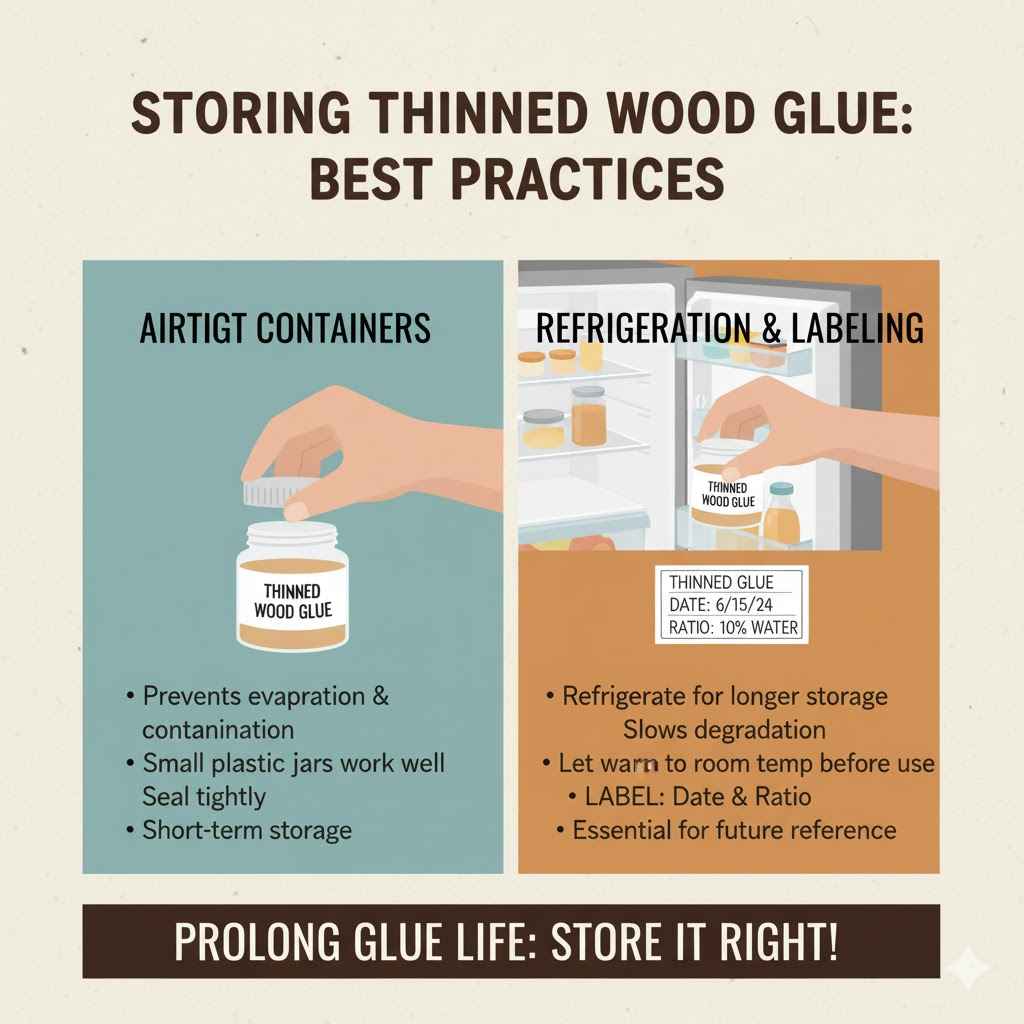
Tips for Storing Your Thinned Glue
Once you’ve thinned wood glue, you might wonder how to store it. Because you’ve added liquid, its shelf life might be shorter than the original glue. Proper storage will help you use it efficiently.
Airtight Containers
Always store thinned wood glue in an airtight container. This prevents evaporation and stops dust or debris from getting into the glue. Small plastic jars with screw-on lids are excellent for this.
If you used a food container, ensure the lid seals tightly.
Even with an airtight container, the added water can eventually promote microbial growth over a very long period, though this is rare for short-term storage. The main goal is to keep it from drying out or getting contaminated.
Refrigeration for Longevity
For longer storage, you can refrigerate thinned wood glue. The cold temperature slows down any chemical reactions or potential degradation. Before using it again, let the glue come to room temperature.
This might take an hour or two. Shaking it gently after it warms up can help re-integrate any slight separation.
Refrigeration is particularly useful if you only thinned a small batch and want to keep it for a few weeks. It significantly extends its usability compared to storing it at room temperature.
Labeling Your Container
It’s a good idea to label your container with the date you thinned the glue. You might also want to note the approximate ratio of water added if you remember it. This helps you keep track of how old the thinned batch is and what consistency you achieved.
For instance, a label might read “Titebond II Thinned – June 15, 2024 – Cream Consistency.” This information is helpful for future reference and for troubleshooting if the glue doesn’t perform as expected.
Frequently Asked Questions
Question: Can I thin wood glue with plain tap water?
Answer: Yes, you can use plain tap water to thin most wood glues. However, distilled water is preferred because it contains no minerals that could potentially affect the glue’s performance or the wood. Tap water is usually fine for common projects, but for critical or high-end work, distilled water is a safer bet.
Question: How do I know if my wood glue is too old to be thinned?
Answer: If your wood glue is very thick, lumpy, dried out, or smells unusual, it’s likely too old. Thinning old, degraded glue often won’t restore its full adhesive strength, and it might fail over time. It’s usually best to discard very old glue and use a fresh bottle.
Question: Will thinning wood glue make my joints weaker?
Answer: Yes, thinning wood glue can reduce its maximum bond strength. The goal is to thin it just enough to achieve the desired consistency for easier application, not to make it watery. Over-thinning will significantly weaken the glue.
Always add liquid gradually and mix well.
Question: How much water should I add to thin wood glue?
Answer: There’s no exact measurement because it depends on the original glue and desired thickness. Start with just a few drops of water for a small amount of glue. Mix thoroughly and test the consistency.
Add more water very sparingly until you reach a flow similar to heavy cream or thin syrup.
Question: Can I thin wood glue for spray application?
Answer: Yes, thinning wood glue is common for spray applications. You’ll need to thin it significantly more than for brush application, often to a much thinner, more watery consistency that can be atomized by a spray gun. Always check the spray equipment manufacturer’s recommendations and test your mixture on scrap material first.
Summary
Knowing Can You Thin Wood Glue? Simple Techniques empowers you to get the best results from your projects. By adding a small amount of water, you can achieve easier application for tasks like veneer work or fine repairs.
Remember to mix gradually and test the consistency. Use your thinned glue promptly, store it in airtight containers, and always use unthinned glue for critical structural joints where maximum strength is needed. You’ve got this!