Can You Glue MDF to Wood? Strongest Bonding Methods
Yes. MDF bonds to solid wood, and I reach first for PVA wood glue on tight face joints, epoxy for edge repairs or damaged spots, and polyurethane only when a small gap needs filling; clamp pressure matters more than glue type on most joints. Bad prep or weak clamping causes creep, starved joints, swelling, and seams that open later. This guide gives a joint-by-joint method for face joints, edge joints, and repairs, plus when to add screws, biscuits, or backing strips.
Can you glue MDF to wood?


When a glued joint works well
MDF bonds well when the mating parts are flat, the fit is tight, and the load is mostly in shear rather than peel. MDF faces are generally denser than the cut edges, so they tend to accept glue more predictably. Solid wood also bonds well when it is freshly sanded and stable enough that seasonal movement will not pry the joint apart.
When it fails and why
MDF edges soak up adhesive fast and can crumble if they are already loose or broken. Solid wood moves across the grain, so a wide panel glued edge-to-face can stress the joint as humidity changes. Failure usually comes from glue starvation, poor pressure, or moisture swelling the MDF before the adhesive has cured.
What you’ll need
- PVA wood glue for tight face joints
- Polyurethane glue for slight gaps or awkward fits
- Two-part epoxy for repairs and edge build-up
- Contact cement for laminates and non-structural skins
- Bar clamps or hand screws
- Cauls to spread pressure across MDF faces
- 120- to 180-grit sandpaper
- Vacuum or brush for MDF dust
- Mineral spirits or denatured alcohol for degreasing oily wood
- Brads, screws, dowels, or biscuits for reinforcement
- Scraper or chisel for squeeze-out cleanup
How to choose the right bond for the joint
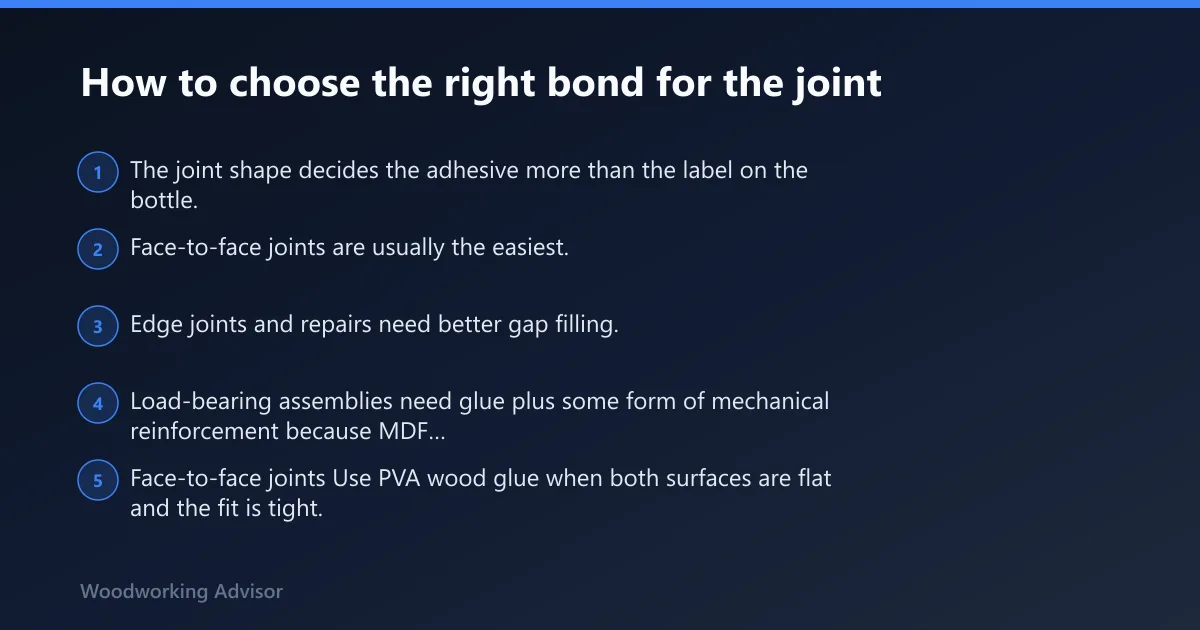
The joint shape decides the adhesive more than the label on the bottle. Face-to-face joints are usually the easiest. Edge joints and repairs need better gap filling. Load-bearing assemblies need glue plus some form of mechanical reinforcement because MDF is weaker at the edge than it is on the face.
Face-to-face joints
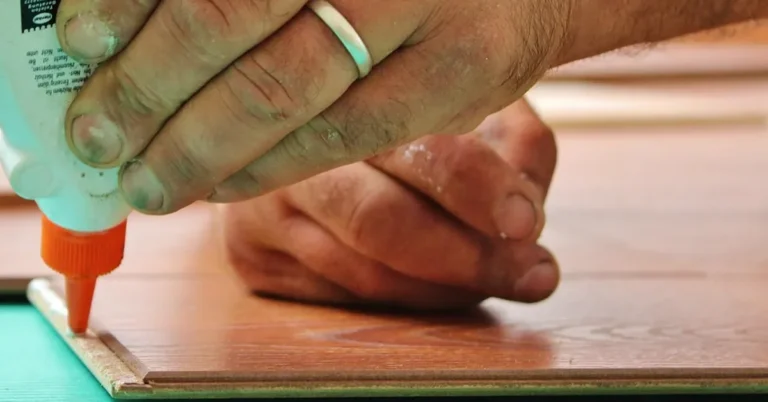
Use PVA wood glue when both surfaces are flat and the fit is tight. MDF faces are smooth enough to bond well after light sanding, and solid wood faces bond reliably if freshly sanded. Clamp with even pressure and keep the parts from sliding, because excess movement can squeeze out too much glue.
Edge-to-face joints
Use epoxy when the MDF edge is exposed, crumbly, or slightly irregular. A tight PVA joint can work here, but MDF edges drink glue quickly and can leave a dry line. If the wood piece is wide and moves seasonally, add a small mechanical fastener or a backing strip.
Edge repair joints
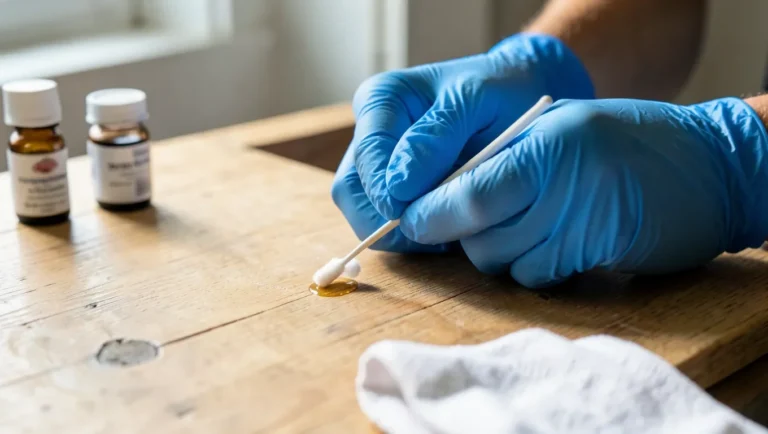
Use epoxy for chips, broken corners, and edge build-up. It fills voids better than PVA and does not rely on perfect contact. Polyurethane can work in a small gap, but its foam does not equal strength. For a damaged MDF edge, epoxy plus a hard backing strip usually lasts longer than glue alone.
Load-bearing assemblies
Use glue and reinforcement together. Screws, dowels, biscuits, or brads help carry stress while the adhesive cures and after the joint is in service. Contact cement is the wrong choice here; it is useful for laminates, not for structural joints that will see racking, pullout, or repeated movement.
Decision table: which glue and reinforcement to use
| Scenario | Best adhesive | Seal MDF first? | Clamp time | Add fasteners? |
|---|---|---|---|---|
| Face-to-face panel to panel | PVA wood glue | No, if both faces are flat and dust-free | 30-60 minutes under pressure | No, unless the panel is large or stressed |
| Edge-to-face shelf or trim | Epoxy or PVA if the fit is very tight | Yes, seal only the raw MDF edge if it drinks glue too fast | 60-120 minutes for epoxy; 30-60 for PVA | Yes, use brads, screws, or biscuits if the part carries weight |
| Edge repair or corner rebuild | Epoxy | Yes, after cleaning out loose fibers | Several hours, then full cure before sanding | No for tiny repairs; yes if a backing strip can hide the fix |
| Load-bearing assembly | PVA plus epoxy only if a gap must be filled | Usually no on faces; yes on thirsty edges | At least 30-60 minutes, with full cure before loading | Yes, always add screws, dowels, biscuits, or a backing strip |
How to prep MDF and solid wood for a stronger bond
Prep decides whether the joint holds or peels. MDF dust acts like release powder, and solid wood movement can ruin a joint that was never flat to begin with. Light sanding, thorough dust removal, and selective edge sealing make a bigger difference than choosing a stronger adhesive for the wrong joint.
Sand the mating surfaces
Sand MDF faces with a fine grit such as 180, and solid wood with a medium grit such as 120 to 150, then stop. Heavy sanding can polish MDF and reduce grip. For end grain or damaged MDF, clean away all loose fibers before any adhesive touches the surface.
Remove dust and contamination
Vacuum MDF first, then wipe the solid wood with a dry cloth. If the wood is oily, degrease it with mineral spirits or denatured alcohol and let it flash off before bonding. A dusty edge can turn a strong glue line into a weak powder layer.
Seal thirsty MDF edges when needed
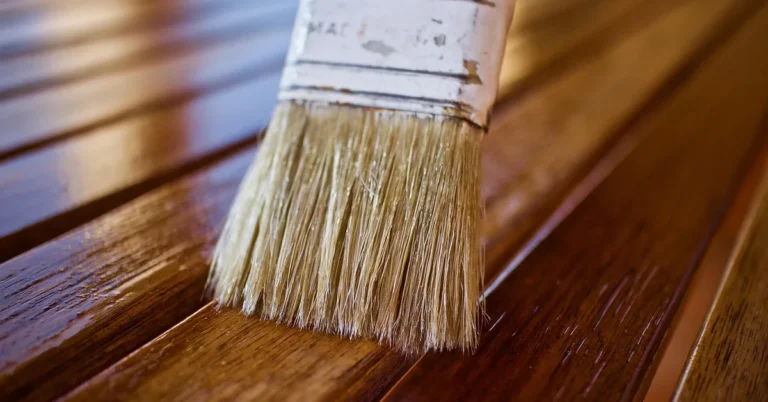
If the MDF edge is raw, fuzzy, or noticeably absorbent, brush on a thin coat of glue or a compatible sealer and let it set before final bonding. Do not flood the edge. Too much liquid swells the fibers and makes the joint weaker, not stronger.
Step-by-step: gluing MDF to wood
Dry-fit first, because MDF does not forgive misalignment well. The cleanest bond comes from a flat fit, the right adhesive for the joint, and clamp pressure that is even from end to end. If the joint will carry weight, plan the fasteners before the glue goes on.
- Dry-fit the parts and mark the final position.
- Sand the contact areas to clean, flat wood.
- Vacuum all MDF dust from the joint line.
- Choose PVA for tight faces, epoxy for repairs, or polyurethane for slight gaps.
- Apply a thin, even glue coat; do not flood MDF edges.
- Assemble the parts and slide them slightly to wet both sides if using PVA.
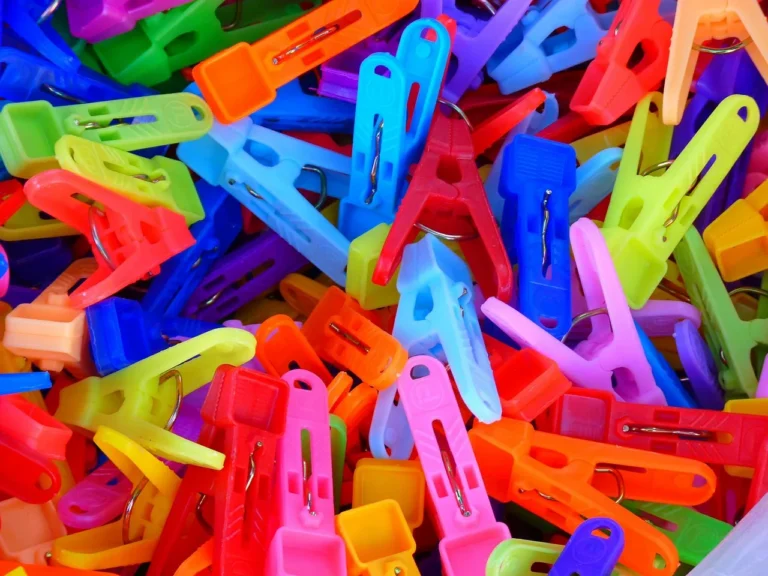
- Clamp with even pressure and use cauls on MDF faces to spread force.
- Install screws, brads, dowels, or biscuits before the glue starts to skin over if the joint needs to carry weight.
- Wipe squeeze-out before it hardens.
- Leave the joint undisturbed until full cure, then remove clamps and trim any residue.
Common mistakes
Most failures come from movement, too little pressure, or the wrong adhesive for the joint shape. MDF edges fail fast when they are soaked, crushed, or left unsupported. Solid wood fails when the grain moves and the joint was asked to do structural work without reinforcement. Fix the setup, not only the glue choice.
Too much glue on MDF edges
Excess glue soaks the edge and starves the line. Use a thin coat, then let the MDF edge drink only what it needs. If the edge keeps disappearing into the glue, seal it first or switch to epoxy.
Weak clamping or uneven pressure
Hand pressure is not enough. Use clamps, and place cauls so the clamp force spreads across the joint. A bowed clamp setup can squeeze one side dry and leave the other side open.
Using the wrong adhesive for the joint
PVA is the default for tight face joints, but it is not the best answer for damaged edges or open gaps. Polyurethane fills more space but is messier and weaker than people expect. Contact cement is generally used for laminates, not for structural assembly.
Skipping reinforcement on stressed joints
Any load-bearing MDF joint should get help from screws, brads, dowels, biscuits, or a backing strip. Glue alone can hold a lot in a perfect shop fit, then fail later when the piece sees racking or seasonal movement.
If that didn’t work, try this next
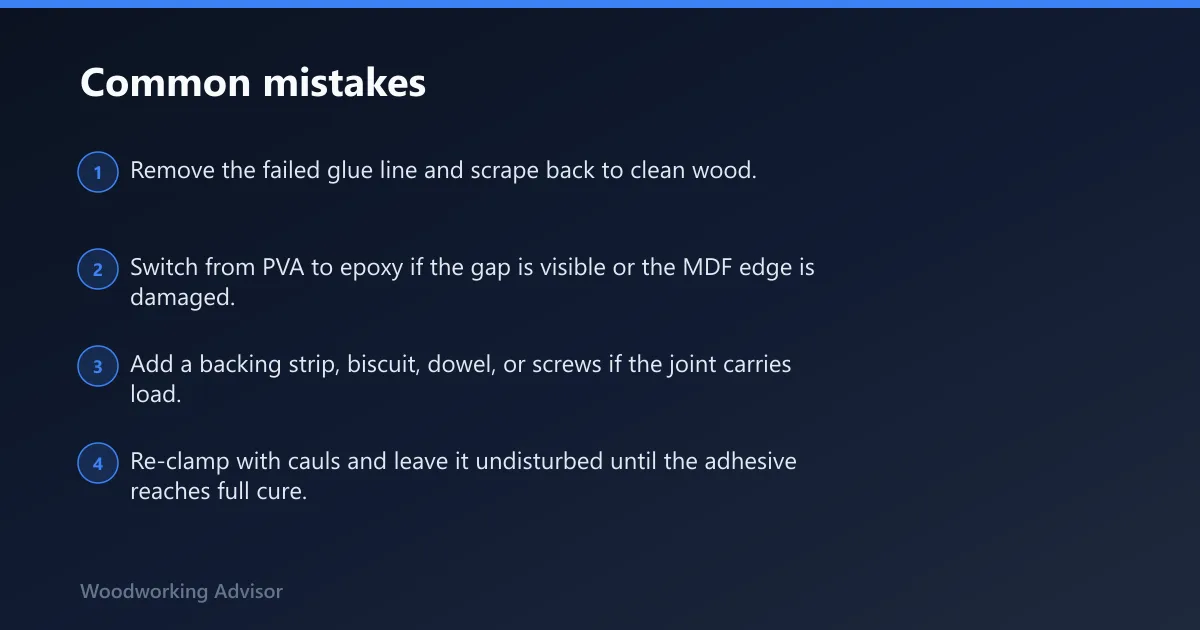
- Remove the failed glue line and scrape back to clean wood.
- Switch from PVA to epoxy if the gap is visible or the MDF edge is damaged.
- Add a backing strip, biscuit, dowel, or screws if the joint carries load.
- Re-clamp with cauls and leave it undisturbed until the adhesive reaches full cure.
Prevention: Prime or seal raw MDF edges before repeated finish coats or moisture exposure, especially on shelves, cabinet parts, and painted assemblies. Unsealed edges swell first and telegraph the failure line later.
Frequently asked questions
What is the strongest glue for MDF to wood?
For a tight face joint, PVA is usually the best structural choice. For a gap, repair, or worn edge, epoxy is stronger in practice because it fills voids and supports damaged fibers. Polyurethane only becomes useful when slight gap-filling is needed and cleanup can be managed.
Do I need to clamp MDF to wood when gluing?
Yes. Clamp pressure keeps the parts flat and prevents glue starvation. Use cauls on MDF faces so the force spreads evenly. Leave the assembly clamped for the adhesive’s full set window, then avoid loading it until full cure, especially on edge joints.
Should I seal MDF edges before gluing to wood?
Seal raw edges when they are very absorbent, crumbly, or part of a repair. A light sealing coat keeps the glue from disappearing into the fiber board. Do not seal tight face joints unless the joint design needs it, because over-sealing can reduce bond quality.
Does polyurethane glue work on MDF to wood?
Yes, but mainly when there is a slight gap or the fit is awkward. It needs moisture to cure, expands as it sets, and is messier than PVA. It is useful for some repairs, but it is not the best first choice for a tight, clean face joint.
What can I use instead of glue for MDF to wood joints?
Use mechanical reinforcement when the joint is structural: screws, brads, dowels, biscuits, or a glued backing strip. For laminates, contact cement can work, but it should not be treated as a structural answer. In load-bearing work, glue plus fasteners is the safer route.
Sponsored / affiliate links. As an Amazon Associate I earn from qualifying purchases. I may earn additional commission from eligible campaigns.