Best Laminate Countertop Glue: Contact Cement Application Guide
Contact cement is the correct glue for laminate countertops — it bonds instantly and permanently the moment two tacky-dry surfaces touch, unlike wood glue or PVA which need clamping and slow drying time. The exception: once it grabs, there is no repositioning, so alignment has to be right before contact. This guide covers real application steps, cure times, and the troubleshooting fixes for lifted edges and bubbles.
Best Glue for Laminate Countertops: Contact Cement vs. Alternatives
Best Laminate Countertop Glue Pick
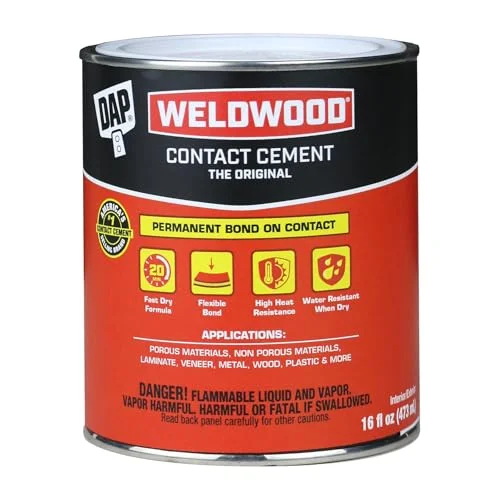 |
DAP Weldwood Original Contact Cement (16 oz) – $18.91 This is the neoprene-based contact cement the application steps below are written around: it grabs the instant both tacky surfaces touch, which is exactly why alignment has to be right the first time.
|
Contact cement is the industry standard because it grabs instantly and flexes slightly with the substrate as temperature and humidity change — something rigid wood glues cannot do. The alternatives below have narrower use cases.
| Adhesive | Bond Time | Best For |
|---|---|---|
| Contact Cement | Instant on contact | Full countertop sheets, edges |
| Spray Adhesive (e.g. 3M Hi-Strength 90) | Instant on contact | Large flat sheets, fast even coverage |
| Epoxy | Hours (needs clamping) | High-stress or gap-filling repairs |
| PVA / Wood Glue | Hours (needs clamping) | Not recommended — lacks flex and instant grab |
How to Apply Contact Cement for a Strong Bond
- Clean and prep both surfaces: wipe the substrate and the back of the laminate sheet with a mild cleaner, rinse, and let them dry completely — any dust or grease weakens the bond.
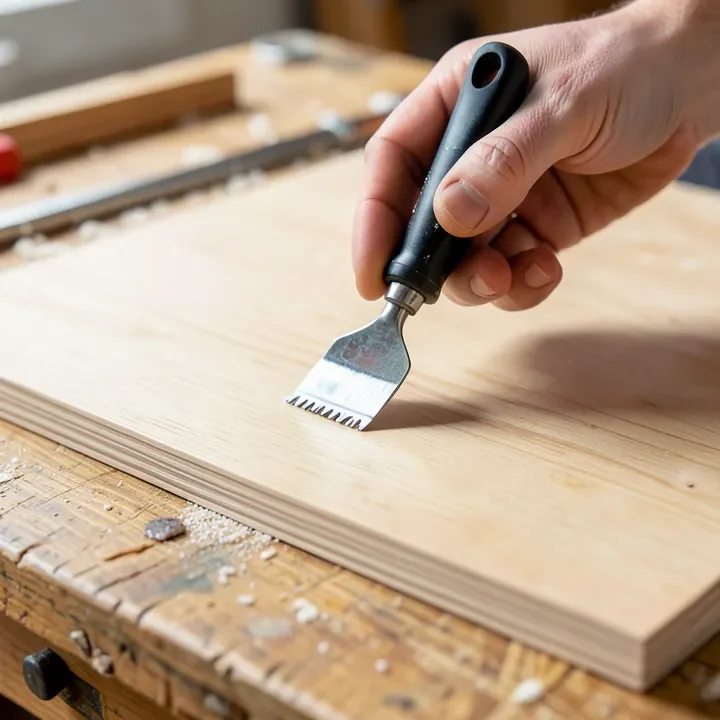
- Apply cement to both surfaces: use a notched trowel to spread an even coat of contact cement on both the substrate and the laminate back, covering the full surface with no gaps.
- Wait for the tacky stage: let both coats dry until they feel dry to the touch but still slightly tacky, typically 15 to 30 minutes depending on temperature and humidity.
- Use spacers to align before contact: lay thin wood dowels or strips across the substrate, set the laminate on top, and check alignment before the surfaces touch.
- Remove spacers and press down: starting from one end, pull spacers out one at a time while pressing the laminate down as you go — once it touches, it is bonded.
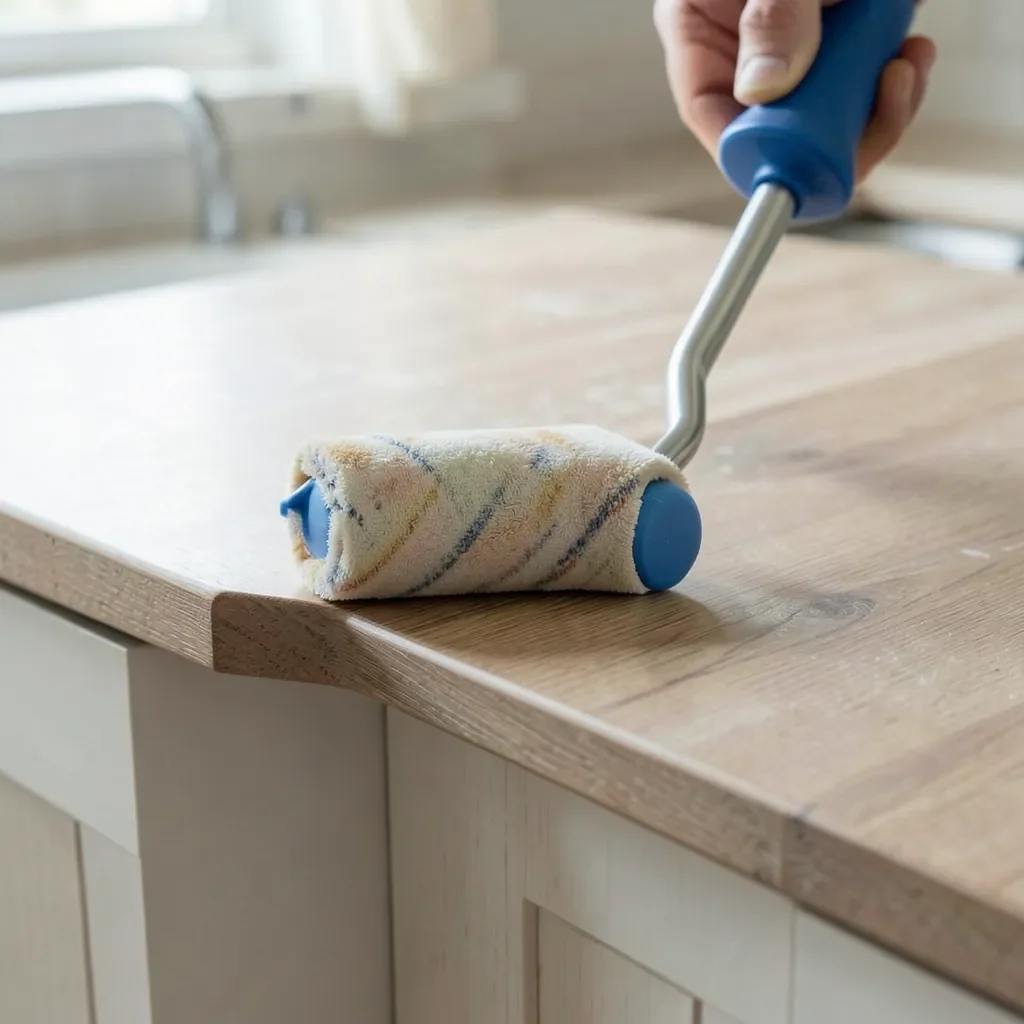
- Roll out air bubbles: starting from the center, roll outward with a J-roller to force out trapped air before it can bubble.
Curing Time and Conditions
Contact cement grabs immediately, but the bond keeps strengthening over the next 24 hours. Keep the room between 70°F and 80°F with humidity between 30% and 50% while it cures — outside that range the bond can stay weaker than it should. Wait the full 24 hours before using the countertop for cutting, heavy weight, or heat exposure.
📊 A properly cured neoprene contact cement bond can withstand heat up to roughly 250°F without lifting or softening — well above what a countertop sees from a hot pan set down briefly. — Source: manufacturer application data
Troubleshooting Common Issues
- Bubbles after installation: use a utility knife to make a small slit in the bubble, work fresh contact cement underneath with a thin applicator, then press and roll flat.
- Lifting edges: gently heat the lifted section with a hair dryer to soften old cement, apply fresh contact cement to both sides, and clamp or weight it until it re-bonds.
- Visible seam lines: usually means the two pieces were not fully flush before bonding — a seam filler matched to the laminate color can hide minor gaps once cured.
- Weak bond in one spot: almost always a coverage gap from the trowel — next time overlap trowel passes to avoid missed strips, especially near edges and corners.
Frequently Asked Questions
What is the best glue for laminate countertops?
Contact cement is the standard choice for laminate countertops because it forms an instant, permanent bond strong enough to resist the heat and moisture a kitchen countertop sees daily. Wood glue and PVA glue lack the instant grab and do not handle the expansion and contraction of a kitchen environment.
How long does contact cement take to dry before bonding?
Most contact cements are ready to bond in 15 to 30 minutes after application, once both surfaces feel dry to the touch but still slightly tacky. Bonding too early (while still wet) or too late (after it has fully dried past tacky) both weaken the bond.
Can you reposition laminate after applying contact cement?
No — contact cement bonds the instant the two tacky surfaces touch, so there is no repositioning window. Use dowels or thin wood strips between the laminate and substrate to hold the sheet in position, then slide them out one at a time as you press the laminate down.
How long should laminate glue cure before using the countertop?
Wait at least 24 hours before using the countertop, with the room held between 70-80°F and 30-50% humidity for the strongest cure. Using the surface too soon risks lifting an edge that has not fully set.
Why is my laminate countertop lifting or bubbling?
Lifting and bubbles usually trace back to uneven adhesive coverage, trapped air not rolled out during application, or bonding before the contact cement reached the tacky stage. Re-heat a lifted edge lightly, add fresh contact cement underneath, and press and roll it flat again.
Conclusion
Contact cement remains the right glue for laminate countertops because nothing else grabs instantly while staying flexible enough for a kitchen’s daily temperature and moisture swings. The whole job comes down to two things: even coverage with a notched trowel, and waiting for the tacky stage before the surfaces touch. Get those two right, wait the full 24-hour cure, and the bond will outlast the countertop itself.
Sponsored / affiliate links. As an Amazon Associate I earn from qualifying purchases. I may earn additional commission from eligible campaigns.