Elmer’s Glue vs Wood Glue: Which Actually Holds Stronger?
Wood glue holds far stronger than Elmer’s Glue-All (the classic white PVA school glue). Elmer’s Carpenter’s Wood Glue and other yellow/PVA wood glues form a chemical cross-linking bond that’s typically stronger than the wood fibers themselves, while Glue-All is a non-cross-linking white PVA meant for paper, fabric, and craft projects — it will hold wood together, but it isn’t water-resistant and comes apart under stress that a real wood glue would survive.
Insert your Affiliate Disclosure reusable block here
Elmer’s Glue-All Vs. Elmer’s Wood Glue: Not The Same Product
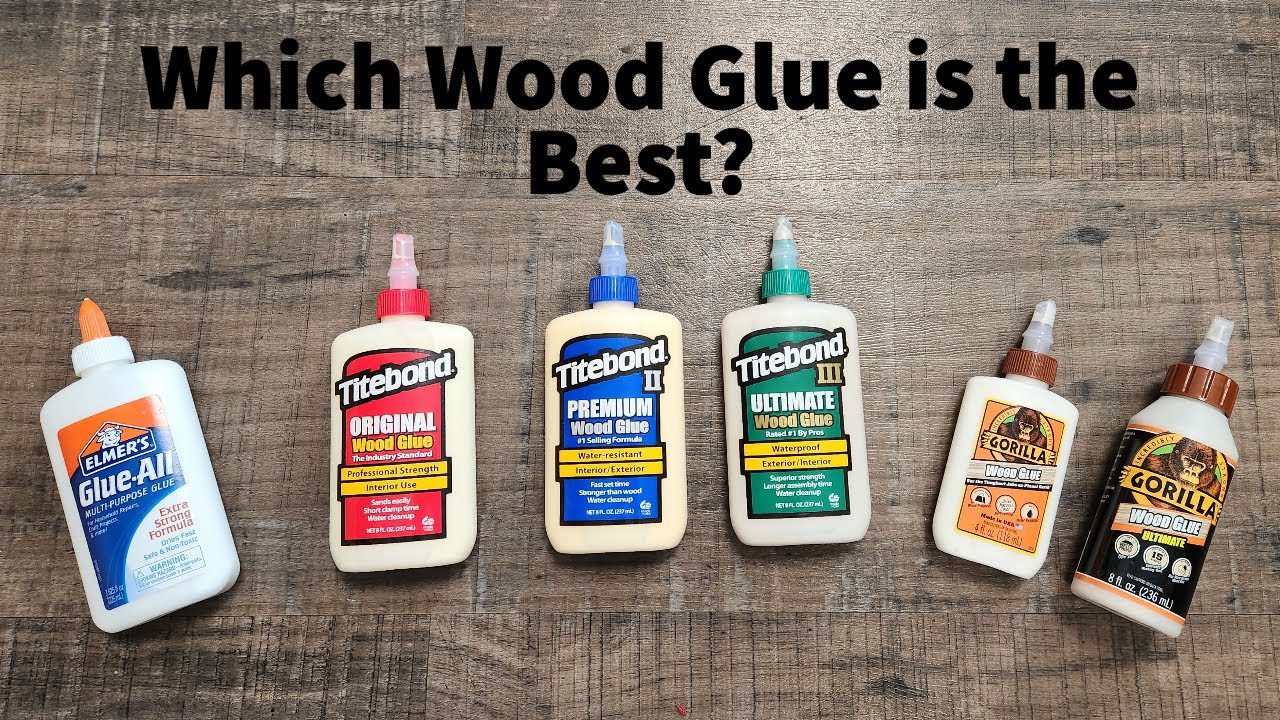
Elmer’s actually sells these as two separate product lines, not one glue with different names. Per Elmer’s own site, their Wood Glue line is described as fast-setting and strong-bonding, “made for furniture repair and general household projects,” while Glue-All (labeled “Hardware Glue All” in their hardware lineup) is a general multi-purpose adhesive for interior use. Glue-All is a straight PVA emulsion — the same basic chemistry as school glue — while Elmer’s Carpenter’s Wood Glue uses a modified, cross-linking PVA formula (often called aliphatic resin) that cures into a harder, more moisture-resistant bond.
That difference matters most for structural joints, furniture repair, and anything that will see repeated stress or moisture — Glue-All can technically bond wood, but it’s really formulated for paper, cardboard, and craft materials, and it was never tested or rated for the same load-bearing use as a dedicated wood glue.
Bond Strength: What The Numbers Actually Say
Wood glue manufacturers publish shear-strength ratings under ASTM D905 (the standard adhesive-bond shear test), and the numbers explain why professionals default to a dedicated wood glue rather than Glue-All for anything structural.
📊 Gorilla Wood Glue’s official technical data sheet lists a shear strength of 3,900 to 4,000 psi (27–28 MPa) per ASTM D905 — well above typical framing lumber’s own shear strength, meaning the glue joint itself usually outlasts the wood around it. — Source: Gorilla Wood Glue Technical Data Sheet
| Adhesive | Typical Shear Strength | Water Resistance |
|---|---|---|
| Elmer’s Glue-All (white PVA) | Not rated for structural use | None — not water-resistant |
| Elmer’s Carpenter’s Wood Glue | ~3,600 psi (tensile, manufacturer-cited) | Interior only |
| Titebond Original | 3,600 psi shear | Interior only |
| Titebond III | 4,000 psi shear | Waterproof |
| Gorilla Wood Glue | 3,900–4,000 psi shear (ASTM D905) | Water-resistant/waterproof |
In practical terms, a well-clamped long-grain joint made with any real wood glue — Elmer’s Carpenter’s, Titebond, or Gorilla — will typically fail in the wood fibers themselves before the glue line lets go. That’s not true of Glue-All, which isn’t formulated or tested to that standard in the first place.
“Both white and yellow glues are stronger than the wood itself… With an aliphatic resin, there is a chemical reaction that occurs that cannot be fully reversed with the addition of moisture.”
Worth noting: that quote is specifically about PVA wood glues (white and yellow) tested against each other — it isn’t endorsing Glue-All for structural work. Glue-All is a different, non-cross-linking PVA formula not covered by that comparison.
Elmer’s Glue-All Vs. Gorilla Wood Glue
This is one of the most common head-to-head questions, and the answer is straightforward: Gorilla Wood Glue is rated and tested specifically for wood bonding (3,900–4,000 psi shear, water-resistant, suitable for outdoor projects), while Glue-All was never designed or tested for that use case. For anything beyond a quick craft fix, Gorilla Wood Glue, Titebond, or Elmer’s own Carpenter’s Wood Glue line will outperform Glue-All by a wide margin.
Elmer’s Glue-All Vs. Hot Glue
Hot glue sets almost instantly and holds well for light craft assembly, but it has poor long-term structural strength on wood and softens again with heat or direct sunlight — it’s a tacking tool, not a permanent wood bond. Glue-All has better long-term hold than hot glue for wood-to-wood contact, but neither is a substitute for a real wood glue on furniture, framing, or anything load-bearing.
Can Elmer’s Glue-All Be Used For Paper Mache Or Craft Projects?
Yes — this is exactly what Glue-All is formulated for. The classic paper mache recipe is a 50/50 mix of Glue-All and water, and it’s also the standard base for homemade slime. For paper, cardboard, fabric, and most school or craft projects, Glue-All is the right choice; it’s wood glue that’s overkill (and pricier) for that kind of job, not the other way around.
Safety Note For Kids’ Crafts
Elmer’s Glue-All and School Glue are formulated and labeled for use by children in crafts. Wood glue is a different product — it is not formulated as a children’s craft glue, and some wood glue formulas carry cure-time and ventilation guidance on their labels that Glue-All does not. Always check the product label before letting a child use any adhesive, and default to Glue-All or School Glue for kids’ projects rather than a carpentry-grade wood glue.
When To Use Each Glue
- Use Elmer’s Glue-All for: paper mache, slime, paper, cardboard, fabric, and school/craft projects.
- Use Elmer’s Carpenter’s Wood Glue, Titebond, or Gorilla Wood Glue for: furniture repair, joinery, cabinetry, framing, and any wood-to-wood joint that needs to hold under real stress.
- Use a waterproof wood glue (Titebond III, Gorilla Wood Glue) for: outdoor furniture, decks, or anything exposed to moisture.
- Use hot glue for: quick temporary tacking or craft assembly only — never for structural wood joints.
Recommended Wood Glues & Clamps
Verified Wood Glue & Clamping Picks
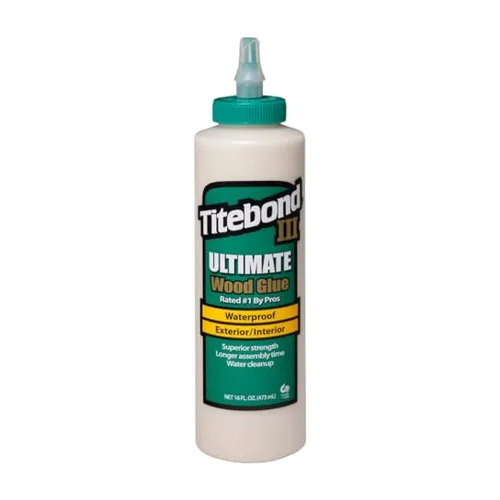
Titebond III Ultimate Wood Glue, 16 oz
4,000 psi shear strength and fully waterproof — the strongest of the three Titebond formulas.
Check Price on Amazon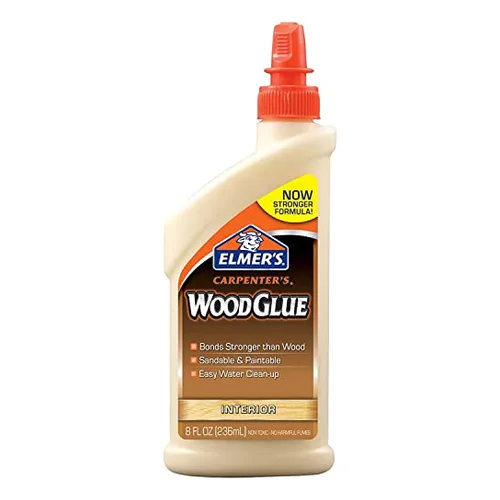
Elmer’s Carpenter’s Wood Glue
Elmer’s own dedicated wood-bonding formula, not Glue-All.
Check Price →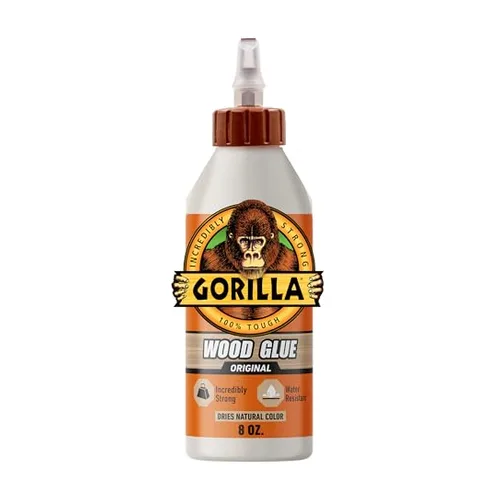
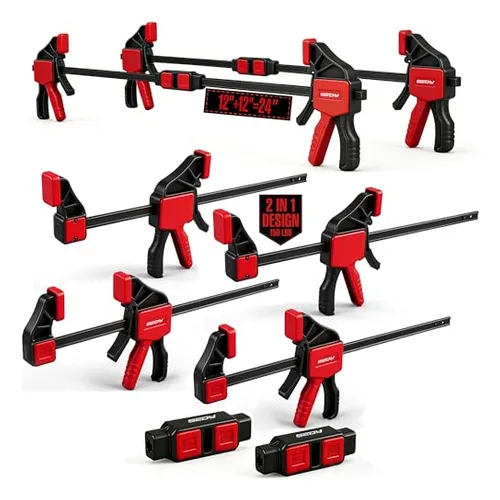
12″ Quick-Release Bar Clamps (4-pack)
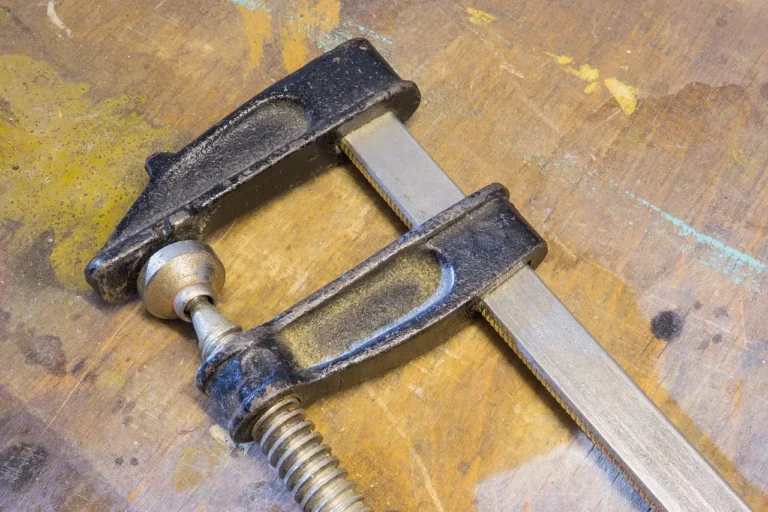
Proper clamping pressure matters as much as the glue itself.
Check Price →Frequently Asked Questions
Can You Use Elmer’s Glue-All As Wood Glue?
You can, and it will bond wood on light-duty projects, but it isn’t water-resistant and isn’t rated for structural use the way Elmer’s Carpenter’s Wood Glue, Titebond, or Gorilla Wood Glue are. For anything load-bearing or exposed to moisture, use a dedicated wood glue instead.
What’s The Difference Between Wood Glue And Regular (Elmer’s) Glue?
Wood glue uses a cross-linking PVA (often called aliphatic resin) that cures into a harder, more moisture-resistant bond, typically rated 3,600–4,000 psi shear strength. Elmer’s Glue-All is a non-cross-linking white PVA formulated for paper, fabric, and craft use, and it isn’t rated or tested for structural wood bonding.
Is Elmer’s Wood Glue As Strong As Gorilla Wood Glue?
They’re close. Elmer’s Carpenter’s Wood Glue is commonly cited around 3,600 psi tensile strength, while Gorilla Wood Glue’s official technical data sheet lists 3,900–4,000 psi shear strength (ASTM D905) and adds water resistance that basic interior-only wood glues don’t have.
What Is A Good Substitute For Wood Glue?
For genuine structural strength, there isn’t a good substitute among craft glues — Titebond, Gorilla Wood Glue, and Elmer’s Carpenter’s Wood Glue are all dedicated wood adhesives built for this purpose. Epoxy is the closest true substitute for gap-filling or non-wood-to-wood bonds, but it costs more and takes longer to cure.
Conclusion
Elmer’s Glue-All and Elmer’s Wood Glue are genuinely different products from the same company, not the same glue in different packaging. Glue-All is built for paper, fabric, and craft work; wood glue — whether it’s Elmer’s Carpenter’s, Titebond, or Gorilla — is built to outlast the wood itself in a properly clamped joint. Pick based on the job, not the brand name on the label.
Sponsored / affiliate links. As an Amazon Associate I earn from qualifying purchases. I may earn additional commission from eligible campaigns.