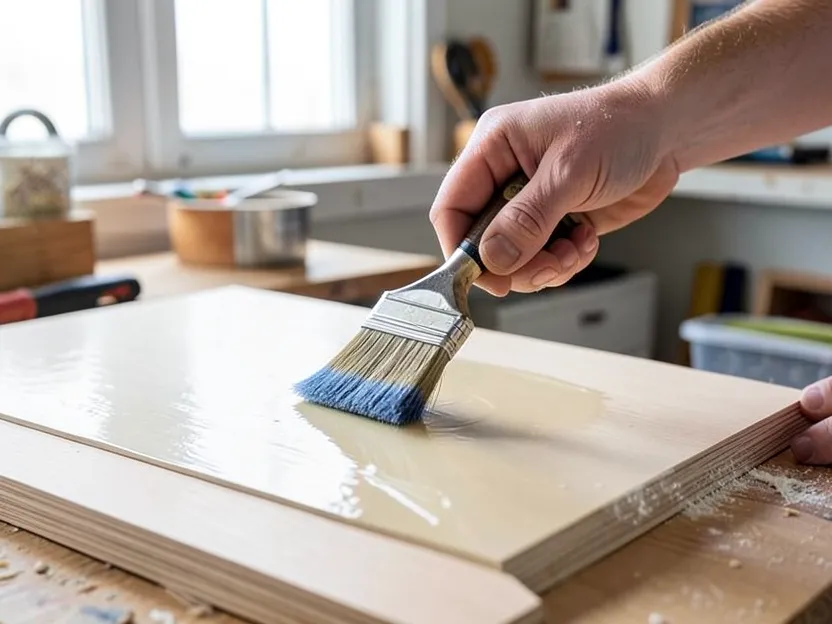
Can You Varnish MDF? Yes, If You Seal It Right
Yes, you can varnish MDF, but only if you seal the raw fibers first — a coat of shellac-based primer or sanding sealer is what actually determines whether the finish looks glassy or blotchy. Skip that step and MDF’s exposed wood fibers will soak up varnish unevenly, especially on cut edges, leaving dull patches no amount of sanding fixes afterward.
MDF has no grain and no knots, which is exactly why it finishes so evenly once it’s sealed — but that same fiberboard structure is why it behaves nothing like solid wood when a finish goes on raw. Here’s the process that actually works, and the mistakes that ruin most first attempts.
Why MDF Needs Sealing Before Varnish
Best Pick For Topcoating Sealed MDF
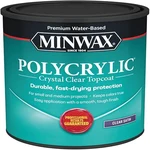 |
Minwax Polycrylic Protective Finish – $22.79 A water-based clear topcoat that goes on over primed MDF without yellowing, dries fast, and cleans up with water instead of mineral spirits.
|
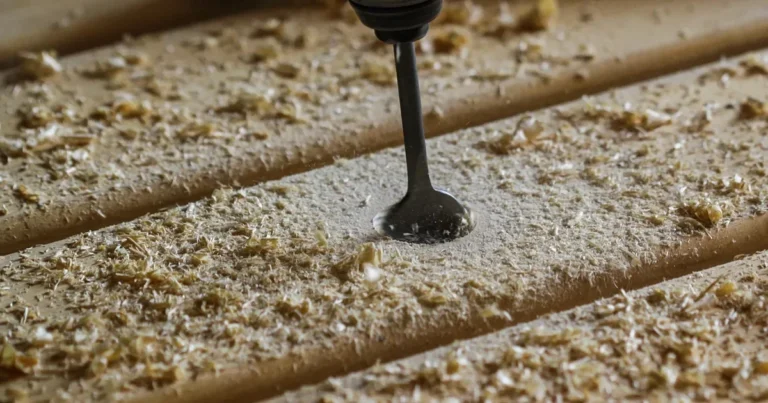
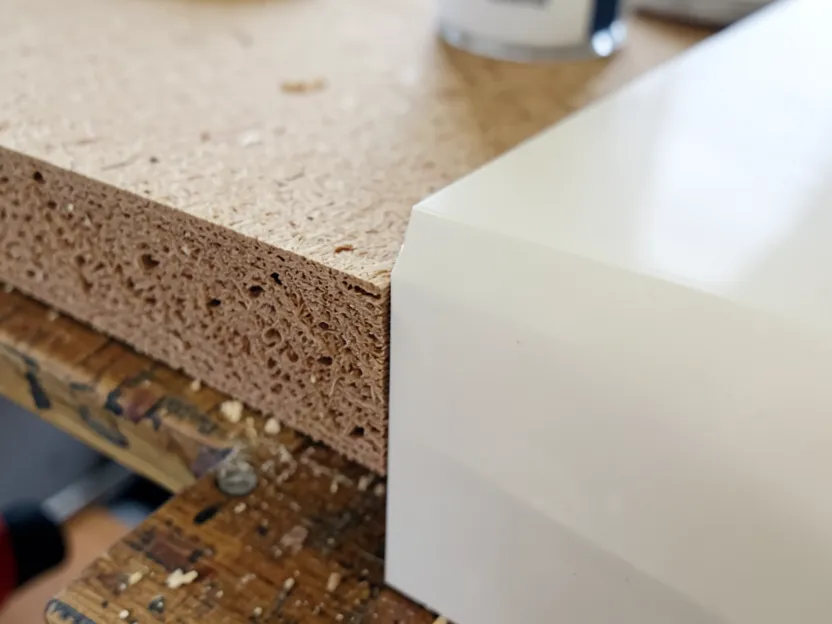
MDF is made of wood fibers bonded with resin under heat and pressure, which gives it a dense, grain-free surface on the faces — but the cut edges expose those raw fibers directly, and they act like a sponge. Any liquid finish applied straight to an unsealed edge gets absorbed unevenly along the fiber structure, which is why the classic MDF finishing complaint is “the edges look chalky and different from the faces.” Sealing first equalizes how much finish each surface absorbs.
The Actual Process, Step by Step
- Sand lightly with 220-grit to knock down any raised fibers, especially on cut edges, then wipe with a tack cloth — not a wet rag, which can raise the fibers again.
- Seal with a shellac-based primer (Zinsser B-I-N is the standard choice) rather than a standard latex primer. Shellac locks down loose fibers and stops the sponge-like absorption that causes blotchy edges. Two thin coats on edges usually beats one thick coat.
- Sand the sealed surface with 320-grit once the primer is fully dry, just enough to knock off any nibs, and wipe clean again.
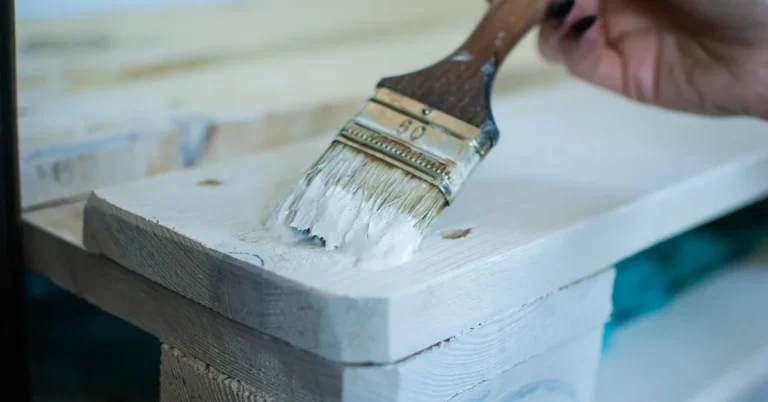
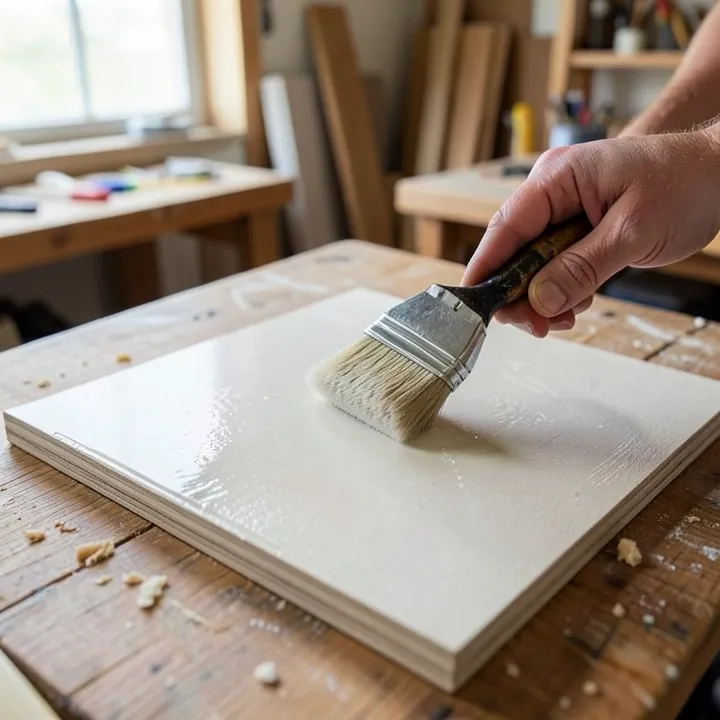
- Apply varnish in thin coats, brush or foam applicator, always with the grain direction of the surface (even though MDF itself has none, this keeps brush marks consistent on any veneer or on adjacent solid-wood trim).
- Scuff-sand between coats with 320- or 400-grit and apply two to three total coats, letting each cure fully rather than just surface-dry before recoating.
Choosing the Right Varnish Type
Oil-based polyurethane gives the most abrasion resistance and a warm amber cast, which works well on furniture meant to look like stained wood but will visibly yellow a white-painted MDF piece over a few years. Water-based polyurethane or polycrylic stays clear and won’t amber, which is the better call for anything painted white or a light color, at a small cost in scratch resistance compared to oil-based. Spar varnish is formulated with UV blockers and more flexible resins for outdoor movement and moisture — but MDF itself isn’t a good outdoor material regardless of topcoat, since the core swells and delaminates if water gets past any finish, even a good one. Don’t use spar varnish as an excuse to put MDF outside.
Mistakes That Ruin an MDF Varnish Job
- Varnishing raw edges without sealing first — the single most common failure, and the one that makes edges look grey/chalky next to glossy faces.
- Applying thick coats to “save time” — thick coats on MDF sag and pool at edges/corners far more than on solid wood, since there’s no grain to help wick the finish along evenly.
- Skipping the scuff-sand between coats — each new coat needs mechanical grip on the last one; without light sanding, coats can peel as a sheet later.
- Ignoring humidity during cure — MDF’s fiber core swells with moisture faster than solid wood, so curing in a damp garage can trap moisture under the film and cause a cloudy finish.
Frequently Asked Questions
What happens if you varnish MDF without sealing it first?
The raw fibers, especially on cut edges, absorb the varnish unevenly, leaving dull, blotchy patches that don’t match the smoother faces. It also uses far more varnish than necessary since so much soaks straight into the fiber core instead of building a film on top. A shellac-based sealer first solves both problems.
What is the best varnish for MDF?
Water-based polyurethane or polycrylic is the best all-around choice for painted or light-colored MDF because it won’t yellow over time. Oil-based polyurethane gives more abrasion resistance and a warm tone that suits MDF finished to look like stained wood. Either way, the varnish only performs as well as the seal coat underneath it.
Can MDF be stained and varnished?
Technically yes, but MDF has no grain to take stain the way solid wood does, so it usually looks flat and uneven rather than like real wood. Most people who want a wood look use a wood-grain primer or a thin veneer instead, then varnish over that. Straight liquid stain on bare MDF is one of the least effective ways to get a convincing wood appearance.
Can you make varnished MDF look like real wood?
Yes, but it takes more than just wood-toned varnish. Apply a wood-grain-effect primer or a thin real-wood veneer first, then a wood-toned varnish or stain-and-seal combination over that, sanding lightly between coats. Varnish alone on plain MDF will add color and sheen but won’t create a convincing grain texture.
Conclusion
MDF varnishes well once it’s properly sealed — a shellac-based primer on the raw fibers first, especially the cut edges, is what separates a glassy, even finish from a blotchy one. From there it’s the same thin-coats, sand-between-coats process as any other varnish job, with water-based polycrylic being the safer pick if the piece is painted a light color.
Sponsored / affiliate links. As an Amazon Associate I earn from qualifying purchases. I may earn additional commission from eligible campaigns.