Cedar vs Treated Wood Deck: Pros Cons
Choosing materials for your new deck can feel a bit confusing, especially when you’re just starting out. You want something that looks great, lasts a long time, and fits your budget. That’s why the question of Cedar vs Treated Wood Deck: Pros and Cons comes up so often.
It seems like a big decision with lots of details to sort through. Don’t worry, we’ll break it all down step by step so you can easily see which wood is the best fit for your home. Let’s explore what makes each wood special.
Cedar Decking vs Treated Wood Decking Explained
When you’re planning to build a deck, selecting the right wood is a big part of the project. Two of the most popular choices are cedar and treated lumber. Both can create beautiful outdoor spaces, but they have different characteristics that affect their looks, durability, cost, and how much care they need.
Understanding these differences will help you make a smart choice for your backyard. This section will give you a clear picture of what each type of wood offers.
What is Cedar Decking
Cedar decking comes from cedar trees, like Western Red Cedar or Eastern White Cedar. It’s a favorite for many homeowners because it has a natural beauty with its warm colors and distinctive grain. Cedar also has a lovely scent that many people enjoy.
It’s naturally resistant to rot and insect damage, which means it can last for many years without special treatments. This natural defense is a big advantage for outdoor projects where wood faces a lot of weather.
One of the key benefits of cedar is its light weight. This can make it easier to handle and install compared to heavier woods. It also stays cooler in the sun, making it more comfortable to walk on barefoot.
Cedar is also known for its ability to resist warping and shrinking, even when exposed to changing moisture levels. This stability helps your deck maintain its shape and integrity over time. Its natural beauty means it doesn’t necessarily need stains or paints, though many people choose to seal or stain it for added protection and color.
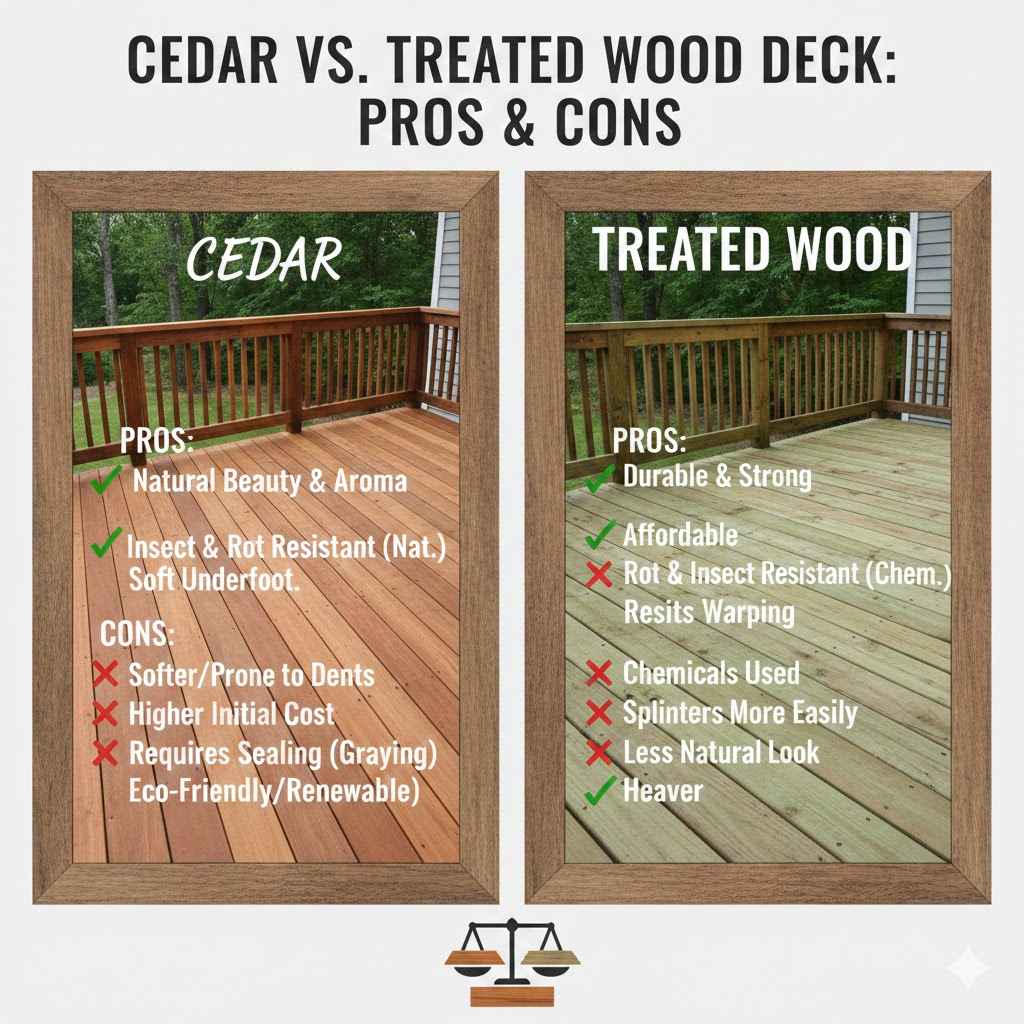
Pros of Cedar Decking
Natural Beauty and Aroma: Cedar offers a warm, inviting color and a pleasant, distinctive scent that enhances the outdoor living experience. Its natural reddish-brown or yellowish tones and fine grain patterns add a touch of elegance to any home.
Natural Resistance to Decay and Insects: Cedar contains natural oils and compounds, such as thujaplicins and methyl thujate, that act as preservatives. These compounds make the wood highly resistant to rot, decay, and insect infestation, extending its lifespan significantly without the need for chemical treatments.
Dimensional Stability: Cedar wood is known for its ability to resist warping, twisting, and shrinking. This stability is due to its lower density and smaller cell structure compared to other woods, allowing it to better handle changes in humidity and temperature, maintaining the deck’s shape and structural integrity.
Lightweight and Easy to Work With: Cedar is relatively lightweight, which makes it easier for builders to transport and install. Its softness also means it’s easier to cut, drill, and fasten, potentially reducing labor costs and installation time.
Cooler to the Touch: Cedar has a lower thermal conductivity than many other decking materials. This means it absorbs less heat from the sun, staying cooler underfoot even on hot, sunny days, which is a significant comfort advantage.
Cons of Cedar Decking
Higher Cost: Cedar is generally more expensive than treated lumber. The cost can vary based on the grade of cedar, availability, and location, but it’s often a significant factor in budget planning for deck projects.
Softer Wood Prone to Dents and Scratches: While its softness makes it easy to work with, cedar is also a softer wood. This means it can be more susceptible to dents, scratches, and wear from heavy furniture, pets, or regular foot traffic. It requires careful handling during construction and regular maintenance to keep it looking its best.
Requires Regular Maintenance for Longevity and Appearance: Although naturally resistant to rot and insects, cedar still requires ongoing maintenance to preserve its color and prevent weathering. Without proper sealing or staining, it can turn a silvery-gray color and may eventually show signs of wear if not cared for.
Variability in Quality and Appearance: The appearance and quality of cedar can vary. Lower grades might have more knots or imperfections. Choosing a higher grade ensures better appearance and fewer structural issues, but also increases the cost.
What is Treated Wood Decking
Treated wood, often called pressure-treated lumber, is wood that has been chemically treated to make it more resistant to rot, decay, and insects. This process involves placing the wood in a sealed tank and using a vacuum to remove air, then filling the tank with preservatives under pressure. The chemicals are forced deep into the wood fibers.
This makes it a very durable option, especially for outdoor structures that are in contact with the ground or exposed to moisture. The most common type of wood used for treatment is Southern Yellow Pine.
The treatment process gives the wood a greenish tint when it’s new, although it can be stained or painted to achieve a different look. Treated wood is widely available and is typically less expensive than cedar. Its resistance to decay and insects makes it a practical choice for decks, fences, and other outdoor projects where longevity and low maintenance are priorities.
It’s a strong, reliable material that can withstand harsh weather conditions and prolonged exposure to the elements.
Pros of Treated Wood Decking
Cost-Effective: Pressure-treated lumber is significantly more affordable than cedar. This makes it an excellent option for homeowners on a budget or for large deck projects where material costs can add up quickly. The initial investment is lower, making decks more accessible.
Excellent Resistance to Rot and Insects: The chemical treatment process forces preservatives deep into the wood fibers, making it highly resistant to decay, fungal growth, and insect infestations like termites and carpenter ants. This protection ensures a long lifespan, even in damp or humid conditions.
Durability and Strength: Treated wood is a strong and stable material. It can support heavy loads and withstand the rigors of daily use. It’s less likely to warp or split compared to untreated softwood, providing a reliable foundation for your deck.
Widely Available: Pressure-treated lumber is readily available at most lumber yards and home improvement stores. This ease of access means you can usually find the materials you need without difficulty, making project planning simpler.
Low Maintenance: While it’s still a good idea to seal or stain treated wood for appearance and added protection, it doesn’t require as frequent or intensive maintenance as some natural woods to prevent decay and insect damage. Its built-in resistance means less worry about core structural integrity.
Cons of Treated Wood Decking
Appearance: Many people find the natural look of treated wood less appealing than cedar. It often has a greenish hue when new, and while it can be stained, achieving the same rich, natural look as cedar can be challenging. The grain patterns may also be less distinct.
Potential for Warping, Cracking, and Splitting: Despite its durability, treated wood can still warp, twist, crack, or split over time, especially as it dries out. This is more common in older formulations of treatment chemicals. Proper drying and handling before installation can help mitigate this, but it remains a concern.
Chemical Concerns: Some people have concerns about the chemicals used in the treatment process, although modern treatments are generally considered safe for residential use. It’s important to follow safety guidelines when cutting or handling treated lumber, such as wearing a mask to avoid inhaling sawdust.
Can be Heavier and Harder to Work With: Treated lumber can be denser and heavier than cedar, making it a bit more challenging to transport and handle. Fastening can also require specialized screws or nails designed for treated wood to prevent corrosion from the treatment chemicals.
Requires Drying Time Before Staining/Sealing: New treated lumber often contains a significant amount of moisture from the treatment process. It needs to dry out for several weeks or months before it can be stained or sealed effectively, delaying the finishing stages of your project.
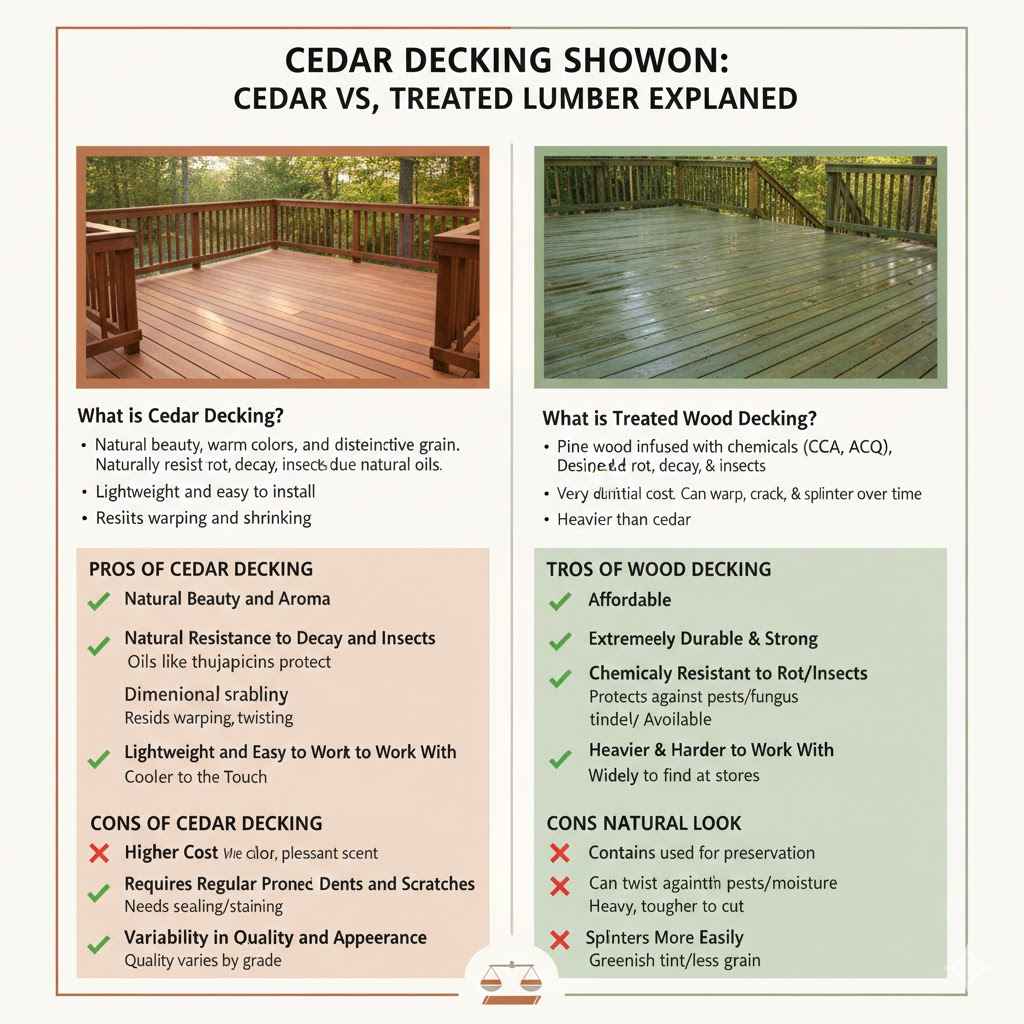
Cedar vs Treated Wood Deck Comparing Key Features
Choosing between cedar and treated wood for your deck involves looking at several important factors. It’s not just about how they look, but also about how they hold up over time, what they cost, and how much effort you want to put into keeping them in good shape. This comparison will help you weigh the pros and cons side by side.
Think about what matters most to you and your home. We will explore aspects like durability, cost, maintenance, and appearance to give you a clear picture.
Durability and Lifespan
Durability is a major consideration for any deck. You want a structure that can withstand years of use and weather without falling apart. Cedar, with its natural oils, offers excellent resistance to rot and insects.
This means it can last a long time, often 15 to 25 years or even longer, depending on the type of cedar and how well it’s maintained. Its stability also means it’s less likely to warp or crack, keeping your deck looking good and feeling safe.
Treated wood is also very durable, thanks to the chemical treatment that protects it from decay and pests. Properly installed and maintained treated wood decks can last anywhere from 10 to 30 years, sometimes even more. The lifespan can depend heavily on the quality of the treatment, the type of wood used, and the environmental conditions.
While it’s resistant to rot, treated wood can sometimes be more prone to warping, cracking, or splitting as it ages and dries out, which can affect its long-term appearance and integrity. Both materials can offer a good lifespan, but their reasons for longevity and potential issues differ.
Cost Analysis
The initial cost is often a deciding factor for many homeowners. Cedar is generally considered a premium material, and its price reflects that. You can expect to pay more for cedar planks than for treated lumber.
The cost of cedar can range from $7 to $15 per linear foot for decking boards, depending on the grade, thickness, and local market prices. This higher upfront cost is for a material that offers natural beauty and inherent resistance to decay without chemical treatments.
Treated wood is the more budget-friendly option. It typically costs between $3 to $6 per linear foot for decking boards. This lower price makes it an attractive choice for larger decks or for homeowners who want to maximize their outdoor living space without breaking the bank on materials.
While the initial material cost is lower, it’s worth considering any potential long-term costs associated with maintenance or
Cost Comparison Table
| Material | Average Cost Per Linear Foot (Decking Boards) | Initial Cost | Potential Long-Term Cost Considerations |
|---|---|---|---|
| Cedar | $7 – $15 | Higher | Less prone to warping/cracking, potentially fewer repairs |
| Treated Wood | $3 – $6 | Lower | May require more frequent maintenance, potential for warping/cracking |
Maintenance Requirements
When it comes to maintenance, cedar and treated wood have different needs. Cedar, while naturally resistant, benefits from regular care to maintain its appearance and prolong its life. If left untreated, cedar will weather to a beautiful silvery-gray color.
However, to keep its original warm tone, you’ll need to clean it annually and apply a sealant or stain every one to three years. This sealant will protect the wood from UV rays and moisture, preventing it from drying out and cracking.
Treated wood also requires maintenance, but its primary needs are different. New treated wood usually needs to dry out for several weeks or months before it can be stained or sealed. Once dry, applying a water-repellent stain or sealant every one to two years is recommended.
This not only enhances the appearance but also helps to prevent checking (small cracks) and splintering. While the chemical treatment protects against rot and insects, regular sealing helps the wood maintain its structural integrity and prevents it from becoming brittle or prone to damage over time.
Aesthetic Appeal
The visual appeal of a deck is crucial for many homeowners. Cedar is widely admired for its natural beauty. It has a rich, warm color that ranges from light yellow to deep reddish-brown, and it often features a pleasing grain pattern.
This natural look can complement a wide variety of home styles, from rustic cabins to modern homes. Cedar can be left natural to achieve a classic weathered look or stained to enhance its rich tones or achieve a different color. Its natural aroma also adds to its appeal.
Treated wood can be a bit more challenging in the aesthetics department for some. When first installed, it often has a greenish tint from the treatment chemicals, though this fades over time. While it can be stained and painted to match any exterior decor, it might not achieve the same depth of natural beauty as cedar.
The grain patterns might be less prominent, and the overall look can sometimes feel more utilitarian. However, with careful staining and finishing, a treated wood deck can still look very attractive and welcoming.
Installation Considerations
The process of installing a deck also has differences depending on the wood you choose. These differences can affect the labor involved, the tools you need, and how long the project takes. Understanding these points will help you plan your build and work efficiently.
Both cedar and treated wood require proper construction techniques to ensure a safe and long-lasting deck, but some specifics vary.
Working with Cedar
Working with cedar is generally considered easier than working with treated wood. Cedar is a lighter wood, which makes it simpler to transport and handle, especially when dealing with long boards. It’s also softer and easier to cut, drill, and fasten.
This means that tools will have an easier time, and you might find that the installation process moves along more quickly. Because it’s less dense, it’s also less likely to split when you drive fasteners into it, provided you use appropriate techniques and fasteners.
When installing cedar, it’s important to use stainless steel or high-quality coated fasteners. This is because cedar, while naturally resistant, can react with certain metals, leading to staining or corrosion. Using the right fasteners ensures the longevity of both the deck and the hardware.
It’s also a good practice to pre-drill holes for screws, especially near the ends of boards, to prevent splitting and ensure a clean finish. Proper spacing between boards is also key to allow for expansion and contraction, though cedar is quite stable in this regard.
Working with Treated Wood
Treated wood, while strong, can be heavier and denser than cedar, which can make it a bit more challenging to maneuver on the job site. Cutting treated wood requires a good saw blade, as it’s a harder material. When cutting treated lumber, it’s essential to wear a dust mask and eye protection because the sawdust can be irritating and may contain residual chemicals.
Proper ventilation is also important during installation and when the wood is being worked.
For treated wood, using hot-dip galvanized or stainless steel fasteners is crucial. The chemicals in the treatment process can corrode standard fasteners over time, leading to rust stains and weakening the connection. Specialized screws and nails are available that are designed to resist this corrosion.
Additionally, because treated wood often comes with a high moisture content from the treatment process, it’s advisable to let it dry out somewhat before installation, if possible, to minimize future warping or shrinking. Proper spacing and fasteners are key to a stable structure.
Fastener Requirements Comparison
| Wood Type | Recommended Fasteners | Reason |
|---|---|---|
| Cedar | Stainless Steel or High-Quality Coated Screws/Nails | To prevent staining and corrosion from natural wood acids |
| Treated Wood | Hot-Dip Galvanized or Stainless Steel Screws/Nails | To resist corrosion from wood treatment chemicals |
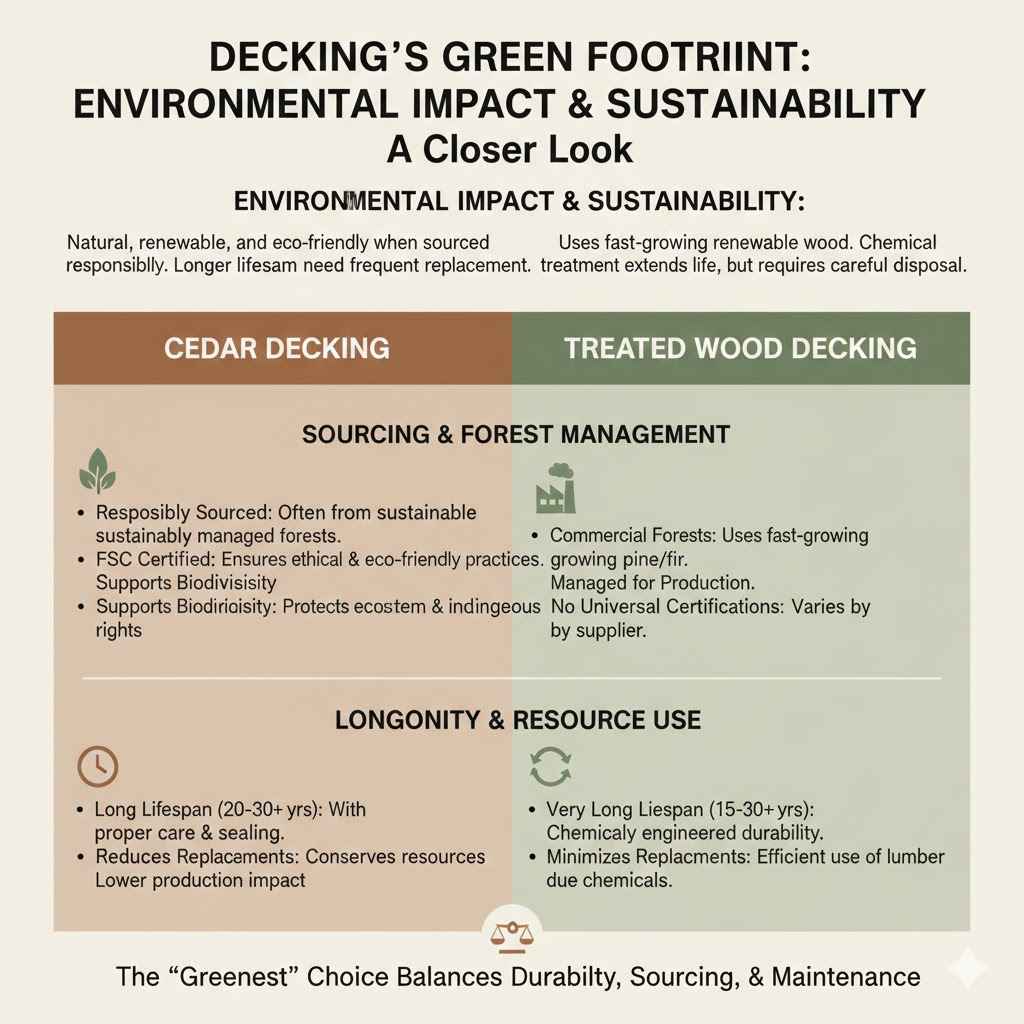
Environmental Impact and Sustainability
When planning any construction project, considering the environmental impact is becoming increasingly important. Both cedar and treated wood have different stories to tell when it comes to sustainability. Cedar, being a natural wood, can be a more environmentally friendly choice, especially when sourced responsibly.
Many cedar products come from sustainably managed forests, which means that for every tree harvested, new trees are planted, ensuring the long-term health of the forest ecosystem.
Treated wood is also a popular choice, and its production involves chemical processes. However, wood is a renewable resource, and treated wood often uses lumber from fast-growing trees, like pine. The lifespan of treated wood, its resistance to decay, and its durability also contribute to sustainability by reducing the need for
Sourcing and Forest Management
For cedar, responsible sourcing is key to its sustainability. Look for products certified by organizations like the Forest Stewardship Council (FSC). FSC certification ensures that the wood comes from forests that are managed in an environmentally responsible, socially beneficial, and economically viable way.
This means that harvesting practices protect biodiversity, uphold the rights of indigenous peoples, and ensure the forest can regenerate. Using certified cedar means you’re supporting sustainable forestry practices.
Treated wood often uses lumber from commercially managed forests, many of which are focused on rapid growth and efficient harvesting. While not always carrying specific certifications like FSC, these forests are managed to ensure continuous production. The chemicals used in treatment are designed to extend the life of the wood, meaning fewer trees might need to be harvested over time to build and maintain outdoor structures.
The recyclability of treated wood is also a consideration, although it requires careful handling and disposal due to the chemicals.
Longevity and Resource Use
The lifespan of a deck material directly impacts its environmental footprint. A longer-lasting deck means less material needs to be harvested, manufactured, and transported over time. Cedar’s natural durability and resistance to decay mean that, with proper care, a cedar deck can last for many decades.
This longevity reduces the frequency of replacement, which in turn conserves resources and reduces waste. The natural oils that make cedar resistant also mean it doesn’t require harsh chemical treatments, further reducing its environmental impact during production.
Treated wood is engineered for longevity. The chemical treatment protects it from elements that would quickly degrade untreated wood. This extended lifespan means that a treated wood deck can last for a very long time, potentially 10-30 years or more.
By making the wood more resistant to rot and insects, the need for frequent replacements is minimized. This efficiency in resource use is a key benefit, as it allows for the effective use of lumber, often from rapidly growing species, and reduces the overall demand for wood over extended periods.
Frequently Asked Questions
Question: Which wood is more expensive cedar or treated wood
Answer: Cedar is generally more expensive than treated wood. The initial material cost for cedar is higher per linear foot.
Question: Does cedar rot
Answer: Cedar has natural resistance to rot and decay due to oils and natural compounds within the wood. However, like all natural materials, it can eventually rot if consistently exposed to extreme moisture without proper maintenance.
Question: Is treated wood safe for decks
Answer: Yes, modern treated wood is considered safe for deck construction. The chemicals used are regulated and designed to be safe for residential use when handled properly and the wood is used as intended.
Question: Which type of wood is lighter cedar or treated wood
Answer: Cedar is typically lighter than treated wood. This makes cedar easier to handle and install.
Question: Can I stain treated wood immediately after installation
Answer: No, new treated wood needs time to dry out, usually several weeks to months, before it can be effectively stained or sealed.
Summary
When deciding between cedar and treated wood for your deck, consider your priorities. Cedar offers natural beauty and aroma but comes at a higher price and requires regular upkeep to maintain its color. Treated wood is a budget-friendly and durable option, highly resistant to rot and insects, though its appearance might be less appealing to some, and it can be prone to warping.
Both can create wonderful outdoor spaces; choose based on your budget, desired look, and maintenance commitment.